

In addition to all the great content we bring cheer professionals in our quarterly print issue, you’ll find plenty of original exclusive content right here at TheCheerProfessional.com.
Keep checking back for all the latest and greatest news, updates, debates and more!
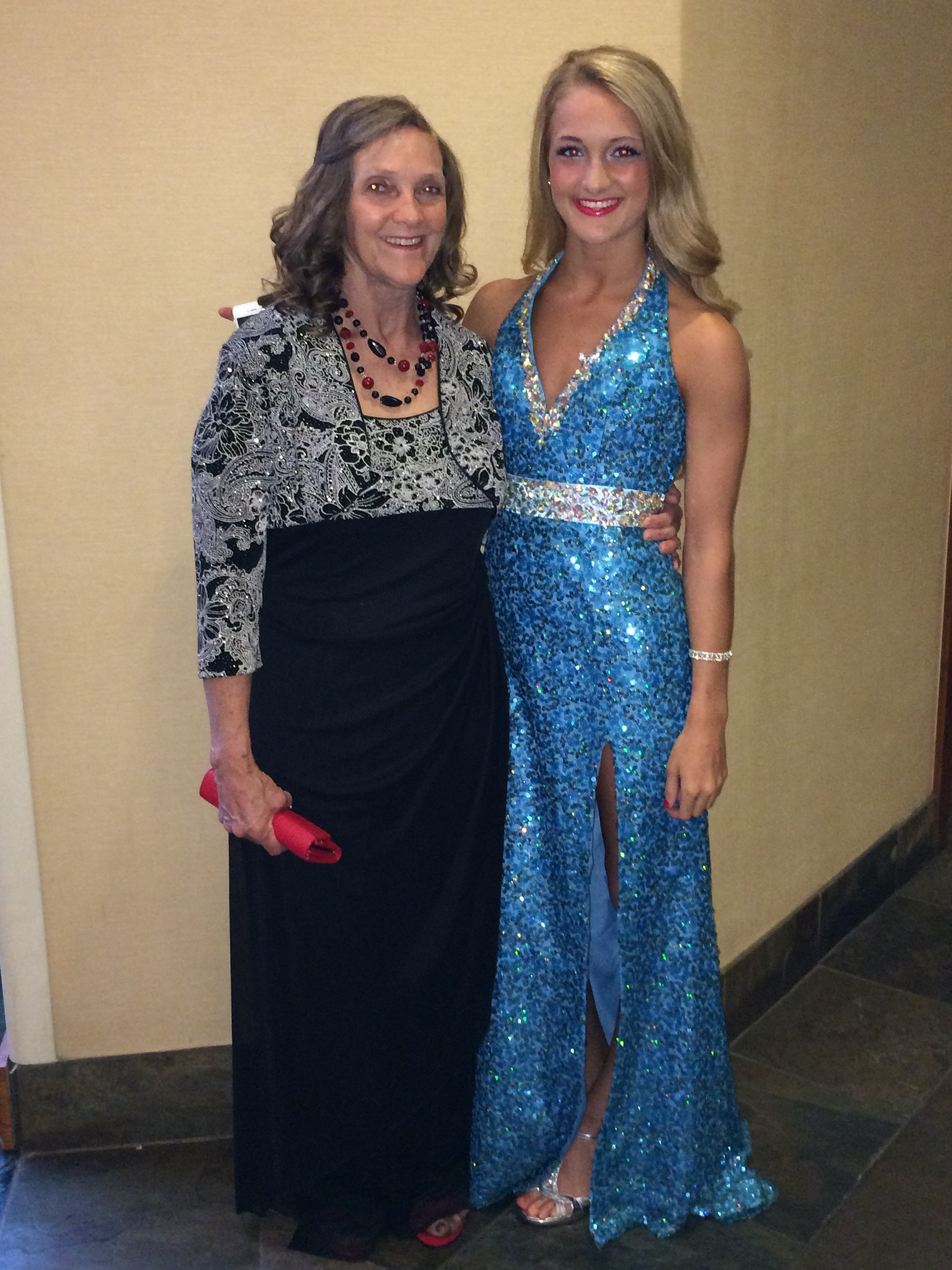
Spotlight: Debbie Love
jen : September 16, 2014 11:56 am : In the Industry| Two Sides| Web Exclusives International cheer consultant and coach Debbie Love is famous in the industry for emphasizing the importance of psychology in sports, but she admits that while competing as a college gymnast she wasn’t always a perfect picture of focus and concentration. In fact, she can pinpoint a specific instance when she realized she was relying mentally on magical thinking: “I wouldn’t tumble until I did a little ritual before my pass,” she says. “I had to stand there and close my eyes and say, ‘Okay, Debbie, you can do this. Now go.’ And if I didn’t say it, I wouldn’t go.”
Love trained herself to execute her routine without the mantra and trust the mechanics of her routine by repeatedly assuring herself, “You’re confident; you can do this.” Now, more than 50 gyms per year—including teams in South America, New Zealand and Scotland, along with Louisville-based GymTyme (which she’s affiliated with)—seek out Love’s expertise on mental block, injury prevention and technique. Not only are they the three most common issues squads ask her for help on, but they’re also the subjects 58-year-old Love is most messianic about.
“I’m more concerned with athletes doing things right,” she says. “I don’t ever talk about winning. We talk about doing things right [and] hitting our routine, because eventually winning will take care of itself.”
During her days as a student at Memphis State University, Love cheered, did gymnastics and ran track before graduating with a bachelor’s degree in math and a minor in English language and psychology. Afterward, she landed in the computer world, working as a systems analyst for four years. Though she enjoyed her time in tech, Love eventually returned to her passion for coaching gymnastics and cheer and stuck with it—including a decade-long stint as a Level 10 gymnastics judge.
Known in cheer as the “Tumbling Queen” (a moniker derived from her uncanny ability to quickly assess biomechanics while watching tumbling runs), Love recalls the a-ha moment when she decided to focus exclusively on coaching cheer. “In 2005, I went to a competition, and I saw these people doing what I thought was going to be a round-off back-handspring, and [instead they did] fulls and ended up on their faces, and I thought, ‘Oh, my gosh. This industry needs help,’” recalls Love. “And then I went 100 percent into the cheerleading industry and never looked back.”
Since that turning point, Love has focused on touting perfection before progression. “We need to consider the bodies of our athletes first before our own desires,” she says. “I’m afraid a lot of times that doesn’t happen.”
 After heeding Love’s advice on safety and teaching mental alertness, individual gyms’ results have ranged from implementing better flexibility training and conditioning programs to better squad cohesion, but one of Love’s favorite success stories takes place on a much smaller scale. A coach contacted her for help with a little boy who had once been an agile tumbler but lost his skills. She helped the coach sharpen his coaching style and alleviate pressure on the child, including instructing him in her “Breaking Free: 9 Steps for Getting Rid of Mind Block” plan. Now, Love says, “[the athlete] has got all his tumbling back, and the coach kept thanking me for changing his life.”
Love’s industry notoriety stems not only from her much-coveted expertise, but also from the fact that her family name is a household one in cheer circles. Her daughters Whitney and Britni, two of six children whom Love home-schooled through high school, have achieved fame as popular “cheerlebrities,” a word Love says she dislikes due to its focus on the individual rather than the team.
“It’s something that we did as a family that turned out to be a really good thing,” Love says. “Between gymnastics and cheerleading, all those things are family activities.”
As seasoned as her daughters are, though, they aren’t exempt from Love’s safety-first instructions. The Loves have their own rule of three that they follow to make sure they grasp new moves. “I have a deal that when I’m teaching a new tumbling skill, they can only try it three times on the floor; if they miss it three times, then they have to go back to a drill or another skill to build themselves up to get that skill,” Love says. “I pretty much do that with every child that I teach. Because I think we keep on trying skills, hoping we’ll get it one time, when what we really need to do is break it down as a drill.”
Even when she’s not on the clock, Love makes suggestions designed to improve conditions for athletes. Case in point: At competitions, including the most recent Worlds, she has noticed athletes sometimes wait a full hour between warming up and performing, creating conditions ripe for injury. As a preventive measure, she has encouraged event producers to put a mat halfway between the warm-up room and the competition floor to re-warm athletes’ quick-twitch muscles. At Worlds, the producers listened—they slowed down warm-ups to reduce backup time.
Love attributes her business success to a certain degree of humility, which she advises anyone interested in becoming a consultant to follow.
“I would just keep your priorities straight,” she says. “It’s not ever about you; you’re a service to the industry. When people see that you want to serve them and that you’re not there for selfish means, they’re more willing to listen. Just make sure that what you have to say is true, current and relevant.”
The approach has worked out for Love. A significant part of her business consists of repeat clients who ask her to return year after year to learn new skills and build on old lessons. (She’s worked with some gyms, like All-Star Elite, World Cup, PowerCheer Athletics, CheerGyms.com and others, for almost 10 years.) Another of Love’s hints? Maintain an open mind when it comes to industry trends.
“Over my lifetime of 59 years, almost everything has changed a whole lot,” Love says. “I think you have to have an attitude of, ‘I don’t have all the answers, and if I don’t know the answer to something, I’m going to find it out.’ So it’s just [having] the desire to just keep learning. I think my favorite saying would be: The day you stop learning is the day you fail.”
–Jamie Beckman
Our First Year: Pittsburgh Pro All-Stars
jen : September 15, 2014 11:50 am : Down to Business| Web Exclusives| webexclusive1 Anyone who’s read our “Starting a Gym 101” series on the CheerProfessional website knows that launching a new all-star program can be a massive undertaking—from setting up the logistics to securing the right insurance to attracting clients. To find out what it really takes for a successful start-up, we spoke with three cheer professionals who’ve just completed their first year at the helm.
First Year Case Study #1:
Location: Imperial, PA
# of athletes: 21
Though it’s not technically Pittsburgh Pro’s first year in business (the gym is actually in its fifth year), first-year cheer director Paige Crimson Priano and two other programs had to start the program from scratch last season with just 10 athletes. The previous year, the gym had about 40 girls, but they all quit and went to different gyms, except for one veteran. Find out how this fledgling program is reinventing itself:
CP: How has your first year in charge of the program gone?
Priano: We got a group of 10 girls that we kept through the whole year—we just had one team. It was a good start for us to see we can handle one team, and now we know we can handle more. We had a youth Level 1 team, so they were all babies and so eager to learn.
CP: What has been your top priority this year?
Priano: After I took the title of program director, the biggest change I made was communication. I sent at least one email every month to make sure everyone knew the dates coming up. By the end of the season, I was sending weekly emails. Communication helped build our relationship with the parents. I feel like I know every single parent now, and I want to keep that [momentum] going.
CP: Can you tell us about how your “Become a Pro” camp helped grow the program?
Priano: We were supposed to have our last competition in April but had to reschedule it, so we had the whole month of April open, still with only 10 girls. We were trying to think of ways to get our name out there, and I came up with a “Become a Pro” camp. The flyer said, “Try it before you buy it.” The camp was every Tuesday in April for two hours; we taught the girls all the basics of all-star cheer so they could see if it’s the sport for them.
 CP: What advice would you give someone starting a new gym?
Priano: You have to be organized. I keep a lot of lists. Being organized in your brain is one thing, but being able to see it on paper really makes a difference for me.
CP: What’s something you’ve learned this year?
Priano: Halfway through the season, we realized we were focused on the wrong thing with our girls. The girls were hitting the routines every single competition, but they were leaving feeling defeated, just because they didn’t get first. So we switched from focusing on placement to focusing on the improvements they made from the last competition, and not letting the judges’ decisions affect the girls. Now, they feel more in control. We didn’t win our big competition at nationals, but we ended up leaving that competition feeling better than ever because of the improvements they made.
–Lisa Beebe
Keeping the Faith: Faith-Based Programs
jen : September 10, 2014 12:36 pm : Mind, Body & Soul| Web Exclusives| webexclusive2 Amanda Dauzat wasn’t always a cheerleader who prayed. The founder of Denver, CO-based Youth Alive Cheer didn’t discover a spiritual connection with cheerleading until she attended a small Christian college. There, through the guidance of her cheer coach, she developed a relationship with the divine. Now Dauzat offers other youth the opportunity to combine athleticism with faith. “The way I view faith-based programs is like any other,” said Dauzat. “We are a cheer program that wants to teach [our students] life lessons. We choose the Bible to be our guide.”
Youth Alive Cheer is one of many programs where cheer and faith collide. In the last year, nearly 100 faith-based teams (comprised of 1,500 athletes total) came together to compete at the Fellowship of Christian Cheerleaders (FCC) national competition in Orlando, marking a significant increase from the 12 teams and 150 cheerleaders that participated in the event when it began in 1989.
Like all cheer organizations, size and structure varies. Youth Alive Cheer is a dual for-profit/non-profit organization that currently serves 45 students ranging from three to 14 years of age. At Carolina Elite (near Greensboro, NC), Rocky Harmon leads a for-profit organization that is nearly triple that size with 120 students from ages 4 to 18. And Texas-based Be of Good Cheer is a strictly not-for-profit organization whose fees are paid entirely by the fundraising efforts of the team. “I’ve even had the kids earn all their money early, and I tell them, ‘You don’t need to go fundraising anymore, and they still go and [then] donate their [additional] money to the kids who can’t go [out and fundraise] and need it,” says 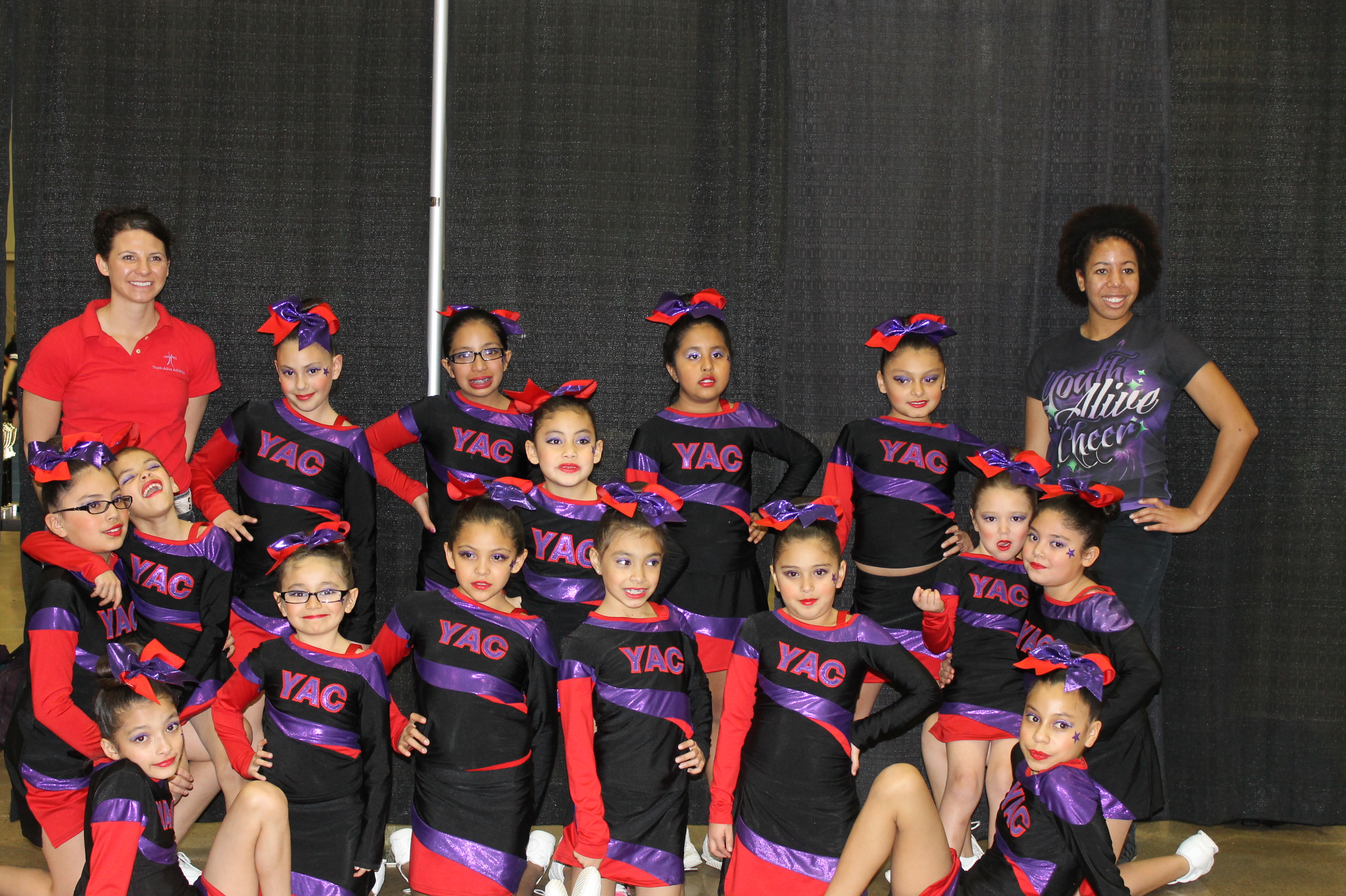 owner Stacy Brumley.
All three programs keep fee structures at the bare minimum to ensure that classes remain open and affordable to all. “I like to joke that we’re a ‘not for much profit program,’” said Harmon.
Finances aside, Harmon, Dauzat and Brumley don’t see their incorporation of faith into cheer practice as a intentional deviation from secular organizations but rather the natural inclusion of a powerful, spiritual connection that fuels their daily lives. “There was never a moment when I made a conscious decision to include my faith in our cheer program,” said Harmon. “Faith is a part of everything in one’s life, so when you start something that faith is already there.”
Still, there are notable differences. “Fun dance moves” are favored over “provocative” ones. Uniforms mimic popular style but lengths are often more conservative and midriffs rarely bared. Like other cheer programs, positive mentorship is a high priority, but for the faith-based programs, this also includes mentorship of the spirit in the form of frequent group prayer and encouragement to seek guidance from above. “[The kids] will come to you with their problems and it’s just natural for any adult to give a faith-based answer,” said Brumley.
According to Dauzat, highlighting a Christian approach to problem solving will enable students to be successful decision makers in the future. “My hope is that through Youth Alive they have been given enough information so that when they are mature they are able to form their own belief and value system,” said Dauzat. “I believe this is just one more tool to add to their tool bag that will help them maneuver through life.”
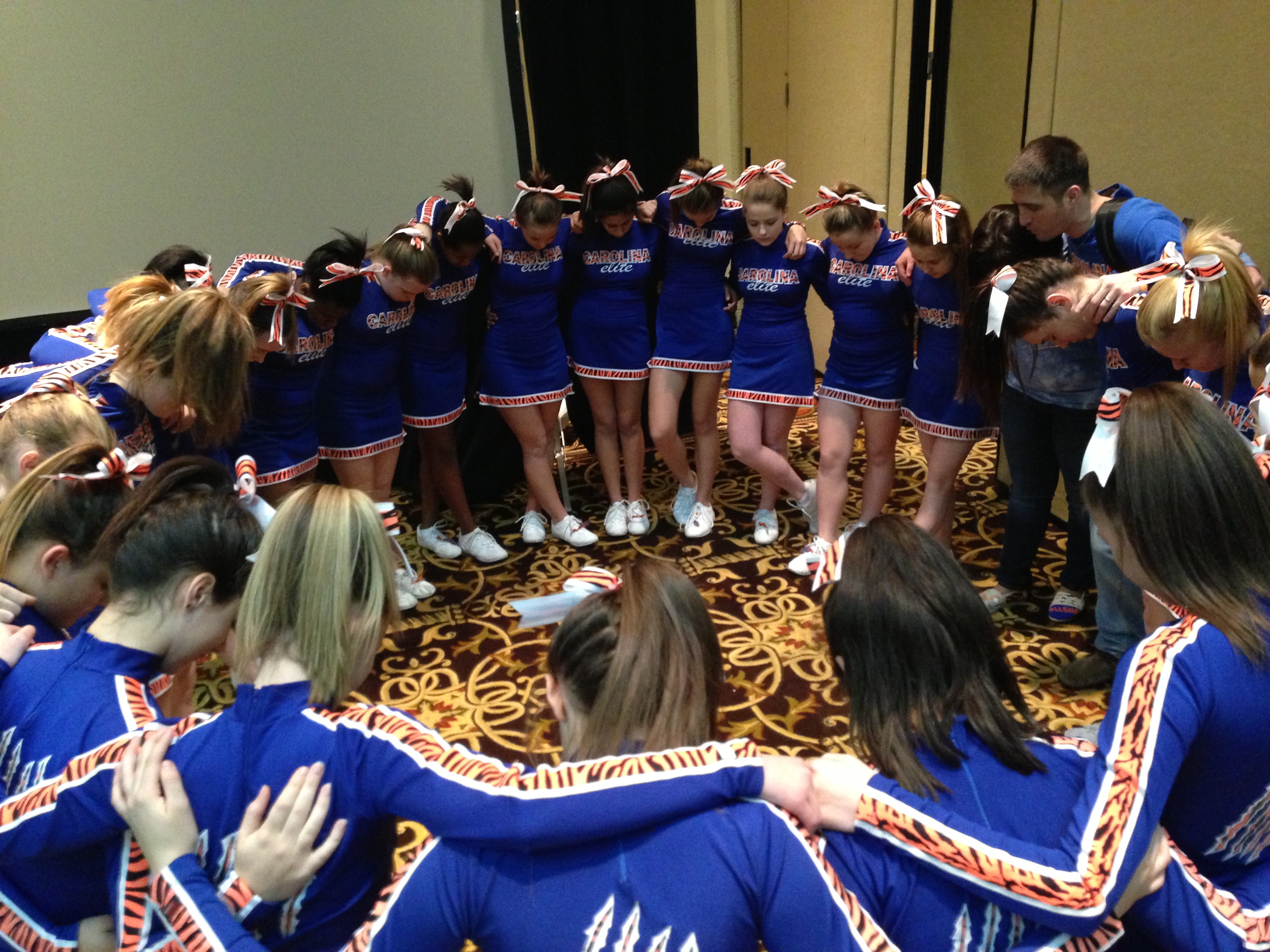 Recently Harmon received an email from such a student who credits Carolina Elite with saving the “better parts” of her. “I found comfort in coming to CEA and learned respect, responsibility and leadership, and that no matter where we come from, something great can always come from us if we are pushed,” the student testified.
Winning and losing are also given a broader context. At Carolina Elite, competition jitters are calmed with a prayer of surrender. “In pre-performance prayers, I always ask that the girls stay safe, perform their best, and we’ll leave the results up to [God].” At Be of Good Cheer, competition results are received with a bigger picture in mind. “You have to teach them that no matter what happens God has a lesson in it for us, win or lose,” said Brumley.
All agree that while their Christian faith is ever present, everyone is welcome to join. “We strive to make it clear that faith is important in our program; we just don’t try to force it on anyone,” said Harmon, adding, “The goal isn’t to point out that we include our faith every day, it’s simply to include it.”
–Carmen Rodriguez
Candid Coach Q&A: Amy Faulkner
jen : September 8, 2014 1:49 pm : In the Industry| Two Sides| Web Exclusives Got your blinders handy? Amy Faulkner’s dedication to the Northstar Studios community shines bright. As founder, owner and coach, she has grown the cheerleading studio to become a welcoming beacon in Sunbury, Ohio. Along with being a wife, mom of three and mother hen to all of the Northstar athletes, her tireless devotion to family is evident in the fact that Northstar welcomes cheerleaders from unfortunate backgrounds to cheer for free.
Faulkner first started Northstar Studios in 2008 shortly after her husband returned from a military tour in Iraq. Since then, the business has outgrown two studios to become what it is today: an 8,000 sq.-ft. space that plays home to five teams, 80 competitive athletes, 150 recreational athletes and a lot of community spirit. That spirit has been kicked up a notch lately, thanks to Faulkner’s latest accomplishment: being named “2014 Coach of the Year” by AmeriCheer and CheerProfessional.
As the 2014 Coach of the Year, you received some stellar nominations from Northstar Studio students, parents and staff members. How would you describe your coaching style?
Faulkner: Let me start by saying we have a pretty amazing staff—one thing that I really want to stress is that I could never have been successful without them. My role is more of the emotional aspect of cheerleading: to focus on the individual, to help those kiddos out there having a mental block. [If they’re] not secure or confident in what they’re doing, I strive to build them up and teach them about working together, overcoming obstacles and being their best. I play the more motherly role; I can tell when a kid had a bad day at school. I also hold my athletes to a high standard. Sometimes you have to yell at them and push them even though they don’t want to be pushed, but at the end of the day, I think they always realize it was worth it.
Why are you willing to sacrifice gym income to help athletes have the opportunity to cheer?
Faulkner: I [started NorthStar] as a way to get out of the house and never looked at it as a way to make a living. I wanted to share my passion of cheerleading with those around me and give my experience to girls who weren’t as fortunate. We have surrounding all-star cheerleading gyms that are probably hard for parents to afford, so my original mindset was to build something local where everybody has the opportunity to cheer. I try not to lose focus of that—I have a weak heart for the less fortunate. Several kids do come for free, and not everyone knows who they are. I love anyone who loves cheerleading, and I will do anything to help her or him be a part of it.
 What is your advice for effectively connecting with and inspiring your clientele?
Faulkner: My advice for other coaches would be to stick to your core values and beliefs and standards that you hold for the athletes in your gym. Don’t stray from who you are and what you want the program to become. The right people will surround you and, with that, you’re bound to be successful. I constantly surround myself with the people who lift me higher; as a business owner, I don’t get caught up in the drama of the cheer world. I have times where I have to be both owner and coach. I coach every team at the gym. I run the business aspect of it during the day: meet with parents, do finances, keep in touch with office manager. At 4:30/5 pm, I am on the mat for the rest of the evening. The key is to continue doing what you love. For me, that was coaching. My mission is to touch the lives of those in my community and move on—after being named Coach of the Year, I smiled at myself and said, “That’s part of the mission.”
–Amanda Kennedy
When Two Become One: Dissolving a Partnership
jen : September 1, 2014 1:02 pm : Down to Business| Web Exclusives| webexclusive1 Like the splitting up of once head-over-heels newlyweds, the parting of ways in business is often tricky, sad and more than a little complicated. Add in the complexities of an all-star cheer business, and breaking up can get downright sticky.
So what happens when one of the partners of an all-star gym wants to retire or pursue other passions?
Legal experts advise not waiting until one person is ready to retire—or wants out—to discuss what will happen with your beloved gym. Business litigator Jay McDaniel, founder of the McDaniel Law Firm, P.C. says it’s imperative to think about not just getting into a business but getting out of it—especially when it comes to cash.
“The cost of not having planned for the exit as one of the principal owners of the business is usually multiples of hundreds of what it would have cost to have done it at the time,” he says.
For Freedom Athletics, Inc. founder and owner Nancy McDowell, buying out her partner in 2006 was pretty straightforward and snag-free, even though she and her partner had never discussed what might happen with the gym if either coach wanted out. At the time they started Freedom from scratch in 2003, McDowell says, “it was just bubblegum and lollipops. We were coaches. And we had all these kids and it was awesome.”
Fast-forward three years, and McDowell’s partner decided she wanted to pursue other career paths. Fortunately, she says, the gym’s attorney was a family member, so the transfer of ownership was seamless. And according to McDowell, there has never been a hint of ill will: “We have a very good relationship. She’s done choreography for me [since the split], so it worked out really nicely.”
D.S. Briggs, Tumbling Director of Metro East St. Louis-based Pride Kids Sports Center, has a different perspective on buyouts. Years ago, he was a staff member of a buyout that was initially treated like a merger so as not to lose key support from its team families and community. In that situation, the gym he was employed by wasn’t necessarily looking to buy or acquire another program, but when they were approached by another gym to join forces to compete with a mega-gym moving into the area, the merger worked—at first.
“Maybe about a year or two later, we ended up buying the program out completely [rather than being equal partners] because things had deteriorated to the point they had no option but to sell,” he says.
Briggs says to make these types of buyouts work, the new owner needs to be sensitive to just who the “old” gym was. “The gym that is taking over has to respect the client and the culture of the smaller gym,” says Briggs. “It takes time to assimilate a whole gym culture into a different culture; it can’t be rushed into or expected to survive without hard work by the perceived leaders in both gyms.”
And, as always, communication is key, says Briggs. “You have to have a lot of open honest discussion about the goals, hopes and dreams, and what really are the personal dreams and philosophies of both programs,” he explains. “You have to figure that out right from the beginning. Otherwise, it’s not going to work at all.”
And when it comes to what McDaniel calls “business divorce” (when one partner wants out), he says most business owners don’t prepare for it when they are just starting out. In his experience, only about 25 percent of his clients have given it real thought. Most, he says, find it difficult to focus on an event that could be 25 years away. “The idea is, ‘we will deal with it someday’ or ‘yeah that’s a good idea’. [They always say], ‘We’ll get back to you,’” shares McDaniel.
Avoid that trap and start planning now for a smooth exit with these helpful tips:
1. Put in agreements to buy and sell. “You come to agreements on how you are going to value the business and you put in place funding for it,” says McDaniel. “That way, the person who stays has funds to buy the other person out.”
He adds that one effective way to do that is by taking out life insurance policies on the principals of the company. With that method, if one of the co-owners dies, the business will have the proceeds of the life insurance policy to pay their family the value of their share of the company.
And when it’s time for retirement, the business will have the cash value of the life insurance policy to pay the retiring partner or withdrawing partner.
2. Incorporate a deadlock clause. McDaniel also suggests putting a deadlock clause into a well-drafted business plan, which can save a lot of heartache down the line. “It basically says that if we can’t agree, then I can make an offer to buy a proposal,” he says.
3. Steer clear of a DIY split. Things can get particularly dicey when the people splitting up attempt to do it themselves. That’s a big no-no, according to McDaniel: “Never do it yourself. About half of my litigation cases come from do-it-yourself business entities. Get a decent lawyer.”
4. Communicate, communicate, communicate. In McDowell’s case, she feels fortunate the process went so smoothly. A key ingredient, she stresses, was talking through everything from the beginning. “Be very honest and upfront from the get-go. Be very clear about what you want. And put it in writing.”
–Lindsay Martell


