

In addition to all the great content we bring cheer professionals in our quarterly print issue, you’ll find plenty of original exclusive content right here at TheCheerProfessional.com.
Keep checking back for all the latest and greatest news, updates, debates and more!
Tate Chalk: To Nfinity and Back
jen : January 16, 2013 1:33 pm : In the Industry| Web Exclusives| webexclusive1 Pacing back and forth on top of purple tumbling mats in front of a rapt audience of All Star Gym Association members, Tate Chalk encourages the coaches and gym owners in attendance to make their voices heard. Wearing a black button-down shirt and stylized jeans, he talks about how to rise above fear of failure and innovate. Suddenly, he goads the crowd to yell, “Money is good!” Understandably, they need a little encouragement. “You all have to find ways to make it work… Learn things, like ‘break-even point,’ and know what they mean,” he says. “Know that this is a business. This is a business!”
Nfinity Athletic Corporation CEO Tate Chalk brings to mind a scrappy Tony Robbins type rather than a stereotypical suit-wearing CEO. After all, this is a man who, when Nfinity was unceremoniously dumped from Cheersport, posted a digital picture of a “breakup tape”—accompanied by a list of songs such as REM’s “Everybody Hurts” written in girlish bubble letters — on Nfinity’s Facebook page and encouraged fans to submit their own favorite sad-sack tunes. Conventional? No. Memorable? Definitely.
He’s also a guy who decided to follow one of his dreams and move out to Los Angeles to try his luck as an actor in Hollywood back in 1999. Among other gigs, he scored a part as a referee in the 2004 Vince Vaughn–Ben Stiller comedy Dodgeball: A True Underdog Story and consulted on cheerleading for the movie. (He says the “brutal” movie industry gave him “a much thicker skin.”)
Speaking up and standing out have become synonymous with 25-year industry veteran Chalk and the Nfinity brand—and that’s the point. The one secret to success, Chalk says, is being original.
“If I had to give three [pieces of advice], I would say be original, be fearless, and be relentless,” he says. “To me, ‘be original’ means know what you are and what you bring, and don’t try to be someone else—and you’ll be successful.”
Chalk has followed his “know what you bring” advice to the letter, taking his stints as a cheerleader at the University of South Carolina and the University of Kentucky and parlaying them into a lucrative career coaching the USC squad, teaching summer camps and owning cheer gyms. Then, in 2003, he developed his own cheerleading shoe just for women: Nfinity, a meticulously designed, spring-floor athletic shoe. The industry hadn’t seen anything like it. And Chalk was in a unique position to sell his vision.
“We’re the only footwear brand whose CEO has actually been on the mat,” he says. “I mean, I was a cheerleader. I coached cheerleading. I have held thousands of stunts and taught thousands of back handsprings and back tucks. And so we hope that the brand comes from a place of authenticity and knowing what it’s like to be there when the lights come on and the music starts.”
Now, almost a decade later, Nfinity Athletic Corporation is not only a consistent leader among the cheerleading shoe market, but has also expanded into basketball and volleyball shoes as well as other sports apparel. In 2009, Nfinity won “Business Innovation of the Year” at the American Business Awards, and the company has regularly ranked in the “Inc. 5000” list.
Though the risks eventually paid off, the early days weren’t without their setbacks. When Chalk was first hawking Nfinity cheerleading shoes, he had only one model pair of shoes and 150 promo T-shirts to try and make his case for the product.
“I was naive, but I think that’s part of being successful—that you’re just naive enough to think you can do it,” he says. “We had lots of defect problems and delivery problems. There was a time there for the first several years that not one shipment had everything go right. You come to accept that it’s never going to be perfect, that something’s going to be off, as far as business goes.”
But Chalk stayed the course, dead-set on making it work. Though his cheer background certainly played a role in his dedication, he attributes his choice of all-star cheerleading as an industry to study and dominate to a deeper reason: the spirit and drive of the people involved.
“I’m really passionate about all-star cheerleading because it gives kids who wouldn’t normally have a chance a [way] to cheer themselves out of whatever situation they’re in,” Chalk says. “Whether they come from the poorest of poor neighborhoods or bad family situations, these kids have had a chance to cheer themselves into a better life. Also, our [industry’s] history is full of small-business owners and entrepreneurs who have taken a chance and taken an idea and created something out of thin air, and that’s noteworthy.”
Putting a megaphone to another marginalized group, Chalk recently founded the Embrace initiative, designed to educate children and parents in the sport about love and acceptance of people of all sexual orientations. The initiative follows a new USASF rule introduced earlier this year decreeing, “Males: minimize exaggerated or theatrical movements,” which has been perceived by some as being anti-gay. (It has since been amended to apply to both genders.)
“The idea being that whether you’re straight or gay or whatever that you can embrace each other in this sport,” Chalk says. “Because of what we do, we’re all sort of outsiders. Cheerleading has a stigma, and we all have to stick together and support each other. And the second part of Embrace is ‘Embrace who you are.’ If you can’t feel safe and secure as a gay or lesbian in cheerleading, then there’s no hope for you in the rest of the world. Our sport should be the one spot that you can go and be yourself and feel at home.”
-Jamie Beckman
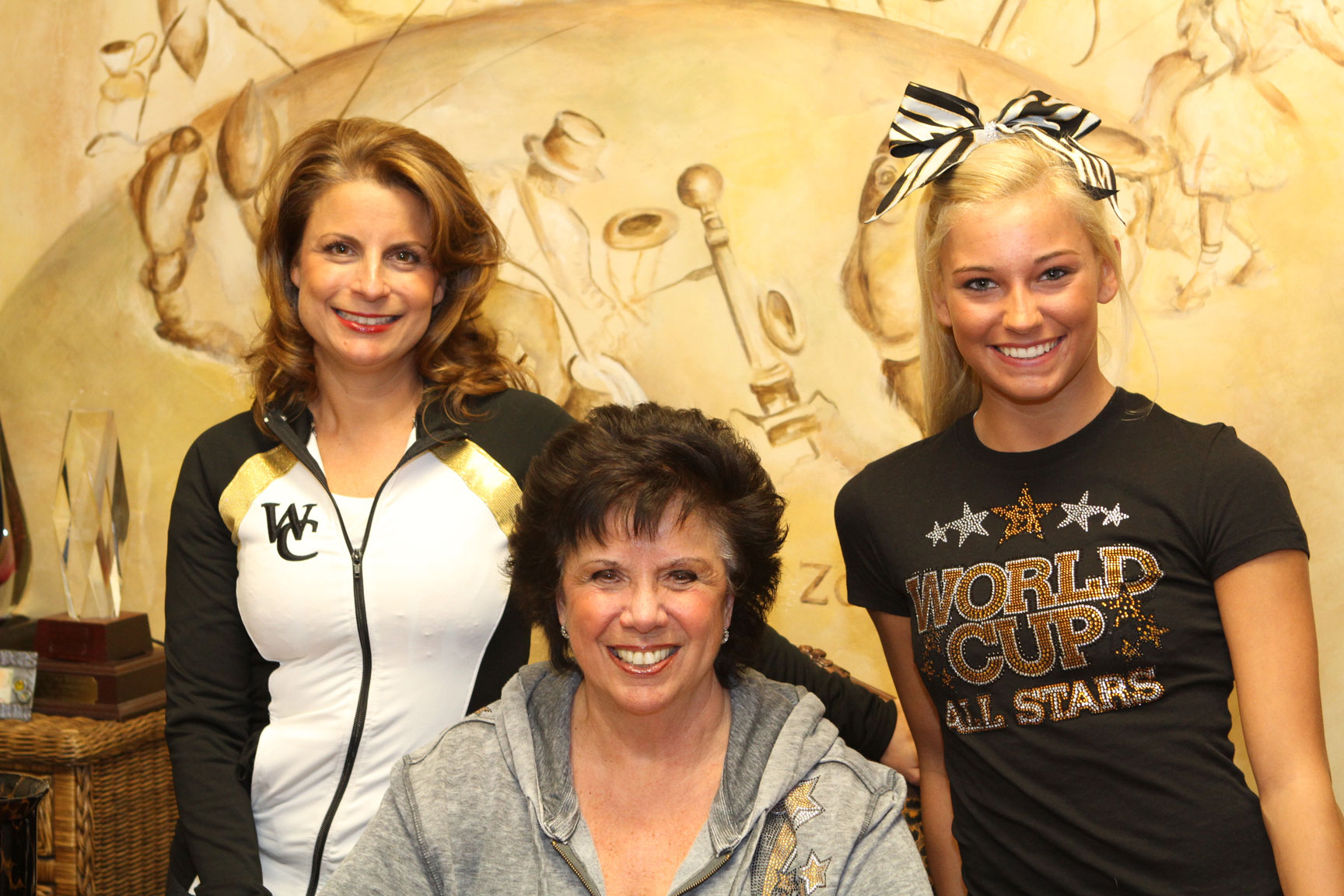
Photo credit: Zoha Photography
To limit the distraction of having a cheerlebrity teammate, Twist & Shout’s Orson Sykes sets strict rules during competitions for cheerlebrities regarding what’s expected of them, even when it once meant having a sit-down discussion with Whitney Love about strolling around too much at Worlds. (The cheerlebrity quickly isolated herself and went on to give the best performance of her life, Sykes says.)
“You have to make sure that the boundaries are set in place,” Sykes adds. “Whitney and Britni [Love] weren’t allowed to sign autographs or take pictures in the warm-up room. We insulated them to keep people away. At the end of the day, we’re at this competition to perform well. This is not a personal appearance for you.”
Former Cheer Extreme All-Star and current University of North Carolina–Chapel Hill student Maddie Gardner appeared a CNN special about Cheer Extreme that focused largely on her, has her own line of Fancy Face cosmetics and will star in an upcoming Cheer Channel show, Cheer Mashup. Aware of the impact her cheerlebrity might have on her teammates, Gardner recently dedicated an entire post on her blog, “Let’s Hear It for the Bases,” to her team.
“My coach always told us that the flyer is like the quarterback,” she says. “They do receive much of the glory, but also much criticism. I feel as though the bases and backspot play a very influential role in the group; without them there would be no flyer. Again, with a football comparison, where would the QB be without the offensive line?”
Sykes also uses a football analogy to describe his work with Whitney Love. “Cheerleading is like any other sport in the sense that if this were football, we ran a lot of plays for her,” explains Sykes. “On the other side of that, Whitney knew she wanted to win at the end of the day and she got into the team concept. She understood that even if she was tired, coming up to an event, the team had to feed off of her. She couldn’t come in lazy. She set an example by coming in early and working hard.”
As far jealousy among teams, Sykes suggests that such issues are usually a product of the cheerlebrity’s personality. If she’s gracious and a hard worker, she tends to lift the rest of the team up, naturally nipping jealousy in the bud.
“If the cheerlebrity is humble, they would always make it a point in interviews to talk about the team and how supportive the team has been,” he says. “Whitney [Love] never put herself over the team. The team knew that Whitney was extremely talented.”
Sykes admits he’s been lucky to have humble, diligent cheerlebrities on his squads. But what about the other members, who also work hard and conduct themselves in a sportsmanlike manner? Pascale, a founding member of the National All Star Cheerleading Coaches Congress, says she has been lobbying for years to create more scholarships for deserving cheerleaders who aren’t as visible.
“There are so many heroes in this world of cheerleading,” Pascale says. “These young athletes work so hard; they give so much up. We have kids with cancer, kids fighting a disability, kids fighting emotional issues from homes and they come out as heroes. To me, these are the kind of kids I’d like to see applauded and [given] scholarships. I just don’t think there’s enough given to these kids that are so deserving. Justin Bieber, Miley Cyrus—this is what they see, and this cheerlebrity is just hooking on to that model. With all the heroes in our industry, why can’t we gift them in an opposite way of what these kids are programmed to see on TV?”
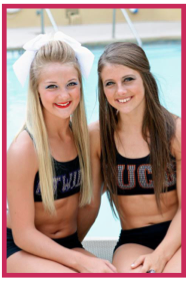 Under Pressure
Speaking of Justin Bieber, in many cases, social media tools like Twitter, Facebook, Tumblr, and Instagram have made (or at least aided) the careers of certain cheerlebrities. Gardner has more than 15,000 Twitter followers and Rule more than 16,000, while Nowlin has no less than three fake impersonators. But, Sykes emphasizes, with great social power comes great responsibility. Not only will fans be watching a cheerlebrity’s performance for any hint of a mistake, but the cheer public will be monitoring every tweet and every post for lapses in judgment or perceived flaws in character.
“You have to make sure that they understand that responsibility comes with their platform, meaning if we have a bad practice, they can’t go on Twitter and say, ‘I hate my coach,’ or ‘I hate cheer.’ You are a role model now,” says Sykes. “Even though they’re your feelings and you have a right to your own feelings, you have a responsibility now. The fleas come with the dogs.”
Gardner speaks cautiously yet diplomatically about social media: “Social media has been a huge part of becoming recognized in the cheer world, and I am thankful for its impact; however, I also see social media used as a weapon in our industry to tear down athletes, so to me it is a double-edged sword.”
Just cruising through Twitter reveals a not-so-nice underbelly of cheerleading fandom: One tweet from a user directed at Maddie read, “Maddie Gardner having a tv show…. #overrated #sorrynotsorry”
Add that increased visibility to intense competition, and the mix could be detrimental if coaches don’t get involved, Pascale says.
“Considering how difficult the scoresheet is right now in making these kids do so much within two and a half minutes, I think good coaches try to alleviate that pressure by making these kids have more fun,” Pascale says. “If these cheerlebrities don’t succeed, the next morning, there is no fun for them. It’s agony. And I don’t think it’s fair. Does it make them tougher? I’m sure.”
Gardner herself seems to have lost some love for the “cheerlebrity” concept.
“Recently I have noticed many athletes trying to become ‘cheerlebrities’ and I feel as though it has become negative,” she said. “From my own experience, I discourage anyone from trying to become a cheerlebrity. I do not consider myself to even be one, and I do not think it is important to have a title. I became recognized in the sport because I loved what I did and I put all my heart and effort into it. I was not trying to become famous in the cheer world; I was just doing what I loved to do and was recognized because I expressed my true passion for cheerleading.”
Sykes, however, says he only sees the cheerlebrity phenomenon escalating. “I think it’s going to get bigger, because what I’ve seen in the past two or three years, it’s just like mainstream sports,” he says. “People who sell shoes, even events, they’re promoting these kids now because they know these kids have a following. It’s crazy. I can say something over Twitter, and when Whitney retweets it, I get 15 new followers within five minutes.”
Sarah Gardner, Maddie’s mother, sees both the positives and negatives inherent in cheerlebrity. “I don’t think there are any fantastic benefits to Maddie being in the spotlight, but she has met amazing people—some of whom will be instrumental in her future and some who will be lifelong friends,” Gardner shares. “She has learned to handle public criticism with grace and, as a result, become very ‘thick-skinned,’ and she’s developed a strong work ethic. In retrospect, there are some perks but not what one might imagine them to be.”
—Jamie Beckman
 A pro cheerlebrity is hard to miss. She’s usually female, a flyer, slicing through the air during a basket toss—makeup bright, smile broad. Perhaps she’s signing autographs before competition or wowing judges on the floor with a superior tumbling pass. Maybe she has an agent in hopes of getting recruited by a college and scoring a scholarship. She may have even signed an exclusive contract with a magazine or landed a deal to sell a specific brand of shoes. Or perhaps you’ll spot her sitting behind the judges’ table at Varsity’s new wave of “Cheerlebrity” competitions.
Click. Flash. Pose with beaming young fans. Sign a program. Smile. Wave. Repeat.
This level of pomp and circumstance isn’t unlike the kind associated with A-list stars with Oscars under their belt, but these cheerlebrities are teenagers who have harnessed social media and caught the public eye, turning their specific set of skills into a brand and launching themselves to superstardom within cheerleading circles.
As “ambassadors” of the sport, some cheerlebrities are tapped to train with and meet-and-greet other cheerleaders in hopes that some of their star quality will rub off on them. Having cheerlebrities teach tumbling/stunting/stretching clinics for young all-star cheerleaders is especially popular. Naturally, the stars sign autographs and mug for pictures afterward. It’s all part of the new normal—the growing culture of cheerlebrity.
Pros and Cons
Is this emphasis on the individual rather than the team as a whole a good thing for the sport? It depends with whom you speak.
“I look at [the growth of cheerlebrities] as a tremendous compliment to our sport,” says Courtney Smith-Pope of Cheer Extreme Allstars, who coached cheerlebrity Maddie Gardner. “Basketball has Michael Jordan. Swimming has Michael Phelps. Gymnastics has Gabby Douglas. This is the natural evolution of our sport—there are going to be superstars.”
However, cheerleading is inherently a team sport—after all, elaborate stunts and formations don’t really work if only one person is performing them—so having the spotlight rest on a select few individuals can make for potentially awkward situations.
World Cup All-Stars CEO Elaine Pascale, who coaches cheerlebrity Kelsey Rule, says she’s concerned not only that there is no formal “selection” process for creating a cheerlebrity (potentially excluding more deserving cheerleaders), but also that the pressure to perform could negatively affect a cheerlebrity’s mental game.
“I just worry that if this is the trend, then we’re looking at these athletes more on a professional level than an amateur level, where we’re putting a lot of pressure on them,” says Pascale. “We’re making them have to live up to a title that at 15, 16 or 17 years old, I’m not sure that they’re developed enough to not have it filter over to the competition floor.”
Pascale is quick to clarify, however, that she’s not against recognizing outstanding individuals—she just wishes awards were doled out fairly.
“In any sport we have trophy winners, but I think there’s a forum to congratulate these specific athletes,” she says. “At World Cup, we gather up parents and award a trophy to the best athlete of that particular performance. Those kids go home with that trophy and feel good about themselves, so they’re still connected to that sense of team.”
But is heaping praise and adulation on a supremely talented individual simply the way things go, whether you’re giving a presentation in a boardroom or tumbling on a gym floor? Danica and Jay Noah of 2×2 Productions, which creates personalized DVDs for cheerleaders, picked noted cheerlebrities Maddie Gardner and Maison Baker to introduce their videos, citing the pair’s inner and outer “grace.” But the Noahs do acknowledge a negative response to the cheerlebrity trend.
“There already seems to be a backlash towards this,” they said in an email. “We do think there will always be hose individuals that stand out in a crowd. It’s just human nature. You could pick any classroom, and you will have certain kids that are leaders, planners, fun ones, pretty or handsome athletes, etc. I think that is how it works here—there will always be those that others will want to emulate, whether for an amazing skill or just the way they look and talk.”
10 Minutes With: Eric Little
jen : January 9, 2013 12:46 pm : In the Industry| Web Exclusives| webexclusive1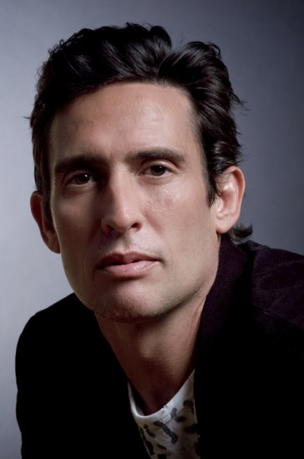 As our industry evolves and shifts, Eric Little stays right in step. With more than 750 national titles and 62 Worlds medals under his belt, Eric Little has cemented himself as one of the industry’s premier choreographers—earning him the USASF’s first-ever “Choreographer of the Year” honor in 2011. Along with all-star programs, Little works with an array of collegiate, NFL and NBA cheer and dance teams, a natural progression for this one-time Riverside Community College and Long Beach State University cheerleader. He was also the choreographer for Bring It On: All or Nothing—an accomplishment that would make any “cheer-tator” envious.
True to form, this busy choreographer is always on the road working, traveling “non-stop” from June until February, but we managed to pin the always outspoken Little down for a one-on-one Q&A:
CP: Our industry is in a state of transition. How has your own job changed in the last five years?
Little: The trend is definitely toward less dance. Instead of routines including 10 to 12 eight-counts of dance, only four or five are included. With that [development], I have had to adjust my rates from $2,000 to $1,000.
CP: How has all-star cheerleading in general evolved in your view?
Little: As far as evolution in teams goes, I think the kids have gotten incredibly good. But the downfall lies with the changing of some rules—thereby hindering talent and suppressing athleticism. I understand some of the restrictions, but I don’t agree with a lot of them. My hope is that the creativity and entertainment value will still hold high. To let go of the artistry would severely hurt this industry.
CP: Some people think that the trend toward making things more uniform is part of the push toward Olympic involvement. What are your thoughts on that?
Little: [All-star cheerleading] is not the format for the Olympics. Leave it alone! It is a subjective event.
CP: What drives or inspires the latest trends? Where do your ideas come from?
Little: I think what drives trends is what the most creative people in the industry do, like the Top Guns, the Cheer Athletics and gyms that people look up to. Whatever new or inventive things they do stunt- or transition-wise, people take notice and try to emulate what they are putting out there. As far as what I do in the dance area, I just do my best to keep the entertainment value and the interpretation of music alive.
CP: What do you wish gym owners and coaches would do when bringing in an outside choreographer?
Little: I think that choreographers and owners/coaches need to communicate before bringing in extra help. With my clients, we always make sure everything works out correctly, whether it be travel, accommodations or anything needed while I am there working for them. It’s all about understanding everyone’s needs.
The only critique I would bring up is that coaches sometimes need to stand back and not interrupt the creative process.
CP: What’s the most important piece of advice you can give cheer professionals?
Little: Go with your gut—go with the formula you’ve always known. Don’t compromise the integrity of creativity or entertainment.


