

In addition to all the great content we bring cheer professionals in our quarterly print issue, you’ll find plenty of original exclusive content right here at TheCheerProfessional.com.
Keep checking back for all the latest and greatest news, updates, debates and more!
Freeze Frame: Overcoming Athlete Anxiety
jen : January 19, 2016 3:30 am : Mind, Body & Soul| Web ExclusivesAfter months of practice, “Heather” had mastered every skill in her routine and her timing was perfect. But once she hit the mat during competition, her face went blank and she froze mid-step. Although she’d been involved with cheer from the age of five, she still experienced periodic bouts of performance anxiety, especially at key moments.
Heather isn’t alone—the National Institute of Mental Health (NIMH) reports that about eight percent of teens age 13 to 18 have an anxiety disorder. In many cases, a certain amount of anxiety can be beneficial, providing an effective way to handle a difficult situation. But excessive anxiety can, in certain circumstances, become disabling, and for cheer teams, too much anxiety could spell serious trouble.
Changing Mindset
As a sports performance expert and owner of Mind Body Cheer, Jeff Benson is all too familiar with scenarios like Heather’s. He notes that some athletes operate with a “fixed mindset,” viewing possible failure “as a life or death situation.”
Case in point: Benson worked with one athlete who resisted his attempts to teach her a more correct and advanced version of a basket toss. “She was thinking she might not be perfect right away and couldn’t tolerate the learning process,” he says. Although her response wasn’t logical, it was real to her and she had to quiet her “critical coach.” By breaking the skill down into steps, helping her visualize execution and reminding her of past successes, he was able to cut through her fear and reduce her anxiety.
In more challenging situations, Benson uses a “traffic light system” to ease athletes into attempting an advanced skill. While the rest of the team might be executing a tricky back handspring, an anxious athlete would prepare by first working on a less demanding “green light” exercise, such as a cartwheel, then proceeding to a more difficult “yellow light” skill, potentially inducing some degree of nervousness. The “red light” skill—or the one that is completely overwhelming—is attempted only after successfully completing exercises at the green and yellow levels.
Jeanine Russell, cheer director at New York-based Core Athletix, notes that in some cases, the athlete is not aware of the underlying cause for her anxiety. As she sees it, there are two main types of athlete anxiety: one related to performance and the other based on skills. Either way, the first step for Russell is helping them “open up and acknowledge there is an issue.” She calls her process “address and correct,” noting that fear often stems from lack of confidence.
To that end, Russell empowers athletes by letting them know that everyone has to start somewhere—especially when attempting a stunt for the first time. “I tell them this is a challenge as you continue to grow. If you could do it the first time, it wouldn’t be such an accomplishment,” she says.
Acknowledging Age and Gender Differences
Russell finds that anxiety seldom manifests to a debilitating degree in athletes younger than 10 years old. “Preteen and adolescence is usually when anxiety starts and then increases,” she says. “There are a lot of things going through their bodies and their heads at this stage.” At this age, female athletes tend to put too much pressure on themselves, and hormonal changes may also play a role in amplifying anxiety levels, she surmises.
In Russell’s experience, anxiety isn’t as common in male athletes, but does surface occasionally. “Males participate in other sports, like lacrosse, football and soccer, so they have a tendency to rise in the face of competition,” Russell says. “But I’ve seen it in males who were more intense with their emotions and more sensitive.”
Finding Homeopathic Solutions
Beth Mundell, coach-owner of Maricopa, AZ-based Fyrestorm, finds that anxiety might sometimes be mistaken for asthma. Amid the often “chaotic energy” in the gym, such excitement can spark vitality and excitement, but can also infuse a sense of panic in even the most seasoned athlete. “[Some] people are quick to shove inhalers at the athlete, but you’re revving up an already revved-up system by doing this,” she says. “An inhaler is a stimulant; when an athlete uses it, she becomes worse.”
One solution that has worked for Mundell is consistency. “Cheer is a superstitious sport. We do the same things in the same order every time. If I change the routine, anxiety gets worse,” she says.
Based on consultations with a naturopathic doctor, Mundell also employs some homeopathic remedies to help her athletes. She has found that magnesium oil rubbed on the soles of the feet has a calming effect. “We also put tea tree oil on the sides of the nose. When the athlete is on the floor, she can smell it and it’s a reminder to breathe,” she says. She admits there is no science to back up her claims and the result may be purely psychosomatic—but the technique does tend to get results, at least with her athletes.
Managing Team Reactions
Athletes are often so closely bonded that they’re very sensitive to each others’ cues and dynamic shifts. Russell relates a situation in which one athlete’s elevated anxiety infected the entire team: “This girl happened to be a leader on the team. When she broke down, they couldn’t handle it,” she says. “One girl was hyperventilating, another was vomiting on the side and another was having hot flashes. There was sympathy across the team.”
To prevent mass contagion, Russell takes a proactive approach. “As a group, I don’t allow them to watch the competition. They keep their backs to the performance,” she says. “[To distract them], I also make them sing a song or count eights.”
Not enough attention is given to anxiety, asserts Mundell. “A coach may call the girl a ‘drama queen’ or a ‘head case’ and brush it off, but that’s due to lack of education,” she says. “Coaches need to be attuned to their athletes. They need to differentiate between legitimate anxiety and simple fatigue.”
Coping Techniques
Sports performance professional Jeff Benson teaches athletes how to handle negative feelings. Get Benson’s tips on identifying anxiety in athletes and suggestions for coping with it:
Signs of anxiety
- Blank stares – the athlete seems to be “off in space”
- Interruptions – the athlete continually interrupts while the coach is giving instructions
- Physical shaking – the athlete’s body moves rapidly and involuntarily
- Resistance – the athlete believes she will not be perfect from the start and refuses to try
- Breathing irregularities – the athlete “forgets” to breathe or breathes very rapidly
Coping strategies
- Take a break – the athlete should be removed from the situation temporarily
- Breathe – instruct the athlete to practice deep, rhythmic breathing to help relax the muscles
- Be consistent – do the same things in the same order before each performance
- Laughter – tell a joke or say something silly to make the athlete laugh
- Empathize – point out that everyone has failed at some point in life, even the coach
- Encourage – remind the athlete of her past successes and reassure her that she will overcome this temporary setback
- Visualize – ask the athlete to imagine herself completing the skill
- Use progression – have the athlete attempt an easy skill to build confidence and then graduate to a more challenging one
- Raise awareness – speak with the athlete one-on-one to figure out what the underlying cause of her anxiety might be
- Educate – teach the athlete to have realistic expectations
–Phyllis Hanlon
It’s every gym owner’s nightmare: put your trust in team moms, and then see that trust betrayed in a big way. Few know that better than the Ohio Pink Panthers, who made headlines in 2014 when a team mom allegedly collected $310 per cheerleader for new uniforms, then disappeared with $6,500 of gym parents’ money. More common are less extreme cases, which are often a matter of team moms being too opinionated or overstepping their boundaries—leading to drama, miscommunication and often one big headache for the gym staff.
Luckily, not all experiences with team moms turn out to be so devastating. In many cases, team moms become a coach’s right hand and trusted confidante. So what makes the difference? Choosing the right people.
At Bel Air, MD-based Eastern Elite Training Center, team moms are a “huge and very important part” of their cheer and dance family, according to coach-owner Karen Eisenhuth. Eisenhuth instituted a team mom program from day one, with the goal of providing an “open and inviting atmosphere for our families.”
Though Eisenhuth had heard the horror stories, she says she had no reservations before enlisting team moms. To find the right folks, she provides a job description and is straightforward about expectations; the selection process takes about two weeks. Once on board, team moms are responsible for sending out information (via calls, texts and emails), organizing team bonding events/fundraisers, assisting with parties and ceremonies and taking on various duties at competition—from holding gear to fielding questions from parents to wrangling the team.
“Our team moms are counted on a lot,” shares Eisenhuth. “However, they have no voting power in coaching, cheer and dance decisions—[instead], they are a support system.”
There is a hierarchy in place as well. The head team mom meets with Eisenhuth and her co-owner each month, and they give her information to pass on to the other team moms. Eisenhuth says this process streamlines communication and keeps things running smoothly. For Eisenhuth, this is the biggest objective of the program—providing open communication lines between owners, coaches, athletes and parents. “[Our team moms are masters of [the] communication chain of command,” she says.
At Pooler, GA-based Cheer Savannah, owner Stephanie Britt’s team mom program is thriving after 15 years, and it works because, like Eisenhuth, she’s particular about who she chooses. “You have to almost do a credit check,” jokes Britt. “We choose people that we recognize as sane, involved, normal, enthusiastic and positive. I prefer people who work [and] who have businesses who are strong leaders in the community. I prefer people who run things.”
Britt works with 14 moms total, or one per team at Cheer Savannah, as well as a “head” team mom. She believes that a big part of having a successful program is running a tight ship—and being able to acknowledge when things aren’t working. “I’ve had to release team moms from their duties [mid-season], absolutely,” says Britt. “Usually, I just note that I won’t use them again the next season. I also have them sign a contract with a handbook and policies, and I constantly remind them of their jobs —what works and what doesn’t, just like an employee.”
In the vast majority of cases, team reps are not compensated, but they will get small discounts or end-of-season gifts. At Cheer Savannah, Britt offers perks such as free “Team Mom” T-shirts or free event admission. Keeping the program drama-free is a major goal for all owners, and choosing wisely and avoiding favoritism is key. Eisenhuth suggests choosing moms who get along with everyone, who don’t have a history of conflict or drama, and, “when in doubt, watch how the mom interacts with her children and other athletes.”
But not all gym owners are on board with the idea of having team moms—like Cheer Factory Florida’s Cody Woodfell. He believes that team moms may be more hassle than help, mainly because he has seen the negativity that it can potentially cause. Instead, Woodfell and his staff choose to communicate directly with parents via Facebook, and he is involved in every aspect of the gym. “We handle any situation you would need a team mom for,” he says.
Though he knows that most parents have “the best intentions,” Woodfell has seen jealousy and drama erupt in the past, and it’s something he chooses to avoid. “Though one would hope they could trust other people whom they place in positions, things don’t always work out as you may intend,” explains Woodfell. “Others may use the platform of team mom and new contact information of other parents to gossip, spread rumors and bring unnecessary drama to the team and organization.”
As Woodfell sees it, it’s best not to blur the lines and responsibilities between clientele and gym staff. He knows that it’s impossible to eliminate drama entirely, but finds he’s able to keep it at by “finding ways to limit it, and then you slow down your own aging process and gray hairs. By keeping parents in the role of parenting and the coaches and hired staff in the role of running everything gym-related, you can do just that.”
In order to avoid any such drama, the coaching staff and gym owners Woodfell knows you can never eliminate drama, but, “You can find ways to limit it, and then you can slow down your own aging process and grey hairs,” he says. “By keeping parents in the role of parenting and the coaches and hired staff in the role of coaching and running everything gym-related you can do just that.”
Though not everyone is a fan of the team mom concept, it’s worth at least exploring to see if it might be a fit for your gym. For Britt, it’s all about liberating her staff and keeping their focus on what they do best. Says Britt, “It allows the coaches to coach.”
–Dina Gachman
“If you’re not prepared to put TEAM first, turn around.”
 This is the motto of ICE All-Stars, and a slogan that hangs on a banner in the windows of all three of Darlene Fanning’s Illinois- and Indiana-based gym locations. It’s a mentality that’s gotten the ICE program founder far since launching her first location in 1996. “Next year will be our 20th anniversary,” says Fanning, who got her start as a high school coach before making the transition to the all-star world.
When ICE was first established, Fanning found herself with 50 athletes and three teams. Over the last two decades, she has expanded to two other prominent Midwest locations and now has a roster of 800 athletes across 37 teams. She credits her initial success to ICE’s ideal location.
“You have to be in the right area,” she explains. “I’m amazed at how many gym owners are in a small metropolitan [town] where they think they are going to get 300 athletes. It’s not possible.”
Fanning, who also owns an exercise facility, says that she looked to the fitness industry as a guidepost. “Only seven percent of the population goes to a gym,” she explains. “Cheerleading is less than that. So you have to look at your area and realize if you are in a town of 15,000, you are not going to have a gym with 500 kids. You have to go to bigger areas or be fine with running a smaller program.”
Once she honed in on a location, Fanning began to focus on properly developing her teams. “It came with a lot of educating parents and kids and just working skills,” she explains. “If you’re successful, people see you at competitions and that makes a statement.”
Another area of focus was to hire a solid staff. “The best staff is homegrown—ones that you’ve trained. A lot of mine have worked for me for a long time or been in the program under me,” says Fanning. And when recruiting from within is not an option, the ICE owner scouts for coaches bearing that “natural ability” to guide athletes.
After growing to 70 athletes, ICE finished in third place at Worlds. And from there, the program continued to expand into the budding powerhouse that is it today. At one point, Fannin g found herself managing six gym locations, but she has since scaled down and shifted her primarily focus towards her three most promising gyms. She’s also learned the importance of treating her program like a business.
“Sometimes we emotionally get involved with the kids, so it’s hard for us to let a kid go because they can’t pay,” says Fanning. “But this is my theory: if they can’t pay, then they can do a job in the gym—sweep the floor, clean bathrooms, run stunt classes. They can work, but giving it to them for free is not okay and not fair to all the other athletes in your gym that are paying. Treat it like a business from day one and don’t treat certain kids more special than others.”
Having been in the all-star game since the early days, Fanning has seen a lot of changes over the years. “The biggest thing that’s changed for me is social media and how quickly you can see everyone’s routines and what they are doing,” she explains. Fanning mentions that sites like Twitter have allowed her to gain access to videos and information about current trends and cheer routines, as well as gain exposure for her gym.
Such technological advances, however, have also come with a dark side. “It starts rumors and a lot of negativity,” she explains. Thus, ICE has established a rule that athletes and coaches are not allowed to make social media posts about their gym or others without Fanning’s permission. “This helps keep things positive so we can focus on our routines and what needs to be done on the floor,” says Fanning.
Another issue she’s seen in the last few years is the attitude of the millennial generation. “I started with almost 20 years and the generation now are very different. It’s a more entitled, more ‘everyone needs to win a trophy,’” says Fanning, who works to foster a healthy competitive nature by teaching her athletes that they won’t always win—and that hard work and perseverance are the best ways to combat defeat.
Such was the case with her 2015 Lady Lightning Small Senior 5 team, who went into Worlds ranking third but experienced falls, which ultimately placed them in ninth position. “I learned lessons from the losses, and I feel like the kids did, too,” Fanning explains. “But I think the best thing I’ve learned is to gauge what the teams can hit because nothing makes them feel worse than walking out of a routine that you know is too hard for them. If they are not hitting five out of five times in practice and you put them on the floor, of course something is going to fall. You might as well go with an easier routine and hit it and build up to the difficulty so that you don’t lose their self-esteem along the way.”
Fanning has also come to realize that teams will always have a mix of stronger and weaker athletes. To bridge that gap, Fanning has her girls focus on what they can bring to the table. “We did three days of bonding this year with the different teams,” she reveals. “Each girl put on a poster what she brings to the team. Certain girls don’t have the tumbling, but they are a really good back spot, a really good base or have really good jumps. So they might say, ‘I might not excel at that stunt, but I can make sure that my jumps are about level and that my stunt never comes down.’ We look at, ‘What are you bringing to the team?’ At that point, nobody gets upset that these girls aren’t throwing as much because they know that they are bringing other things.”
Fanning’s approach seems to be working. The gym’s Small Senior Coed 5 Thunder team took sixth place at Worlds this year, on the heels of a first-place finish in 2014 for Lady Lightning. Her secret to running three successful locations? “Get good people…and stay as organized as you can,” she says, with a laugh. And, of course, put TEAM first.
–Nicole Pajer
At Midwest Cheer Elite’s Lima, Ohio location, a cheer dad approaches a wall covered in Post-Its and takes one that says “Band-Aids.” When he goes to the store later that day, he’s not just buying the gym something they need, he’s earning an entry into Midwest Cheer Elite’s contest for a month of free tuition. Many gyms use contests like this one to engage athletes and their families and generate excitement—and, more often than not, it works.
Here’s how it works: “We have a wall in the gym, and once a month, we put up Post-It notes,” says gym owner Jamie Crippin. “Each Post-It has an item on it—a case of water, pens, paper towels, office supplies, first aid supplies and other items. Everybody comes in and pulls a Post-It note; when they buy that item and bring it in, they get a ticket that’s put into the drawing for a free month’s tuition.”
Crippin runs the contest almost every month, and it’s been very popular: “I will put up a hundred Post-It notes, and within a day, half of them are gone. People take five or six.”
To keep the drawing anonymous, Crippin gives out numbered carnival tickets in exchange for the items. That eliminates any accusations of favoritism and makes it easier on Crippin, who simply picks a number and posts the winning one on Facebook.
Crippin has also learned to be very specific about the quantity of items needed. “Once I put toilet paper on there, and I got [only] two rolls of toilet paper. [So now], even with pens, I’ll specify how many I want in a pack.” She also recommends that gym owners post more notes than they actually need: “A lot of times, you’ll have people take them, and they won’t bring them back. You may put up 100 Post-Its and only get 75 back.”
While the Post-It contest is a practical way to keep the gym stocked with supplies, other contests offer silly family fun—which can also be worth its weight in gym gold. After Burns, TN-based Elite Storm Allstar Cheer & Tumble opened in May 2015, owner Dida Finch thought a contest would get people working together and get the gym some attention. Over the July 4th weekend, the gym held a video contest for the best daddy/daughter dance to the popular Silentó song, “Watch Me (Whip/Nae Nae).” The video that got the most likes on Elite Storm’s Facebook page would win an Nfinity backpack.
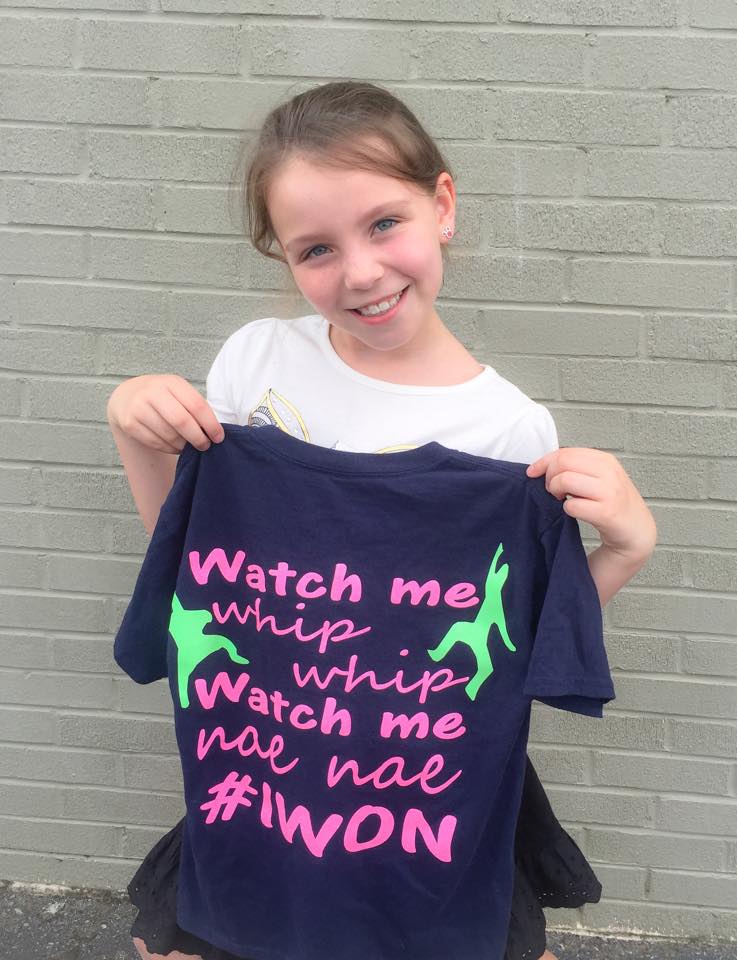 To Finch’s surprise, one of the contest videos went viral. “The last time I looked, it was at 3.4 million views. The newspaper did an article about it, and it was on the radio and on TV—it just kind of skyrocketed,” shares Finch. “It was crazy.” The winning video featured cheerleader Gabi Mann doing the “Whip/Nae Nae” dance with her dad and her two grandfathers. When Gabi won, she gave the Nfinity bag to a friend, and Finch made her a custom T-shirt so that she’d have a prize, too.
Because the contest reached such a wide audience, it grew Elite Storm’s Facebook page from around 230 likes to over 6,000 likes. Finch recommends that when choosing a prize, it’s important to pick something that the children really want: “Our next contest is going to be for one of the gym’s letterman jackets. It’s something that parents don’t necessarily buy, but all the kids want.”
Tiffany Hayes, owner of Chico, CA-based Chico Cheer All Stars, also ran a “Whip/Nae Nae” contest featuring girls and their moms. “I knew our families would dress up and totally go for it. We got a bunch of new followers,” says Hayes. “We had one family that made a full-on music video. They had matching outfits—they spent hours on it.” The prize: free shirts for the family.
Chico Cheer also hosted a bow-and-arrow stunt photo contest for fathers and daughters, and the cheerleader whose photo got the most likes on Facebook won a free summer camp. Hayes says, “We have these dads that are diehard fans of their daughters, so I thought it would go over really well, and our dads went nuts with it. They’re competitive, yet they want to have fun, you know?”
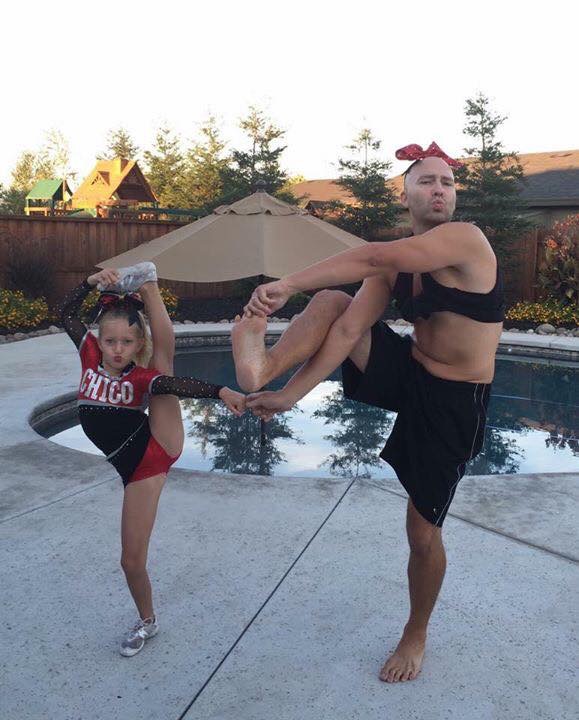 Hayes likes running contests because they help build a feeling of community at the gym. “I feel like we can get caught up in the competitiveness and getting tuition in on time,” she shares. “Contests like these bring positivity into the cheerleading atmosphere and make it more family-like.”
Even if a contest only gets a few entrants, as was the case with Chico Cheer’s bow-and-arrow contest, the results are a lot of fun. A social media contest where people compete for the most “likes” on a silly photo or video helps the gym’s social media accounts grow. To that end, Hayes recommends posting any submissions directly on the gym’s official Facebook page: “You want it to be about your gym, and about your program.”
She also points out that her contests aren’t just for cheerleaders who are on teams—anyone who attends the gym can participate. When a contest gets clients excited, while also promoting the gym, everybody wins.
–Lisa Beebe
It’s the health trend du jour—everyone seems to be talking about bone broth. And if it’s not on the radar of your athletes and staff yet, maybe it should be. Advocates rave about the drink’s healing properties, and high-profile athletes like Kobe Bryant swear by it. But does bone broth live up to the hype?
 Registered dietician Esther Blum credits bone broth’s current popularity to the rise of the Paleo diet, which is built around foods that ancient hunters and gatherers would have eaten. She believes that bone broth’s biggest benefit is that it supports healthy bones. “It’s rich in trace minerals, which support the bone matrix and the building of bones,” says Blum. “Bone broth also has a lot of glutamine, which combats gut inflammation and supports immune function. Glutamine is also wonderful as a post-workout recovery nutrient.”
The question skeptics ask is whether bone broth is just a souped-up version of stock. Similar to stock, bone broth is the liquid that remains after animal bones are boiled in water, typically along with vegetables. It differs from other types of soup in that it is typically served as a hot beverage for sipping.
Though some question the claims around bone broth, Blum’s a believer. She drinks bone broth regularuly, especially during the cold months of the year when she’s prone to colds. “I’ll drink a mason jar’s worth of broth throughout the day when I’m feeling sick, and the next day, I’m totally fine,” shares Blum. “It could be the hydration, you could argue, but I believe it’s the nutrition in there.”
And bone broth doesn’t just come in handy when the temperature drops—it can also be a way to nourish tired bones after a long practice. Whether you choose to drink bone broth before a workout to build up energy or post-workout to speed recovery is your call: “As long as you’re getting your nutrients in within 12 to 18 hours after you work out, you’re really okay,” says Blum, who is also the author of Eat, Drink and Be Gorgeous.
While a serving of bone broth can cost up to $9 at Brodo (a bone broth take-out restaurant in New York City), it’s simple to make it yourself at home. (See sidebar for an easy recipe.) Here’s how Blum does it in her slow cooker: “I use large bones, like knuckle and neck bones. You can use bone marrow bones, but I recommend getting the marrow out first; otherwise, it’s very oily and fatty,” she advises. “Different cultures use chicken bones and fish bones—the larger the bones, the more collagen you’re going to get.”
No matter what type of bones one chooses to use, Blum emphasizes the importance of cooking the broth over low heat. “There is a real science to it. Most of us, we’re boiling the heck out of the bones, which breaks up the collagen so you don’t get the same nutrients,” says Blum.
Food trends come and go, but bone broth has been around for centuries, and it’ll probably be around for many more. As Blum says, “It’s just soup.” She recommends drinking a mug of bone broth a day to support bone health—which is sure to boil down to better performance overall.
Make It: Basic Bone Broth
Registered dietician Esther Blum provided us with her tried-and-true, easy recipe for making bone broth in the comforts of home:
Ingredients
3 pounds knuckle and neck bones (ideally from pastured cows)
¼ cup vinegar
1 organic onion, quartered
2 organic carrots, peeled and chopped into large pieces
1 organic celery rib, chopped into large pieces
Instructions: Place the bones into a 7-quart slow cooker and pour the vinegar over the bones. Let sit for 30-60 minutes. Add the chopped veggies and 16 cups of water. Cook for 16-18 hours on low heat overnight. (Never raise the heat.) Cool, strain and pour into glass mason jars [for daily consumption]. Keeps for five days in the fridge and in the freezer for up to six months.


