

In addition to all the great content we bring cheer professionals in our quarterly print issue, you’ll find plenty of original exclusive content right here at TheCheerProfessional.com.
Keep checking back for all the latest and greatest news, updates, debates and more!
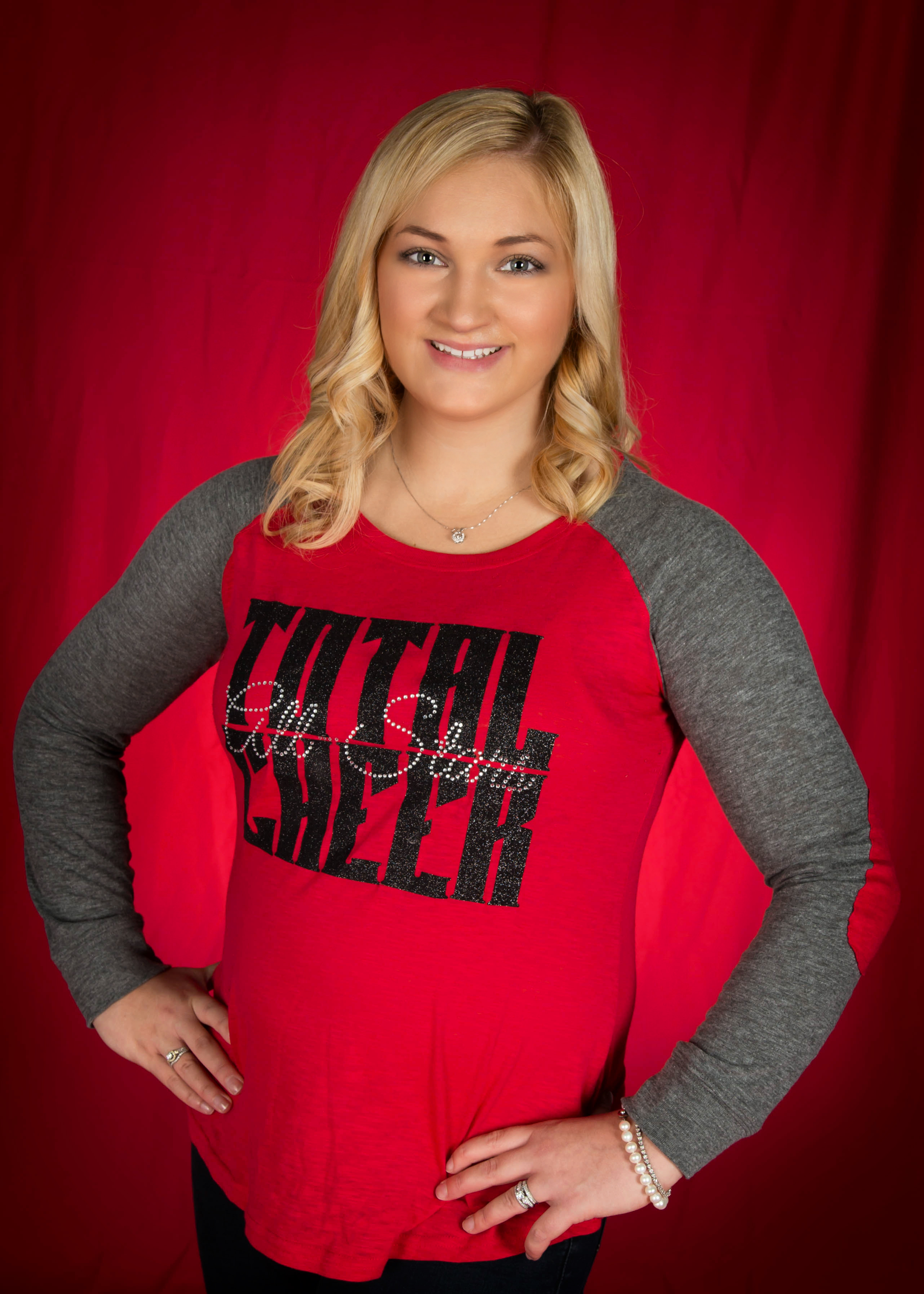
The Love family is practically cheer royalty—maybe gymnastics guru Debbie Love has visited your gym, or you’ve seen cheerlebrities Whitney and Britni Love kicking butt on the mat. But how well do you know Tiffany Love Anestis?
As Total Cheer’s gym manager, Love Anestis coaches eight teams from Tiny to Level 5 at the Bowling Green, KY-based program (where her husband also serves as tumbling director). She has also conducted clinics all over the world with her mother. The concept of family is clearly important to her and present in all her work, even as she embarks on a second career in sonography.
 What was it like growing up in such a cheer-oriented family?
Love Anestis: Awesome. My mom home-schooled all of us. We would wake up and do all our [schoolwork] and were done and to the gym by noon—where we stayed until 10 pm every night. We played a lot on the trampolines, especially me and Whitney and Britni. We were always at the gym. That’s the only thing we knew. It was definitely a childhood that was very special, and my mom and dad worked hard for us to have that. That’s the kind of childhood I want my future kids to have.
How do you create a family bond at Total Cheer?
Love Anestis: Once a week, they do team bonding, whether it’s sitting down and sharing goals or putting something in the Positive Box. Each team has its own Positive Box, and each time they come into the gym, they have to put in something positive about their day. It doesn’t have to be about cheer; it can be about their family or school, anything. Then they have to write something positive about practice before they leave. We encourage positivity, and the kids respond to that.
How does your gymnastics background make your teaching unique?
Love Anestis: I don’t think a lot of people have the experience in gymnastics that I do, competing in Level 10 gymnastics and learning skills on the different apparatus. I think that sets my teaching apart from other people. We focus on technique of the little things—not just straight legs and pointed toes, but the angle to hit in a roundoff, the stretch through the shoulders in a back handspring. All the little things that are so minute make such a big difference in tumbling.
What’s it like doing clinics around the world?
Love Anestis: We’ve been with so many gyms, from San Francisco to Louisville to all over the place. My husband and I moved to New Zealand and worked at an all-star gym for six months, and we loved it. We were in Montreal at a cheerleading clinic for a week, which was different because they spoke French, but they learn the same as the kids here and have that same passion and love for the sport. It’s so cool to go to a gym and have them be accepting of you and want to learn everything that you have to say.
How has your mom, Debbie Love, been influential on your career?
Love Anestis: Yes, I love to listen to my mom. She’s my biggest inspiration and my mentor. I love to sit in her classes, even though I’ve heard them a million times and could probably regurgitate anything that she has said in them. I love to watch her teach and take everything that I can get from it. Even though I’ve heard it a million times, I always get something out of it. It’s pretty awesome. Once you stop learning, that’s when you fail your students, because nobody ever knows everything. Nobody ever is the god of cheerleading. There’s always something to learn and once you stop learning, that’s when you’ve let your kids down.
–Renee Camus
In 2007, Newsweek covered the growing popularity of cheerleading outside of the United States, citing globalization as a major factor. They attributed this spread to the fact that ESPN International has been showing U.S. competitions globally since 1997. They also credited movies like Bring It On as reasons for cheer’s popularity in places like Japan and Australia. Add to that the fact that NFL teams brought along cheerleaders when they played overseas, and “you get a wave of kids attracted to modern cheerleading’s athleticism and élan.”
 Nine years later, this trend is stronger than ever before, and it’s evident at Worlds—in 2015, teams from Canada, Mexico, Australia, New Zealand, England and Thailand placed right up there with the leading U.S. competitors. The number of countries participating has quadrupled since 2007 and is expected to hit 40 countries in 2016.
In less than a decade, cheerleading has gone from a predominantly American sport to an international phenomenon, and U.S. coaches are finding more opportunities to teach and train athletes overseas as a result. After all, America has long been considered the dominant country at Worlds, and athletes and gym owners in other countries tend to look to the U.S. cheer community for inspiration and guidance.
Several coaches have taken advantage of this global cheer fever by offering classes and clinics abroad, or in some cases, moving out of the U.S. to open a gym. Just ask Jerry Ozuna, who has traveled to Australia and Canada educating up-and-coming coaches and choreographers and working with athletes. “It was a breath of fresh air to step into another part of the world and work with pure passion-driven athletes and coaches that are so thirsty for knowledge and who want to grow the sport of all-star cheer,” says Ozuna, formerly of Cheer Athletics. “It really did take me back to the love of cheerleading.”
His overseas opportunities came about mainly due to networking. But creating a personal brand is important as well, Ozuna says. “Before you know it, opportunities will begin to find you,” he says. “The cheer community has a way with helping each other out.”
Like Ozuna, Oklahoma Twisters owner Craig Hallmark’s early opportunities came about via networking. A coach he knew couldn’t make his annual trip to Finland to coach, so he contacted Hallmark and his business partner Jeff LeForce. “We jumped at the opportunity to work in Finland,” says Hallmark, who has also taken gigs in Mexico.
Every coach’s experience outside of the U.S. varies, but most opportunities do come from good old-fashioned networking. Putting the word out that you are interested in working abroad is a good start, as is fostering relationships at competition with coaches and gym owners operating outside of the country.
Matthew Brown, co-owner of Chicago-based Cheer Destiny Allstars, has developed programs in Finland, Mexico and Chile. He says that the organizers he has worked with in each country have been “insanely efficient” when it comes to helping him understand their scoring systems and how they teach athletes. Before heading to another country, he makes sure his style of coaching is “conducive to what they are looking for while maintaining the ‘perfection before progression’ mindset I instill in all of my athletes.”
He also takes the time to study the language a bit before he travels—to ensure that communication will be smooth, and out of respect for the culture. Many coaches emphasize the need to be respectful of whatever culture you happen to be stepping into, which often means asking questions, doing research and learning at least a small bit of the language.
 If the headaches and paperwork of traveling out of the country to coach sound like a dealbreaker, Brown, Ozuna, and Hallmark stress that if you are going to work for a short amount of time (in most cases, a few weeks) you do not need to bother with bureaucratic paperwork and visas. You really just need a passport, plus any contracts you have signed with your host gym. If you plan to spend six months or more out of the country working, you will need to apply for special work permits.
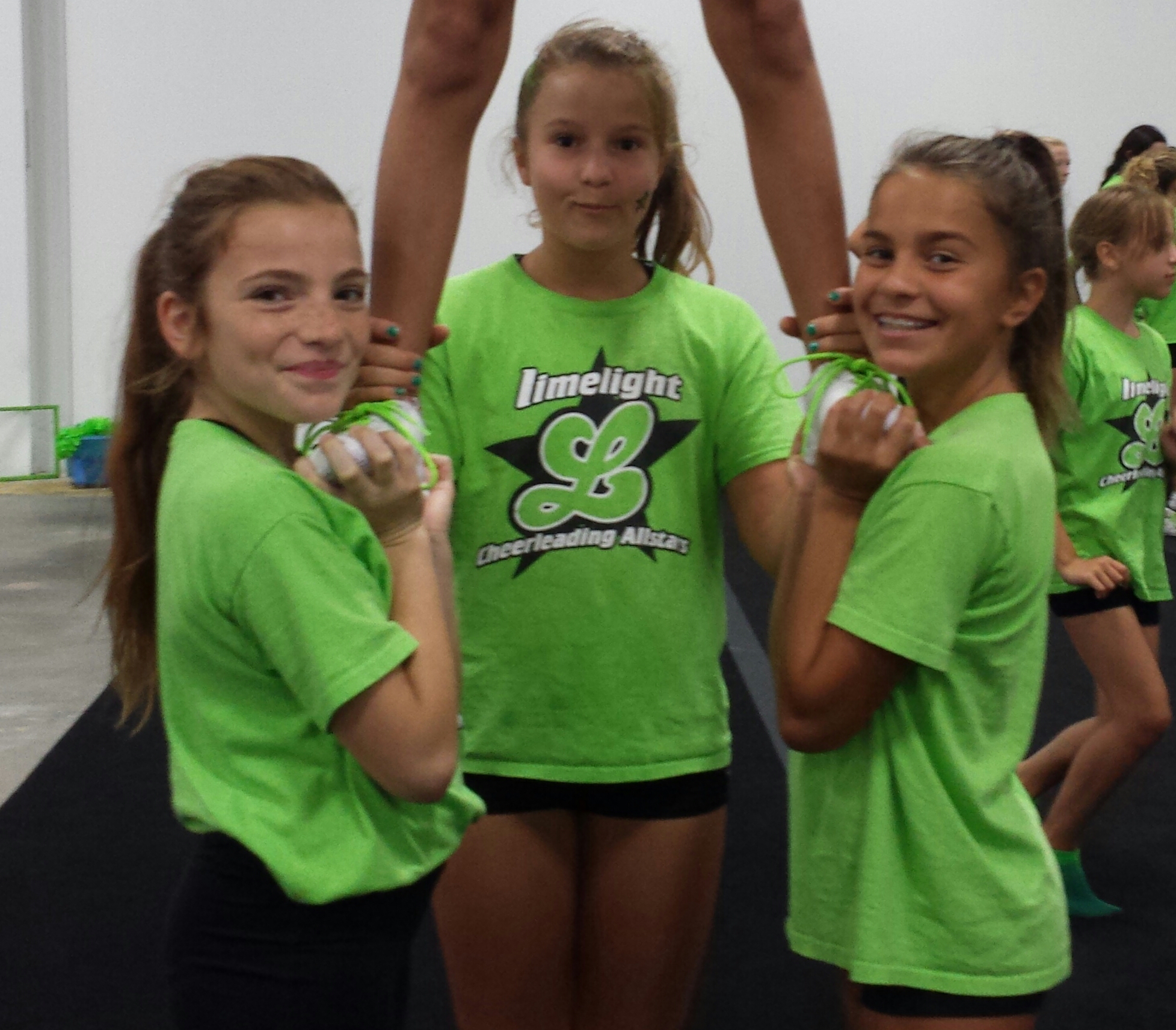
Jerry Mauldin, owner and director of Limelight Allstars in Vaughan, Ontario, moved to Canada nearly eight years ago on a work permit to become the director at a cheer gym near Toronto. He says that he did have to deal with a lot of paperwork to get approved for the visa; after securing it, Mauldin then worked for four years on the permit before becoming a permanent resident and opening his own business.
“I was lucky to forge relationships that lasted for years,” Mauldin says of his experiences all over the world. “I have been to Japan nine times, Costa Rica five times, Sweden three times…” He has also judged competitions in the Bahamas, Mexico, Scotland, Japan and Taiwan and has taken teams to compete in England, Mexico and Germany.
Once you’ve put the word out, networked and landed an opportunity to go teach outside the U.S., the next step is to master the ins and outs of negotiating your contract and make sure that both parties are 100 percent clear about the details. The contract should specify payment, work hours and the expectations surrounding your visit—you do not want to arrive in another country assuming you will work three hours and day and finding out they want you there for eight. Also, make sure that the rate you are negotiating is in U.S. currency, not the currency of the host country. Many coaches say the time differences can be brutal, so it’s important to be prepared for that as well.
As far as payment, some overseas opportunities pay a decent rate, and some do not pay at all, but many coaches say it’s worth it because flights, meals and lodging are provided. The chance to see another country, experience their passion for cheerleading and make contacts across the globe is valuable of itself. Brown cautions coaches not to take advantage of these opportunities as simply a “free vacation,” though. “You are an influence to their athletes, coaches and to anyone watching while you work,” he says. The takeaway? Remain professional, even if you are getting a free trip to Finland or Australia.
There are a growing number of opportunities in other countries due to the ever-growing popularity of cheer around the world. “If you have the resources and time, then I say go for it,” Ozuna says. “Go see the world and spread your knowledge. You never know what a small seed can grow into until you put in the work.”
–Dina Gachman
Ever seen a team of all-star athletes wholeheartedly cheering for their competitors? It might look strange to an outsider, but anyone with a sister gym relationship understands. After all, when gyms forge close relationships, it creates a unique bond like no other. The owners and coaches lean on each other for support, referrals and resources, and the athletes get to know each other and cheer each other on. Just ask Fury Athletics of Madison, 3-D Elite Allstars and North Florida Christian Cheer—all of whom know firsthand how much having a sister gym can offer.
 Fury Athletics of Madison
Madison, WI
Sister gyms: Wisconsin Storm Elite, Green Bay Elite, Heat Athletics
For the past two years, Fury Athletics has participated in Green Bay Elite’s showcase, and this year, Storm Elite joined the fold as well. Owner Julie Petersen says, “These are teams that could be potentially competing against each other several times this year, but everybody was cheering each other on and kids were taking pictures with kids from other gyms. They were getting to know each other, because they’re going to see each other all year.”
The gym owners also support and encourage each other throughout the season. To stay in better touch, they’ve formed a private Facebook group, along with the owner from Heat Athletics. “Sometimes it’s ‘Who do you use for this?’ or ‘What do you do about that?’ and sometimes it’s just venting [about] crazy or funny things that happen in your gym,” explains Petersen. “It’s nice to be able to share some of the things that you’re feeling, and to have someone else who 100 percent understands what you’re going through.”
After competition, the four coaches get together for dinner and to share ideas. “We’re all so far away from each other—the closest two gyms are over an hour apart—that we’re not competing for the same kids in the same markets. It’s a cool group, because not only do we get to chit-chat, but we’re also providing each other with ideas that can help grow each other’s business. I’m really excited about it.”
3-D Elite Allstars
Myrtle Beach, SC
Sister gym: Extreme Cheer and Tumble
Here’s the backstory: Maureen Sullivan, program director and gym manager of 3-D Elite Allstars, cheered on an open team in Columbia, South Carolina, with Lanell Timmons and Ty Rogers for years. These days, Timmons is the head coach and Rogers is the dance choreographer at Extreme Cheer and Tumble in Florence, South Carolina. When Sullivan moved to Myrtle Beach and opened her own gym a few years ago, she found Timmons and Rogers very supportive. Sullivan is also friends with Extreme’s owner, Jason Weatherford. “He had two girls last year who moved from Florence to Myrtle Beach, and he told their parents, ‘I’m just going to go ahead and sign them up for what team they’re supposed to be on at 3-D Elite,’” she shares.
The bond may have started between the owners and coaches, but it has grown to include the athletes, too. Sullivan says they follow the same competition schedule, doing at least four competitions together every year. “Our kids are always sitting in front on the floor for each other, and that’s just fantastic,” she says.
Even when the teams compete against each other, the vibe is a positive one. Adds Sullivan, “I don’t know if it’s because we’re such good friends, but there’s never any tension. My kids are always like, ‘We need the competition schedule. We need to know if we can watch them and get back in time for warm-ups.’”
Sullivan remembers one particularly poignant moment from U.S. Finals: “Our Senior Level 1 teams had been competing against each other all year, because most of the smaller competitions didn’t split the large and the small gyms. Both teams made it to U.S. Finals and were actually in different divisions. [Extreme] won the large division and we won the small division, and they were in there trying on their jackets together. You would’ve thought they were all on the same team.”
Although the two gyms don’t always communicate regularly, they remain close. Sullivan says, “We don’t talk as much as we should, but it doesn’t matter if it’s been five days or five months—it feels like five minutes. We work together so well, and it’s hard to find that in this industry.”
 North Florida Christian Cheer
Jacksonville, FL
Sister gyms: Myrtle Beach All Stars, Dynasty All Stars, Power Cheer & Tumble
North Florida Christian Cheer owner Julie Barry comes from what she calls the “old school” mentality: “You compete on the floor, but leave it there and keep your friendship. We were always supportive of other teams. I was raised that way, and it’s always carried on with me.”
Her gym is especially close with Myrtle Beach All Stars, Dynasty All Stars (in West Virginia) and Power Cheer & Tumble (in North Carolina). Barry says, “We stay in touch as coaches, and the kids have connected on social media.” At competitions, North Florida Christian Cheer’s athletes, parents and coaches often sit with parents of the teams that they’re competing against to cheer them on.
They’ll even plan their competition schedules around opportunities to connect. Says Barry, “We’re having our regionals down here in Florida, and Power Cheer and Tumble is coming down here instead of going to their local regionals so we can hang out for the weekend. We’re doing a thing on Friday night to welcome them. We’re all competing against each other on Saturday, and then we’ll probably all go out to dinner afterwards.”
One reason Barry likes being friendly with other gyms is because she wants her athletes to realize that winning isn’t everything—and that they’re essentially competing only with themselves. “This is what I teach kids: We want every team to hit a clean routine. I don’t want to win because somebody fell out of their stunt. I want to win because every routine hit, but ours was best.”
For Barry, it’s not just about the cheer world; it’s a lesson her athletes will have with them their whole lives. “They’re going to go out into a field—no matter what profession they pick—and they’re going to have to work as a team. If I don’t teach these young people how to be good sports in losing, then my job’s not done.”
–by Lisa Beebe
Sometimes a merger can be the kiss of death for a business. That, however, was far from the case with East Celebrity Elite, which formed after East Elite and Celebrity decided to join forces in 2009. Since the union, the program has become stronger than ever.
 “I think the thing that really helped us get to the next level is that we had different ways of performing,” says Cassie Bienvenue, one of ECE’s four female owners. “East Elite at the time was very technical; Celebrity was more focused on choreography and entertaining the audience,” she explains. So when the two forces came together, it combined the best of both worlds.
East Celebrity Elite’s Tewksbury, MA location is now considered to be the program’s home base. Following the merger, they expanded to two additional gyms in Central, MA and East Windsor, CT. In addition, the gym’s Londonderry, NH location stayed on to continue to service the local school teams that trained there, as did the Oakdale, CT facility. From there, the staff merged and the program really began to shine.
One such success was their Medium Coed Level 5 team winning 2015 Worlds and also being invited to compete at the Majors. Their Medium All-Girl and International All-Girl teams had strong Top 10 showings at Worlds as well. In addition, ECE’s Junior 5 team won the 2015 Summit and their senior dance team had back-to-back Dance Worlds victories.
 “I think people were interested to see what would happen after we merged,” says Bienvenue. “There are plenty of teams that we’re competing against at Worlds with twice the athletes that we have. I think anytime you become successful and you’re a little bit smaller, it does generate some excitement about your program because everybody roots for the underdog.”
ECE’s Cheryl Pasinato says the program’s growth spurs from the gym’s determination to move their athletes forward. “We’re always trying to get our kids to reach their highest potential, in a positive way,” she explains. “Sometimes you go to competitions and you see these teams that don’t always do well and the coaches are punishing them, making them run laps… Our feeling is no kid goes on the mat and says, ‘Hey. Let’s have a really bad performance today. Let’s not even try.’ That’s not what happens. They are human. So we try to prepare our kids to do their personal best.”
The program’s owners work to foster a family atmosphere and positive attitude in their gyms, regardless of what level of athletes they are dealing with. “We don’t put more emphasis on Level 5 than we do on other levels. Whatever we do for one team, we do for the other team,” adds Pasinato.
Looking toward the future, ECE is currently focused on two areas, one being recruiting new athletes to the sport and developing their skills at a young age. But these kids don’t always have to be all-stars. “Obviously we’re most known for the competitive cheerleading program, but we also try to offer a lot of classes and train high school teams,” explains Bienvenue. “Not every parent can have their kid in all-star cheerleading and we’re very aware of that, but every kid can take a class or come to a clinic now and then. So we’ve done a lot of marketing to attract kids from the surrounding community,” Pasinato adds.
In addition to the gym’s thriving pro shop, the program has also experienced success building up their prep teams. “We’ve been pretty fortunate that we’ve had a lot of interest in them over the past few years,” she adds. Between the gym’s five locations, they’ve averaged 8-10 prep squads per year.
ECE also credit a lot of their achievements to their staff—particularly their tumbling instructors, who have received a lot of kudos on the competitive front. They also laud their coaching staff, including Amy Jones (who passed away in 2012 and is remembered through the Love You Mean It charitable fund) as being part of their success story. “She really brought our dance program off the ground from, like, nothing to winning Worlds,” explains Pasinato. “I think she made a huge impact on the industry as a whole.”
Winning Worlds this year has really energized the ECE owners and has inspired them to continue to build up their already successful brand. “We feel confident that we don’t have a great single team, we have a great program,” says Bienvenue. “And the teams that feed into our Worlds teams are super strong. So we feel like the future is bright.”
–Nicole Pajer
When Brandon Hale looks out at the practice mat at North Carolina-based Cheer Extreme Allstars, he wants to see athletes focused on tumbling, twisting and training—not distracted by drama. So when a trio of troublemakers threatened to take the focus away from what matters, Hale knew he couldn’t let it slide. “These girls just sat at the back of the mat, creating drama,” remembers Hale, who acts as head coach and head of choreography for the high-profile gym. One girl in particular “had a lot of insecurities and hung out with the wrong people on the team, who were more negative.”
 Sound familiar? Whether it’s jealousy that erupts among team members, animosity causing a divide or lazy attitudes tainting the work ethic, bad attitudes can create a harmful ripple effect—and affect the team’s performance throughout the season. The good news is that it’s never too late to set the tone as a gym owner and/or coach and take action that will nip the negativity in the bud. Check out these strategies, which can turn such challenges into team-building opportunities:
Encourage positivity. Early in the season, Hale chooses a standout athlete to send home with a journal. He or she is free to add pictures, write messages and use feathers, glitter or stickers—whatever creative expression comes to mind. At the beginning of the next practice, the journal is shared with the rest of the team, and by the end of practice, the athlete who had the journal gets to choose which teammate takes the journal home next.
“They have to notice the greatness in each other,” Hale says.
Not only is the journal a light-hearted way to frame practice, but it also helps encourage team bonding as the kids open up with each other. “Even if they’re not being spoken about or spoken to,” Hale points out, “they hear what each other has to say.”
Consider the source. Puma Cheer owner Jennifer Uselton believes that issues arise as “a matter of respect—not getting respect, not giving respect.” She started her Texas-based gym after years of coaching high school cheer, and she believes strongly in treating even young children with the same respect owed to an adult. The takeaway? A child who feels respected is more likely to reflect that back in his or her attitude.
 Another source of friction is the frustration that comes with learning a new skill. “It’s a learning curve more than an attitude,” Hale points out. “Kids can get upset when things aren’t working out for the first time.” Uselton agrees, and to combat that, she’ll often pair two athletes together whose skill sets complement each other in some way. For instance, a girl whose jumps are low but is a natural dancer might be partnered with a more flexible gymnast who hasn’t learned the dance moves yet. “I want them to learn to embrace both strengths and weaknesses,” Uselton says.
Often, an athlete’s attitude stems from forces outside the gym. Mandi Spina, program director of Fredericksburg, VA-based Cheer Fusion, emphasizes that this is especially true of more senior athletes: “They have much more active social lives than younger athletes, as well as heightened school activities.” For his part, Hale was surprised when the journal exercise worked just as well with older athletes as with the younger ones. “[They] actually seem to need it the most,” he says.
Hold kids accountable. At the end of the day, though coaches and parents can certainly influence a child, the biggest growth is always going to come from within. Spina prefers to circumvent direct parent involvement unless absolutely necessary, focusing instead on “team bonding activities, having captains (if applicable) speak to the athletes,” and emphasizing that “attitude is just as important as skill set on any team.”
Hale believes strongly in deputizing athletes to solve problems within the team. He’s created sub-groups based on the Fantastic Four, where natural leaders are “Mr. Fantastic,” while athletes who are silent but deadly fall into “The Invisible Woman” category. Finding a fun way to split a larger team into smaller groups can be incredibly helpful, particularly for attitude checks. “The ratio becomes 8-to-1 instead of 36-to-1,” Hale says.
 Uselton has also found a unique way to ensure her team stays accountable—not only to each other, but also to themselves: “They put together a commitment contract with three things that they are going to do to personally to better themselves so that they could better their team.” Uselton uses commitment contracts with athletes as young as five years old, and has them sign their names and share their goals with the whole group.
Not only are athletes more motivated to work toward self-chosen goals, but those goals are helpful for coaches to monitor what their team is worried about or focused on. “I thought most of my kids were going to write things about tumbling or jumping or stunting,” Uselton says, “but many of them wrote about attitude adjustments.” Uselton promotes team togetherness online as well as in the gym by encouraging her girls to post their progress on their commitment contracts on Instagram and Twitter using a team hashtag. Kindness online is important to model, too, Uselton points out, especially in this era of social media.
It takes time, but the efforts are rarely wasted. “Dealing with athletes who have negative attitudes is a long process,” Spina says, but watching those athletes who’ve risen above help other athletes through the same type of behavior “makes the process worth every minute.”
Hale agrees. That girl he spoke about, the one who sat on the back of the mats creating drama? “She’s now about to graduate through the program,” Hale says, and he cites positivity and compassion as two of the biggest forces that turned her around. “We just had to show her that we do care about her,” he says, “and everything changed immediately.”
–Alicia Thompson Guy


