

In addition to all the great content we bring cheer professionals in our quarterly print issue, you’ll find plenty of original exclusive content right here at TheCheerProfessional.com.
Keep checking back for all the latest and greatest news, updates, debates and more!
Owner’s Manual: Patrick Fogarty of Cheer World
jen : October 9, 2014 3:08 pm : Down to Business| Web Exclusives| webexclusive1 Vital Stats
Name: Patrick Fogarty, Co-Owner and Program Director
Gym: Cheer World All Stars
Location: Brecksville, OH
Founded: 2007
Size: 807 athletes
Gym Size: 14,000 square feet
The Debrief: In 2013, Cheer World won the USASF Chairman’s Cup Award, a prestigious award given for outstanding service. Over the years, the gym has donated $200,000+ to Children’s Miracle Network and has also worked with charities like Rush for a Cause and Ronald McDonald House. The efforts have been led by co-owners Patrick Fogarty, A.J. Ganim and Greg Ganim. We spoke with Fogarty to find out why service is such a big part of his gym culture.
The Dish: We have been doing charitable work since the day our doors opened. At Cheer World, we are a family and we believe in being life coaches first and cheer coaches second. To that end, we band together as a family and get involved in our community in any way we can.
Anyone can coach a back handspring. We pride ourselves on working on many other aspects of the kids, not just the athlete. We do it because it’s the right thing to do—both for our involved gym families and the community. Does volunteering at a festival that has families from all over bring attention to our program? Of course. It does bring media attention when you do charity work.
We feel that cheerleaders and community service go hand in hand. Cheerleaders have great personalities—they light up a room. When you give the kids the opportunity to help other kids, they excel at it. They love it and feel such a sense of accomplishment in helping; it’s something bigger than them. The athletes build such a sense of how they fit into the fabric of their own communities, and how they can help those around them.
As far as scheduling, it is certainly something to manage, but it’s worth every hour spent. We do a lot of our community service projects in conjunction with our booster club, so we get support and help from our involved parents. It also helps our booster club build relationships with other businesses and programs in our community, which has been helpful.
As far as advice to other gym owners, I would say partner with your booster club. Find a few involved parents and make it an expectation of being a part of your program. Giving back to our community has become as important to our athletes and families as attending practices and learning that next skill. Build it into your culture.
We have a Summer Growth Series, which is a series of events and speakers over the summer. Traditionally, this has only been open to our athletes and kids, but we want to grow it to extend beyond our doors and into our community. We have guest speakers talk about many different things including health and fitness, diet and healthy eating habits, recognizing bullying (and what you can do about it) and other youth-focused topics. We would like to build these talks and seminars into community events where local kids, not just kids in our program, attend and learn. That’s our next focus and hopefully it will be happening this summer.
We tell our athletes and families that it isn’t about what happens on the mat—it is about the footprints we leave when we step off.
A Day in the Life: Debbie Love
jen : October 6, 2014 1:45 pm : A day in the Life| Web Exclusives| webexclusive2 8:00 am: I do a devotional every day when I wake up; that’s really important to my life, because I’ve been given all these gifts. Everything I do, I want people to see Christ in me.
8:15 am: One of the first things I do is take care of social media stuff: Facebook, Twitter, Instagram. Messenger is a new one that’s kind of nice. I’m pretty active on social media, especially for my age! About three years ago I decided to post a tweet once a day, either inspirational or informational, about a skill. I’ve been doing that for three years—it’s called #debtips.
8:45 am: Breakfast! I like oatmeal, fruit and cereal—kind of light [foods]. I like eggs sometimes too, but always stuff that’s good for you. I have rheumatoid arthritis, so I try to stay with a diet that’s going to keep that inflammation down.
9:15 am: Whatever I need to do in the house I do in the morning: letting the dogs out (we have two dachshunds, plus my daughter’s two dogs), writing emails or answering messages—I have tons of them!
11:00 am: Errands, and then lunch; my husband Marcus and I like to get soups and sandwiches. We eat really healthy: a lot of water or hot tea, and lots and lots of fruit. Sometimes I’ll have a little bit of sweet tea.
4:30 pm: Getting ready to go to the gym. I go to GymTyme on Tuesdays, Thursdays, Saturdays and Sundays, and then I work with University of Kentucky on Mondays and Wednesdays. We have to drive an hour and a half to the gym, so we usually grab a snack right before we go in. Many times we eat on the run at Panera, Whole Foods, Subway….
7:00 pm: All-star practice goes until 9 pm, and then college [practice] is from 9 to 11 pm. The schedule I follow for practices is: a dynamic warm-up, a little bit of cardio, exercises with cardio, and then, right before Worlds, we warm up our separate skills in our routine and our tumbling. Then we do it full out a couple of times, plus any parts that need to be worked on. Ideally, we stretch at the end of practice so they’re not sore for the next one.
11:00 pm: On the road back home to Lexington!
12:30 am: I go to bed pretty late around midnight or 1 am. I get a lot of my work done late at night! I just enjoy it. My mind is freer at night. Before I go to sleep, I’ll re-look at my emails to see if anything new has come in, or sit down and make a to-do list for the next day. I might sit and read a book on kinetics or physiology. I was reading Game of Thrones for a while. That was pretty interesting! I like James Patterson and Nicholas Sparks books, too. Or I’ll watch one of my favorite TV shows. I don’t watch a lot of TV, but sometimes late at night it relaxes me. All of the crime shows like “NCIS,” “Law & Order” and “Criminal Minds” are my favorites. I also enjoy watching movies with my husband. He likes old movies, so we’ve watched Gone with the Wind and all of the oldies. The Sound of Music would probably be one of our favorites!
-Jamie Beckman
Choreography: To Hire or Not to Hire?
jen : September 29, 2014 10:48 am : Down to Business| Two Sides| Web Exclusives Your teams have the same skills as the competition, but your competitors are always getting higher scores. Is it time to hire a choreographer to work full-time at your gym? Or is it a smarter move financially to bring in an outside choreographer to craft one killer routine for the season? Each option has its pros and cons.
According to Casey Popp of CheerForce San Diego, one of the major benefits of having a choreographer in-house is ongoing availability. “If you have an injury or financial setbacks for certain families, and your roster changes, it’s nice to have that person in there.” Popp also pointed out that for many gyms, bringing in outside choreographers involves costs above and beyond the choreography itself (such as airfare and housing, depending on how far the choreographer has to travel).
Kyle Gadke agrees, maintaining a balanced viewpoint as both senior choreographer of Platinum Athletics and head of his own independent choreography company, Spirit Fx. “I think you really just have to assess your program and see where you’re at, because there are some programs that probably aren’t ready to have that extra expense. It’s already hard enough for a lot of people to pay for cheerleading. With choreography, I feel like the average goes from $2,000 all the way up to $6,000 per team. If you’re in a small area with only a couple of teams in your gym, that might not be an extra expense that you can divide by the number of kids in your gym, [on top of] uniforms and tuition and all the other expenses that parents have to pay for the sport.”
However, bringing in outside choreographers has its benefits, not the least of which is someone who can view a program with fresh eyes. Anthony Best of Cheer Legendz says, “I can tell you from our experience that as the gym has grown, it’s been better to bring in people from the outside, because you get a different perspective and new ideas.”
Like Gadke, Jamie Parrish choreographs for many gyms alongside his staff position with the Georgia All-Stars. He believes contracting a freelance choreographer is ultimately the more affordable option for many gyms. “What they pay [a choreographer] to do a full routine is far, far less than what they’d have to pay to have someone full-time on staff, or even part-time on staff,” says Parrish. However, he says that cost-effectiveness changes for large gyms that need to create routines for more than five teams: “You might want to have someone full-time [in that scenario].”
Diversity also comes into play. Parrish believes that gyms who do choreography in-house run the risk of every routine blending into each other. “With an in-house choreographer, you have that choreographer’s flair, that choreographer’s style, and all of your teams tend to look the same,” he warns.
So when it is worth it for a gym to hire out? Best of Cheer Legendz says, “I think if you really look at your scoresheets from year to year and they start to say the same thing all the time, then maybe it’s time to look outside. Maybe you can get a fresh, creative idea as to some new ways to help increase your scores.” Gadke agrees, saying it’s essentially guaranteed that any gym is likely to achieve certain results when they bring in an outside choreographer. “If you’ve never hired out before, nine out of 10 times, hiring out should increase your scores and help your program grow.”
 If your gym does start hiring out, Parrish recommends working with different choreographers throughout the season: “Having multiple choreographers brought in is not only going to help you with each team being kind of different, but also for your coaches to see our process and learn from different people, which I feel is more beneficial. Sometimes the creative process or something [a choreographer] might do or say can rub off a little bit on your staff.”
Another advantage to bringing in people who’ve worked at other gyms? Their experience is a valuable resource. When Best brings choreographers into Cheer Legendz, he and his business partner take them out for a productive dinner meeting, where they can glean “knowledge from them about other gyms they’ve worked with around the country. How are they doing things? What are fundraisers that have worked for them? Most choreographers have worked in a gym or are currently working in a gym, so it’s a great opportunity to get some new ideas.”
No matter how you choose to hire a choreographer, be sure you know what you’re looking for and whom you’re dealing with. Gadke strongly recommends checking everyone’s references, even if you need someone fast. “If there are no references out there, there’s probably a reason for that. If they can’t show you videos of their work, there’s probably a reason for that. Do your research. Ask around. There’s nothing wrong with asking a choreographer, ‘Hey, can I have a couple references of clients you’ve worked with, and do you have any video samples of work that you’ve done?’ I think it’s important, too, just to see the work, because I know my style of choreography is typically very clean and symmetrical. If you’re someone that’s looking for a very sassy, girly style, that’s not something I personally offer.”
–Lisa Beebe
Our First Year: Ideal Cheer Elite
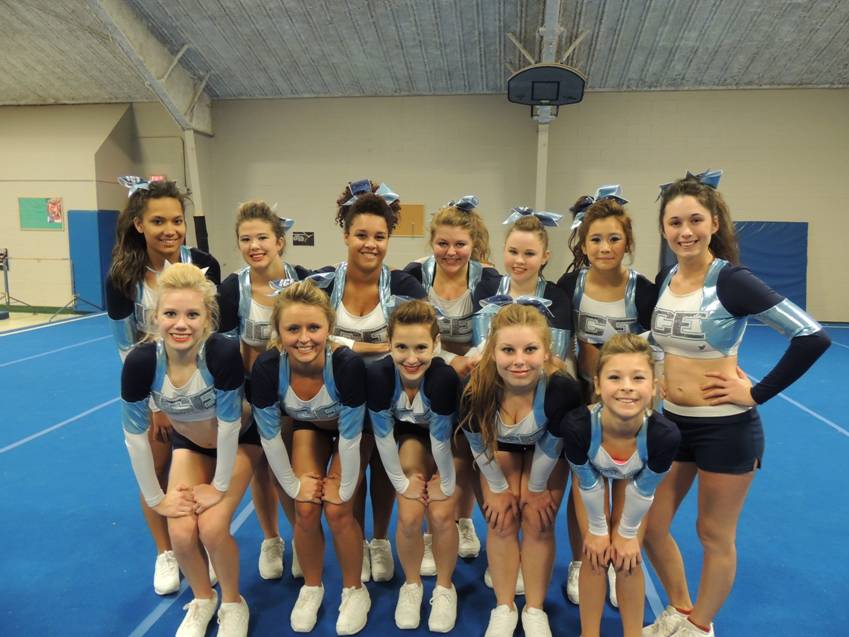
jen : September 24, 2014 7:48 pm : Down to Business| Web Exclusives| webexclusive1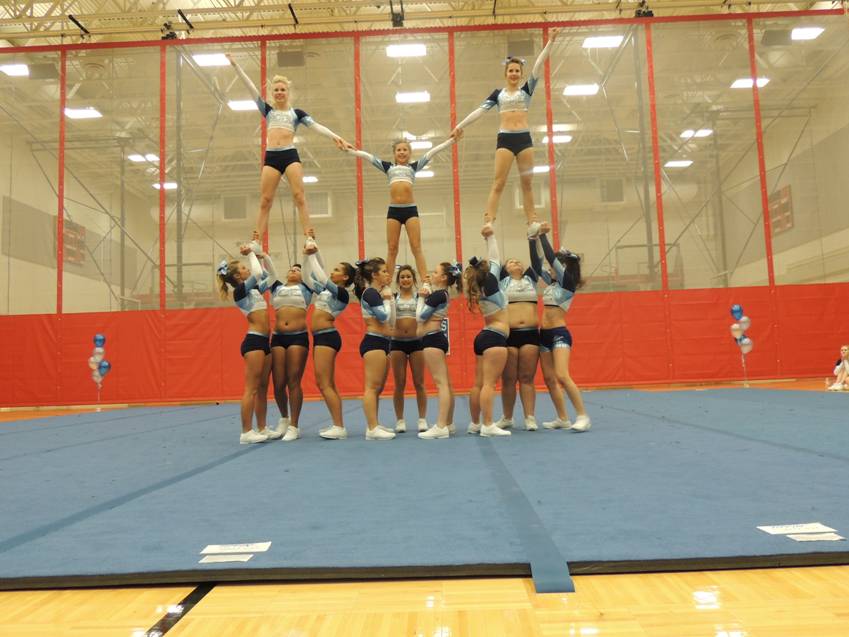 Anyone who’s read our “Starting a Gym 101” series on the CheerProfessional website knows that launching a new all-star program can be a massive undertaking—from setting up the logistics to securing the right insurance to attracting clients. To find out what it really takes for a successful start-up, we spoke with three cheer professionals who’ve just completed their first year at the helm. See how Ideal Cheer Elite’s first season went…and what they learned.
First Year Case Study #2: Ideal Cheer Elite
Location: Duluth, Minnesota
# of athletes: 60
Chelsie Waller and her co-owner Ashley Penny are bringing legitimate all-star cheerleading to the Duluth area for the first time—and working with local families to realize its potential.
CP: You bill yourselves as the first USASF gym in Duluth. Has that helped you position yourself and get more credibility?
Waller: Being the first USASF-registered gym in the Duluth area is a really great credential. It catches people’s ear and makes them want to learn more, and kind of validates what we’re doing. However, with the exception of a small rec-style league about 40 miles away, there’s never been an all-star program in Duluth. So when we say we’re the first USASF-registered gym, a lot of people don’t know what that means. We’re doing a lot of educating.
CP: How did you first get started?
Waller: To properly convey passion, you need to meet people face to face. In March, we had a couple meetings where we invited parents, athletes and potential coaches to come in and meet us. At that point, we already had a lot of our business stuff lined up—we had tryout packets set, costs set, uniform prototypes. We did as much as we could to get them to catch onto this craze that we’re so excited about.
CP: What was your biggest challenge along the way?
Waller: For us, it’s a constant struggle explaining to people what all-star is. Even when they see the things we do on the news, read about us in the newspaper or come to an exhibition, people still don’t necessarily get it. We had someone come in to one of our open gyms and ask what color our pompons were. So it’s been about branding all-star and getting people excited about it as a competitive athletic sport.
 CP: What advice would you give someone who’s preparing to open a gym?
Waller: Remember that if you’re opening a gym, you’re opening a business. We cheer people get so passionate and so busy with the uniforms and the coaching and the choreography, music and competitions [that] it’s easy to leave behind the business aspect—and it’s very important not to do that. I think it’s important for anyone that wants to open a gym to know that you do not need to do it all by yourself, nor should you. As a business, you should hire an attorney, an accountant, a bookkeeper and a payroll service. Don’t be afraid to ask for help on the business side.
CP: What have you learned this year?
Waller: We learned the hard way that if you don’t tell parents that they can’t do something, they probably will. We never thought to make it a point to tell people that they can’t put our logo on things until we went to a competition, and there was a group of parents that had hand-drawn our logo onto some T-shirts using puff paint and spray paint. We kind of looked at each other in horror, because there was nothing in our code of conduct or gym rules that they couldn’t do this. So we’ve learned to make a rule for everything, even if it seemed silly.
CP: What are your goals for year two?
Waller: Growth. 100% growth. I’m looking to grow the program in athletes, looking to grow the program in teams, I’m looking to grow my athletes in skills, and I’m looking to get the teams to grow closer. We didn’t do a lot of outside bonding events last year, and that’s a shame, so it’s definitely something I’m focusing on this year.
–Lisa Beebe
Cheering For Charity
jen : September 22, 2014 11:29 am : In the Industry| Web Exclusives| webexclusive2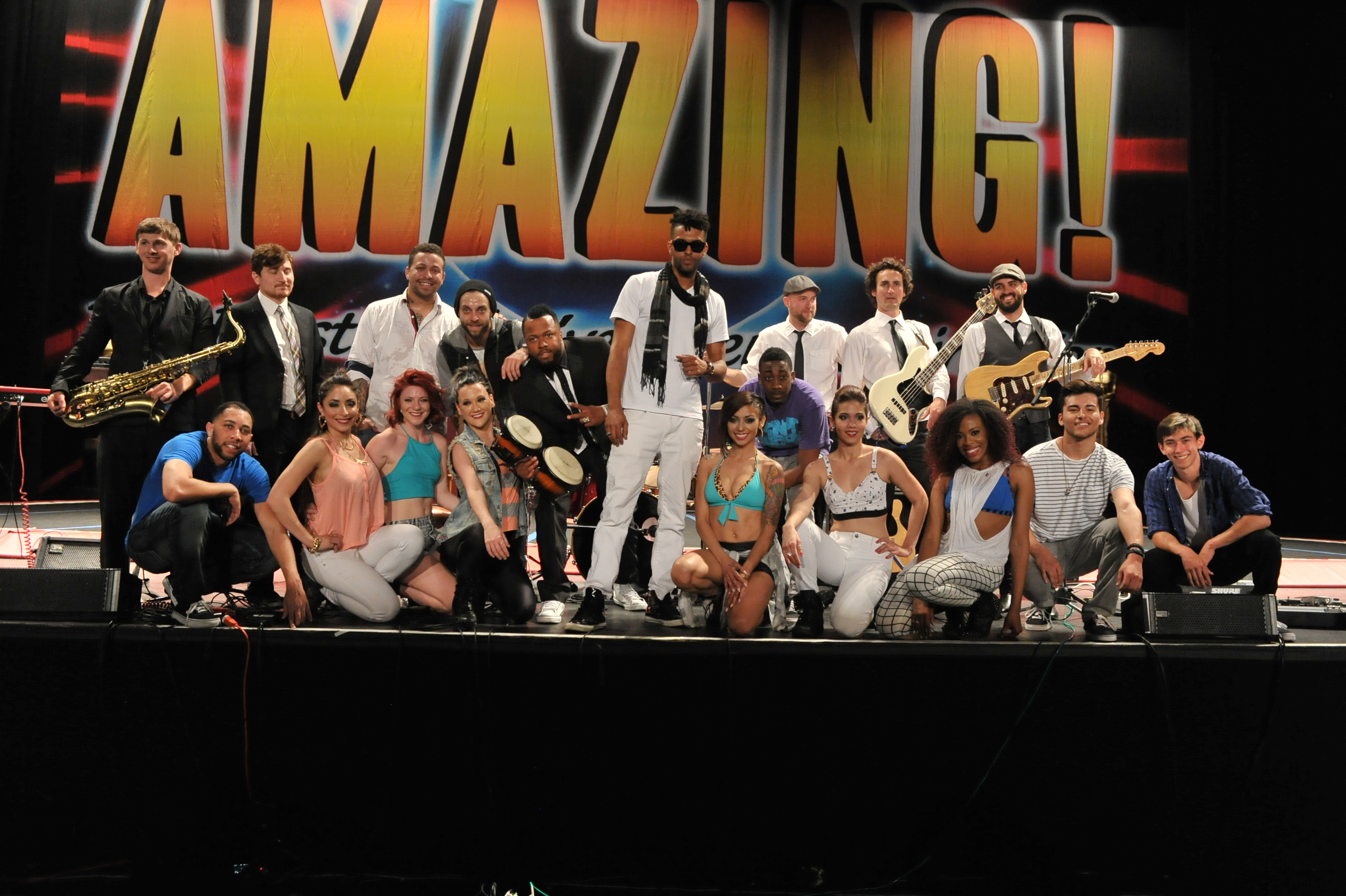 “If you haven’t got any charity in your heart, you have the worst kind of heart trouble,” funnyman Bob Hope once quipped. It feels good to give back, but that might seem like a tall order if your weeks are filled with classes, meetings and competitions. Still, finding time to do philanthropic work can benefit your gym and, most importantly, your athletes.
Many gyms realize this and manage to make giving back a priority. In fact, according to Cheerleading.org, more than half of all cheer teams currently participate in community charity events. A select few have won USASF Chairman’s Cup awards, which honor programs that display powerful philanthropic or community service work each season. Others have been supporting the same charity for years, getting the kids involved in the community—and, in turn, getting the community to pay attention to their business.
Julie Van Os, owner of Tracy, CA-based Athletic Perfection, is a former high school leadership teacher, so being involved in the community has always been a core value for her. Every Christmas since she started her gym, her athletes have gone “ringing the bells” for the Salvation Army in front of local businesses. Last year, they wanted to do more so they “adopted a family” in Tracy for the holidays, donating toys, clothes and gifts. They also help with Case for Kids, a program that provides a “custom case” to foster children—filled with clothes, blankets, stuffed animals and things to make their new place feel like home.
Van Os says philanthropy is a “win-win” as far as business goes, since it helps get the word out about your program and increases exposure in the community. Doing charitable work can also make your kids better athletes, which is a sentiment that many gym owners share. “[Athletes] learn about teamwork, perseverance, commitment and hard work,” says Van Os. “They’re learning about giving back and being thankful for what they have.”
 To find balance, Van Os and her team try to do their charity work during the less busy times of the year, when schedules are less intense. She says it’s important to focus on causes you care about, rather than spreading yourself thin.
“Choose something you’re passionate about—that’s the key,” she says. “If you jump around, you lose your drive.” And don’t do it for the business, she advises. Instead, do it because it feels right and you truly want to give back.
Tara Wieland, program director/coach of Midland, MI-based Michigan Storm Cheer & Dance, initially started her charity program to help teach her own daughters the value of appreciating what you have. One of their biggest charities is Toys For Tots, an organization they’ve been supporting for over a decade. They’ve also had the athletes write letters to soldiers in Afghanistan. “It was hilarious,” Wieland says. “One little girl wrote: ‘Thank you for saving our country and I really like camouflage shirts.’ The feedback we got from the soldiers was amazing.” The gym has also done things like hold a flash mob for the American Cancer Society.
She says some kids initially resisted the charity work, but quickly grew to love it. “Watching them give back is better than watching them do something on the floor. It has become the backbone of what our program is about,” shares Wieland.
The best advice Wieland has is that if charity work is going to be a part of the program, explain that to parents ahead of time in an open, honest way. “You have to be upfront about it,” Wieland says. “I haven’t had any problems, and now we have way more parental support than we used to.”
This charity-focused trend also seems to be ramping up with a new slew of competitions in the last few years that devote winnings to charity, such as Amazing! Champions and Cheer for Charity. At Amazing!, participants complete a charity service project, which is announced as each gym enters the performance mat. $10,000 is awarded to the chosen philanthropies of the winners; beneficiaries have included the Texas Autism Foundation, Scottish Rite Hospital, The Dallas Association of the Deaf, Foster Families of Texas and the Carter Blood Care Center, to name a few.
Even if your gym isn’t participating in a competition like Amazing!, it can still be impactful to target a central cause. “Each year, pick a different charity to support,” suggests Smith. “Even better is to have your athletes involved.” And don’t forget to let Smith know about it—on the website for his other company, Spirit Celebration, Smith has created a “Community Service” page to spotlight the good deeds of various gyms.
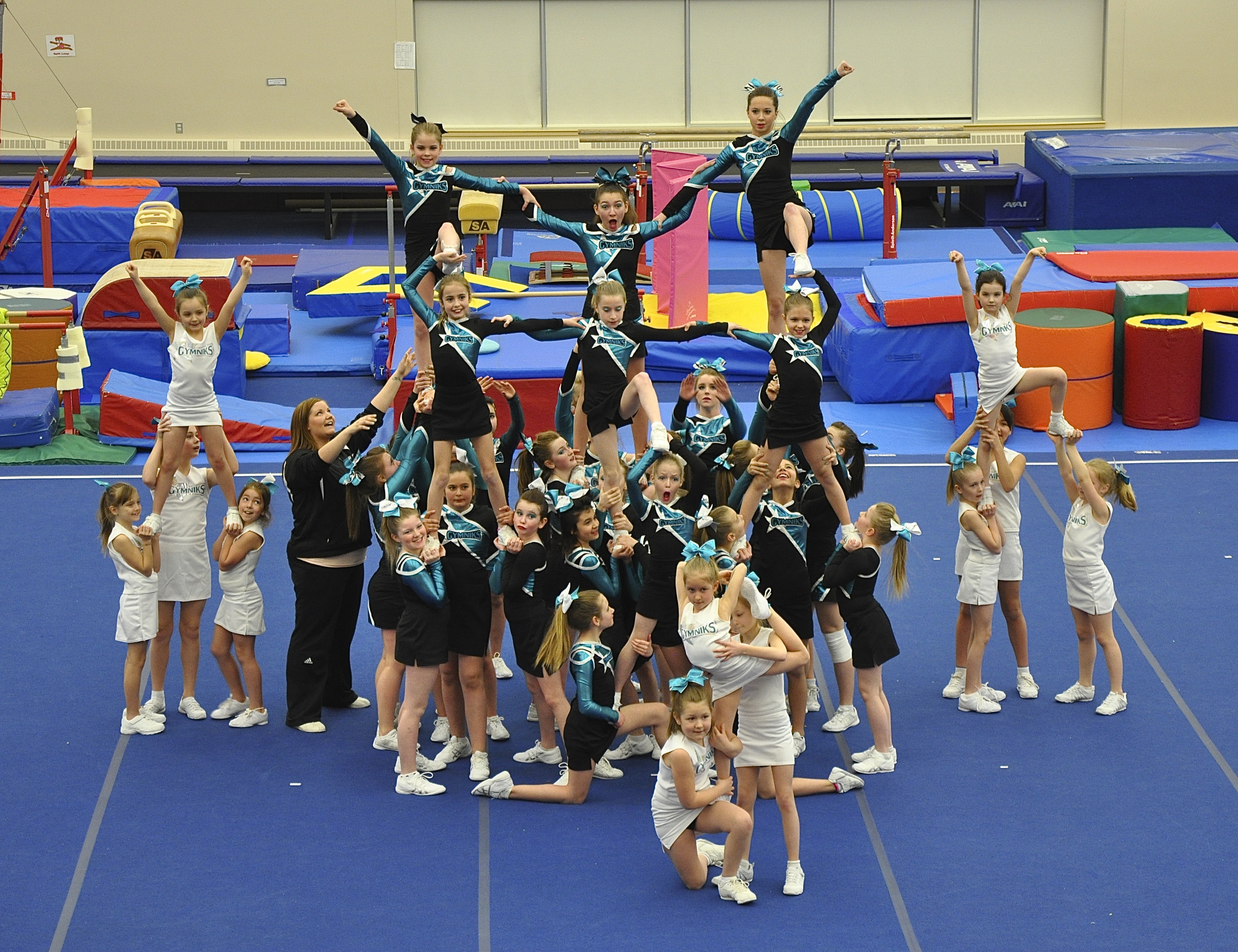
At Gymniks All Stars in Grand Prairie, Alberta, program director Jennifer Lekisch implemented charitable work as soon as she signed on in 2010. Each year, they focus on different ideas, but always with the goal of bettering the community, which helps keep them focused. They’ve helped victims of a DUI accident and have done advocacy work for Toys for Tots, Breast Cancer Awareness, the “Butt Out” National Non-Smoking Campaign and Heart Month, to name a few.
 The gym is a non-profit, so their charitable work is not a tax write-off. “It is just something we do to give back to our community and help build that foundation of excellence in our community,” Lekisch says. She also says that it does attract attention to the gym, which can be a reward in itself. They fit the charitable work into their schedule by doing it during slower points in the season, and they use social media to promote and spread the word about the work they’re doing.
As far as advice for gym owners who are thinking about getting into charitable work, Lekisch says, “Ask yourself three questions: What’s important to you? What image do you want to put out there about your athletes and your gym? What do you want to be remembered by?”
In short, it’s about staying organized, getting the kids (and parents) on board, finding charities that you’re passionate about and integrating the philanthropic work into your gym’s ethos—rather than tacking it on as an afterthought.


