

In addition to all the great content we bring cheer professionals in our quarterly print issue, you’ll find plenty of original exclusive content right here at TheCheerProfessional.com.
Keep checking back for all the latest and greatest news, updates, debates and more!
Incentive Programs: Do They Work?
jen : December 1, 2014 1:31 pm : Down to Business| Two Sides| Web Exclusives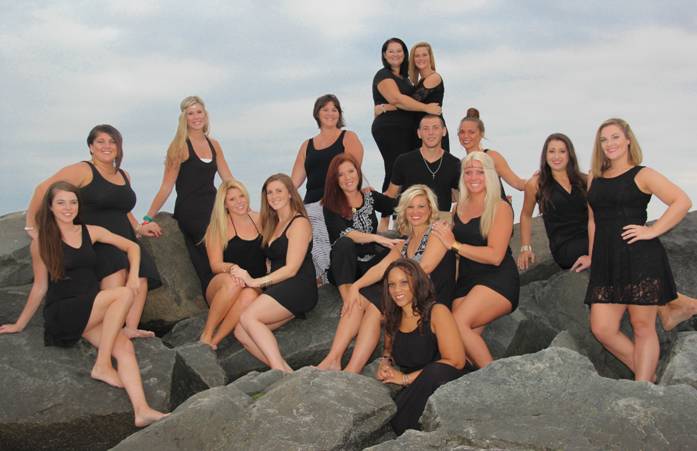 At Avon, OH-based Tumbles & Cheers, the more coaches put into the program, the more they get out of it. Owner Heather Zidek offers her coaches a financial incentive based on their performance. “We have all sorts of different factors that go into the compensation they receive— everything from retention rates to how high enrollment is in their classes to how their teams perform,” shares Zidek. “For each of those factors, they would get a bonus.”
Tumbles & Cheers’ incentive program is in its second year, and so far, Zidek is happy with how it’s going. “It increased our enrollment overall as a gym because the coaches were willing to put a little bit more effort into it, following up on kids that had come to trial classes, knowing that they could benefit,” she explains.
Zidek calculates the coaches’ bonuses at the end of every month. She says, “It’s all structured – they know how much they’ll get. The first of every month is when they get the bonuses for the month prior.” Though Zidek says it can be somewhat time-consuming to calculate the bonuses every month, the effort is worth it: “There haven’t been any drawbacks, really, because it’s increased our bottom line as a company.”
Lee Ward, owner of Plano TX-based EC Athletics, offers coaches at his gym a similar incentive, but on a yearly basis. He says, “[Our] bonus structure is fairly involved,” says Ward. “Basically it looks at retention rates, and not necessarily wins or losses in competitions, but the percentage of perfection scores that they get, for each team for the entire year.”
The bonuses are calculated after the competition season is over. “It’s over at the end of April [or] beginning of May, so we do our computations on the first of June, and we have it out the middle part of June.”
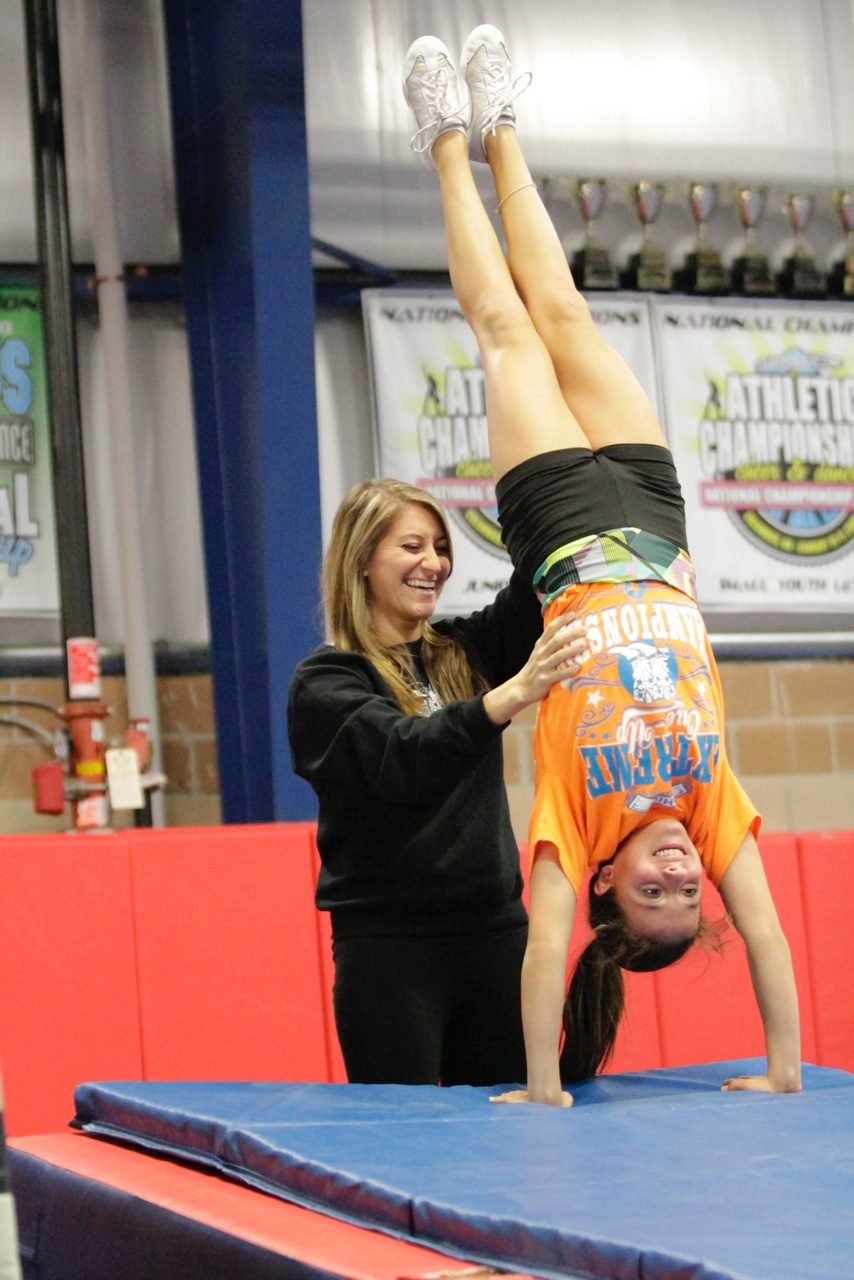 Last year was Ward’s first year offering the incentives, and he plans to continue it—with a few adjustments based on the unified scoring system. He noted, “They changed the scoring system on us, so we’re going to have to revise it a bit this year.”
Are financial incentives necessary for a successful program? Karen Brenner, owner of All Star One in Egg Harbor Township, New Jersey, doesn’t think so. She says, “My incentive is: They get a paycheck. They get a job. That’s why they call it work.” Brenner was raised with a strong work ethic, and she expects the same from her staff: “I pay them well, and their incentive is to get paid.”
Brenner has tried an incentive program in the past, but it was more for fun than financial motivation. She made the staff business cards that said “Bring this in for a free tumbling class” on the back, and told her employees, “We’ll see who gets the most business cards in.” When the coaches asked, “What do we get?” she said, “I don’t know, M&M’s?” and that’s what she gave them.
Brenner does reward her teams for their hard work, but the rewards aren’t tied to specific performance metrics. For example, she capitalizes on the gym’s proximity to the Jersey Shore by renting a beach house for the All Star One gym family. “The teams take turns coming, and then we add on three extra days at the end that my family and our staff get to stay at the beach house,” says Brenner. “I try to do small things like that to show them that I care.”
Whether your gym’s incentives are tied to performance numbers or not—and whether they’re in bonuses or beach days—they could pay off by keeping your staff happy.
–Lisa Beebe
Star Power: Bringing Cheerlebrities To Your Gym
jen : November 24, 2014 12:45 pm : Down to Business| Web Exclusives| webexclusive2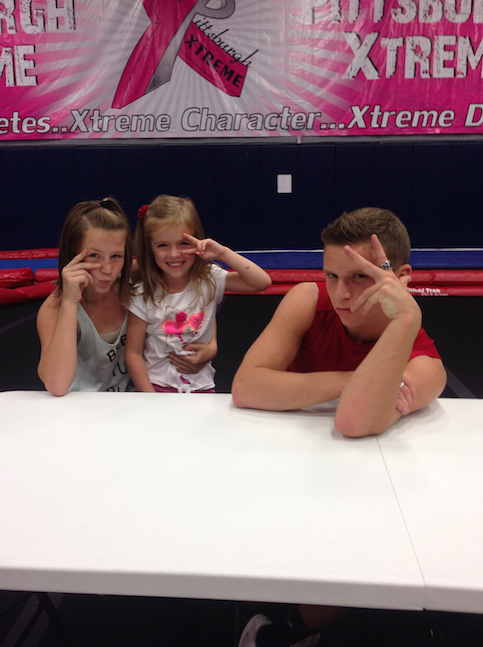 When Shiela Hajjar Perry, owner of Saucier, MS-based Cheer Zone Athletics, saw an opportunity to bring cheerlebrities Gabi Butler (California All Stars) and Kiara Nowlin (Baylor University) into her gym, she jumped at it. “Gabi posted on social media that they were going through Interstate 10 and hosting some clinics,” she says. “One of our kids tagged me in the post and said we should get them to come. I thought it sounded like a great idea.
Her instincts were right—the clinic ended up being a fantastic revenue booster for the gym, and a great PR tactic. “We had people travel from as far as Alabama and Louisiana to attend the camp, and lots of kids interested in coming to our gym [as a result],” says Hajjar Perry.
Stephanie Davis at Davis Allstar Gym also brought in Butler and Nowlin and says that the experience provided an awesome learning tool for both the coaches and the athletes. “Being able to reach out to their role models was so exciting,” she says. “The kids would have been happy just to talk to them for three hours, but seeing how they trained inspired the kids to do better.”
Davis’ and Perry’s experiences speak to a growing trend in the all-star industry: the practice of bringing in well-known “cheerlebrities” to host on-site clinics, meet-and-greets, and other special events (not unlike a dance studio bringing in a choreographer to do a master class). For many gym owners, it’s a no-brainer: it’s a chance for athletes to meet and learn from their role models and a way for the gym to gain community exposure.
Yet not everyone is a fan of the idea. Georgia Tech cheer coach King Harrison says, “Cheerlebrities are kids with amazing physical abilities, but they’re just kids—we can’t expect them to teach other kids. I’d look at bringing in the coaches that train these kids instead.” His concern is that cheerlebrities aren’t necessarily trained to teach, so they won’t to be able to properly troubleshoot and train other athletes (save for the few exceptions that are USASF-certified).
Is it the right move for your gym? Read on to see what it takes to host a successful cheerlebrity event.
Managing Expectations
 When booking cheerlebrities, it’s vital to know what type of experience they are offering and communicate that to athletes and parents. For instance, Hajjar Perry says that she realized right away that it wasn’t going to be an in-depth learning opportunity, but rather a “meet-and-greet with some tips and drills.”
“Thinking that two people can teach 100 is ridiculous,” she says. “I gave my parents a heads-up that this was going to be a fun clinic where their kids would maybe pick up a couple of tips.”
However, different cheerlebrities offer different experiences. Pittsburgh Xtreme owner Kira Lyndon wasn’t expecting much of an educational experience when she booked Robert Scianna (California All-Stars), but was blown away with how much hands-on training he did. “He gave us a full-on boot camp, and our girls were exhausted at the end of it. This definitely wasn’t just a meet-and-greet,” she says.
Hajjar Perry was very pleased with how the clinic went not only because of the income and positive PR it brought her gym, but also because of the impact on her athletes. “There aren’t a lot of huge gyms here in South Mississippi, so our kids aren’t exposed to a lot of level 5 athletes. Just to have different types of athletes coming through here and exposing them to different styles, techniques and people is good,” she says, “These are the cheerleaders that our kids see in magazines. For a lot of my kids that are Level 1, 2, and 3, it’s an opportunity to see different levels of training and ability.”
Contracts and Paperwork
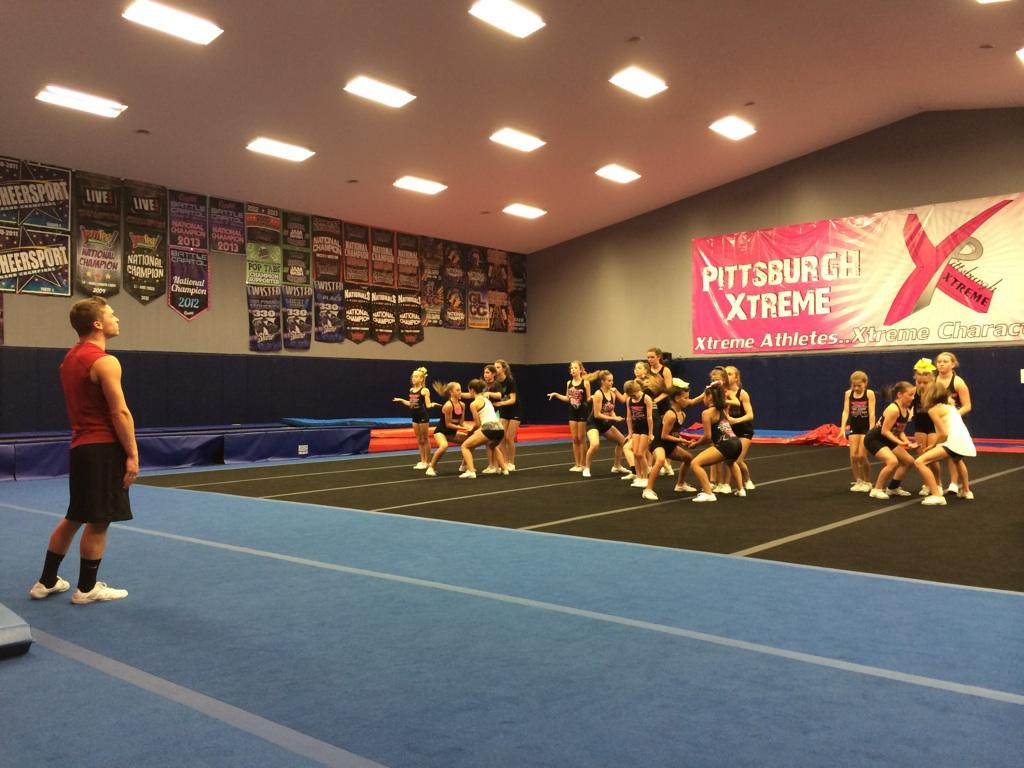 When Hajjar Perry first reached out to Gabi Butler, her management provided a contract to sign and all conditions related to the visit were spelled out. “It was very professional,” she says. For Lyndon’s part, she says that though there was no formal contract with Scianna, the whole experience was very businesslike regardless. However, that’s not always the case—some gym owners have had issues with spotty communication after the initial signing process with various cheerlebrities, so be sure to stay in close contact up until the event date and keep an eye out for any red flags.
It’s also important to be clear about what’s included in the cheerlebrity’s fee. Make sure to ask whether accommodations and travel are folded into the overall fee, and whether your gym will be responsible for the arrangements. For instance, Lyndon was asked to pick up Scianna from another clinic an hour away, and after the clinic at her gym, the gym he was visiting next picked him up. Some cheerlebrities also require extra manpower—Hajjar Perry says she was asked to provide a coach (for spotting purposes) on her own dime.
And, as with running any clinic, gym owners should make sure they are covered should any problems arise—by having all agreements well-documented, covering any additional insurance needs, and making sure necessary waivers are signed for anyone attending the clinic.
Covering Costs
The cache that cheerlebrities bring into your gym doesn’t come cheap, so it’s important to ensure a return on your investment. The cost for bringing Butler and Nowlin to Cheer Zone for one day was $2,500, so Hajjar Perry divided that figure by the number of tickets projected to sell, then figured any ticket sales above that number were pure profit (and she did make a profit).
At Pittsburgh Xtreme, Robert Scianna charged $55 per clinic attendee (and extra for autographs and merchandise sales). Lyndon added an extra $10 onto each ticket price, but admits she probably could have added more. “Do your research,” advises Lyndon. “We were going to book someone much more expensive, but couldn’t have been happier than we were with Robert. We weren’t worried about having a huge outlay then not making it back.”
Opening the events to a wider audience can also increase profit margins. When Butler and Nowlin visited Davis Allstar Gym, Davis reached out to nearby gyms to see if their athletes would be interested in attending the clinics, and ultimately had kids from four other local gyms buy tickets.
Whatever your opinion on cheerlebrities, there is no doubt that hosting a cheerlebrity-centric event can bring extra revenue and boost morale—along with possibly grooming future cheerlebrities to take center stage.
–Lola Augustine Brown
Starting a Big Sibling Program
jen : November 17, 2014 12:01 pm : Mind, Body & Soul| Web Exclusives| webexclusive1 Between long practices and mounting anticipation, the months leading up to a big competition can often be riddled with stress—especially for younger athletes who are new to the sport. That’s a big part of the reason Cody Woodfell decided to introduce a “Big Sister” program at his Sunrise, FL-based gym, Cheer Factory.
“The payoff is so late in the season, and the older girls really help the younger ones through that,” said Woodfell, who pairs more seasoned senior athletes with Level 1 newbies. Throughout the season, the big sister will pop notes into her sibling’s gym cubby or hand out small gifts. Adds Woodfell, “It’s all about encouragement and camaraderie, and [the program] works really well.”
At Jacksonville, FL-based GLAM Cheer and Dance (a Christian-based program), Holly Koonce has designed a similar arrangement for her athletes—one that has evolved from a note exchange among big and little sisters to more intimate gatherings where the families can get to know each other as well. Events have ranged from beach days to picnics to fall pumpkin carving parties.
A cheerleader since she was just 10, Koonce knows all too well how much younger girls admire the more experienced athletes. She has seen the interactions among the big and little sisters and believes those relationships improve motivation and focus, which “makes a big difference in their days.”
Kerri Fey, owner of Allstar Cheer Academy located near Scranton, Penn., had a similar setup among older and younger girls, but noticed last season the athletes’ natural competitiveness was usurping the big sister program’s objective. “The gift giving turned into a contest,” she said. “There were some hurt feelings.”
Fey decided to enlist help, instead, from her booster club who now purchase the same treat for each girl—anything from a hair bow to a goodie bag with a granola bar—and the girls exchange those items on competition days. Now dubbed “Spirit Sisters,” the program is “more about supporting each other and providing a connection to another athlete whom they may not know, particularly on competition days,” shares Fey.
 When it comes to matching, Fey has found success by pairing girls with different personalities, girls who attend different schools or those who are from diverse backgrounds. She believes that matching opposites helps to build new connections and friendships—ultimately fostering stronger bonds gym-wide.
Woodfell agrees, saying that without programs like this, girls often don’t have the opportunity to get to know those on other teams—even in their own gym. They’re able to build each others’ morale, empower one another to try new skills and talk through issues that may take place off the mat. The Cheer Factory athletes keep their same “sibling” season after season, so they bond exponentially over time. “I know the older athletes get just as much out of the program [as the little siblings],” says Woodfell.
One other major benefit to having a big sibling program, according to Koonce? “It makes things fun, too!”
–Molly Blake
 Talk about power in numbers—when the All-Star Gym Owners Association (ASGA) speaks, people listen. Whether it’s getting an event producer to reconsider its stance on stay-to-play, tracking down answers and assistance from a MIA vendor or righting an industry wrong, the ASGA is able to exert influence via its ever-growing Facebook group 3,000+ members strong.
“We invited all of the powers that be into the group so that they could see what the collective voice was talking about,” explains ACX Cheer’s Randy Dickey, who co-founded the group with Cheer Extreme Allstars owner Courtney Smith-Pope. “When there are 150 comments on a particular topic, it’s clear that it needs attention. We’re not trying to strong-arm or bully anyone; it’s more about learning to listen to customers. Our opinion matters.”
The group started back in 2008 with a select group of growing gyms including ACX, CEA, Cheer Carolina All-Stars, Charlotte Allstars and Rockstar Cheer. Dickey says the group was “fairly low-key” at that point and mainly connected several times a year to share resources, review scoring systems and combine buying power. “We’d work together to get volume pricing on uniforms and hotel rooms,” he explains. It wasn’t until 2012 that the ASGA membership eventually exploded: “When they announced the tumbling restrictions around the time of Worlds, we had 1,000 people show up to our conference call,” remembers Dickey.
Since then, the ASGA has been full-steam ahead—yet stayed true to its grassroots beginnings. The group lives solely on Facebook (outside of annual retreats where members can connect in person), and it’s a free resource for all cheer professionals. “We don’t have LLC or non-profit status; it’s completely funded by Courtney and me and whatever sponsors are willing to chip in,” shares Dickey. “We don’t make a dollar off ASGA, but the beautiful thing is that more and more people are willing to help.”
No topic is off-limits in the lively Facebook forums, from dealing with problematic parents to dirty recruiting to inappropriate coaching behavior. The group is also a place for gym owners to share best business practices and resources, and it has spawned numerous friendships, professional connections and even business ideas (Lark Wood credits the formation of Fierce Connection to his involvement with ASGA).
“I think the best part of ASGA is that people are willing to share ideas and info,” says ASGA member Jessica Lee of Galaxy Elite Athletics. “So much of our industry is keeping everything a secret—this group breaks the mold! People share openly and give honest answers and advice.”
Next up for the ASGA? Quite possibly revolutionizing the event space. Dickey eventually envisions the ASGA hosting its own competitions and recently set up a board of directors to “brainstorm and have a meeting of the minds.” While the group is still figuring out what such an event might look like, the idea is to provide lower registration fees and more regional events to minimize travel costs. “When you see something you don’t like, you have to be the change,” says Dickey. “If I can use the ASGA as a vehicle to create a new or innovative format that is less expensive, we can set the mold for everyone else to follow.”
Overall, Dickey see the missions of the ASGA as education, connection and all-star gym advocacy—giving owners a louder voice throughout the industry and a means of uniting to help each other succeed. “There is so much potential with the power this group is building,” says Dickey. “I think it’s really cool that peeps who compete on the mat come together off the mat to help each other, and ASGA has been the vehicle to create those bonds.”
–Jen Jones Donatelli
Athlete Poaching: Should You Be Worried?
jen : November 10, 2014 11:57 am : Down to Business| Web Exclusives| webexclusive1 “If you switch to our gym, we’ll make you a flyer.”
“If you switch to our gym, we’ll give you free tuition.”
If these promises sound familiar, you’re not alone—many gym owners have lost athletes to other gyms practicing questionable recruiting techniques. Some people will say anything to convince an athlete to switch to their program, and the offers can be hard to resist. Though healthy competition among businesses is normal, the desire to attract new athletes by any means possible can sometimes cross the line into inappropriate behavior. Just ask Kentucky Reign owner Jessica Bugg Smith, who says, “I had a program where they literally lined their kids on the floor while my kids were competing and yelled for a particular athlete, and then invited them to their gym.”
According to Leslie Pledger-Griffin, owner of Calhoun, GA-based Renegade Athletics, dirty recruiting isn’t always directed at the athlete, but often the parents (aka the financial decision-makers). “For the most part, whenever they’re approached, it’s a very flattering thing. ‘Your child’s too good to be on that team. They might not have their tuck, but we can get them their tuck before Thanksgiving.’ And then the child is put on that team, and they never get the tuck during that season—it’s just something that they were told to get them to join,” says Pledger- Griffin.
Athlete poaching is certainly an ongoing problem in the all-star industry, but is it worth worrying about? CheerProfessional talked to gym owners who’ve experienced the problem and got them to weigh in.
If an athlete is considering leaving, is there anything you can do?
Surrendering control may be the easiest way to stay sane in this scenario—and that sometimes means setting athletes free. “I’ve had the philosophy [that] I don’t beg kids to stay. The reason is because then they’re never 100% committed the rest of the season,” explains Pledger-Griffin. “They think they’re doing you a favor by being on your team, and in reality you probably don’t need them anyway.”
Stefanie Nelson, owner of Starke, FL-based North Florida Elite, agrees. “Though we pour our hearts and souls into these athletes, they are not personal property and we have to as an industry remember that. Yes, it hurts when an athlete leaves for whatever reason, but at the end of the day they are humans, not our personal belongings.”
When an athlete does leave, Pledger-Griffin sees it as an opportunity to analyze her own program’s strengths and weaknesses. Is there a missing link morale-wise? Do the gym’s offerings need to be expanded? Or is it an isolated case of an unhappy athlete? “When it does happen, I try to make sure that we’re doing our best and that we don’t have a reason for them to leave,” she shares. “But if you let it consume you, you’re just going to turn out to be bitter about a situation you can’t control. You just have to let it go and move on.”
Bugg Smith agrees, and she’s confident enough in her own program that she doesn’t worry about poaching. “I feel like if owners would focus more on addressing problems within their walls instead of worrying about the predators that lurk outside the walls, they wouldn’t be as afraid.”
That said, there are many documented cases in which gyms go too far in recruiting—and shouldn’t be allowed to get away with it. Rather than spending your own energy and time fighting the situation, Nelson suggests taking action through USASF. “If you have hard evidence that poaching or general shady business practice is going on, I would report the individual and the gym to USASF and allow them to decide on how to handle it,” advises Nelson. “Getting into a war of words with the other person or gym never works —all it does is cause more problems than solutions.”
How can a gym prevent athlete poaching in the first place?
Make sure your gym shows the same integrity you expect from others. Bugg Smith of Kentucky Reign teaches her staff that poaching isn’t acceptable behavior. “Our coaches are instructed that if there’s a coach or athlete or parent that they’re speaking with who’s already affiliated with another program, they are not allowed to solicit them until the season is over, when we go into tryout season. As an owner, that’s how I want to run my program.”
Bugg Smith also recommends establishing community ties where your gym is. Her coaches attend school plays and football games to be more involved in their athletes’ everyday lives. “Be a part of their lives, more than just in practice – and make it authentic. It’s got to be real.”
Being honest with yourself about what your program has to offer can also help. If you are losing athletes because the competitor is doing a better job, do whatever it takes to change that. “If you don’t have as good of a training product as the gym down the road, then you need to get to conferences. You need to reach out to people. 90% of them are willing to help you, and a lot of them will help for free especially if it’s a small program, because they were a small program once, too,” Bugg Smith recommends.
For North Florida Elite’s Nelson, it’s ultimately about building a program athletes don’t want to leave, no matter how good the offer looks from the other gym. “If they still choose to leave, be positive and don’t burn that bridge with the existing athlete,” she says. “I have seen many times where an athlete leaves a program only to return the following season after they realize that it’s not always better on the other side of the fence.”
–Lisa Beebe


