

In addition to all the great content we bring cheer professionals in our quarterly print issue, you’ll find plenty of original exclusive content right here at TheCheerProfessional.com.
Keep checking back for all the latest and greatest news, updates, debates and more!
 As a gym owner, dealing with drama is often part of the job description—but bad or event toxic behavior from your athletes, team parents or coaches can make life difficult not only for you, but everyone who is part of your gym. CheerProfessional spoke with cheer professionals who’ve dealt with disastrous behavior to find out their wildest stories—and how they fixed the situation. See if anyone from this cast of characters sounds familiar, and see how to deal:
Case study #1: The parent who gave her kid a beatdown in front of everyone
Brandi Weaver, owner of Stepz All Star Gym in Wills Point, TX, has seen a lot in the 11 years that she’s been in business. One of the strangest experiences to date was when a parent came running across the floor and yanked her 9-year-old out of a stunt because she wasn’t doing it right, then proceeded to spank her right there on the gym floor, yelling, “I pay all this money, you’re going to do it right!” This was in front of the athlete’s 19 teammates, all of the coaches and another tumbling class.
Weaver says she and the parent had a “heated” argument, in which she made it clear that any type of violence was unacceptable on gym premises. The fight concluded with Weaver telling the parent that while her daughter was still welcome at Stepz, she was not.
“She was yelling all kinds of cuss words as I kicked her out of my gym and making a real scene,” shares Weaver. “And once I kick someone out, they’re never allowed back.” Unfortunately, the child’s mother wouldn’t allow her to return to the gym, which Weaver says is a real shame as she didn’t do anything wrong.
Case study #2: The 15-year-old athlete who was using crystal meth
Having coached at various gyms in Texas for 19 years, Danny Torres has seen a lot of questionable behavior. “At one gym I worked at, we had a child that was dabbling with meth,” he shares. “Her demeanor had changed to the point where she was unpleasant to be around. I hated having to call the parents and tell them something that bad, but I did, and asked them not to say that they heard from me because I still wanted the child to feel like they could trust me and come to me for help.”
The parents got help for their child, and they continued to come to the gym. “It was a really sad situation, but staying in cheerleading helped that child through what was going on,” he says.
During this time, Torres says he changed his coaching methods to include more stationary drills and less groupwork in order to better deal with the behavior while it was going on. While he never considered dismissing the child from the gym, it was emotionally very hard to be there for the athlete while she and her family worked through their problems. However, for Torres, it was worth it: “I see myself in the role of mentor as well as coach, and felt like I could help keep an eye on the kid for the parents.”
Case study #3: The coach who dated all of the gym moms
Weaver has one very simple rule for her staff: don’t date the customers. Unfortunately, not all employees take it to heart. “I had a very talented coach who was great when he was here, but who dated half of my parents,” says Weaver. “Plus, he had a girlfriend!”
Weaver discovered what was going on when the coach’s girlfriend started coming into work to keep an eye on him—which was also against the rules. When Weaver asked why she was there, the girlfriend showed her emails that he’d been getting from gym moms. “I was looking at her dumbfounded, because some of the moms she was naming were there at the gym while we were having the conversation,” says Weaver.
The coach’s actions were a direct violation of the gym’s code of conduct, which clearly spells out that employees cannot date parents or anyone at the gym. “He broke policy and brought drama to the gym, so I let him go,” she says. “And after he left, I found out there’d been a fight in the parking lot between the moms over him, and lots of drama amongst the parents.”
Weaver rightly believes that making employees sign a code of conduct is essential in this business—and necessary should you find yourself in a position where you need to fire someone. “It’s savage that you need to spell these things out to adults, but you do,” says Weaver.
Case study #4: The top athlete who defected to a competitor’s gym, then wanted to come back
When Adam Rufkahr, owner of Maryland Heights, MO-based Platinum Athletics, lost a high-level 17-year-old athlete to a competing gym, he was sad to find out she’d been bad-mouthing his gym all over social media. Rufkahr had coached the athlete for five years and felt close to both her and her family. A week after leaving, the athlete decided that she wanted to come back, but Rufkahr told her that wasn’t possible.
“We’d had run-ins with her before, where she was rude to new gym members, or to those who she felt threatened by, and skills be damned, I’d much rather have a group of hard-working kids than a few kids with higher skills who are just nasty,” he says, adding that when an athlete has had to be removed to the gym, it has always ended up being the exact right thing to do.
Rufkahr says it isn’t typical for him to just let an athlete go because of bad behavior. “We’ll meet with the athletes and coaches first, and if the behavior continues, we bring the parent in. Most of the time, that is sufficient,” he says. “But [if they] feel they’re above the rules because they have a higher skill set, that just hurts the gym in the long run, so it is best for everyone if they leave.”
-Lola Augustine Brown
For the third year in a row, CheerProfessional tapped three of the industry’s cheer “leaders” for a spirited panel discussion on our industry and its future. Check out Part One here, and read Part Two below!

Morton Bergue, CheerGyms.com
There’s also been quite a backlash against stay-to-play.
Bergue: The stay-to-play thing has two sides to the story. It’s unfair to me as a gym owner who has worked very hard to set up my families so I can make it cheaper. But when I take my “gym hat” off and look at it from the big picture, I see why the companies had to do it—they need to keep their event alive. However, since those companies get a kickback, I believe they should compensate gyms in some way or provide incentives, whether it’s a free room or a set amount per athlete.
Roesel: We had to drop a couple of big stay-to-play events because our parents could no longer afford it. However, the Summit competitions this year have been tripling and quadrupling in size, which allows us to compete locally. We can drive an hour and a half away to a big city and still hit a Summit bid.
Sims: Our competition doesn’t have a stay-to-play policy. At our 350-team national championship in Las Vegas, teams can stay at any resort that they choose; the majority of teams do stay at our host hotel, but are not required to do so. I don’t think it helps the industry to force teams into stay-to-play, but you have to understand a company’s reasoning behind it. When you have a 500- or 600-team event and you’re taking up all of

Tanya Roesel, Midwest Cheer Elite
the hotel space, you’ve got to give up some of that flexibility. It’s not like this is happening only in cheerleading—it’s happening in a lot of sports.
How do you feel about the possibility of splintering into Division One and Division Two?
Bergue: When we started our gym 20 years ago, we were pretty much the only gym this side of the Mississippi besides Cheer Athletics. We could make all the mistakes we wanted; there were no other gyms to take our kids away. Now, in our area, I can name 15 gyms within a half-hour of my gym. I do think our industry is changing and we need to change how we look at it. [Having Divisions One and Two] could help everyone—big gyms and small gyms—in the long run.
Roesel: For everyone to be successful, we all have to have competition. Division Two could help small gyms grow—as long as they still have the opportunity to step into the Division One market if they want. Cherokee Greendeer is a great example of a small gym [owner] that prefers to go head-to-head with large gyms. Smart gym owners will be able to use [these new delineations] to their advantage; they’ll be able to market to their customer base strategically.
What do you feel are the growth areas right now?
David Sims, JAMZ
Bergue: I think all-star cheer as a whole in the U.S. has hit a bit of a plateau; we’re not seeing a lot of growth like we were three years ago. Everyone is doing well, but right now it’s more predictable. We can predict it a lot better now than five years ago because it was growing so fast [then]. However, I do believe that all-star is booming internationally. I’ve been fortunate enough to go to different countries to teach clinics, and it is growing like wildfire internationally. Besides myself, I can name at least 10 other choreographers traveling internationally, and there are coaches and all-star gyms being hired like celebrities to go abroad.
Roesel: A lot of gyms are finding success with all-star prep; at Midwest Cheer Elite, it’s huge—we have more than 150 kids doing all-star prep. Gym owners are starting to realize they’ll have to tap into other markets of kids that don’t have the time or finances to be on full travel teams. Anything that we do that doesn’t involve the time commitment or cost seems to attract people. For instance, our Totally Tiny team for 2- and 3-year-olds just started two weeks ago and we already have 50 signed up, which is insane. Things are trending younger, and rather than pushing people to full travel teams, gym owners are realizing there are other markets.
Any final thoughts on the state of our union?
Roesel: I see a big trend happening with integrity, which is making everyone accountable. Whether you’re a gym owner, event producer, music producer or choreographer, people who aren’t delivering product are getting called out on social media. All it takes is one negative [complaint] to be shared on millions of walls. Social media is definitely helping the integrity of our industry.
Sims: I predict some changes going on with the World championships. Worlds has been in Orlando in the same venue for the past decade; I can see [cheer professionals] wanting to infuse some new life and energy into that event. Also, there’s a movement towards gyms being profitable and successful without having to have a Level 5 team and go to Worlds—end-of-year programs are allowing that to happen now. Whereas you used to not be considered an upper echelon program without Level 5 or 6, now we see programs achieving that [status] without offering those levels, which is great.
Bergue: As the new NACCC chairman, my number one priority is making sure athletes are safe—doing anything I can do to make our scoresheet better, make gyms accountable, make the rules good for everyone. Our sport is now labeled the most injury-prone; we have to get rid of that stigma and figure something out. Athlete membership is a good way to start, because we can track their injuries; we can do so much more with a database. It’s all about the kids and their safety.
For the third year in a row, CheerProfessional tapped three of the industry’s cheer “leaders” for a spirited panel discussion on our industry and its future.
Morton Bergue, CheerGyms.com
Scoring is an incredibly hot topic right now in the industry. Where do you stand on the universal scoresheet?
Bergue: As the chairman of NACCC, I’m all for it. The unified scoresheet was sort of a band-aid [approach] for Varsity and JAM Brands, but they’ve committed to use the universal scoresheet next year. It’s really exciting for the industry—teams will be able to go to any competition in the U.S. and know the same criteria will be used. Being a choreographer, I’m all for creativity. The last five to seven years, we saw cookie-cutter routines, which would have been fine if they weren’t causing coaches to teach skills they couldn’t teach and kids to try skills they couldn’t do. When difficulty is the main [objective], kids are going to get hurt—bottom line. Now, it’s about doing less difficult skills and doing them better. This has been a hard year for a lot of coaches, but once everyone gets on board and we all work together, everyone will be very happy.
Sims: We’ve seen a lot of success with the Universal Scoresheet on the West Coast, where companies like GSSA, Jamz, Cheer Pros and All Things Cheer are using it for all levels. We attribute that success to the ability to interpret the scoresheet, fix issues and communicate—we don’t want coaches to leave and wonder why they received the score they received. What many people are forgetting in the scoresheet controversy is this: whether you’re on universal or unified, most of the teams will score within a small percentage of each other in most of the difficulty categories. The teams who are distinguishing themselves with creativity in stunts, pyramids and transitions are scoring higher and winning. Once everyone is doing a double up or high-to-high, the defining characteristic comes down to not only whether you can hit all those skills, but also what creative movements and methods you can do within them to catch the judge’s eye.
Roesel: Now, your job as an all-star coach is to investigate and study everyone you’re up against. You have to do everything everyone else is doing and do it more creatively than they are. It’s comparative scoring, which forces the coaches to use video and study other teams to make sure you not only hit the scoresheet, but that you’re doing what everyone else is doing plus one. I think it’s made us think a little more. Before, it felt like a checklist; now you have the checklist, but you also have a whole other novel of things you need to do. I literally send my coaches a list of whom we’re going against, like “Start stalking!” [laughs] The idea is to find out how you can do it better.
Mega-gym franchising is also a trend on the rise. What’s your take?
Tanya Roesel, Midwest Cheer Elite
Roesel: I think we’re in the “Walmart phase” of all-star cheer, where we’re seeing lots of locations and mega-gyms. [The trend is] forcing smaller gyms to step back and learn to run more like a business. The reason Midwest Cheer Elite franchised is that we wanted to give our product to those who weren’t in our area. The next few years, I can see the trend continuing to grow, but at some point, mega-gyms may have to back down a bit because if the product can’t stay consistent it will be hard for that [franchise] gym to stay open. As long as they can continue to offer that product, they’ll be successful.
Bergue: Here’s the thing: we live in the United States. We are free to do whatever we want, and that includes gyms putting their brand on other gyms. However, I do feel sorry for smaller gyms—they want to have a nice family-feel gym, but often can’t compete against the big gym with all the finances. It forces them to work really hard on their product so their kids won’t leave. I’m not sure what we need to do as USASF/NACCC to look at it. I don’t want [the industry] to turn into 20 gyms in the whole country because everyone else closed their doors. I pray it doesn’t become an issue, but we’ll have to wait and see what happens.
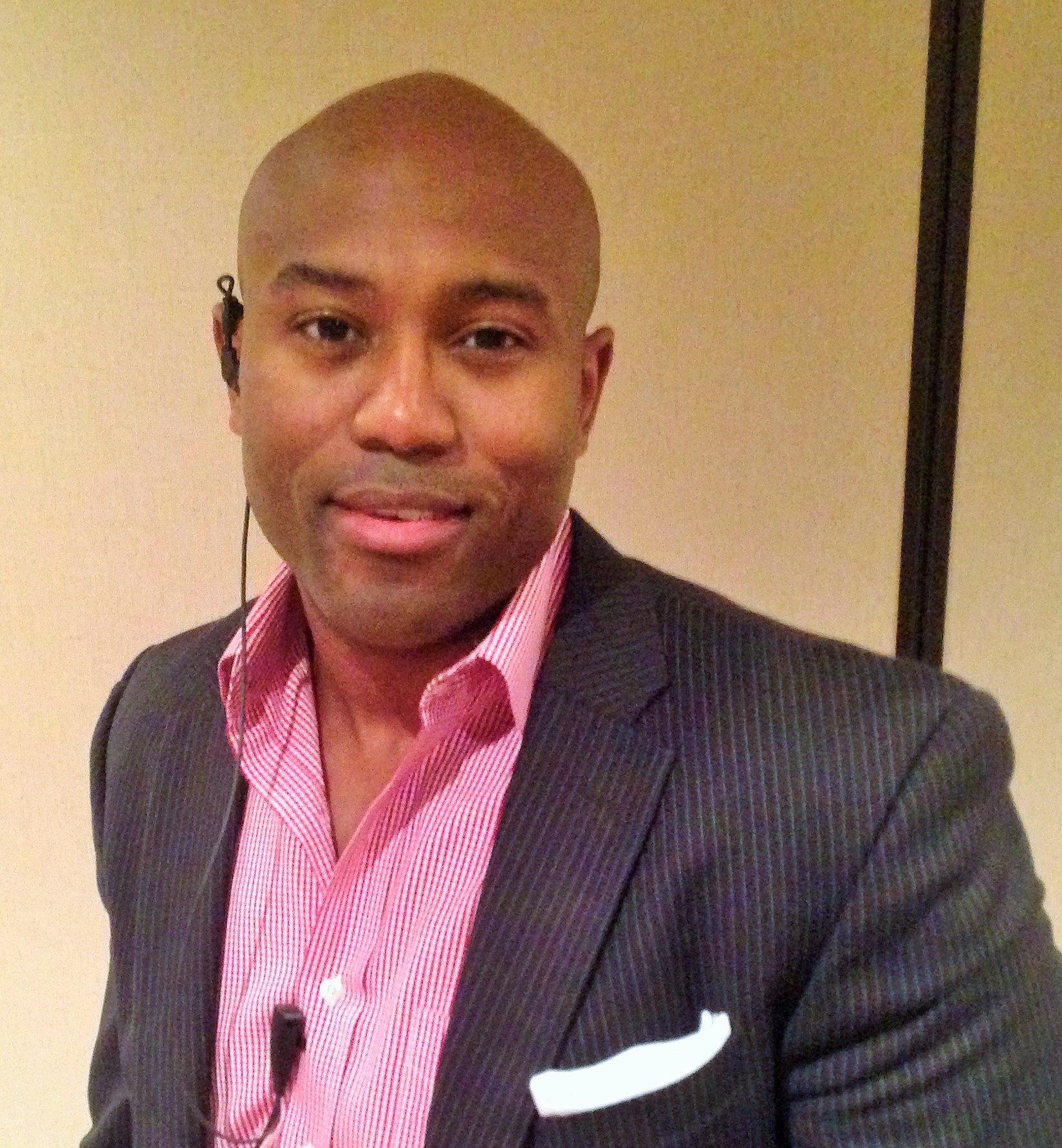
David Sims, JAMZ
Sims: I’m definitely for free enterprise and businesses learning new, different ways to strive and make money. My company started with small gyms who came and supported us consistently; some of those small gyms have ended up becoming mega-gyms through growth and/or franchising. Is it harder now for a gym to start up and then grow into a large gym than it was 10 years ago? Absolutely. The mega-gyms have taken away a little bit in a franchising aspect from the small gyms. [But] cheer is cyclical. I think you’ll have large growth in the big gyms for a while, and then maybe you’ll see some contracting.
Click here to read Part Two of our “State of the Union” roundtable!
Owner’s Manual: Bobby Gomez of Ultimate All Stars
jen : January 15, 2015 12:38 pm : Down to Business| Two Sides| Web Exclusives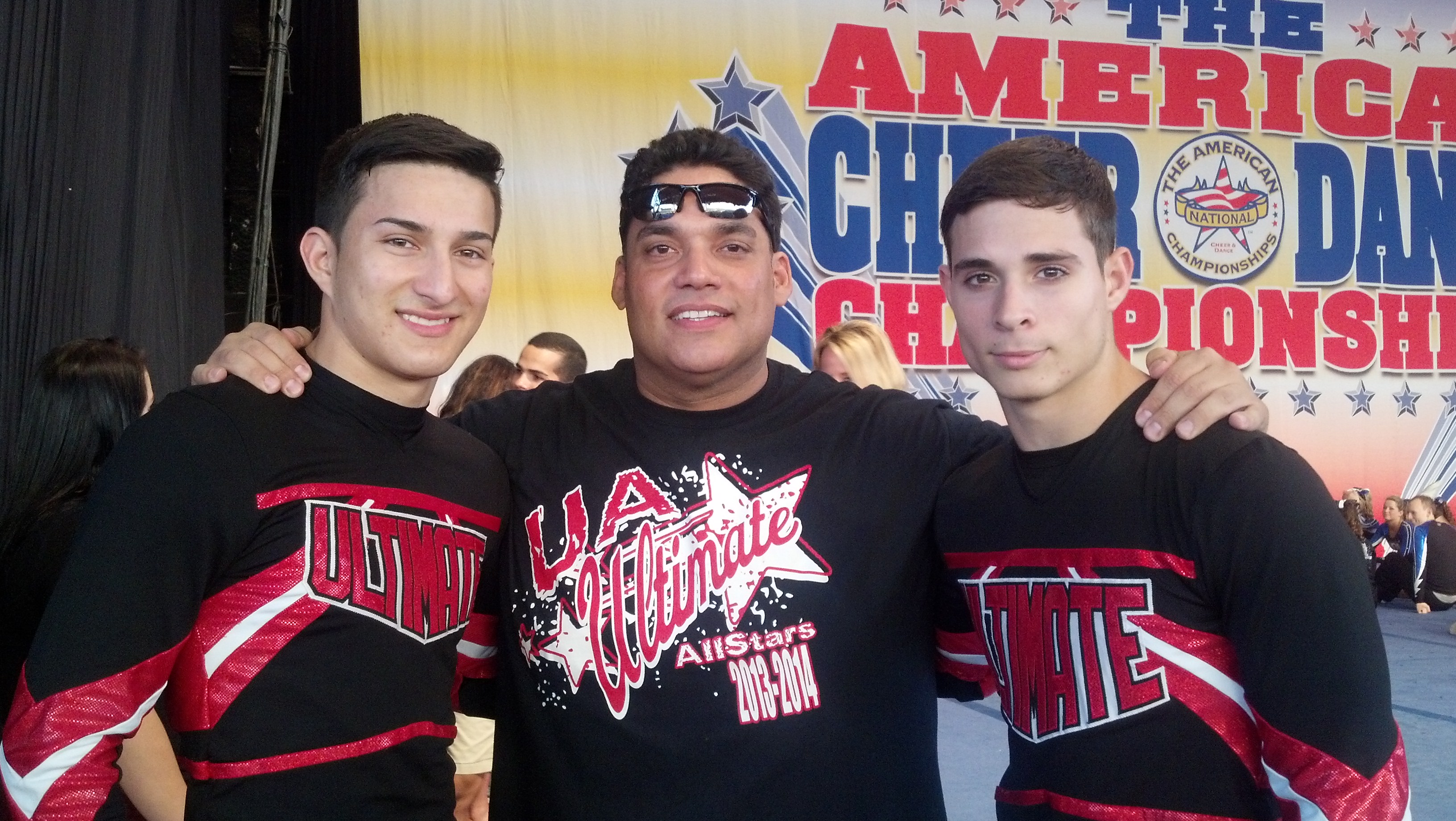 Vital Stats:
Name: Bobby Gomez, Owner/Coach
Gym: Ultimate All Stars
Locations: Port St. Lucie, FL and Vero Beach, FL
Founded: 2004
Size: 300+ athletes
Gym size: 6,000 square feet (Vero Beach)/7,000 square feet (Port St. Lucie)
The Debrief: Since this Florida-based gym first launched in 2004, the program has gone from 35 athletes to almost 200 in its Port St. Lucie location, and grown from 50 to 100+ in its second Vero Beach location (which opened in 2010). Successful recruitment and retention of male athletes has played a big part in the program’s growing success, thanks to a free tuition program and strong focus on mentorship.
The Dish: Traditionally, we’d always had a hard time getting male athletes. In 2012, we decided to offer free tuition to all males in the areas of cheer and dance. At first, my wife Sherry didn’t like the idea because she didn’t think it was fair to paying athletes. However, I wanted to share this awesome sport with the boys and couldn’t get them any other way. Their parents just wouldn’t agree to have their kid dance or cheer. So getting the service for free was more appealing for them, and a means of convincing them to at least give it a shot.
 Another method we’ve employed is to create an agreement for the boys to work around the gym and become junior coaches. This has been a good way for them to help earn their free tuition; our boys take out the garbage or help paint the gym, and they’ve been amazing. For younger boys, I recruit them with tumbling classes. By getting them to tumble, that’s how they get hooked. After a while, we’re able to get them to fill in at a cheer practice and try it—and 95 percent of the time they also get hooked on that. The dads aren’t normally quite as enthused, but once they see their boy tumbling and working out alongside the girls, they usually think, ‘Man, this can’t be too bad.’
The bottom line is that free classes don’t help all gyms. I get that. But what we do is right for us. I’m just doing my small part to introduce male athletes to the sport of cheer. The boys bring a different energy that fits so well with our female athletes, and the number of boys we have has tripled from the beginning until now. At the start, we had one or two males and now we have 15 hardcore cheerleaders and dancers. I’ve also noticed our numbers growing in our tumbling classes—we just had some local football players come in to tumble.
Though the age group varies, I think the best approach is to start them young, but good luck on convincing the parents. It’s very tough [to get them in] and that’s why they often only consider it when it’s free. I think the best age for us has been the 14- to 18-year old boys—by then, they make more of their own decisions. Most of the parents don’t even know exactly what they do until we have a showcase or competition. When they see their kid tumble or throw a girl up in the air, the parent is smiling ear-to-ear and is just speechless. It’s pretty neat to watch. I personally mentor each kid as if they are my own. I become the other father figure, and sometimes the only one.
–Dina Gachman
Franchising Case Study #2: CNY Storm
jen : January 5, 2015 2:58 pm : Down to Business| Web Exclusives| webexclusive1 In recent years, there’s been a major trend in the all-star cheer industry of large gyms either buying out or lending the use of their name to smaller gyms. In many instances, it appears to be a win-win situation: the larger gym is able to expand to more cities and grow its brand, while the smaller gym receives more credibility and business support. CheerProfessional talked to the owners of three cheer gyms who are giving franchising a try—and reaping the benefits.
Franchise Case Study #2: CNY Storm
Kathy Penree has been in business in Syracuse, New York, for 19 years—this year, Penree was honored as USASF Program Owner of the Year. Six years ago, she took over a gym in Albany, and just recently, she turned it into a franchise location. Another program in Watertown, New York, also recently became a CNY Storm franchise.
You’re new to franchising. How is it going so far? We’re still in the learning curve phase, but I love that we’ve combined our energy, talent and resources. We can give so much more to the staff and to our customer base as a whole. Once we get through this transition phase, I think everyone’s going to be thrilled with what we can all do together.
When do you think gyms should consider franchise opportunities? There are two perspectives. If you’re a smaller gym, don’t be afraid to approach an established program and ask about this opportunity, because I really think it’s becoming the wave of the future. The people who’ve had success and longevity as gym owners are obviously doing the right things, financially. Instruction-wise, they have so much valuable knowledge to share. I see small gyms struggling financially and to retain athletes, and they have to explore all their options in order to be successful. I like when other gym owners say, “I really like what you’re doing. Can we bring that to my athletes?”
On the gym owner side, I think it’s a great opportunity to reach as many kids as I can and have an influence on them. As you become a bigger program, you lose some of the coaching time, and the administrative time takes over. I enjoy doing that part and coordinating everything for the program as a whole, so I have that resource for the gym owner who still wants to be on the floor doing a lot of the coaching. We complement each other.
What other benefits do you offer your franchisees? I’m managing the competition schedule, all of our supplies, ongoing staff education and sharing instructors, so everyone’s bringing their knowledge to the table.
What advice would you give owners who are considering franchising? Number one: have a good solid contract. Be clear and concise about how you want things to run, as far as representing your name and your branding. You want them to conform to your policies, procedures and training.
If a gym owner is looking to become a franchisee, I would tell them to ask all the questions they have any concerns about, and make sure everything is up front. Don’t assume anything.
–Lisa Beebe


