

In addition to all the great content we bring cheer professionals in our quarterly print issue, you’ll find plenty of original exclusive content right here at TheCheerProfessional.com.
Keep checking back for all the latest and greatest news, updates, debates and more!
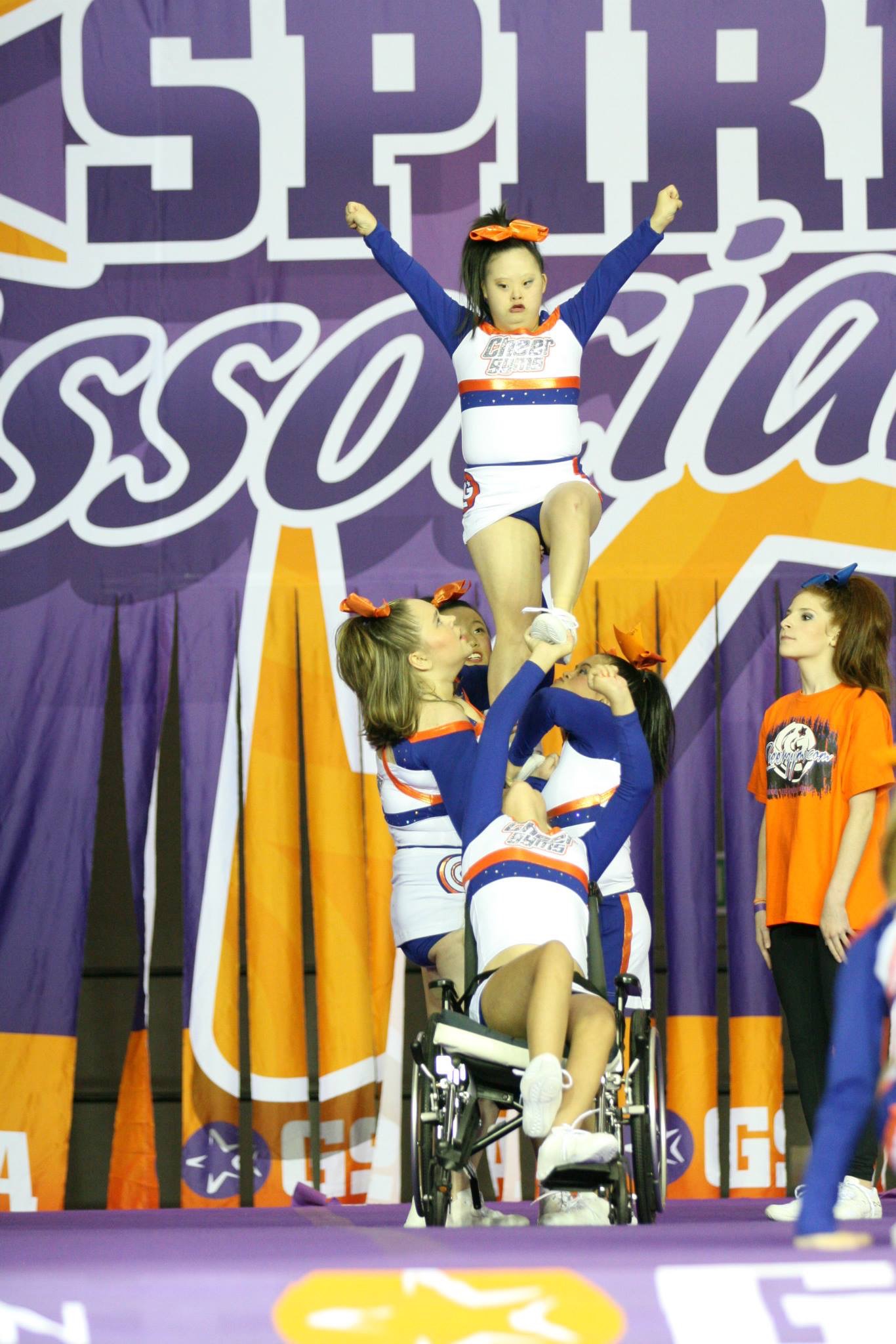 “Begin at the beginning”—a simple concept, but one that works well for coach Jodi Kandl in her work with the all-star cheer teams at Cheergyms.com, including its special needs team, Sparkle. “Every athlete that walks in the gym learns differently, whether they are on the special needs team or not,” says Jodi Kandl.
Still, starting a special needs team does require that gym owners and coaches have practices and precautions in place to create the safest, most successful special needs program they can. For starters, there should be properly credentialed coaches with expertise in teaching people with special needs. “They should be certified through Level 2 with USASF,” says Kandl, adding that certification should include things like concussion training, CPR/first aid and seizure training.
Sharon Myrick, program administrator of the Special Athletes Program for Glen Burnie, MD-based Maryland Twisters, agrees. The gym has two special needs teams (Eye of the Storm and Storm Chasers), and Myrick emphasizes that gyms “must have coaches who are willing to learn about differences, and to be discipline-oriented and consistent.”
Starting a special needs team can be hugely beneficial and rewarding for both athletes and owners, but there are certain steps that should be followed in order to make it a safe, worthwhile, positive addition to your business. First and foremost, knowing each athlete’s medical history and individual needs is paramount. The athletes shouldn’t necessarily be treated differently, but making sure that the coaches and staff know about each athlete is crucial. For gym owners, that often means creating detailed intake questionnaires for parents and having regular meetings and communication.
“Have a conversation with the parent to have them instruct you what signs to be aware of, as no two people are the same,” advises Bonnie Melnick, program director/principal at Southampton, NJ-based Diamond Athletics, where the Precious Gems program is a non-profit program for special needs athletes of all ages.
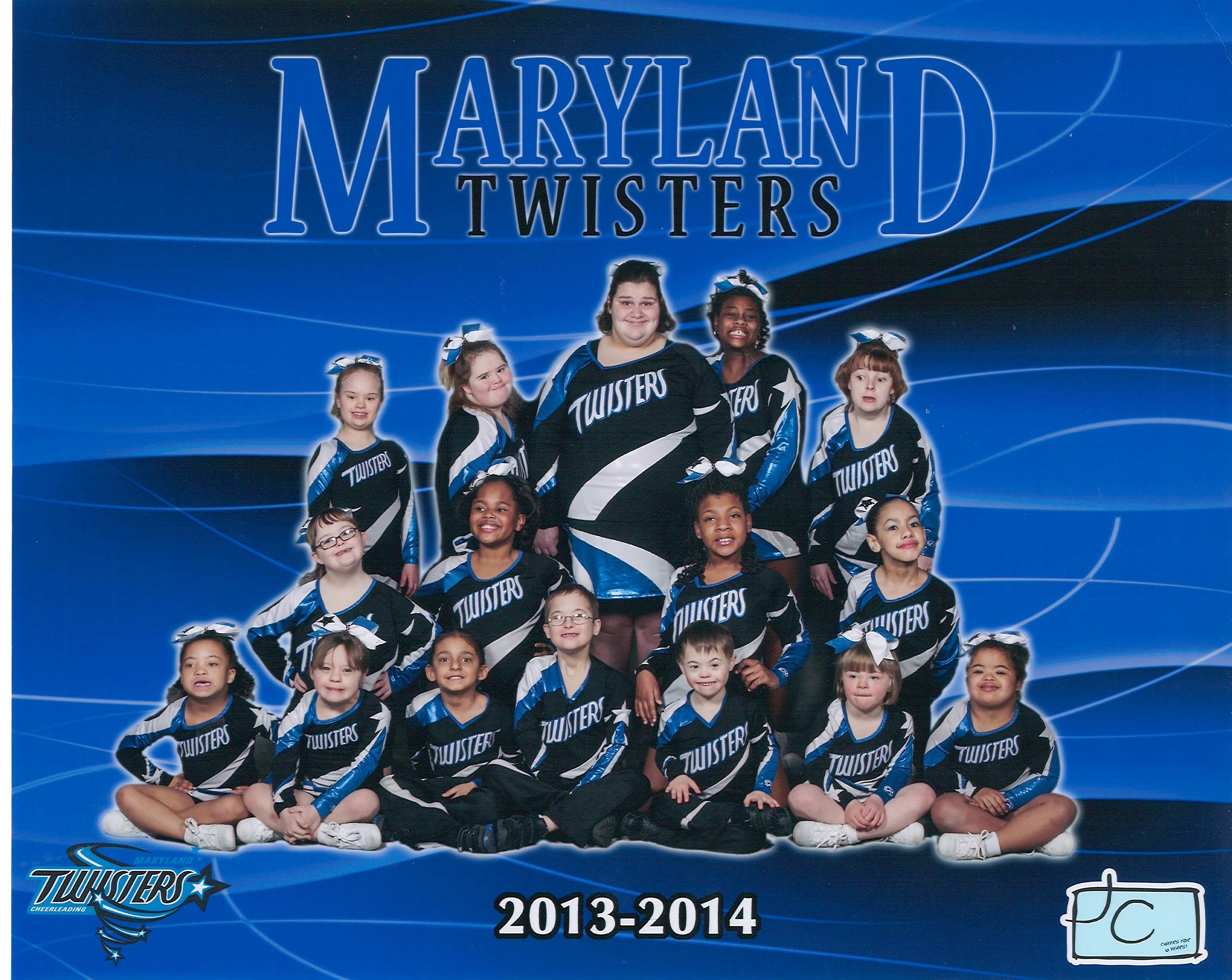 All of the special needs coaches at Maryland Twisters are volunteers, and Myrick says that they interview new candidates “to make sure they are willing to work within our program goals and mission.” The division has grown over the last five years, and the number of teams in their area has doubled. “Allowing the teams to participate at free or reduced cost will continue to make the division grow,” Myrick adds. “Many families are strapped by continuous medical and therapy costs, so having this program at no or low cost has been such a great opportunity.”
If you’re thinking of starting a special needs team, do it for the right reasons—and not because you strive to make a huge profit. “Typically the team is not a profitable team,” says Kandl of Cheergyms.com. “Gyms usually have a minimal charge, if any, for the athletes.” One option is finding sponsors or holding fundraising efforts such as raffles or fun runs to raise money. At the Maryland Twisters, the athlete booster club is their main sponsor, and their special needs booster club obtains small sponsors throughout the season, as well as conducting independent fundraising.
At Diamond Athletics, they fundraise throughout the year to keep it free of charge for the parents, and Melnick says that they do have some families and local businesses that are sponsors for their program. “Many vendors will give a discount or free apparel to the special needs athletes,” says Kandl. “We have had a local bakery that helped raise over $1,500 for the athletes when they were given the honor of a paid bid to Worlds. We have also had families donate privately.”
If incorporating a special needs team sounds like a daunting task, start small. Begin with a single class and build from there. “Safety is the most important thing, so understanding their abilities as well as limitations is essential,” says Melnick. “I would also recommend getting all other athletes in your program involved. It truly does bring the program as a whole together.”
The experience creates friendships, builds confidence and shows the special needs athlete that they can take risks. “Through sport, they are learning life lessons that show successes in school and in work,” says Myrick of Maryland Twisters. “Many families have said that this program has transformed their child. It has turned their dreams into reality.”
And what’s Kandl’s final advice when it comes to starting a special needs program or class? Two words: “Do it.”
–Dina Gachman
They say when one door closes, another one opens. In Jessica Moltisanti’s case, the 2009 economic downturn and her husband’s sudden unemployment was just the catalyst Moltisanti needed to open the doors at Zone Cheer All Stars. Since then, Zone has grown from one team of 16 athletes to nine teams with more than 300 athletes. Despite such a meteoric rise, however, Moltisanti never wavered from her commitment to a powerful trifecta: dedication to the sport, an educator’s background and a fierce, former cheerleader’s spirit. Learn more about this rising cheer entrepreneur in our candid Q&A:
 Parents play an increasingly key role in this sport. How do you stay in touch with parents?
Moltisanti: At the beginning of the season, I invite all 300 [sets of] parents to the gym and present our history, goals for the year and a bit about the gym’s philosophy. Once we establish the teams, we have smaller, intimate team meetings so parents can ask questions and we can all get to know each other. I also hand pick a team mom—usually a seasoned parent—whom I communicate with regularly. The team moms provide a vital link between the parents and me.
Do you also rely on social media?
Moltisanti: We use Facebook a lot to communicate with parents and athletes. We are so proud when girls learn a new skill and share those milestones on our page. For the older teams, we have separate groups, and I’m very active on those pages, too.
You are both a coach and an owner. Do you find that balancing those two very different roles is difficult?
Moltisanti: It’s hectic! Between the gym and the daily existence as a mother of three, being both a coach and owner is stressful. I’ve learned to put on my owner hat and tackle all the business tasks. After that, I become coach. And I only coach one team now—the platinum senior level 4—but coaching is one of my strengths. I also know my weaknesses.
 What are those weaknesses, and how have they played into your business decisions since you opened Zone?
Moltisanti: Coming into the all-star world as the new kid of the block isn’t easy. But I focused on myself and my goals for the gym, and never stopped improving on the business. I also educate the parents so they understand the importance of things like tumbling clinics. We have lost some people that didn’t like our philosophy but I stuck to my vision and what I believed in, and then we started to get more and more people coming through the door. [This year,] I was a top three finalist for Coach of the Year for USASF. Although I didn’t win, I will strive to represent all that the awards stands for and our families know that.
Talk about a recent challenge that you have faced.
Moltisanti: We started a dance program in 2011 and we had a great instructor but she moved. Last year, it wasn’t where it needed to be so we brought on Brantley Jittu. He has a strong dance, hip-hop and choreography background and has incorporated those elements into cheer and stunts.
What are your business goals for 2015, and how do you plan on reaching them?
Moltisanti: My goals are to grow the program by providing high customer service, a family atmosphere and the best staff who can implement the highest level of competitive coaching for our athletes. I plan to continue to add mats and conditioning apparatus and maintain the cleanest and most pristine facility in our area. I also plan to focus on kids having fun and learning not only athletics, but how to become a strong, caring individual.
–Molly Blake
5 Strategies to Help You Avoid Flaky Vendors
jen : June 24, 2015 1:48 pm : Down to Business| Web Exclusives Late uniform delivery, missing music, and flaky vendors, oh my! If any of this sounds familiar, you’re not alone. Choosing a qualified vendor for uniforms, music or choreography can be a lot like speed dating—there is much information to process in a short amount of time and, even if you are hopeful about the relationship moving in the right direction, sometimes it just doesn’t work out.
CheerProfessional spoke with Bridgette Crosson, owner at Kansas-based Cheer Fire, and Shiela Perry, owner of Mississippi-based Cheer Zone Athletics, about their recent vendor snafus and what they learned from their experiences.
Open the lines of communication. For Perry, communication is key. “We had problems the year prior with our uniform vendor,” Perry explained. “In their emails to me, they’d promised the mistake—a factory issue—had been corrected, so we decided to go ahead.” But when the uniforms failed to show up on time, Perry’s optimism was crushed and she had only an email address as a contact, which left her feeling unheard.
Crosson had a similar experience to Perry’s, but overcame her late delivery date by bypassing the representative and talking directly with the company. When the warm-up suits for two of her teams arrived more than two months late, Crosson felt she was better equipped to resolve the situation because of her relationship with company management. “Going direct to the supplier was more responsive,” she says. “I felt [the company] understood the value of customer service.”
Be selective. Crosson admits it’s easy to fall into the “busy trap” when it comes to taking time to review uniform options or interview choreographers. When she was initially looking to hire someone to arrange music for her teams, she went with the first person she had contacted. Unfortunately, he never returned the final music Crosson paid for and, instead, she had to rely on stock arrangements. “Now I recommend interviewing several,” Crosson says. Compare the services offered and ensure they align with your expectations, and then make a decision based on facts rather than who is first.
Have a written contract. While this seems obvious, it isn’t always the practice. “Having a contract we both [Crosson and her vendor] sign is important,” explains Crosson. A contract provides “a clear outline of what the deliverables are,” including timing and details of the order. It also provides a plan for correction, resolution and even refunds should things not go as designed.
Negotiate payment terms based on delivery. While many vendors insist on upfront payment before delivery of products and services, Crosson recommends negotiating away from these traditional methods. She learned the hard way: When a choreographer didn’t provide the routines and music he’d promised despite being paid upfront, Crosson realized she needed to regain control. Now, instead of relying on traditional business terms, Crosson negotiates. She agrees to pay when the services delivered match what is promised. “When a choreographer’s routine is not quite up to par, we talk about it,” Crosson says, adding that together they review expectations and she requests any necessary changes before “I hand over that last installment.”
Take to social media and ask for references. Perry’s uniform situation left her feeling helpless. When her shorts eventually arrived, the order was wrong—leaving her team with a mismatched look that didn’t convey the appearance she’d wanted. She was frustrated at the lack of communication with her vendor and posted her disappointment online. “Within 20 minutes, a manager with the company called me,” Perry explained. By then, it was too late.
In Perry’s hunt for a replacement, she asked potential vendors to provide customer contacts for use as references. “Not only for quality and customer service,” she says. “But also how quickly they respond when things don’t go as planned.”
–Cathleen Calkins
Branding Case Study #1: Maryland Twisters
jen : May 20, 2015 11:31 am : Down to Business| Web ExclusivesYou know the ones: those gyms who have instantly recognizable logos, unmistakable choreography and/or a name that’s known all over the cheer world. Many of the most successful gyms in the industry get there by cultivating a strong brand that suits their product perfectly. To find out how to build a massively effective brand, we spoke with three gyms who’ve done just that: Maryland Twisters, California All-Stars and Top Gun. See our first installment with Tara Cain of Maryland Twisters!
Branding Case Study #1: Maryland Twisters
 Maryland Twisters have been around for 15 years, with Tara Cain acting as owner for the last 10 years. The gym didn’t have branding prior to Cain taking it on. Maryland Twisters now has two locations, with about 600 athletes on teams.
How did you come up with the gym name? A bunch of us were just sitting at a table in a restaurant when we formed the company, trying to think of different terms that sounded familiar in the cheerleading world. We were really good at tumbling at the time, and most of our athletes could twist. Twisters just kind of evolved because of the tumbling skills of our athletes. We added Maryland when we started traveling, and realized that everyone we were competing against were from different states. We wanted to represent Maryland.
How did you come up with your colors and logo? When Maryland Twisters was born, it was under different ownership; I was just the cheer director at the time. The colors were royal blue, green, silver and white. As we started competing more, we started hating the color scheme on the floor. It was distracting, so we changed the green out for black.
How do you use social media to further your brand? I have a social media director and a marketing person on staff. In social media, you want to reinforce your brand and your message. We have Twitter, Instagram, Facebook and our website. My social media people are on there every single day—whether it’s a contest we’re promoting at the gym, an athlete we’re highlighting or just reinforcing who we are, there’s a message being put out there on a daily basis.
How much does the pro shop/merchandise play into building a brand? Part of having a pro shop is advertising your business. Your goal would be to sell as many products as you can that will reinforce the message of who you are. If I see a Twisters logo on someone’s car while I’m driving down I-95 in Connecticut, it blows my mind. That’s what you want: your brand to be out there as often as possible, because that’s free advertising. Whether it’s T-shirts or pencils or notebooks or iPhone covers, you want to constantly have your logo or the name of your company on everything that you sell.
Have you had any problems with imitators or copycats? A horrible experience, and it costs me a lot of money. There are a lot of people in this industry who don’t have their name trademarked, which I do. It costs a couple hundred dollars to get your logo and your name trademarked. For example, F5 is a very well-known team of mine, and people think they can sell iPhone covers with F5 on it, but I have that trademarked for everything in this industry. Nobody else has the rights to use it without paying me a royalty.
How do you stop it? I send a cease-and-desist, and then I have to sick my attorney on them. Most of the time the vendor backs off or shuts it down, but it’s a pain in the butt dealing with these people. I think a lot of gyms forget that they need to get an attorney and protect their brand.
How important is branding in the overall picture? If you’re happy being in a very small gym, working day-to-day operations without having any long-term goals, you don’t need to invest the time and money. But if you want to take your gym to the next level—grow it and franchise it and have it nationally recognized—then branding is everything. You have to have it as one of the biggest parts of the business plan.
–Lisa Beebe
The Summit has been a game-changer for the industry—but is it for better or for worse? CheerProfessional looks at both sides of the issue.
As The Summit heads into its third year and large-scale end-of-year events continue to trend throughout the industry, gym owners and coaches are reflecting on its impact. Some gym owners have felt a ripple effect from this rising tide, saying that parents and lower-level athletes are now laser-focused on getting bids to the Summit—but not everyone views this development as a positive one. So what’s the true impact? We spoke with Bravo All Stars owner Adriane Callahan and Cheer Extreme Allstars owner Courtney Smith-Pope to explore various perspectives.
Editor’s Note: Please note that the views expressed in this article are expressly those of our sources and not those of CheerProfessional.
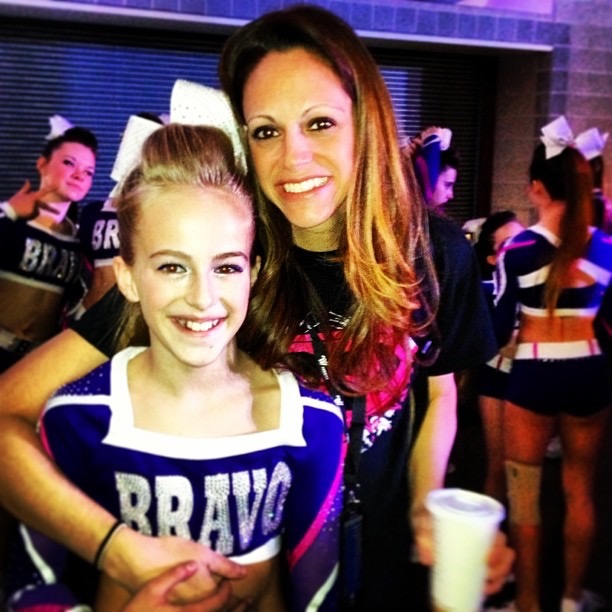 Callahan’s experience with the Summit: We took three teams to the Summit in its inaugural year. Everyone was so excited—it made the athletes feel special and it was well-run. The second year, we brought one team, and again, it was a good event, but we noticed that the culture in our gym changed in regards to the way we competed. We’re a small gym that has always competed everywhere—big competitions, small competitions, even high school gym competitions. [With the advent of the Summit], we started getting resistance to the smaller events from parents, athletes, and even ourselves. They no longer felt worthwhile because there were no big qualifiers; we wanted to put all of our money toward bid events.
On pressure from parents to cater competition schedule to Summit bid events: This year, the Summit is dictating how we compete. We’ve cut our schedule down significantly, and we focus mostly on bid events at this point. The first question I get from parents about a competition is, “Is it a Summit bid?” Before, the questions were: “Who are we competing against? How many teams are in the division? What’s the lighting like?” Now it feels like those things don’t matter, and all of the other competitions have been devalued. Athletes and parents want to be part of Summit teams because they feel like they’re more prestigious.
On whether younger athletes may get burnt out or desensitized to high-level competition: I don’t think that has happened in our gym for the first two seasons we’ve done the Summit, but I’m not sure what it will create this year. I’m a bit nervous of animosity between teams if one gets it and the other doesn’t. That hasn’t happened yet, but now that the athletes have had a taste of what the Summit is like, I’m afraid it could. I don’t want my kids to only find joy in cheerleading if they make it to the Summit.
On the issue of coaches “leveling down” athletes to be more competitive: There is sandbagging all across the board—1000 percent. Why is there a rule about Level 5 athletes crossing over to the Summit? Because everyone wants to take their best athletes and win Summit rings. As much as I’d love to take a Level 4 team and make a Level 3 team for Summit, I wouldn’t do it, but that’s not to say it hasn’t been done by others. In the past, we didn’t have to build Summit teams—athletes came, they tried out, we placed them on level-appropriate teams, and we competed. Now, many gyms are specifically building Summit teams the same way they build Worlds teams. The success or failure of the season was never qualified by one event, and that’s what makes me slightly nervous in future going forward.
The bottom line: So far, the Summit has been a mostly positive thing for us—the kids and coaches have had great experiences. However, going forward, I don’t know what impact it will have on gyms like us now that there is a prestige around it. Families may say, “This is the competitive route we want to take, and if you’re not doing it, we will go to XYZ gym.” It has really monopolized the competition season for me this year, so I’ll be curious to see how the season ends and whether the happiness of our parents and athletes will depend on whether we make it to the Summit.
 Smith-Pope’s experience with the Summit: At the onset, I was one of the loudest people who wasn’t a fan [of the concept]. My mind was changed last year, when my daughter’s team won a bid and we attended the Summit for the first time. I was amazed by the production level and the professionalism—the event was fantastic. Seeing the level of excitement reinvigorated me as a coach. We get so bogged down with the very top level of the sport and cheerlebrities; these kids are so genuine.
It restored my belief in where we’re headed as an industry, and it was just as competitive as any Worlds division I’ve ever watched. These teams have the same dedication and level of perfection [as Worlds teams]; it’s been a long time since the sport has seen that much of a challenge in a day where everyone wins a trophy. I believe the Summit will only serve to grow our sport.
On whether younger athletes may get burnt out or desensitized to high-level competition: There’s always that fear. I would really like to see the Summit transition toward the Junior/Senior age bracket and away from Youth, Mini, and Tiny teams so they don’t get burnt out. I’d especially love if the Summit incorporated more focus on Junior 5 teams and made that division a bigger deal—if coaches focused on that rather than trying to rush Worlds teams, I believe they’d experience more long-term success.
Overall, I think it would lengthen the career of our athletes if we would consider making the Summit exclusive for Junior and Senior teams.
On pressure from parents to cater competition schedule to Summit bid events: If people think strategically, they’ll realize that this event centralizes talent and makes a more competitive environment all season long. It also gives a heads up to teams that are more developmental for their level, so a coach can say, “This competition offers a Summit bid—maybe I shouldn’t put my brand-new team in that mix.” It’s an opportunity for gyms to offer two different products [to their customers]: one that’s on the [Summit] path, and one that is more about training the athletes.
On the issue of coaches “leveling down” athletes to be more competitive: I think that’s always been the case. There are increasing numbers of teams who are 100 percent competitive with very high-level athletes that have all the maxed-out skills; that wasn’t the case even two years ago. To be competitive [in the future], gyms will have to have a full roster of kids with every skill.
On possible solutions/improvements: I would prefer for Summit bids to be given more regionally to avoid extensive travel costs. My Worlds teams are already traveling far too much this season—at some point, you have to put the brakes on. I can’t imagine the same families having to do that for years leading up to this experience. As fun as the Summit is, you have to think long-term.
The bottom line: I think the Summit gives kids an opportunity to have a major goal on their mind throughout the season, and gyms more opportunity to be successful and legitimate. Imagine how many incredible gyms will come out of this concept! There’s major growth potential and that will increase overall numbers. And the more athletes are in the sport, the more economical it is. Long-term, it will really boost the industry as a whole.


