

In addition to all the great content we bring cheer professionals in our quarterly print issue, you’ll find plenty of original exclusive content right here at TheCheerProfessional.com.
Keep checking back for all the latest and greatest news, updates, debates and more!
Prior to taking the floor for a 2010 competition, former Shine Athletics owner Sydney McBride wrangled her team into the warm-up room where they did a quick final run-through of their routine. Everything was right on schedule, until an unexpected accident occurred. One of McBride’s girls tumbled to the floor, landing on her arm and suffering an open break. The injured all-star cheerleader was scared, in pain and lying on the floor—unable to lift her limb. Someone dialed 911, but it took a full 15 minutes for an ambulance to arrive.
“In those types of situations, when an athlete is in pain, 15 minutes can feel like an hour,” says McBride. “The venue was in a remote area, and there were no medical personnel on site. We just had to sit there with her and wait!”
This isn’t the first time that a wounded cheerleader has suffered from the lack of on-site emergency staff at a competition. Cheer Extreme owner Courtney Smith-Pope once had to wait 21 minutes for an EMT to arrive and tend to one of her injured athletes. On top of that, she says delayed medical attention has even been an issue at competitions where there are stationed medics onsite. “I’ve had several situations where the kid just lies there and the lights go off. The competition may have one EMT, but he’s 16 convention booths away. It can take so long for help to get to your kid. It’s terrifying!” says Smith-Pope.
As we approach the upcoming cheer season, coaches, parents and gym owners are calling for events to step up their game and implement more effective emergency response protocol. After speaking with some key players in today’s competitive cheer world, we came up with a list of suggestions for ways in which event organizers and cheer professionals can work together to ensure that athlete safety is the number one priority.
Allow on-site medics to give the final say on whether the athlete should return to the floor or not. During 2015 Worlds, Smith-Pope had two members of her co-ed elite team suffer pre-performance injuries. One girl got hurt on the warm-up floor and, to make up for the handicap, one of the male athletes attempted a move that was unrehearsed, fell and tore his ACL.
As Smith-Pope points out, a lot of commotion occurs when an athlete is injured—and this case was no exception. “You’re standing back there like, ‘Oh, you got it. You can do it.’ But [gym owners and coaches] don’t know. I actually appreciated the fact that they said, ‘No. The kid is not going back in,’” says Smith-Pope of the medics at Worlds. “They were fantastic. It takes the decision off the coach in an already stressful situation, and I appreciated that it was a trainer having the say.”
It’s not always fully up to the event producer, though—Billy Smith of Spirit Celebration says that while paramedics at his events may voice their opinions on an injured competitor’s situation, athletes’ parents often come down from the stands and override the decision on whether or not their children should go back in and compete. “Sometimes we have to rely on the age of the child, too,” he adds. “If it’s an older athlete, they know their bodies more, versus a younger athlete.”
Ensure better cell phone reception. Many gym owners report that a lack of cell phone service can be one of the biggest obstacles to ensuring prompt attention to athlete injuries. Competitions are often chock-full of parents and athletes, many of whom are on their cell phones in between exhibitions. For this reason, being able to nab a signal in an emergency situation can be challenging, and cheer professionals say they could benefit from event organizers working to outfit their competition sites with mobile hotspots and devices that help facilitate better cell phone coverage.
This is an issue that is also recognized by many event producers, but Smith says it doesn’t affect his emergency response abilities. “To get around this, we don’t use our cell phones at all,” he explains. “We have a manager over each area that has a walkie-talkie and paramedics on-site that are also equipped with one.”
Put a proper emergency response plan in place. McBride suggests that event organizers place banners up that inform competition attendees of what to do in the event of an emergency. “In those panic situations, you don’t always know how to find someone or how to get someone there quickly,” she explains. “You have so many different people in different places that it’s important to actually take the time to make sure everyone is aware of how to get help.”
An event’s emergency response plan should include information such as the address of the event hall and instructions on how a parent, coach or athlete should go about finding an emergency response personnel member in the event of an athlete injury. “When you’re at these big events, a lot of people don’t know the exact address. I can tell you, ‘Hey, I’m at the Orlando Convention Center,’ but what’s the actual address?” says McBride. “It’s little things like that. How can we make help come faster, and how can we help ourselves better?”
Smith says Spirit Celebration tries to keep its attendees in the loop by sending out emergency information to coaches prior to events. “[It’s included] in pre-literature that we email before the event, and then at the event, they have to read it and sign off that they are aware of our emergency response protocol,” says Smith.
Call on paramedics strictly for emergencies. Smith would like to remind coaches that his paramedics are not the same thing as trainers. “They are not there to tape ankles, only to handle emergency situations,” he explains. The Spirit Celebration producer suggests that coaches take a class to learn how to tape their own athletes and that they tend to minor scrapes and cuts, keeping the EMTs free to handle the high-risk situations.
Station a paramedic at a central location. When an athlete gets injured at a competition, people don’t always know where to find the on-site responder. As a remedy, gym owners suggest that each competition place their medical personnel in the same, easy-to-find location within the arena. “It may not be feasible to have stretchers in every performance area, but I think having medical personnel—even if it’s an assistant or somebody that at least has a radio or the ability to perform CPR—parked at the music station where a coach is already positioned would be a great idea,” says Smith-Pope.
Establish consistent rules. According to Smith-Pope, the rules for how injuries are handled during competition need to be consistent across the board. “Your first impression is shocking, especially when you see a very ugly brutal injury. You have to think to yourself, ‘If I push stop, does that mean we get disqualified? Do we start over? Do we start from the beginning? Do we go full out and take a deduction? There needs to be a policy that no matter what competition you’re at or what event it is, the same thing happens when a kid gets hurt,” she suggests.
For Smith’s part, he stresses that that every competition does things differently—and he doesn’t see that changing anytime soon. As such, he believes that it’s best for coaches to take a moment before each competition to educate themselves on each event producer and their policies. One area where Smith would like to see improvement is better boundaries industry-wide: “I don’t understand why you can step out of bounds with both feet before you get a deduction. Some of our floors have a drop-off, and some have slanted foam that is not safe,” says Smith. “We have to establish a boundary and a safety guideline that being out of bounds is not safe. [The fact that] we don’t have that in our sport just blows me away!”
McBride agrees that some reform is necessary. “Keeping our kids safe needs to be the number one priority,” says McBride. “The best way to do this will be to make sure that competitions have some sort of safety professional there and that parents, coaches and athletes are all familiar with the established safety protocol going into the competition.”
–Nicole Pajer
Fundraising Case Study: Xtreme Athletics
jen : November 24, 2015 12:20 pm : Down to Business| Web ExclusivesFundraising is a challenge all gyms face, but done right, it can be an exciting, memorable experience for everyone involved. For inspiration, we’re interviewing gym owners who’ve found ways to put the “fun” in fundraising. Meet Josh Filiault, owner of Troy, AL-based Xtreme Athletics. For the past four years, Filiault and his team have organized a highly successful zombie-themed 5K run, raising as much as $25,000.

How does the zombie run work? It’s a 5K race, and “zombies” are scattered throughout the course. We get volunteers—athletes, parents, coaches—and they dress up as zombies. You can sign up as an individual or as a team, and most of the teams wear costumes. Each runner gets a flag football belt with detachable flags, and the goal is for them to get through the entire 5K with at least one flag left on their belt. If they do that, they’re considered a “survivor.” We charge each runner $30, and every runner that comes through the race gets a T-shirt, a meal (chips and a hot dog) and a bottled water at the end. We set it up out in the woods, including obstacles. (My business partner has about 100 acres of land with a lot of natural trails, and we bulldozed it level.) We tie our gym sponsorships through it all; we’ve found we get a lot more sponsorships going toward the race than going straight into the gym.
How are the sponsors involved in the race? There are two kinds—monetary and goods. The first year, we had a lot of expenses because we had to buy the belts and get the trail ready, but for the past couple of years, we haven’t had many expenses. We do medals for the survivors, so that’s around $100+ a year. Almost everything else is donated, including the runner packets. I don’t think of the T-shirts as an expense, because it’s built into what we’re charging them.
Our platinum sponsors pay $650 for a 4’x8’ banner. They can design it however they want, and we hang it up in our gym for one year. Our platinum sponsors, we advertise pretty much everywhere we can—their logo is on the shirt, and they can hand out whatever they want to at the race. Gold sponsors get a smaller banner, their names on the T-shirt and are able to hand things out at the race. At the silver level, we put the logo or name on the back of the T-shirt. We also give the businesses free cards for our “Kids Night Out” and allow them to have a free team entry of three people into the race. We try to make it a big deal that whoever supports us, we will support those businesses.
How has the event grown? The first year, we had about 175 runners. We didn’t have a lot of sponsors, but we raised a couple thousand dollars and were pumped about that. It was a lot of work, but the volunteers that were zombies and the runners had fun doing the race. Every year, people keep coming back to it. This year, our goal is 500 runners. We’re in a relatively small town, but we have a lot of people that drive in for it. Last year, we raised between $20,000 and $25,000, and our goal this year is $30,000. We have some teams going to Triple Crown this year, and we want to raise enough money to pay for their charter bus to Dallas, their entry fee and at least half of their trip to UCA Internationals.
How do you promote the zombie run? Word-of-mouth is a big part of it. We have a guy who works for us who’s a graphic design major, and he does posters for the run. We print 300 14×17” posters for about $1 apiece in our area and hang them up wherever we can within an hour’s drive. We also reach out to runners’ clubs that are nearby. We’ve had people drive as far as four hours to come to the race because their runners’ club liked the idea of it.
What advice would you give another gym that’s interested in setting up a 5K fundraiser? Be organized and start planning early. We do the run in October, and we start planning it in May. There are so many races nowadays that if you don’t start advertising it as early as possible, another race will pop up and take runners away from you. We experienced that the first year—there were like four races the same weekend as ours. The second year, we started communicating with some of the other races, and worked together to make sure we weren’t on the same weekend.
Really think through the whole race—making sure your water coolers can stay cool, that you have people managing those stations, that the zombies are getting water and that they’re not out there dehydrating themselves. Where we are, parking is an issue, so we have a shuttle service that brings people out to the woods. Make sure that your volunteers all understand what’s going on. The zombies sometimes get competitive and see who can get the most flags, but it’s not a fun race if you get through the first half-mile and have no more flags because the zombies were too aggressive. We do a zombie training session before the race; some sprint, some crawl, and some don’t try to get a flag at all but just try to scare you. This year, we’re actually doing it on Halloween, [followed by] a Halloween party at the gym that night. It’ll be a long day, but everyone’s going to be talking about it and it’ll end up on social media.
–Lisa Beebe
For Pam Duke, owner of Nor’Eastern Storm, recognition as USASF’s 2015 “Small Program of the Year” means everything. It’s validation of her vision, dedication, perseverance and aspirations. The only problem is that she doesn’t operate like a small gym—which just might be the key to her success.
Going into her 10th year, Duke has learned a thing or two about how to succeed in the all-star cheer industry despite living in an area with limited population. Located on the eastern shore of Maryland, an area that does not realistically have enough potential athletes to support a large gym, Duke makes the most of what she’s got…and that’s a lot.
The small-but-mighty gym’s owner started thinking big from the start. She studied other gyms, particularly the success of another then-small gym she admired, Washington D.C.’s Crimson Heat. Aside from the success of the program and its stellar athletes, the faith-based, non-profit program had another impressive element: Jon Rolle, who coaches Crimson’s Worlds team, 5 Alarm.
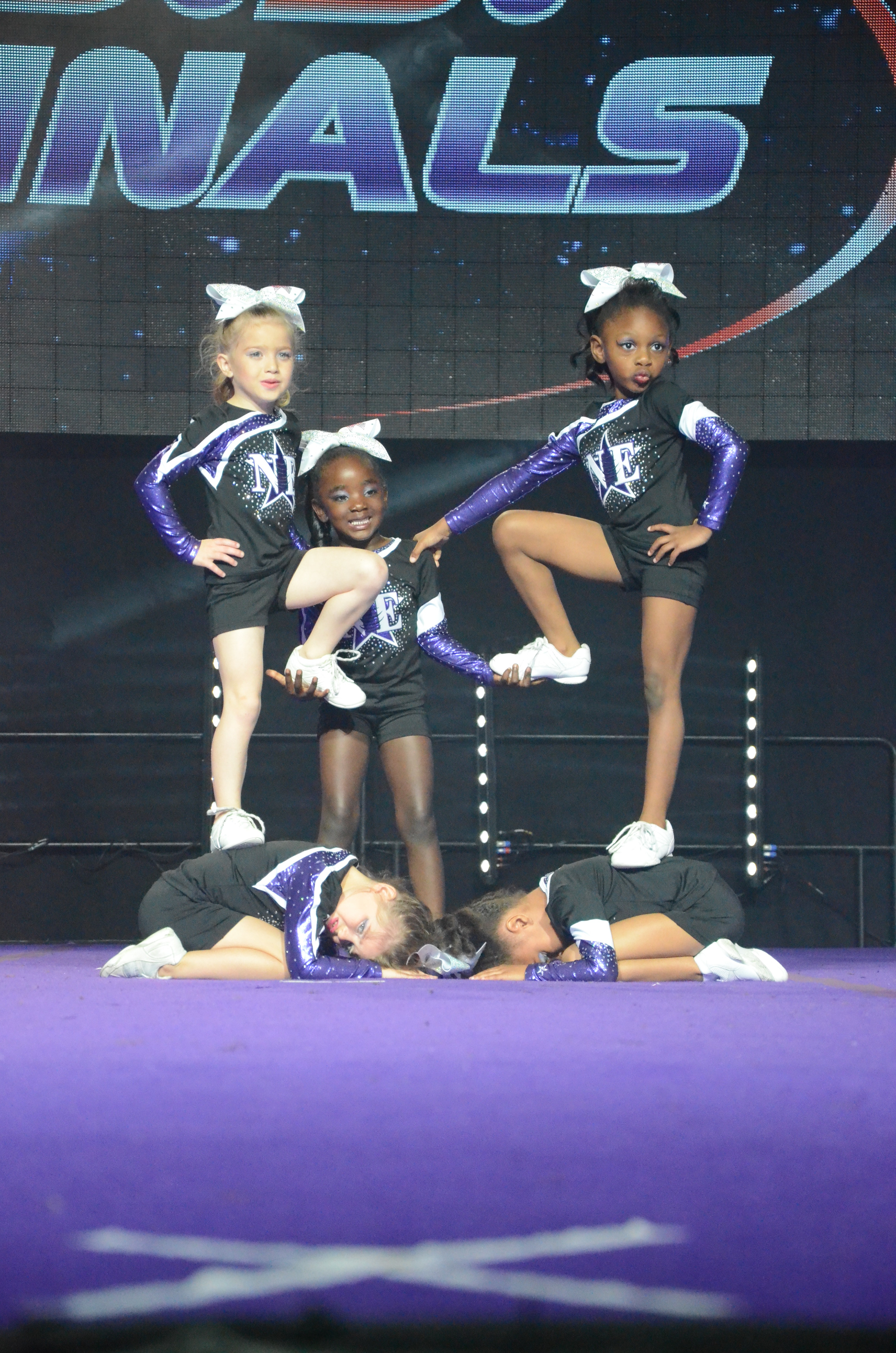 It didn’t take long before Duke recruited Rolle (also Crimson Heat’s cheer program director) as her choreographer. He instantly became an integral part of the Nor’Eastern family, adding friend and mentor to his title. And while camaraderie comes first, technical skills and staying current are a close second. With so much innovation coming out of the larger, more advanced cheer gyms, Duke never underestimates how important it is keep up with the curve.
That’s where Rolle’s expertise comes in handy the most—he’s helped the gym bring home recent titles such as 2014 Level 1 Grand Champions at U.S. Finals and 2015 Level 4.2 Senior Cheer Champions at JAMFest. The program also won IEP’s “I-Award” for 2013-2014, recognizing the qualities of integrity, enthusiasm, and passion. “[Jon] is our catalyst for helping us stay in the forefront of competition,” she says. “He has been amazing for us.”
It is no surprise to Duke that Rolle shares the spotlight with her this year, having received USASF’s “Coach of the Year” award. “He is such a supporter of the industry, period, that I just feel so tremendously blessed to have found him,” Duke says. “I almost feel like it goes hand-in-hand with us getting Small Gym of the Year. We have been together so long that it almost seemed like a natural thing to happen.”
And it’s not just the athletes who notice the difference. “All of our parents who come from other gyms, one of the most important things they notice is that we are willing to go outside the box and not just rely on in-house choreography. We are willing to invest in their children by bringing in the experts to make my gym, their team, their program, the best it can be the next season,” adds Duke.
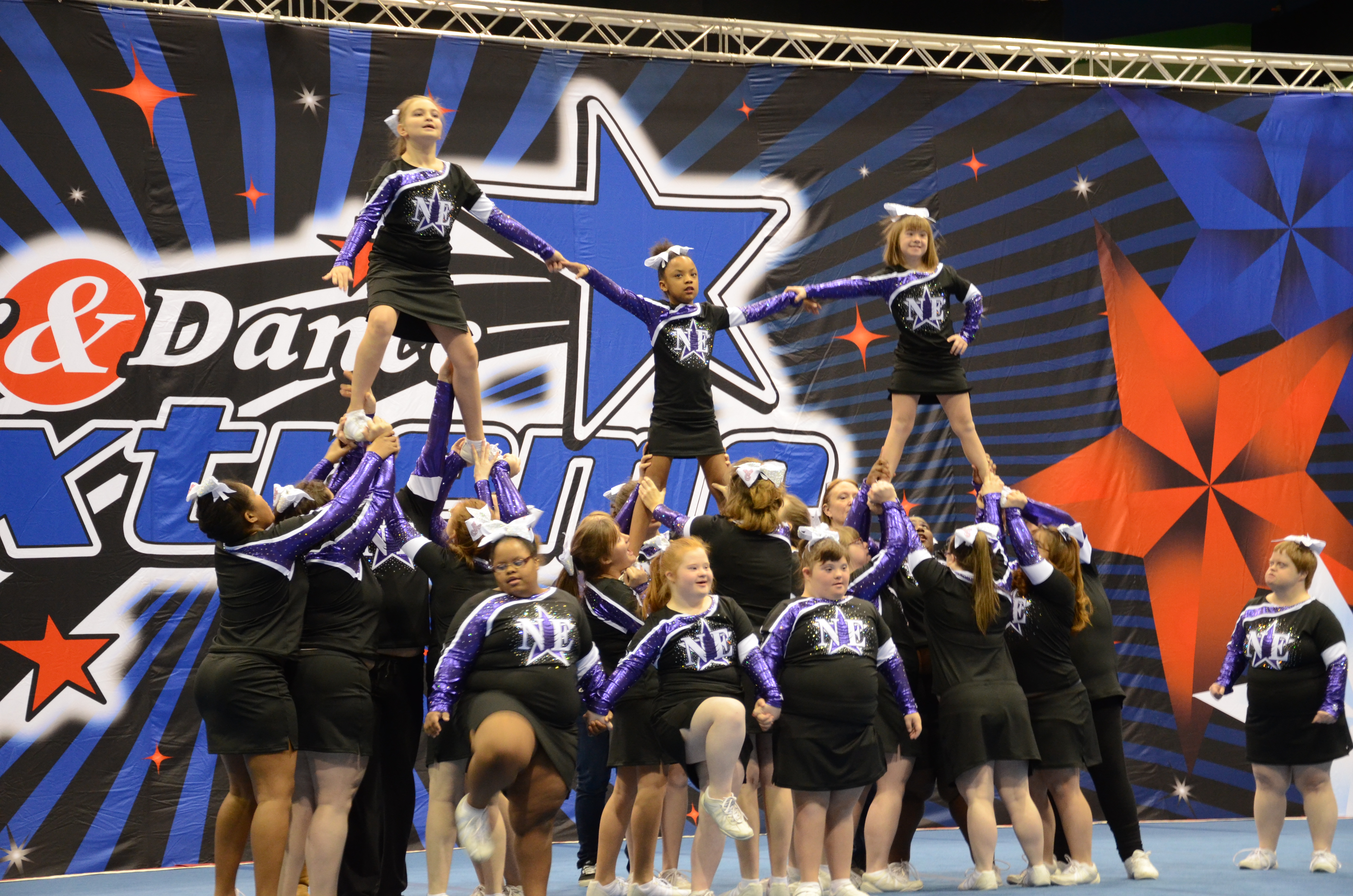 Duke digs in her heels, too. At every competition or event, she can be found tracking down EPs and nurturing relationships, getting her gym name recognition and building its reputation while learning from others’ successes. “I look at these gyms, and I think, ‘Wow, how does somebody become that?’” Duke says. “But I am realistic. That is not going to happen in my area. But I can make my small gym feel as big as them to my kids and my gym family.”
The biggest challenge back home, she says, is educating people about the sport and getting new people through the doors to see the great things happening inside. She does so by passing out flyers at athletic clubs and setting up booths at family-friendly events and fairs. She doesn’t shy away from guerrilla marketing, but her best weapon is word of mouth.
Cheer titan Kevin Brubaker instilled that in Duke from the start. “He told me all the money in the world spent on advertising isn’t going to do as much as word of mouth,” Duke says. “[It’s all about] that parent or that child that raves about your gym and says good things about the coaches and the gym. I took that and ran with it.”
Once athletes join the program, retention takes care of itself because of the program and the family environment Duke creates—complete with movie nights at her house, swim parties, bowling excursions and more. The 12 girls from her first team are all still part of the program, with her first graduate heading to college this fall.
“They all know they are my children,” she says. “It is important to me. We need to be their second family. We need to be the place they can go to escape a bad day at school or to just have their own time to work hard and have fun.”
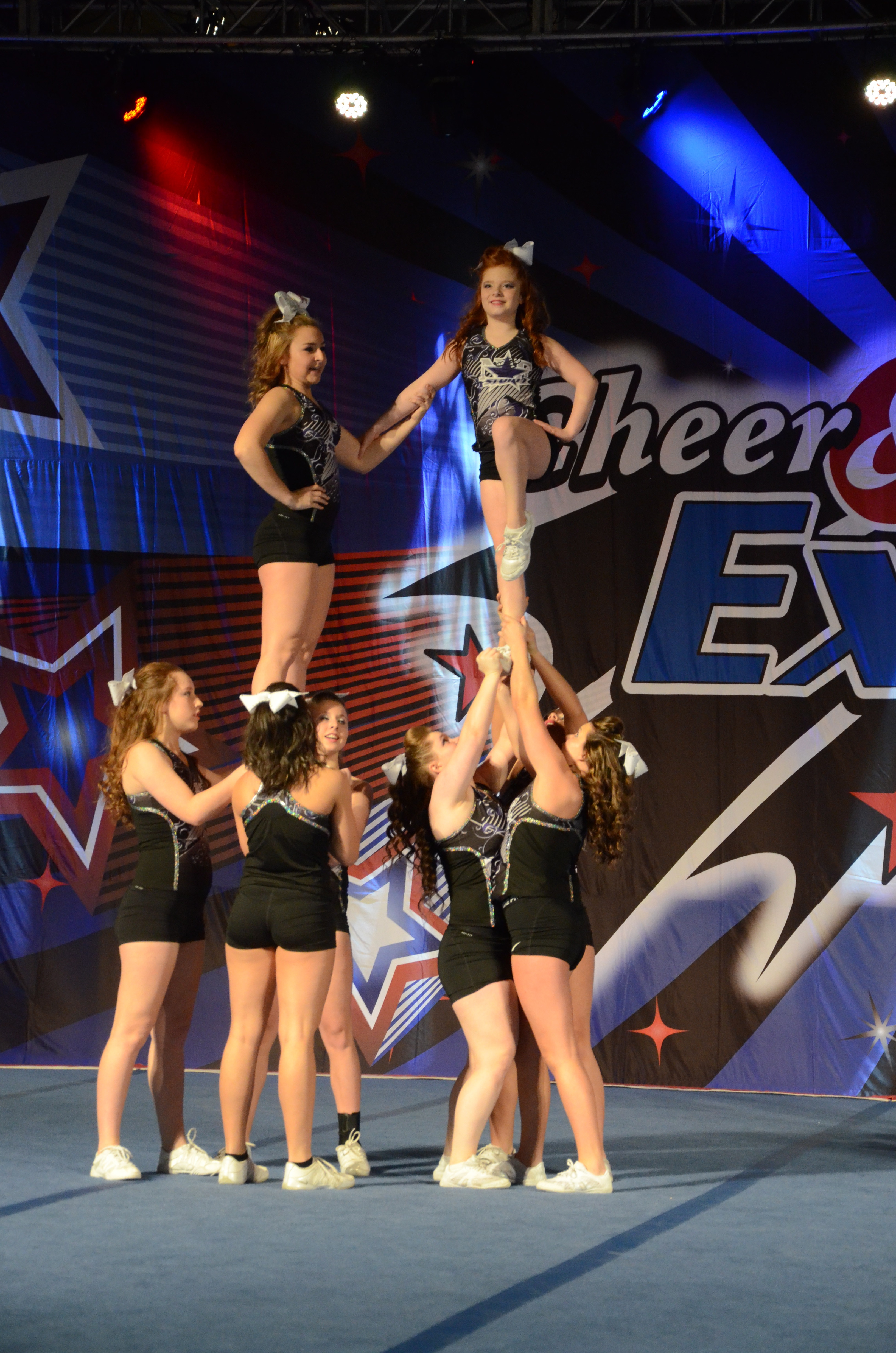 To keep things going, like most gyms, Duke has come up with ways to supplement her competitive teams via other programs that generate revenue. The gym offers prep teams and unique programs like this past summer’s Superhero Camp and a new recreational tumbling program, Galaxy Athletics, which opens the gym up for kids who simply want to learn to do cartwheels and handsprings in a no-pressure setting. Seeing that there was no other program locally offering a recreational gymnastics program, Duke seized the opportunity—and it was an instant hit.
She also accepted a request from the local AAA baseball team, the Orioles-affiliated Shorebirds, to run the team’s dance squad. The program brings more attention to the gym because of the exposure at games and has added some new faces to the roster in-house. It’s a unique dance offering in an area saturated with dance programs, in addition to Nor’Eastern’s own.
The program that is closest to Duke’s heart, though, isn’t about making money or growing the program. It’s the gym’s co-ed special needs squad, made up of athletes ages 8 to 32 with intellectual and physical disabilities. The team, led by coaches with special ed certifications, trains at the gym and faces off against other special needs teams at competitions.
“They want to be like everyone else,” she says. “It has been quite an education. It’s amazing.”
–Arrissia Owen
Should Your Gym Offer a Parent Viewing Area?
jen : November 11, 2015 1:30 am : Down to Business| Web ExclusivesOn the surface, it sounds like a great idea: provide a specially designated room where parents can watch cheer practice and see the hard work their kids are putting in. But some gym owners say that introducing a parent viewing area can open doors that remain better closed—and invite unwelcome feedback and drama.
That’s not the case for Karen Brenner, owner of All Star One in Egg Harbor Township, New Jersey. She vowed to always provide a viewing area for parents based on her own experience of not being allowed to observe her daughter at her dance studio. “I couldn’t stand it, I wanted to watch,” Brenner shares. “I like my parents—they’re my clients, and they should be able to watch what I’m doing with their kids. I feel like [having a viewing area] helps our parents be involved.”
 While that’s true, it can also be a liability when parents want to get too involved. “It’s hard to sit and watch someone do something and not think, ‘Oh, I would do that differently,’” explains Casie King, owner of KCK Wildfire in Brookings, South Dakota. “I think if anyone had people constantly watching their job and critiquing what they were doing, they would understand.”
For King, it’s a matter of setting clear boundaries and keeping the roles separate. “When [the coaches] walk in the gym, the athletes need to know to respect them,” says King. “If they’re looking up to see if it’s okay with Mom, that’s not going to work.”
With that in mind, King recently closed her grand viewing area completely after interviewing coaches and weighing the pros and cons. A business consultant told her she was letting her biggest asset go to waste: her gym.
King took the consultant’s advice to heart, and what used to look like a stadium VIP lounge is now two smaller rooms separated by doors. One side hosts a party area with tables and chairs, while the other is a classroom. King offers yoga, flexibility, jumps and conditioning classes, and also rents the space to a taekwondo teacher. She’s now maximizing all of her gym, which has helped her financially, reduced her workload (less cleaning to do), lessened her stress level and virtually eliminated any gossip or negativity.
And what about King’s cheer parents, who can no longer watch their child’s practice? “I was really nervous about it,” she says. “I thought we would have a lot of complaints, and we haven’t.”
At Midland, MI-based Michigan Storm, owner Tara Wieland does offer a viewing area, but has struck what she considers a satisfactory balance by being strict about its use and closing it during choreography, before competitions and “randomly when I feel like it.” Says Wieland, “Parent viewing is a privilege, not a right, and if it’s abused, they can lose that privilege.”
To that end, she has no qualms about dismissing a parent who fosters negativity or oversteps boundaries. When asked whether students or parents are the bigger gossip culprits, Wieland doesn’t hesitate. “If I could coach a team of orphans, I’d do it any day of the week,” she says with a laugh.
Wieland even installed audio and video surveillance in her viewing area to watch over the rumor mill, an investment she feels was well worth it. “Kids will get over it in two seconds,” Wieland says of negativity. “The minute Mom becomes involved, it is a huge to-do.”
If, like Wieland and Brenner, your gym does offer a parent viewing area, there are some ways to make it as hassle-free as possible. Most gym owners suggest an enclosed area, so that there’s no possibility of interaction between parents and kids during practice. Brenner also recommends that the room be on the same floor as the gym: “When you put people up overhead, you can see too much. Then the parents start telling you about lines and formation,” she laments.
At C&C Cheer Factory, owner Angie Crissman added another layer of protection by installing two-way mirrors on what she calls the “Fishbowl,” reducing distraction and serving a dual purpose: “[Students] can use the mirrors when we need them to see what they’re doing, but they can’t see their parents.”
As Crissman sees it, it’s vital to do whatever it takes to send parents the message that coaching is best left to the coaches. “Why are you here if you’re going to teach your kid by yourself?” she says. “[When parents] are yelling or coaching from the side, it’s distracting.”
And when parents understand that, it benefits everyone. “Parents have to trust you as the coach,” explains Wieland of Michigan Storm. “If they don’t trust you as the coach, the kids are not going to trust you, either.”
–Renee Camus
At the start of the 2015-2016 season, we wanted to know: what are your business and team goals for the upcoming year? CheerProfessional polled gym owners and coaches from around the country to find out. See what cheer pros from Ultimate Allstars, ACX Twisters, and more had to say.
 Jessica Cestare, Co-Owner, Coastal Athletics Cheerleading (Setauket, NY)
“This season, we are aiming to bring the love of cheerleading to new athletes. As a first year gym, we want all of our athletes to fall in love with the sport and the discipline, hard work, family atmosphere and new experiences of it all. We want them to find their ‘home.’”
 Justin Lenhard, Tumbling Director, Ultimate Allstars (Port St Lucie, FL)
“Our goals for this season are to continuing to grow our lower level teams and earn a bid to the Summit for cheer and dance. Also, we are aiming for paid Worlds bids for our senior and international dance teams and our Medium Coed Level 5 team!”
Nicki Haynes Baker, Co-Owner, Nebraska Cheer Center (Lincoln, NE)
“Our business/gym goals are to run a successful program that continues to be a second home to 250+ athletes—running a cheerleading business first, but helping and supporting all of these young athletes both on and off the mat. Being good mentors and leading by example. Our competitive program goals, similar to others, are to hit deduction-free routines and bring home wins, as well as being proud of weekly, monthly and yearly goals and new accomplishments. We want to put some amazing performances on the mat!”
 Mandi Spina, Program Director, Cheer Fusion (Fredericksburg, VA)
“This year, our goal as a program is to receive overall perfection in technique. Teams also set individual goals for Summit and Worlds; athletes were provided with goal-setting sessions to ‘work backwards’ toward their personal and team goals.”
 Michaela Gonzales, Owner, ACX Twisters (Columbia, SC)
“I want our gym to meet the demands of creativity and difficulty that the sport now demands—but still hold technique and proper progression at the heart of our program! Both are important to the sport, and now that the scoresheet equally rewards all three areas, it will be a challenge on the mat always.”
CheerProfessional wishes all gyms in our industry a successful and safe season! Here’s to 2015-2016 ushering in continued growth and prosperity.


