

In addition to all the great content we bring cheer professionals in our quarterly print issue, you’ll find plenty of original exclusive content right here at TheCheerProfessional.com.
Keep checking back for all the latest and greatest news, updates, debates and more!
Working Wisdom: Q&A with Steve Wedge
jen : November 14, 2012 1:13 pm : In the Industry| Web Exclusives| webexclusive2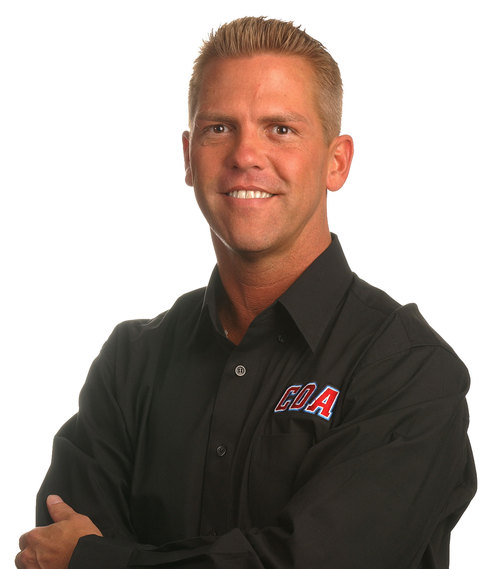 From the moment Steve Wedge got his first taste of competitive glory as an Ohio State University cheerleader, he was hooked. It was during Wedge’s first year of cheering that the squad brought home the title from UCA’s Ford Collegiate Cheerleading National Championships in Honolulu—and he hasn’t looked back since. Armed with a business degree and several years of choreography and judging experience, Wedge went on to start his own company, COA Cheer & Dance, where he was president and CEO for 25 years. By the time he retired in 2011, COA had grown to more than 100 instructional camps and 35 competitions.
Along with serving as COA’s fearless leader, Wedge has maintained involvement in a virtual alphabet of associations—from the National Council for Spirit Safety and Education (NCSSE) to the Spirit Industry Trade Association (SITA) to the International Cheerleading Union (ICU) to the USASF (for which he sits on the Worlds Advisory Board). Much of his time is also spent spearheading the Shirley A. Wedge National Cheer and Dance Scholarship Fund, which has awarded more than $600,000 to deserving athletes.
CheerProfessional caught up with this busy cheer mogul for an in-depth Q&A:
When weighing the various competitions and camps available, what factors should cheer professionals take into account?
Wedge: Cheer professionals should consider many factors when selecting competitions and camps, but many times budget and price are dominant factors. Parents can drive these two factors, but looking at the big picture, cheer professionals should also consider event/camp producer experience, reputation and quality, event/camp location (i.e. is it easy to get to and is it family-friendly?), fit (i.e. does the score system fit the style, skill and level of their teams), competition (i.e. will their teams have ample teams to compete with?), and of course, date.
You’ve said that customer service has been the key to COA’s success. How do you think cheer gyms can best provide optimal service to their own clientele?
Wedge: With all things being equal (i.e. sound skill development and coaching), it is great customer service that will retain current customers and attract new customers. Cheer gym clientele (parents and athletes) want to feel appreciated and the best way to accomplish this is by providing top-notch customer service through accessibility of gym personnel (especially gym owners); effective, compassionate and frequent communication; and last, but not least, transparency.
You work with Spirit Industry Trade Association, which focuses on industry issues and relevant topics. What in your opinion are some of the top concerns or issues facing cheer professionals today?
Wedge: Support, respect and professionalism. While we have come a long way in these areas, we are only as strong as our weakest link, so all cheer professionals must continually strive to promote and exhibit positive actions, images, and beliefs to others involved with the cheerleading industry, as well to those in the general public.
You also sit on the ICU Safety Council. What’s your response to the media reports and people who say cheerleading is unsafe?
Wedge: Media geared towards the general population needs readers/viewers, and one way they capture an audience is by generalizing, sensationalizing, and sometimes making conclusions without complete information and sound data. These media techniques have plagued the perception and reputation of cheerleading since at least the early 1980’s. Like all sports, cheerleading also possesses inherent risks. However, the risk of injury can be mitigated with the proper equipment and environment, and continuous education and training of coaches and athletes.
Your Shirley A. Wedge National Cheer and Dance Scholarship fund provides college scholarships for high school juniors and seniors. Do you have any tips for cheer gym owners who want to help their athletes procure college scholarships?
Wedge: Gym owners can help their athletes procure college scholarships by providing consistent promotion and exposure at competitions and by networking with college coaches and choreographers. If the best cheerleading athletes in the world are not given these platforms, college programs that provide scholarships will have a difficult time discovering them.
Your cheer career spans more than 30 years—what do you think the future holds for all-star cheerleading?
Wedge: All-star cheerleading has a firm foundation in the United States and an ever-growing presence in the world due to the efforts of the USASF/IASF and the ICU. In recent years, the growth pace of all-star cheerleading has slowed (some would say stalled) in the United States, but I believe that will change as we continue to emerge from the Great Recession and the next wave of athletes choose to become gym owners. As far as the rest of the world is concerned, I firmly believe this is still the area of greatest growth potential for all-star cheerleading. In five to 10 years, I would expect there to be more all-star cheerleaders in the rest of the world than there are in the United States.
What’s your personal motto or mantra for success?
Wedge: Work harder than everyone else, do it ethically, with dignity and humility, and treat others with kindness and respect.
If you could give the modern cheer professional one piece of advice, what would it be?
Wedge: Respect your profession and your colleagues by setting the bar high and always strive to do things that will advance the profession as a whole.
Game Changers: Jessica Smith of Southern Cheer Elite
jen : November 14, 2012 1:07 pm : In the Industry| Web Exclusives| webexclusive1 When Jessica Smith first started her Danville, KY-based gym, Southern Cheer Elite, she stacked her shelves with all the business books she could get her hands on. But the primers didn’t prep Smith with the intel necessary for success—either the information wasn’t industry-specific enough or didn’t have practical applications for her own business. One thing was clear: Smith was going to have to find her own way to make it as a small gym owner.
She tossed the books and followed her own instincts to create a thriving business in the world of all-star cheerleading. In two years, Southern Cheer Elite has grown from 12 to more than 130 athletes—a stark contrast to its humble beginnings. “I started my business with $30 worth of borrowed equipment,” she remembers. “We slept on the floor of our apartment and I worked 60 hours a week as a waitress.”
Smith was soon able to say sayonara to her day job, progress that she credits to following her gut. According to Smith, most of the experts in the books she read recommended diversification—advice she chose not to heed and has since seen a growth of 20 percent. Instead, Smith turned her focus to exceeding customer expectations and incorporating personal touches in her dealings with families and athletes. “You have to go out there and hustle and be a part of people’s lives,” says Smith. To do so, Smith and her staff do everything from sending birthday cards to giving out long-stemmed roses at competition. Even the invitation to join their team spreads the proverbial love, as it resembles a wedding invitation.
It’s all part of Smith’s philosophy that cheer parents are actually her employers—one she believes that many gym owners forget or neglect. Smith says many owners believe that everyone is replaceable, but at Southern Cheer Elite, that’s not the case. To minimize commuting and maximize convenience, Smith often goes as far as to change class times or let parents bring kids of different ages at the same time. She also seeks parental input when it comes to scheduling meetings: “We don’t just tell them when it will be,” says Smith. “I’m going to be that person that accommodates them.”
Part of the reason Smith values her cheer parents (whom she calls her “advocates”) so much is her belief that they played a big role in the rapid growth of Southern Cheer Elite. Many parents took it upon themselves to refer new business along with their own, with one mom even bringing in 30 new athletes she’d rounded up. “Our business is forever indebted to those people who took a chance on us,” says Smith.
Smith’s employees are also vital to her success. She’s willing to train the right staff members, even if they have no prior experience in the cheer business—an approach she calls “growing your own staff.” She pays them more than she pays herself, a sacrifice she makes willingly. “They’re worth more than I am. I can’t do it without them,” says Smith, who didn’t take a salary the first year, and even now—like many business owners—is the last to get paid. “You have to be willing to be poor for a while,” she concedes.
For Smith, however, it’s a conduit to following her passion—and the eventual success of her business has allowed her to do just that. “If I won the MegaMillions on Friday, the only change you’d see is that I’d probably have a bigger facility. There can’t be a Plan B in starting a program,” says Smith. “You have to be all in.”
Going for Broke: Top 5 Money Mistakes
jen : November 6, 2012 3:16 pm : Down to Business| Web Exclusives| webexclusive2 While teaching a profitability seminar at the 2012 Worlds, ACX owner Randy Dickey made a startling discovery. “Out of 160 gym owners, not one raised their hand when I asked this question: how many of you know your hourly expenses for running your company?” remembers Dickey, who also leads the All-Star Gym Association. “Many of them were just charging the same as the gym down the street—they didn’t realize that they were losing profit because they weren’t charging enough.”
Lack of financial clarity is just one of many common mistakes made by business owners. We asked Dickey for his take on common financial pitfalls and the precautions cheer gym owners can take to steer clear of making them:
1. Launching too much, too fast: Though the exciting nature of starting an all-star gym can make it tempting to go all in, starting small is often more conducive to longevity. Dickey first opened ACX in 1996 with “very minimal equipment and very small debt,” renting space out of a local gymnastics facility on a percentage basis. “As we made money and grew our clientele, we then used the profits to buy more,” he explains. His gradual investment approach ended up having an unintended benefit: “We were always surprising our existing clients by constantly adding new elements such as a new floor and extra space. When you give everything away at first, people don’t appreciate it as much.”
2. Not taking all expenses into account when budgeting: When figuring out your monthly “break-even” budget, Dickey says it’s essential to factor in everything from property taxes to estimated tax payments to payroll to website hosting. “Take all of your bills and divide the total by how many hours you’re open—if you’re not making that much per hour, you’re in trouble,” says Dickey. To better plan ahead, Dickey keeps a monthly log of not only expenses, but also key milestones or financial factors of note (i.e. payroll being tight, enrollment fluctuations); he then refers to it the following year as a barometer of what to expect each month.
3. Not planning for setbacks or disasters: Even the most efficient entrepreneurs can’t control the unexpected—from storm damage to vandalism to our volatile economy. Although there’s no way to avoid these hardships, you can prepare for these events by having adequate insurance, backup money (cash and lines of credit), and more than one contingency plan in place. “We have every type of insurance you could imagine,” shares Dickey. “It’s also important to know the difference between replacement cost value and actual cash value.” (Replacement cost insurance is preferable, as it typically will replace the damaged item whereas actual cash value insurance takes depreciation into account.)
4. Letting competition distract you from the bottom line: “There are two types of gym owners: those who want to make money and those who want to win,” says Dickey. “9 out of 10 times, you can’t do both.” Dickey cautions against giving too many scholarships or making financial exceptions for top athletes, as that can backfire in a number of ways (such as resentment amongst other teams in the program and/or resulting loss of business).
5. Mixing business and personal money: When it comes to spending, the famed “KISS” adage applies: “Keep it separate, silly!” Having dedicated bank accounts and a business credit card is a must, not only for tax purposes but also to establish legitimacy; personal finances should be a completely separate entity from that of your cheer gym. Another enticing reason? Racking up rewards points on your business credit card can help you save on significant expenses. Dickey uses his American Express points to pay for coaches’ flights and hotel rooms when traveling to competition.
Shares Dickey, “It saves a lot of money over time.”
Spotlight: Morton Bergue of CheerGyms.com
jen : November 6, 2012 2:58 pm : In the Industry| Web Exclusives| webexclusive1 When in doubt, diversify, diversify, diversify. For CheerGyms.com owner Morton Bergue, all-star cheerleading is just one part of a bigger puzzle, as it comprises one-fifth of overall business. To maximize profitability, Bergue and his team regularly host classes and stunt/jump clinics for novices and school squads, and space is rented out during non-peak hours for everything from birthday parties to Tae Kwon Do classes. Much like master classes at a dance studio, Bergue also orchestrates weekend workshops with notables like Victor Rosario and Debbie Love.
The move isn’t just a smart business strategy, but a necessary one—says Bergue, “It’s the only way to make a gym paying California prices work.” (Bergue pays around $1.25/sq. ft.) It’s also a branding tactic for Bergue, who says the phrase “cheer gym” is perceived as more inclusive by their customer base. “You call it an all-star gym, and high schools and youth groups don’t want to come because they’re afraid you’ll steal their kids,” he shares. “My philosophy is that as a ‘cheer gym,’ you open up your money a lot more. Otherwise, you’re completely reliant on all-stars.”
Bergue’s philosophy also translates to competition, which isn’t as much of a focus for CheerGyms.com as team bonding and family atmosphere. “I’m an old dinosaur. I try to run [this business] on integrity and make the kids have a good year, not be all about winning,” he shares. “Worlds is just one percent of our industry—most kids are levels one, two, or three. That’s the kid we want to nourish.”
 This practical approach has been key to Cheer Gyms’ success and longevity. The program’s roots were first laid in 1995, when Bergue left his post as NCA’s West Coast Director to team up with Danny Kahn (who created the first all-star team in the country in the mid-80s) and then-owner Patricia Reith. The trio launched what was then known as Pyramids, Inc. with an enrollment of 25 cheerleaders. 27 years later, Cheergyms.com is one of the longest-standing programs in the country, boasting three gyms, 200 all-star cheerleaders, 800 class cheerleaders, and regular engagements with 15 high schools. “We got into this business at the beginning,” says Bergue.
Along with the growth of his own program, Bergue has immersed himself in the international sector of all-star cheerleading, where he sees a lot of growth potential (largely thanks to greater exposure in the media and on sites like YouTube). For the last decade, Bergue has been judging national competitions in London and has also appeared at camps, clinics, and conferences in Japan, Mexico, Canada, and other countries. “Opportunities in other countries range from judging to clinics to speaking to choreography,” Bergue says. “Many [cheer professionals] are taking advantage of this boom of cheer across the world and making good money on it.”
And he’s paving the way.
Spotlight: Stingray All-Stars
jen : October 31, 2012 11:57 am : In the Industry| Web Exclusives| webexclusive2 On the surface, Stingrays duo Casey Jones and Roger Schonder may come off like polar opposites, but one commonality shines—for both of them, all roads lead back to cheer. Jones began his career cheering at Georgia Southern University, then cut his teeth at Pro Cheer before purchasing American Cheer Academy from Tate Chalk in 1998. When he reinvented the gym as the Stingray All-Stars in 2002, Schonder was on the verge of leaving the industry altogether and becoming a pilot, but shifted gears to join Jones’ new venture as the fledgling program’s all-star director.
And what a difference a decade makes—as Schonder’s talents have taken flight in an entirely new direction. “When we planned this out, we wanted our all-star program to be the best in the world,” shares Jones. “That’s what we are always striving for.” Adds Schonder, “We both had the same vision. We wanted a program that was successful at every level and age group.”
Many would say they’re well on their way to accomplishing that shared mission, consistently placing in the top 3 at Worlds and winning a slew of national championships at NCA, JamFest, and others. (The Stingrays hold six Worlds titles in the Small Senior division alone.) In 10 years, the gym’s manpower has more than doubled—from 9 teams with 200+ athletes to 18 teams with 500+ athletes. In April, the Marietta, GA-based gym also expanded to include a second location about 30 miles away in Johns Creek, GA.

Casey Jones
“I spent a year trying to decide whether to start [a new location] from scratch or buy out a smaller gym,” says Jones, who now splits his time between Marietta and Johns Creek. “We ended up buying out the All-Star Panthers, which was on the side of town we wanted and felt like a great fit. Now I’m focused on trying to grow and set the right foundation—we want [Johns Creek] to be equally as successful.”
The two are willing to put in the extra time to make that happen, and frequently take bike rides or make Starbucks runs for the sole purpose of discussing strategy. In running the program, Jones says he and Schonder often get “lumped together” by people outside their business, but make no mistake: the two each have distinctly different roles in shaping its success. Jones, the business guru, has gradually gravitated away from coaching to focus on the bigger picture—including tumbling classes, school teams, and 100+ summer camps—while Schonder keeps his creative energy laser-focused on raising the bar for the all-star program. The result? A dynamic left-brain/right-brain-esque synergy.
“To me, [Roger] is the best in the business at what he does,” says Jones. “He’s constantly trying to make our program better and really takes the time to study the sport. He truly has an eye for detail and an ability to get his teams to follow through on those details.” Schonder returns the admiration, saying, “I really appreciate Casey’s ability to run our business effectively, but not make it feel like ‘work.’”

Roger Schonder
That particular attribute has become a central part of the gym’s philosophy and approach. “We’re not into hard work, we’re into smart work,” says Jones. “It’s all about trying to take the things we learn from each season and focus on getting better. We’ve incorporated different training methodologies and a lot more warm-up into our practices; our goal is to be at the forefront of training and not do things the way we’ve always done them.” To that end, he and Schonder now require their approximately 80 staff members to undergo several yearly trainings along with an annual retreat, and all coaches must be USASF-certified for all levels.
In that vein, Jones is reticent to limit the credit for Stingray All-Stars’ success to just himself and Schonder. “It literally takes every single one of us to do the job that we do,” shares Jones. “That’s the kind of thing I pride myself on—I think we have the best staff in the country. I’m just along for the ride.”
–Jen Jones Donatelli


