

In addition to all the great content we bring cheer professionals in our quarterly print issue, you’ll find plenty of original exclusive content right here at TheCheerProfessional.com.
Keep checking back for all the latest and greatest news, updates, debates and more!
Danger Zone: Forming An Intruder Plan
jen : April 11, 2013 1:22 pm : Down to Business| Web Exclusives| webexclusive2 In the face of tragedies like the Sandy Hook Elementary shooting, gyms and event producers are forming contigency “intruder plans” to ward off potential disaster.
Since a gunman killed 26 people at Sandy Hook Elementary in December, the incident has propelled businesses—especially ones involving children—to review their safety procedures. And all-star gyms are no exception: to counter threats, many gym owners are beginning to talk about forming an “intruder plan,” a blueprint that will help them tackle a safety crisis like Sandy Hook.
Guy Beveridge, co-owner of security consultation firm Isaiah Group, says that these gym owners are on the right track. Even though statistically there is no huge uptick in violence at gyms, he believes Sandy Hook should serve as a wake-up call for owners. CheerProfessional spoke with experts like Beveridge, as well as gym owners and event producers to find out what they’re doing to make the cheer world a safer place:
Inside the Gym
Though it’s important for all gyms to have some sort of crisis and/or intruder plan, what works for one gym may not work for another. When drawing up a plan, it’s important to tailor it to your gym’s own individual needs—keeping in mind variables like location, layout and number of available staff. At CAS Cheer and Dance in Chesapeake, Maryland, owner Tracie Jones is always acutely aware of who is coming and going. “As a small facility (3,000 square feet), we don’t have the luxury of a front desk,” she explains. “Our front door is our front desk, and upon entering, one is ‘in the gym,’ so our policy keeps that in mind. We keep a keen watch on people. When someone who is not affiliated with the program enters, we greet them immediately with a ‘Can we help you?’ and place ourselves between them and our athletes.”
In putting together a plan, it may be useful to enlist the services of a third-party firm. Beveridge says most security firms start by doing an initial risk assessment for between $500-$1,000, after which they can identify solutions for the gym’s unique security challenges. Though the investment may be hefty for some, Beveridge says that gym owners may not be able to afford not to do it. “To put that in perspective: a child can learn a cartwheel in a backyard from a friend. However, the performance, execution and safety of that cartwheel will be suspect,” he says.
In states where concealed-carry licenses are legal, some gym owners are in the process of adding another layer of protection and taking things into their own hands. However, Frank Sahlein of 3rd Level Consulting says that being armed isn’t always the best option. “The incident could be well under way by the time the weapon is located, loaded and ready for use,” says Sahlein, who provides consulting services to a number of gyms. “A child could also find the weapon and harm themselves or others inadvertently.”
However, Beveridge believes that it is a personal choice for gym owners and that there is nothing wrong with acquiring weapons for protection. He does add the caveat: “If a gym decides to add a weapon to their facility, they must take the necessary steps to ensure that access to the weapons is limited and that staff is trained in advanced weapon handling.”
No matter what course of action you choose or policy you put in place, it’s important to keep parents in the loop. Some of them may have concerns about gyms installing guns and shouldn’t be kept in the dark about such decisions. “Gyms should hold discussions with parents and address their concerns head on,” says Jones of CAS Cheer and Dance.
At Events
While no facility is immune from the possibility of an intruder, events may be even more at risk than gyms. “With gyms, the safety lies in the front door and the front desk. There are multiple layers of protection, which provides more of a deterrent than an open arena,” explains Dan Kessler, co-founder of The Jam Brands. “[Event] venues are big and wide, and there can be multiple events going on in the convention center simultaneously. With a gym, there are just a few dozen or hundred people per night, whereas an event has thousands.”
In light of this fact, Kessler says that meticulous attention is paid to both prevention and reaction plans. Venue emergency plans and exit door layouts are reviewed six months to a year before an event takes place. Armed police officers and event security are present at all events, and Jam Brands employees are trained to be “vigilant for anyone who looks out of place.” If anyone is indeed found to be taking unauthorized pictures, looking or lurking in inappropriate areas or exhibiting other warning signs, the person is questioned by staff—and, if necessary, removed immediately.
The Greater Midwest Cheer Expo also follows a specific protocol. “Our staff is briefed on all emergency exits for each venue that we attend,” says co-owner Teresa Barbiere, who has been producing events for 14 years. “If there is someone who appears irate or not in full control, all employees are instructed to immediately contact either me or my husband.” (Barbiere’s husband, a co-owner of the company, is also constantly patrolling events throughout the day.)
Parents also add to the system of checks and balances. Kessler says that parents who attend Jam Brands events often alert staff to people that may not belong. “Parents will come up to us and say, “This guy is sitting over here, and he doesn’t seem to be with a group,’” he says. “They bring things to our attention, and then we’ll ask, ‘Who are you with? Who’s the program owner? What’s the coach’s name?’ and other things that can detect whether they belong at the event.”
Renegade Athletics owner Leslie Pledger-Griffin says that this type of vigilance is absolutely necessary. As example, she cites a recent event in Atlanta where another local team experienced a scare—a female athlete’s phone was stolen from her cheer bag in the team room, and when her mother tracked the phone through an iPhone app, they located it in a halfway house for sex offenders.
Kessler says this type of situation points to the need for vigilance and education across the board—not only at events, but at gyms and schools. “There is a level of responsibility to coaches and gym owners to tell kids not to leave their bags unattended,” says Kessler. “It’s important that gyms and schools teach kids to be aware of who’s around them.”
While Sandy Hook has safety on the forefront of many minds, the incident is only the latest reminder of what many cheer professionals already know—that safety is the number one concern when it comes to protecting athletes and youth. Says Pledger-Griffin, “Keeping our kids safe is far more than just stopping someone with a gun.”
-Dinsa Sachan
GrowCheer.org Survey Results: Where The Industry Stands
jen : April 8, 2013 7:26 pm : Web Exclusives| webexclusive1 In March, Cheer Industry Insights founder Jeff Watkins conducted a study of more than 500 cheer professionals and parents to see where they stand on the issues raised by the GrowCheer.org proposal. We conducted a Q&A with him to find out more about the collective response:
Looking at your research on the whole, what were some of the things that stood out most in your findings?
First of all, it became very clear how much most of the industry is craving a change right now. They’re seeking changes in the way USASF is currently being run, particularly with its reliance on Varsity and the perceived imbalance in the decision-making process. Most of the survey respondents are excited that there are people out there starting to take action to try to affect that change. I don’t know that they see the GrowCheer.org proposal as the immediate answer, but they are hopeful it will get the ball rolling. It has provided good grounds for conversation.
What were the most commonly perceived strengths and weaknesses of USASF?
Clearly people recognize USASF for what it has done in getting all-star cheer organized and under the same set of rules, and they acknowledge Varsity’s help along the way. They appreciate the efforts toward increasing the safety of the sport, and people also commented on how successful the Worlds competition has become. The weaknesses that clearly rose to the top were the financial reliance on Varsity and its unbalanced influence (as far as the number of people sitting on the board and stronghold they have on decisions). Those concerns accounted for 30 percent of all things noted as weaknesses, mostly by gym owners and coaches. Another weakness often mentioned was that USASF has outgrown the Worlds competition and has lost flexibility in terms of venue. The other main thing believed to be hindering the growth is that staffing at USASF is insufficient for the growth they’d like to see it take.
How would you describe the overall response to the GrowCheer.org proposal among your respondents?
Roughly 30 percent of survey-takers had some hesitation or maybe a bit of distrust that the seven companies are doing this without any financial motivation. Although it wasn’t the majority [of respondents], it’s enough that the GrowCheer.org companies should pay attention. They’ll have to convince the industry that their motives are the best interest of sport and not for their bottom line. The keyword is transparency and gaining their trust. It also needs to be noted that there was a clear group of respondents (about 15 percent) that had nothing good to say about the proposal—I’d call them Varsity loyalists. They were filled with doubt about the intentions and saw it as a desperation move by these companies to stir up an angry mob.
As far as the number of respondents who said they would be more likely to support the seven companies backing the proposal, this was polarizing. 42 percent of these people said 8 or higher, but the Varsity loyalists really brought that number down. If I’m [affiliated with] Varsity and I see that number, I’m freaking out because these companies are all in direct competition with Varsity. If 42 percent of gym owners are identifying as highly likely to go ahead and buy from these other companies, I better listen to what these guys have to say. That’s a considerable amount of potential loss.
Your research found that different criteria were important to different groups. Can you expand on that a bit?
Responses across the board were quite similar, but there were differentiators. The gym owners are the ones who want this change, who are demanding this independence. They want to be assured that all their hard work and investment and risk won’t be swept out from under them because of a dysfunctional governing body. There is a sense of betrayal from when they originally signed on to the USASF idea.
The feeling among parents is that they’re forking over all of this money for their kids to cheer and they’re not 100 percent convinced it’s going to an organization that is supporting it being a sport or anything more than a rec activity. As for the athletes, they were quite verbal and vocal. I think they’re pretty upset and pretty frustrated with last year’s rules changes. They felt like no one really cared what they thought and they’re mad at USASF.
Download the full survey results here: Reaction to GrowCheer proposal2.
Power your way to Worlds with inspirational quotes, fitness and nutrition challenges to keep you on track.

Going for the Gold: 10 Years of Worlds Winners!
jen : April 1, 2013 2:19 pm : In the Industry| Web Exclusives| webexclusive2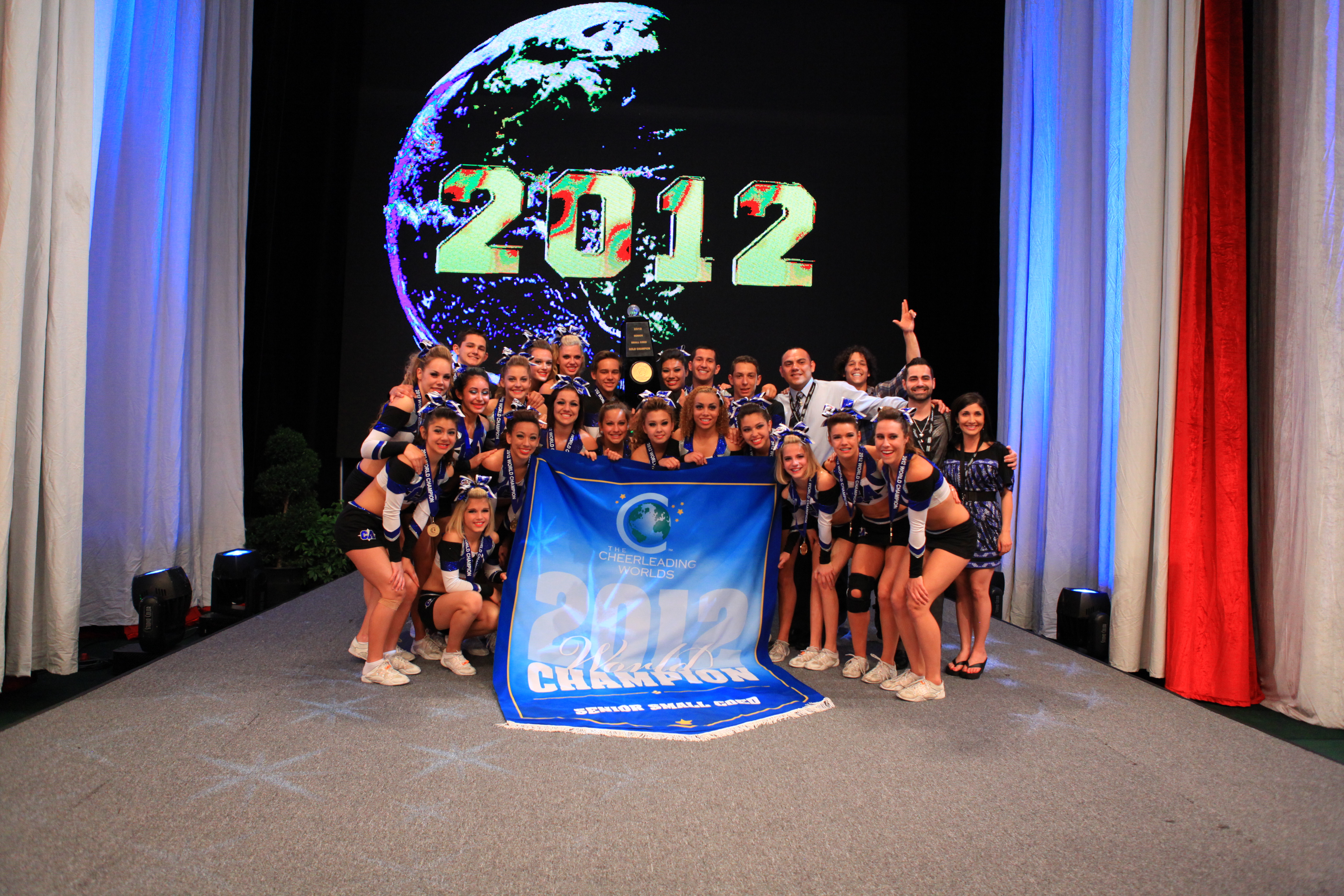 This month marks the 10th annual Cheerleading Worlds in Orlando, Florida—the countdown begins! Get prepped by taking a look back at the gold medalists in each division since the beginning. (We’re looking forward to filling in the blanks for 2013.) Check out the wonderful wide world of worlds, and don’t miss our 10-year retrospective in the summer issue of CheerProfessional!
2004
Senior All-Girl: Cheer Athletics
Senior Coed: Miami Elite
2005
Small Senior: Stingray All-Stars
Small Senior Coed: Spirit of Texas
Large Senior: Maryland Twisters – F5
Large Senior Coed: Miami Elite
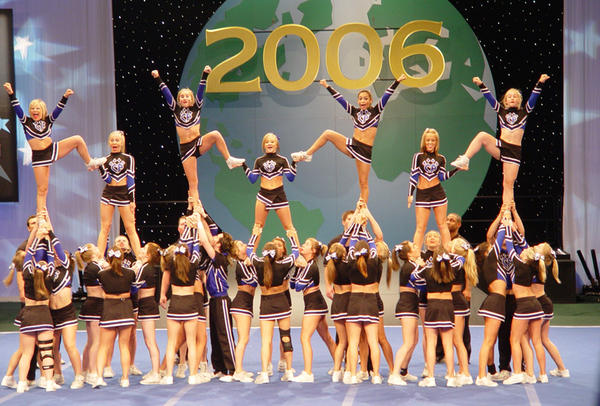 2006
2006
Small Senior: Cheer Athletics – Jags
Large Senior: Cheer Athletics – Panthers
Small Senior Coed: Gym Tyme All Stars
Large Senior Coed: Cheer Athletics – Wildcats
International Open All-Girl: Georgia All Stars
International Coed: Gym Tyme All Stars
2007
 Small Senior: Stingray All-Stars
Large Senior: World Cup Shooting Stars
Small Senior Coed: Gym Tyme All Stars
Large Senior Coed: Top Gun
International Junior: World Cup – Starlites
International Junior Coed: Flip Factory
International Open All Girl: Encore Cheer Company
International Coed: Gym Tyme All Stars
2008
 Small Senior All-Girl: Stingray All-Stars
Large Senior All-Girl: World Cup Shooting Stars
Senior Unlimited Coed: Top Gun
Large Senior Unlimited Coed: Spirit of Texas
International Junior All Girl 5: World Cup – Starlites
International Junior Coed 5: University Cheer Junior Air Force
Small International Open All Girl: Cheer Athletics Fierce Katz
Large International Open All Girl 5: South Elite Allstars
Small International Open Coed 5: Cheer Athletics Pumas
Large International Open Coed 5: Gym Tyme All Stars
International Open Coed 6: Stingray All-Stars
International Open All Girl 6: PACE Phoenix Allstars
2009
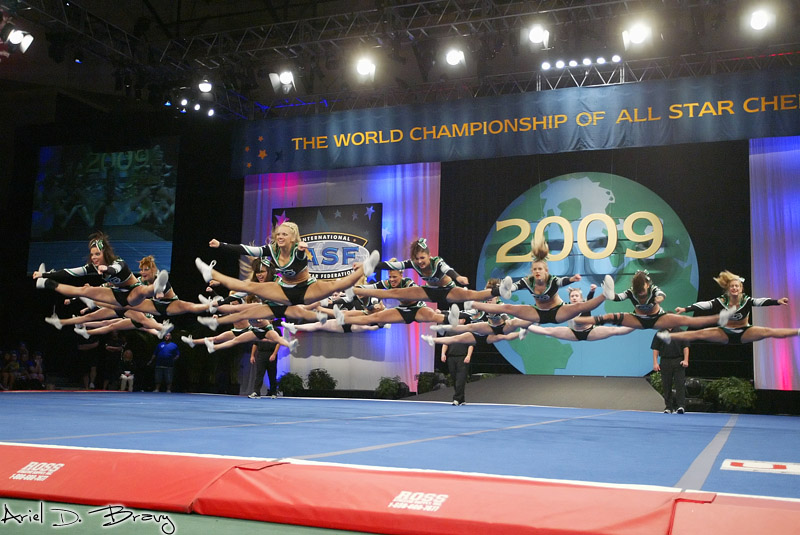 Small Senior All-Girl: Stingray All-Stars
Large Senior All-Girl: World Cup Shooting Stars
Senior Unlimited Coed: California All Stars
Large Senior Limited Coed: Spirit of Texas
Small Senior Limited Coed: Brandon All Stars
International Junior: Maryland Twisters Supercells
International Junior Coed: Cheer Athletics Jags
International Coed 5: Cheer Athletics Wildcats
International All Girl 5: Cheer Athletics FierceKatz
International Coed 6: Gym Tyme All Stars
International All Girl 6: UPAC Miss Panthers (Chile)
2010
 Small Senior All-Girl: Stingray All-Stars
Small Senior Limited Coed: Premier Athletics Kentucky Elite
Large Senior All-Girl: Cheer Extreme
Large Senior Limited Coed: Spirit of Texas
Large Senior Semi-Limited Coed: Georgia All-Stars
Senior Unlimited Coed: Top Gun All Stars
International Junior All-Girl 5: Maryland Twisters Supercells
International Junior Coed 5: California All Stars
International Open All-Girl 5: Gym Tyme – Pink
International Open Coed 5: Top Gun All Stars
International Open All Girl 6: Gym Tyme All Stars – Orange
International Open Coed 6: Gym Tyme – Infinity
2011
 Small Senior All-Girl: Cheer Athletics – Panthers
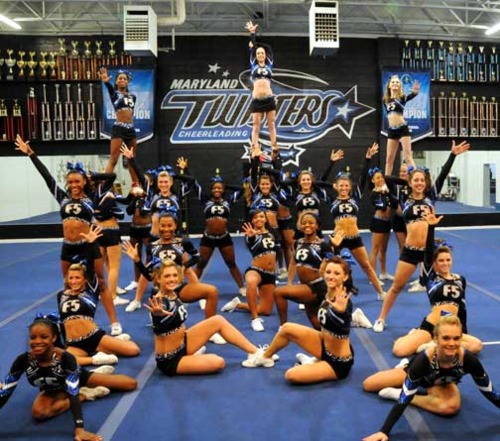
Large Senior All-Girl: Maryland Twisters – F5
Small Senior Limited: Brandon All Stars – Senior Black
Large Senior Limited Coed: Twist and Shout – Senior Obsession
Large Senior Semi-Limited Coed: ACE Warriors
Senior Unlimited Coed: California All Stars
International Open All-Girl 5: Gym Tyme – Pink
International Open Coed 5: Top Gun All Stars
International Open Coed 6: Bangkok University (Thailand); Gym Tyme – Nfinity
2012
 Senior Large Coed: Cheer Athletics – Cheetahs
Small Senior All-Girl: Stingray All-Stars – Orange
Senior Large All-Girl: Cheer Extreme Senior Elite
Senior Medium Coed: Spirit of Texas
Senior Small Coed Level 5: California All Stars – Smoed
International Open Coed Level 5: Gym Tyme All Stars – Black
International Coed Level 6: Twist & Shout – Genesis
International Open All-Girl Level 5: Gym Tyme All Stars/Louisville Cheer & Dance Inc.
International Open All-Girl Level 6: Cheer Athletics – Lady Katz
 The path to championship glory is paved with good intentions—and smart strategies. To help you discover the right road map for your program, we asked several gym owners for their secrets to success:
Be mindful of the trickle-up effect. Focusing too much on any one team can compromise long-term success, says Orson Sykes of Twist and Shout, which has 20 teams and three Oklahoma-based locations. Several years ago, Sykes performed a thorough assessment of the program and realized that more effort needed to be dedicated to nurturing rising talent. “We realized that we had good upper-level teams, but our younger teams were lacking a lot,” admits Sykes, whose teams have won more than 200 national titles to date. “Our mini and youth programs weren’t excelling as much as they should.”
Sykes reallocated his efforts and resources, and today the gym boasts a successful Youth Level 5 team. “That makes me more proud than anything because I know we’ll be able to compete at a high level for a long time,” he says.
Require a high level of commitment. At Arlington, TX-based Spirit of Texas, cheerleaders are required to attend all practices year-round regardless of illness or outside obligations (the only exception being school functions that result in a letter grade). Mandatory practices are held twice weekly for up to five hours, which co-owner Brett Allen Hansen says helps to elevate the level of excellence. “At Spirit of Texas, everyone is equally committed because everyone is equal—no one is so amazing that they get to miss practice,” shares Hansen, who co-owns the gym with Brad Vaughan. “Not having your entire team at every practice is mind-boggling to me.”
Rock Solid All-Stars in Pinellas Park, FL, takes a similar approach, but only during Nationals season from January until Worlds. Practices are held three times per week, with a “no-miss” policy firmly in place the week before any competition. “’Get better or get beaten’ is our motto,” says owner Carol Bariteau. “We work hard, because we know there is always another gym out there working harder.”
 Make sure your staff is in the know. At Rock Solid All-Stars, Bariteau makes a point of requiring her employees to follow industry policies and rule changes closely. To do so, her staff members attend coaches’ meetings as often as possible and stay abreast of updates on the USASF website. “It’s all about the numbers game and knowing how to work the scoresheet,” says Bariteau, whose program has been to Worlds every year since 2007. “Not knowing the scoresheet has hurt our teams in the past, so that’s where your staff really needs to be on top of its game. Since there are so many grey areas, knowing how to get the wow effect while staying within the rules is a big deal.”
Find your “thing” and nurture it. Whether it’s jumps, daring stunts, or stand-out choreography, having a signature strength can be a surefire strategy for standing out from the rest of the competitive pack. To pinpoint your program’s secret weapon, Spirit of Texas’ Hansen recommends honing in on one particular strength during training and playing it up in routines. “Most groups in the top tier have something that they are the best in,” says Hansen. “Really push those areas where you’re great, but don’t forget to also nurture the weak areas so they don’t wash each other out.”
Zero in on stunting potential. In Tampa at Brandon All-Stars, president Peter Lezin places a strong emphasis on finding skilled stunters during the tryout process, saying they “pick [their teams] like a football team, all based on stunting positions.” Hansen does the same at Spirit of Texas, designating a certain amount of slots for bases, spotters, and flyers. He adds that they like to keep the same stunt groups together every year, so it’s important to choose wisely.
“When we’re putting together our team, we look at having 24 people on the team and how they fit into the six stunt groups,” says Hansen. “If you get a whole squad of girls that do double twists but all of them weigh 95 pounds, who will hold each other up? If all of your kids can’t build and do stunts, they won’t be competitive.”
Sykes of Twist & Shout agrees. “We use to take all the kids with fulls and doubles and put them all on one team, despite what they could do stunting-wise,” he shares. “Now, I have kids who can’t do a full to save their lives but they can base any stunt. Stunting has become so important to your overall score that it makes them extremely valuable on our teams.”
Encourage skill mastery. Though many programs have certain minimum requirements in order to make various teams, Bariteau says she’s mindful of assessing true skill level beyond the selection process. “Many athletes are able to hit a skill under pressure during tryouts when the adrenaline is flowing,” she says. “Then, at practice, you end up dealing with kids that don’t have the skill mastered and that poses a problem. We want to be able to effectively run our practices without having to do the skill over and over again when one person doesn’t hit.”
To avoid this issue, Bariteau performs random skill checks throughout the year, and says that she makes athletes aware that “they can be moved at any time to another team if they’re not up to par.”
Learn from the best. Though Twist & Shout is widely regarded as one of the top programs in the industry, Sykes says that he’s constantly seeking ways to become better. “We don’t ever get to a point where we feel like we’ve ‘arrived’ or are too big to learn,” says Sykes, a frequent conference attendee and speaker. “If you want to stay successful, you have to keep pushing yourself to learn more and more.” One way Sykes encourages his teams to learn is by exposing them to other successful squads; at competition, Twist & Shout teams are required to watch the others perform. Says Sykes, “We look at how top teams handle and perform in high-pressure situations—we try to learn from the good and the bad.”
Another effective method is practicing with other teams. Sykes often honors requests from other coaches who want to bring their teams to his gym to observe and train together, and Twist & Shout has its own “buddy team” that they work out and practice with every year at Worlds. “It’s beneficial for both of us,” says Sykes.
Stay united. At Spirit of Texas, Hansen makes a concerted effort to keep teams intact from tryouts through the end of the season. “The team that wins a Worlds bid or goes to Nationals is usually the same time that tried out—once we make selections, rarely do they change,” says Hansen, adding that his motivation is to develop the utmost team camaraderie and dynamics. “When a team has one heartbeat as the walk onto the floor, it’s noticeable and gives you an edge every time.”


