

In addition to all the great content we bring cheer professionals in our quarterly print issue, you’ll find plenty of original exclusive content right here at TheCheerProfessional.com.
Keep checking back for all the latest and greatest news, updates, debates and more!
Game Changers: Maximum Cheer
jen : July 17, 2013 12:40 pm : In the Industry| Web Exclusives| webexclusive2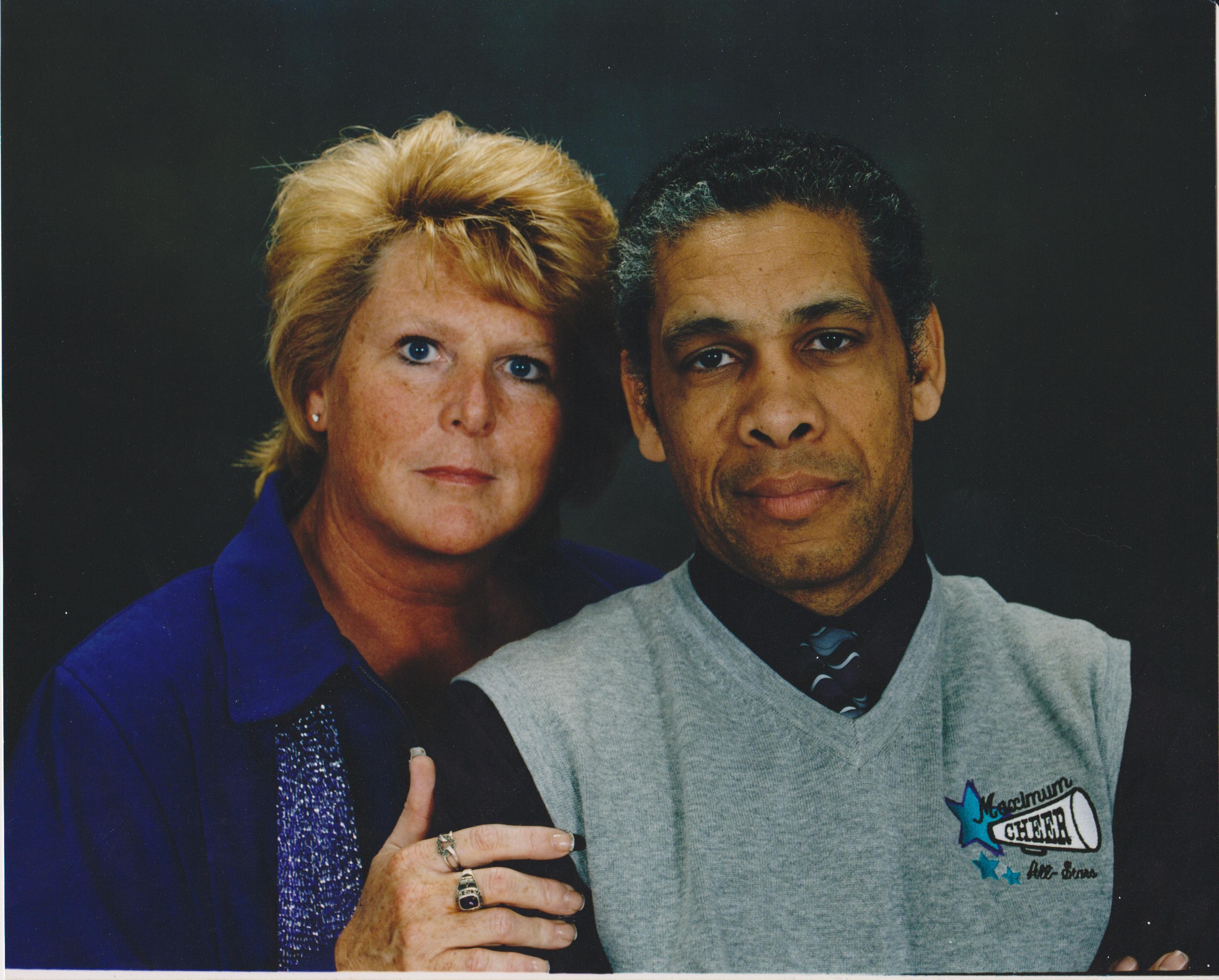 In an industry driven largely by dollars, Maximum Cheer owners Pat McGowan and Cookie Jamison McGowan walk the talk of truly making it “all about the kids.” Their program is entirely non-profit, yet has managed to become a formidable competition presence—creating not just a unique success story, but also valuable opportunities for athletes who might not otherwise be able to benefit from all-star cheerleading.
Open to all kids, Maximum Cheer began simply back in 1995. “We started with five flat mats at the Philadelphia Boys & Girls Club,” says Jamison McGowan, adding that it was one of the first all-star programs in the state.
Today the program operates out of the Power and Grace tumbling facility in Quakertown, Penn., where they can take full advantage of the spring floor and other tumbling equipment; they rent the space for three days per week. Neither of the McGowans nor their nine coaches take a salary—rather, they put all the money paid by those athletes who can afford it back into their program, which they keep at about 75 athletes annually. Athletes hail from 12 different school districts and range in age from three to 32 years old.
Thanks to its non-profit status, Maximum Cheer is not beholden to the traditional limits of a for-profit business. For example, the McGowans have a strict policy against bullying and don’t allow parents in the gym during practices. Athletes or parents who violate these policies are released from the team. They also subscribe to the idea of attraction versus promotion—they don’t advertise, yet their program is consistently full and very strong. “We are not a ‘yes’ gym,” says McGowan. “People stay because they really like the system.”
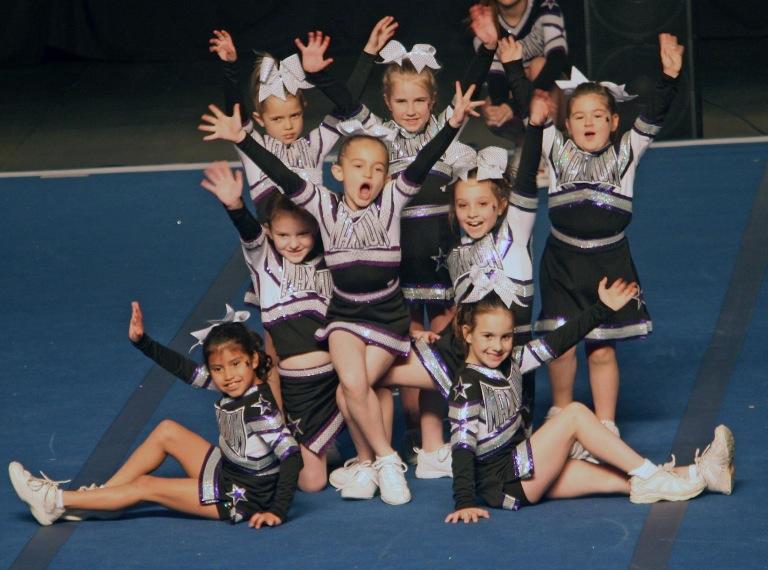 Each year, Maximum Cheer competes at an array of events, including Americheer, InterNationals, JAM!Live and U.S. Finals; last year, its Level 4 team took five grand championships and five division championships. Viewing the experience as a means of building teamwork and character, the McGowans insist that all athletes travel together by bus, instead of individually with parents. (“The kids sit together and bond, which shows during competition,” explains Jamison McGowan.) Maximum Cheer athletes are also taught to root on every team at competition—regardless of ranking or reputation. “Trophies are nice, but good sportsmanship is far more important,” says McGowan.
Service and personal achievement are also emphasized. Maximum Cheer athletes need to maintain a 3.0 grade point average to stay active and must complete two community service projects annually. (Past philanthropic projects have included a Giving Tree, Stockings for Kids and Alex’s Lemonade Stand, among others.) Athletes have also established a peer-tutoring program where they help one another with schoolwork. “We teach the kids the ‘three R’s:’ respect for others, respect for self and responsibility for your actions,” says Jamison McGowan. Adds McGowan, “We attract a different, no-drama breed.”
Of course, keeping Maximum Cheer afloat requires no small amount of sacrifice. Both McGowans are employed full-time in other jobs (McGowan as a computer engineer, Jamison McGowan working with autistic students), and outfitting Maximum Cheer with the proper resources can be a time-consuming endeavor. “Our greatest challenge is finding corporate sponsorship so that all kids can continue to share in our program—with the economy in its current state, businesses are not as eager to give,” shares Jamison McGowan.
But to the McGowans, the end result is worth it. They continue to run Maximum Cheer both for the love of the sport and for what it does for kids’ personal development. 18 years later, their original mission still holds true: to serve all kids—regardless of financial means—and to keep it both fun and positive. Says Jamison McGowan, “Being non-profit and having a volunteer staff has allowed us to reach families from all walks of life.”
–Jenn Kennedy
 A new gym’s tryouts listed in the local newspaper calendar. Facebook ads promoting a new team. A Twitter campaign that targets most of the local cheer community. Coaches wearing shirts emblazoned with gym info at competitions, making sure to be seen by the Level Five athletes. Signs in the median of the road, attracting the attention of athletes on their way to their current gyms. There are also promises: free tuition if you’re good enough—not to mention free uniform, free travel and the assurance you’re going to Worlds. Cash bounties for getting your (talented) friend to sign up from your competitor. Cheerlebrity-style opportunities for sponsorship, exposure or branding.
Somewhere in there, there’s a line between “good” recruiting and the kind of tactics that cheapen the sport. But where is that line? And as increasing numbers of current all-star athletes move on to be cheer professionals, where will the standard be set in the future?
It’s a conundrum highly unique to all-star cheer gyms. “For most businesses, recruiting means merely gathering more customers. However, in the cheer gym business, it typically means trying to get kids from a different gym to quit there and join your own gym,” explains Cheer Athletics co-founder Jody Melton. With so many gyms vying for business, prestige and trophies, many cheer professionals view recruiting as a means of building the perfect team or shoring up weak areas in an existing squad.
On the surface, most coaches and gym owners can agree on the broad strokes of what’s acceptable and what’s not. Currently competing cheerleaders are out of bounds, but during the off-season or if the cheerleader actively seeks out information, athletes are fair game. “Our overall policy is that no staff should approach an athlete that they know to be a part of another gym,” says Melton. “If that athlete approaches us, then we will talk about our program, staff and facility, but will not trash talk any other gym.”
To some degree, many gyms rely on athletes and families to do their recruiting for them. In the Yelp age, good word-of-mouth is certainly vital for the success of all of a gym’s programs, not just its highly competitive squads. Understandably, gym owners hope that their happy team members will tell their friends about their cheer experience.
“I think ‘good’ recruiting happens through general advertising and with positive word-of-mouth communication,” says Andrea McBride, director and head coach of the rec and all-star cheer programs at Denham Springs, LA-based Leaps and Bounds Sports Center. “‘Bad’ recruiting happens when there is an overstepping of boundaries. Athletes that are clearly committed to another gym should not be approached until they have completed their commitment for the season.”
As for whether it makes financial sense for a gym to essentially pay gymnasts to compete there, opinions vary. New or aggressively growing gyms often seem to recruit most heavily, especially in offering substantial scholarship packages to athletes with advanced skills and experience. And this strategy wouldn’t keep happening if it didn’t work—programs that can attract the best athletes are often the ones taking home the gold. There is also more at stake for today’s all-star athlete, thanks to bigger trophies, more gymnastics/cheer scholarships, TV coverage and “cheerlebrity” status for the lucky few.
However, recruiting athletes whose sole concerns are the next title or trophy can have a downside. “I don’t know if gyms using recruiting as a quick fix on the way to Worlds really have longevity,” said Morton Bergue, owner and founder of Cheergyms.com. “Once you promise to win and don’t, your kid is going to go to the next gym where they think they can win.”
As the frequency and intensity of recruiting between gyms grows, some cheer professionals are calling for stricter regulations. However, there are few explicit rules about recruiting, and many that do exist don’t require teams to abide by them.
“With the structure we have now, there’s not much we can do about it. And as much as I hate recruiting, as much as I disagree with it, you can’t recruit someone who’s happy,” reflects Bergue. “I hate saying that because it hurts. Even today, I had a girl tell me she was switching gyms because she ‘wanted to win Worlds’—those were her words. It was upsetting and it made me sad, but I can’t promise her that. I can promise we’ll have a good program, I can promise we’ll love your kids and try to get them scholarships and into good colleges, but I can’t promise Worlds. Make your kids happy and they won’t leave—that’s the moral of the story.”
–Janet Jay
Candid Coach: Karrie Tumelson
jen : July 10, 2013 12:24 pm : In the Industry| Web Exclusives| webexclusive1 After nearly a decade running the all-star program at St. Peters, MO-based Spirit Elite, Karrie Tumelson is on to a new adventure doing choreography, camps and clinics—with plans to eventually open her own gym. Nominated by The JAM Brands as “Coach of the Year” in 2010 and USASF certified through Level 5, Tumelson has learned a lot in the trenches about inspiring athletes to achieve their best. For our “Athletes” issue, we asked Tumelson to share her hard-earned secrets for coaching success:
What are some coaching flubs you’ve made throughout the years, and how did you learn from them?
Tumelson: [I’ve learned that] skipping steps in the foundation of skills to progress is definitely not a good idea. In stunting, it’s important to make sure kids have solid foundational Level 1 skills before moving on to Level 2 skills. You might have kids that come [onto] a Level 2 team, and you may just start working at the beginning of that season on Level 2 skills instead of going back and reinforcing the foundation of a level lower. Over time, I’ve learned to take time in the summer to reinforce those skills rather than jumping right in.
Do you often encounter parents who think their child should be on a different level team? How do you handle that?
Tumelson: Education is key in getting parents and athletes to understand proper progressions, as well as the different levels and how the scoresheet works. It’s also important to build strong relationships with parents so that they trust your opinion. We’ve had people leave because they wanted to be on a different level, but you have to be consistent and do what you believe is right. A lot of times, they go to another gym and, in time, the concerns I had come to fruition. When you put a young one on a senior team, they’re often burnt out in two years—they’ve already done all there is to do.
What are the issues you most often encounter around athletes?
Tumelson: The biggest obstacle is getting athletes to understand the nature of a team sport and accept all teammates for who they are and tap into everyone’s strengths. Obviously there will be personality clashes on every team, but a team who can’t see the bigger picture will struggle. A team that gets along can do great things.
One of your athletes at Spirit Elite, Janie Pascoe, dedicated the winnings from her America’s Best “Athlete of the Year” award to Sandy Hook Families. How do you encourage athletes to give back?
Tumelson: We always talk about providing for the less fortunate, and every holiday season we adopt a family to provide for kids that are less fortunate [than] they are. We do a lot of volunteer work; we’ve always done the Susan G. Komen Race for the Cure every year as a gym. We’ve also done food drives. I think a lot of it, too, is just awareness. Cheerleading is a very expensive sport, and not every child can afford it. So we continually remind them of being appreciative of what they do have, and remind them of those children that don’t have these opportunities because of financial stabilities or whatever the reason may be. [We] try to expose them to that so they do appreciate what they have more, and it also encourages them to get involved and give back.
–Mandi Hefflinger
Emergency R/x: Handling Medical Issues in the Gym
jen : July 8, 2013 2:27 am : Down to Business| Web Exclusives| webexclusive2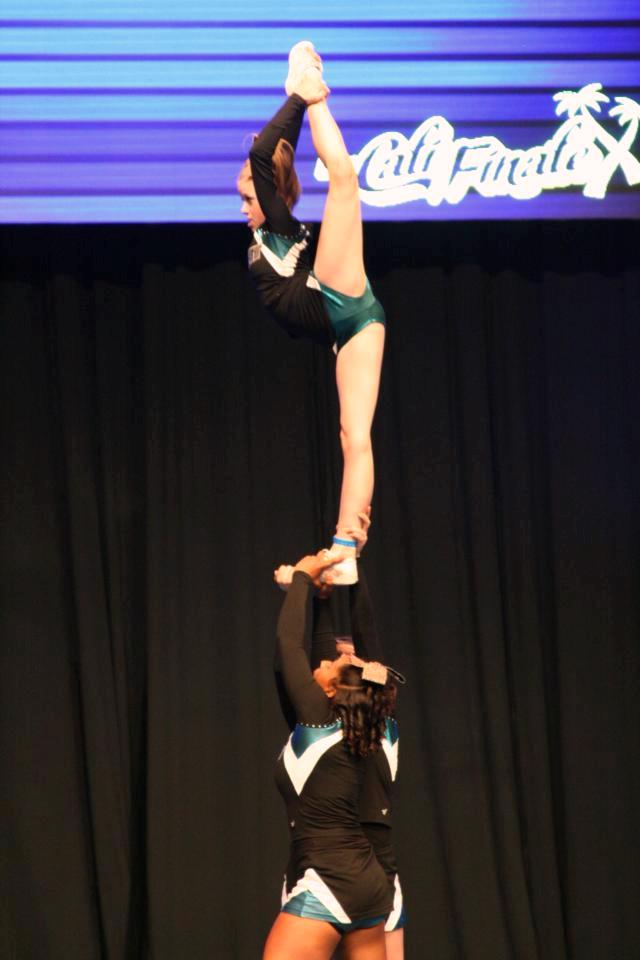 It’s not easy for the staff of SWAT All Stars in Fairfield, California, to train an athlete who has double medical trouble—varicose veins and asthma. The varicose veins can be particularly worrisome when even minor injuries happen on the floor, as they make it difficult for the athlete’s body to produce a scab after bleeding. “In cheer, athletes are always [prone] to being cut, but for her, a simple cut could become an emergency,” says Andres Cantero, the gym’s administrative director.
To ward off issues, the young cheerleader wears compression socks to ease the pain from varicose veins and minimize skin exposure. Coaches also keep asthma pumps handy in case she has an attack, and her mother has to be always around to help in case of emergency. However, the concerns do add an extra layer of work and worry for gym employees. “It is not easy, and there is no manual on how to best do this,” says Cantero.
At Renegade Athletics in Calhoun, Georgia, owner Leslie Pledger has also come across her share of athletes with medical issues—including some that were life-or-death. “One athlete had sustained a brain injury when she was younger and it was very dangerous for her to be inverted, so she couldn’t do any cartwheels or handstands,” shares Pledger, who was able to gain clearance from a doctor for the athlete to join the gym’s special needs squad.
In the gym environment, cheer professionals are sure to encounter kids with a gamut of medical conditions, ranging from asthma to heart disease. Here are a few tips to help you rise to the challenge of coaching and helping these athletes stay healthy:
Make the right call. Most gyms have a release form that parents fill out and sign when an athlete registers at the gym. At Renegade Athletics, Pledger is always diligent about carefully reviewing the medical information area of any release form submitted. “When I see something on the medical history that I don’t know about, I look it up and try to determine if I need a release from a doctor to allow the child to participate,” she says. Pledger adds that irrespective of what the doctor decides, coaches have to take the final call. “Some times the doctor doesn’t understand how strenuous competitive cheerleading is and may clear a child anyway,” she points out.
However, this doesn’t mean that athletes don’t get to participate at all—Pledger simply finds the right fit for each athlete’s individual needs. For instance, an athlete who had injured her shoulder at another gym was placed on Renegade’s semi-competitive team since lifting was prohibited, while another who had a heart condition joined Renegade’s low-impact community performance program.
Take it on a case-by-case basis. Even though there is no one-size-fits-all solution for all medical problems, there are some basic questions that need to be asked every time a child with a medical condition walks into the gym. From there, once any issues are brought to light, cheer professionals can dig deeper and work with parents to create a safe environment. “A plan of action should be made with all parties: the coach, the parents and the athlete,” says Jim Lord, executive director at American Association of Cheerleading Coaches and Advisors.
For example, if an athlete has asthma, coaches will need to ask the following questions: Is the asthma brought on by physical exertion or is it stress-related? What steps can be taken by the parent, athlete and coach to minimize having an episode? At that point, provisions can be made to properly accommodate the athlete. “Coaches will need to determine if the athlete needs an inhaler accessible at all times and, if so, where it will be located,” adds Lord.
Have a master plan. Although athletes with pre-existing medical conditions are arguably more susceptible to emergency situations, even healthy individuals can succumb to injuries. As such, it’s vital for gyms to be prepared for any situation that might arise—and that means forming an all-encompassing emergency plan. At Renegade Athletics, the emergency action plan addresses injuries, hazardous materials and weather emergencies. “Coaches and staff should be trained on how to respond to each of these [situations], and the plan should be posted in the gym for parents and athletes to see as well,” says Pledger.
Equip your coaches to handle situations properly. Additionally, most gym owners advocate that at least one employee on-site should be trained in proper cardiopulmonary resuscitation (CPR) and automated external defibrillator (AED) techniques. At SWAT All Stars, all coaches are required to be CPR/AED certified, and much of the early staff training revolves around emergencies and how to handle them.
“We speak on medical emergencies at our first couple staff meetings, and we usually establish and agree upon codes and standards to ensure the safety and health of all athletes,” says Cantero. “Like a fire drill or earthquake drill, coaches need to have a plan in place and everyone on staff needs to know how to react to ensure the best support and services are provided during times of medical emergency.”
Consider requiring physicals to participate. In high school sports, most schools require a physical, but not all gyms have a provision for it. AACCA’s Lord, however, advocates having physicals for all-star gyms. “Gyms should strongly consider requiring PPEs (Pre-Participation Physical Evaluations) in order to minimize the chance of injury due to foreseeable circumstances. They also provide a baseline set of data that can be referenced in the future,” says Lord.
Reduce your liability. Medical issues raise the subject of liability. At SWAT All Stars, parents must sign a form in which they agree not to hold the gym liable. Cantero also reduces his liability by reducing the time of responsibility they have over their athletes, and he is clear about their capability to handle serious emergencies. “We always let parents know we are not medical professionals, and in cases of emergency, we can only do what is in our knowledge and training capacity,” says Cantero, who immediately refers all emergencies to medical professionals.
In the same vein, Cantero is careful to maintain open communication between parents and coaches. That way, no confusion arises around the way medical issues will be handled. Says Cantero, “Open communication makes the gym aware and allows for coaches and parents to pre-plan and agree how to handle athletes’ medical conditions.”
–Dinsa Sachan
 When Alexandra Allred made the first U.S. Olympic women’s bobsled team in 1994, she expected to train hard, eat healthy food and get plenty of sleep. What she didn’t expect was that she’d become an enthusiastic journal keeper.
While living at the Olympic training center in Lake Placid, Allred’s coaches encouraged her to write down descriptions of her workouts, including any injuries and “off days,” as well as dietary intake. “I was recording everything and it became a daily habit,” she says. “I was writing if my workout was good or bad, how I felt about that and why. After a while, I could see patterns emerge.”
Now a writer and teacher at Navarro Community College just south of Dallas, Allred points out that journaling isn’t just beneficial for individuals but can also help the team at large. “Some of the entries could identify a cause and date of an injury. If your back is tight, your ankles are tender, or you can’t stick a landing, write it down. As a competitive athlete, you’ll be able to see patterns and reference dates.
Journal writing also served as a motivating factor for Roisin McGettigan, a 2003 track and field Olympian for Ireland. She credits the practice of keeping a journal with helping her take ownership of her athletic pursuits. “When you record your training, it crosses the line between being casual or serious about the sport,” she says. “I was able to track my progress, learn what worked and what didn’t. I could figure out why I was tired and see if I over- or under-estimated my training.”

Roisin McGettigan
Additionally, keeping a journal helped McGettigan move toward her Olympic dream. “When you’re ready for a competition, you can look back and see all the work you’ve done. It makes you confident and prepared when you see the improvement. It encourages momentum. You can anchor your mind, dispel self-doubt, motivate and excite,” says McGettigan, who now resides in Providence, Rhode Island.
These experiences led McGettigan to develop “Believe I Am” training journal with national track and field champion Lauren Fleshman. Intended to help track athletic performance, this journal also provides space for personally inspiring quotes, post-competition reflections, freewriting and drawing. It’s not hard to see how journaling might translate to the all-star cheer sphere—after all, an Olympic training journal could just as easily be a Worlds training journal. Along with athletes, coaches and gym owners might also find it useful, keeping track of everything from how stunt groups are performing at practice to monthly revenue numbers.
Journaling can also be a great tool for cheer professionals who want to empower their athletes—simply encouraging athletes to journal might make a world of difference in morale and mindset. Richard Kent, Ph.D., associate professor and director of the Maine Writing Project at the College of Education and Human Development, University of Maine, has used writing techniques with athletes since the early 1980s. He notes that athletes who journal become more engaged, self-aware and mentally sharp, less stressed and better able to cope both on the mat and off.
“It’s wildly interesting that athletes, when given opportunity and guidance, explore their own thinking and gain knowledge of their sport,” says Kent, who is also author of Writing on the Bus.
While a variety of protocols are useful, Kent finds that taking five minutes after an event to “unpack the competition” enables the individual to look more deeply into his or her performance and identify strengths and weaknesses. “More important, it helps the athlete be more objective and avoid blaming [judges]. You can be more balanced, thoughtful and reflective,” he says.
On a team level, journaling inspires productivity. “It’s a precursor to more thoughtful, engaged conversation. Your thinking is more organized and balanced. You can communicate on a higher level,” Kent says.
Allred nails it when she says, “Journaling defines who you are and who you want to be in this world.” And whether it’s world champion, top cheer coach or owner of a lucrative gym, it can be one step closer to getting you there.
Check out our CP blog for journaling tips from an Artist’s Way expert!
–Phyllis Hanlon


