

In addition to all the great content we bring cheer professionals in our quarterly print issue, you’ll find plenty of original exclusive content right here at TheCheerProfessional.com.
Keep checking back for all the latest and greatest news, updates, debates and more!
GTM Sportswear Spotlight: Top Gun
jen : October 9, 2013 11:53 am : In the Industry| Web Exclusives| webexclusive2 As love stories go, gym owners and power couple Kristen and Victor Rosario have one that’s straight out of a Nicholas Sparks movie. (No wonder they’ve been referred to as the “Brangelina” of the cheer world.) A simple ride home from high school was the catalyst for their relationship—and, a few years later, ended up being the foundation of Miami-based gym Top Gun All-Stars, well-known for its reputation as an industry innovator.
The plot at a glance: Kristen was a 10th grade ballet dancer and Victor a senior cheerleader when they first struck up a friendship. She would often watch after-school cheer practices while waiting for a ride home from her friend (who was also a cheerleader). Normally quiet and reserved, Victor found himself chatting easily with Kristen about gymnastics and cheer. He still gets a little gushy about those early days. “It’s easy to open up and talk to her when she looks like she does,” says Victor.
When Victor later floated the idea of starting an all-star cheerleading program, Kristen hopped on board, melding her knack for organization and book balancing with his cheer experience. They began slowly, with one team that practiced in a park, and built that into what is now Top Gun—a nationally respected gym known for creativity, flow, and trend-setting routines. But the path to prominence hasn’t been a total cakewalk: Victor says accepting the gym’s strengths and weaknesses and viewing itself as something of an underdog has been key to its success.
“We’ve never been a super-powerhouse gym with 700-plus kids and a 30,000 sq.-ft. facility and 40 staff members,” he says. “We came from humble beginnings, and we’re still considered a smaller-scale gym. Our talent is great, but it’s not the most amazing out there, so we’ve had to learn how to be creative and find the things we’re good at.”
That spirit of scrappiness and innovation has led to the gym pioneering stunts that are now prerequisites at high levels of competition (like the pike open basket)—and taking chances on out-of-the-ordinary, memorable routines that often tell a story. After one of their squad members, Omar Moreno, died in a car accident last year, the gym dedicated their 2012 Worlds routine to Omar and other “Fallen Jags,” complete with uniforms studded with angel wings and carefully chosen music ranging from Swedish House Mafia to Bette Midler.
According to Victor, the tragedy ended up making the team stronger than ever. “A lot of our athletes were close with Omar personally. It just kind of inspired them and made them realize that life is really short, and we’ve got to…live every day like it was our last and try to make the most of it,” Victor says. “We just kept them on track and said, ‘We’re going to put the best routine on the floor, and we’re not going to go out there with our fingers crossed that they’re going to hit. We’re going to capitalize on our creativity.’”
Another pioneering move is Kristen’s push for a universal scoresheet, which has been a hot topic amongst widespread complaints about competition results. To further the cause, Kristen led a discussion recently about the topic at the NACCC coaches’ conference.
“It’s hard for the average parent to be able to even look at our sport legitimately, because today, 9.0 was the best routine out there on the floor, and tomorrow, [you get] a 365, you just lost, and you’re in second place,” Kristen says. “They don’t seem to understand it, and our thing was, ‘How do we make it better?’ When we started looking at it, we realized that most of the scoresheets all say the same thing. They’re all judging the same thing, but with a different point scale or rubric.”
She’s hoping that the new scoresheet she’s helped propose will be set into motion by the end of this year.
Kristen and Victor credit their mutual love for cheer and that hard-won thing known as balance—his strong but silent demeanor balancing out her talkative pragmatism—with the success of the gym and their own marriage. Sometimes the two intertwine: Kristen cites one example of traveling to Spain on cheer business when a person she was working with stiffed her $5,000. She still remembers what Victor said to calm her when she called in tears: “Baby, it’s okay; these things happen. I will pick up another camp; I will do what I have to do. I just don’t want to hear you cry.”
The pair has two daughters now, ages 10 and 12. It shouldn’t come as much of a surprise to learn they love cheerleading as much as their parents do.
–Jamie Beckman
To Comp or Not to Comp?
jen : October 7, 2013 12:25 pm : Down to Business| Web Exclusives| webexclusive1 The divide over whether to provide complimentary tuition to certain athletes, including boys, is not new. For those in the “pro” column, they typically comp athletes with the idea that offering a free ride will attract additional membership to a gym and—in the case of male athletes—round out a team to deliver an edge over the competition.
Shawn Herrera, owner of Simi Valley, CA-based Cheer Force, believes comping athletes is a rampant practice in the industry but concedes it’s something “most gym owners don’t want to discuss or admit to [doing].” In reality, comping usually doesn’t work, Herrera opines. “Comping kids is like saying ‘I don’t believe in my product; we’re not good enough,’” he adds. “When you give people services for free, they don’t value it.”
Herrera uses Cheer Force’s special needs program as an example. “We used to provide free tuition for the kids [with special needs],” he explains. But it didn’t pay off: the kids didn’t take it seriously, and parents weren’t vested. There wasn’t the consequence of “wasting money or time,” Herrera reasons. Ultimately the kids dropped out.
But when Herrera made the decision to begin charging a low monthly $25 fee, something surprising happened: the parents didn’t resist and the kids started showing up. “It added value,” he says. “It was an epiphany: you don’t need to make it free to get kids to join your program.”
For Karen Potucek, co-owner and coach at Fairfield, NJ-based JuST Cheer All Stars, the topic of comping is complicated. “It’s a big issue,” she admits. “I don’t know how I feel about comping in general, but comping boys [versus girls] is not fair.” Potucek understands the need for male athletes but she empathizes with girls who could also use financial help. At 150 kids, her gym is on the smaller side, but “everyone pays,” she says.
Similar to Potucek, Herrera also takes a hard stance on comping athletes, but he does believe in providing financial breaks to his membership in the way of incentives. “For our higher-level athletes, we offer a 50 percent discount in fees based on skills,” he says, meaning if an athlete can perform a complicated tumbling routine or move, they pay less tuition.
Amy Grey, director of Palm Desert, CA-based Desert Elite Mavericks Cheer, has a different take: she considers scholarships and comping necessary. “We don’t do it across the board,” she says. But when they do, it is typically based on one of two things: loyalty, in the case of financial hardship, or the team’s need to entice boys to join. “Male athletes are few and far between,” points out Grey.
While Desert Elite will cover operational costs, such as tuition, it doesn’t mean those athletes receiving scholarships get a free ride. “We will comp their tuition but they pay the hard costs,” Grey notes, referencing “hard costs” as non-tuition-related expenses like uniforms and travel.
Like Grey, Tammy Smith, coach and president of Big Bear Elite Cheer in the resort community of Big Bear Lake, Calif., uses comping to maintain her membership. “[Waiving fees] gives kids a chance,” Smith says.
But Smith’s situation is unique. “Big Bear Lake is a small town and most parents don’t have the money,” she says. She knows firsthand—Smith started Big Bear Elite Cheer in August 2012 at the urging of parents because the alternatives (mostly school teams) were too expensive. Smith’s yearly program costs $150 and includes everything from coaching to uniforms. Competitions are extra, but are paid for by team fundraising and a partnership Smith created with the Lighthouse Project, a local non-profit devoted to creating a child-honoring community.
To date, Smith has 50 kids enrolled and believes her program goes beyond cheerleading. “It builds their confidence and teaches them discipline,” she says. Smith’s biggest motivator: to help all children who want to join her team—regardless of their ability or inability to pay. However, while Smith waives fees for athletes, she doesn’t let them off the hook. “They still have to raise the money,” she says, adding that they have two options: “They can sell candy, which we facilitate, or they can ask someone else to pay.” Smith believes this arrangement doesn’t diminish her program’s value.
It is this risk of diminished value that inspires Cheer Force’s Herrera to look beyond his own views on the issue of comping toward the future. “Comping is just a short-term fix to the problem [attracting new membership],” he says, “and owning a gym is a long-term investment.”
–Cathleen Calkins
Secondhand News: Buying Used Equipment
jen : October 2, 2013 1:31 pm : In the Industry| Web Exclusives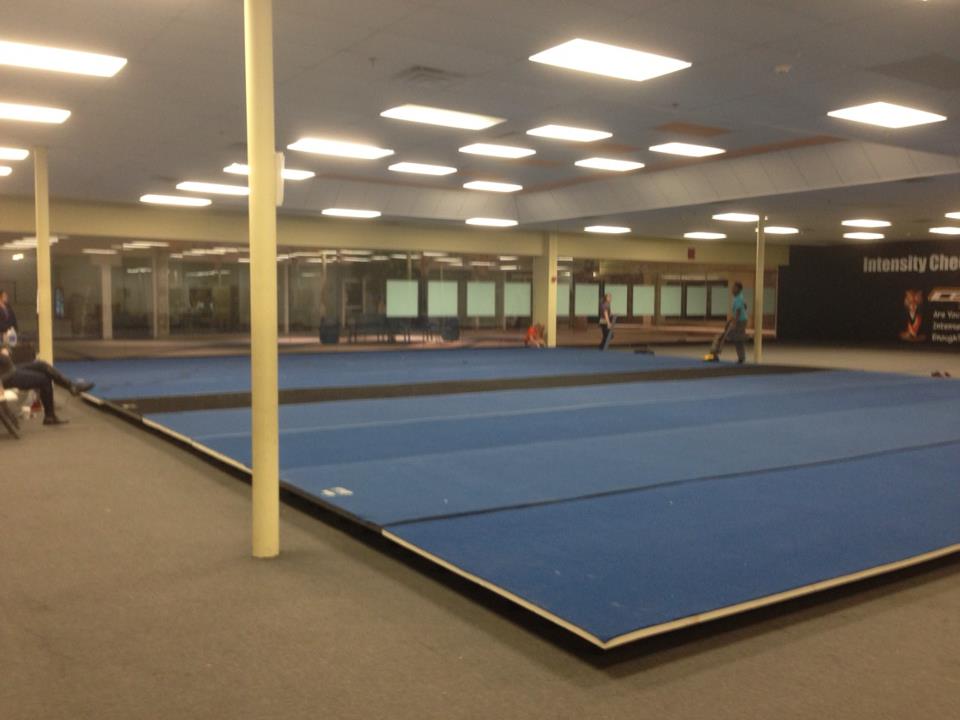 As a new gym owner, it can be a challenge to make ends meet with a small budget. One surefire way to save cash when just starting out is to buy used equipment. Be warned, though: this route can be fraught with thorns, and it’s important to keep several caveats in mind during purchase. When in the market for used equipment, consider these need-to-know tips from top equipment experts:
Do your homework. Be curious. Know what you want—and then ask intelligent questions. Stacy Finnerty, vice-president of Tumbl Trak, a Michigan-based provider of cheerleading, dance and gymnastics equipment, has a list of some helpful basic questions to ask the original manufacturer: What was the original retail price of the item? Were there any product recalls of this particular item? What value would the manufacturer place on the used item? What is the life expectancy of the item? Is the manufacturer able or willing to look up the original bill of sale to confirm the age of the item? Contacting the original manufacturer may seem like extra work, but it can go a long way in helping you determine whether a piece fits your needs or not.
Network like mad. You can visit a dozen equipment stores or spend hours digging out deals on Ebay, but nothing works like networking when trying to get good deals on used equipment. When Josh Kennedy, owner at Horseheads, NY-based Intensity Cheer Elite, was looking for a used tumble track and a portable mat, he posted profusely on social media about his requirements. He conveyed his requirements to other gym owner friends and even personal friends. Through networking, he stumbled upon a golden lead—a woman who was shutting her business down and looking to sell items quickly. Kennedy got a tumble track and a mat at throwaway prices.
Consider age and depreciation. A question you’ll be asking a lot when in the market for equipment: “How old is this piece?” Yet old is not always bad. “The number of years someone has owned a piece of equipment is not necessarily a factor,” says Matthew Miller of Gateway Sports Source, a St. Louis-based supplier of cheer and gymnastics equipment. “If it is a small club, an item could still be in great shape after eight years. But, if it is a big gym with lots of athletes using that item every day, it could be ready for the dumpster.”
Moreover, some items like balance beams can be robust enough for use even after 25 years, says Ross Athletic Supply owner Ross Morreale—but he adds that you wouldn’t want to buy a mat that’s been used that long.
Seek credible sources. Though there’s nothing like personally checking a piece of equipment out, most gym owners don’t have the time to actually visit a supplier. Your best bet is to ensure that you’re buying from a credible source. “The longer someone has been in business, the easier it should be for you to trust them,” says Morreale. “Ask people in your gym and other gyms for references; that’s one of the best ways to find credible vendors.”
Carefully vet any online purchases. Sites like Ebay and Craigslist can sometimes yield great deals, but exert caution right from the word “go” when dealing with online vendors. “We’ve heard horror stories from customers who purchased stuff off eBay only to find three out of four parts of a piece not working,” says Finnerty. He adds it’s usually okay to buy mats and other foam products from these sites as long as you’ve seen pictures and are aware of the item’s condition.
Morreale says once someone on a site sells you something, you’re probably not going to hear from them again. “You don’t know the person you’re dealing with on the other end, so it’s always a bit risky,” he says. If and when you do buy online, consider using PayPal, as they offer buyer protections such as a dispute resolution center where you can request a refund for items that don’t match the description.
Capitalize on event attendance. Cheerleading events can be a great avenue for scoping cheap equipment for your gym. “Generally, such pieces—called demo pieces—have been used once or twice and are as good as new,” says Morreale. While demo pieces are more expensive than your standard used equipment, you can get anywhere from six to 15 percent off, and they typically have a longer shelf life.
Check our blog tomorrow for tips on how to inspect prospective purchases before you buy!
–Dinsa Sachan
Head Games: Overcoming Performance Anxiety
jen : September 29, 2013 8:36 pm : Mind, Body & Soul| Web Exclusives| webexclusive2 Minutes before taking the floor, an athlete crumbles: her heart rate spikes and her breath comes in quick, shallow gulps. While backstage is chaotic, her panic is centered on something else: what will happen next, performing in front of the crowd. As her coach, you’re not sure what to do before she walks onstage—calm her, convince her it’s just like practice or remind her to have fun. Sound familiar?
The hard fact is that helping young athletes overcome performance anxiety or move beyond mental blocks may be two of the most difficult tasks coaches face. The good news: both can be overcome. However, there are no quick fixes, notes sports psychologist Dr. Caroline Silby, Ph.D.
Anxiety can arise from any number of sources, whether it is a negative outlook about success, concern about injury or a fear of failing. The feeling is most potent when increased expectations collide with decreased confidence, explains Dr. Silby: “Another way to think about it: an athlete’s physical capability is ahead of her confidence.”
Aly Mantell, director of San Luis Obispo, CA-based Central Coast Elite Cheer, agrees with Dr. Silby, but takes it a step further. She’s encountered numerous athletes that were “afraid to move up,” even though they were more than capable. For one child, Mantell found that the solution was to have her attend one extra tumbling class each week. The difference: the athlete was more dedicated. Not only must athletes be capable, “they must want to get that new skill,” advises Mantell. “If they are committed, we can get creative and help them.”
Here are four ways you can help your athletes move past performance anxiety:
See it to believe it via visualization. Mantell accomplishes this by giving her athletes homework. “I ask them to visualize skill progressions at home, away from the gym,” she says, “and write down what they see, like where the arms are during a back handspring.” Mantell then reviews the written record of the image and redirects stressed kids to realize what they are good at and what they need to work on.
Karen Lundgren, a professional adventure racer and youth coach, also believes that visualization is highly effective—when done correctly. As a child athlete, Lundgren found visualization helpful, but not at first. “When I watched myself [during visualization], I made the same mistakes,” she says. “I had to teach myself to picture doing it [the skill] right.” Lundgren thinks this is an error coaches often make: asking a child to visualize without teaching them how to do it properly. She urges coaches to consider the consequences of flawed visualization, sharing that it can often “support self-sabotage.”
Lundgren also puts emphasis on how kids visualize, whether they see themselves as if they were “on television” or “through their own eyes.” While Lundgren concedes neither is wrong or right, she will ask athletes to switch it around. “As they become more aware of the differences, watching versus doing, they gain a better understanding of the power of visualization,” explains Lundgren.
While visualization is easier for older kids, it is often challenging for younger children. “It’s about sitting still,” Lundgren says. “That’s difficult; it’s new to them and you need to talk them through it.” But introducing the concept of “what is going on inside my head” is valuable at an early age. “It helps young athletes grow,” she adds, “because the mental aspect [of performance] is one of the hardest things to notice.”
Put a lock-step system in place to deal with apprehension. Dr. Silby advocates creating a “contract” of sorts with athletes. Her theory is that having an agreed-upon method for execution will prevent the escalation of emotions—both by athlete and coach.
For example, the arrangement could allow an athlete three attempts to do a skill. If an athlete does not perform a skill successfully, he or she must stop and perform an agreed upon action or set of actions (such as attempting another skill or performing any number of measures that serve to clear the head, such as tensing and releasing).
“Allowing an athlete to work through fear in a systematic way begins to produce momentum to move the athlete closer to making up her mind to work through the situation that is making her anxious,” says Dr. Silby. Athletes can concentrate on what they are willing to do as opposed to drawing attention to what they are not willing to do. “The pattern of ‘not going’ is interrupted with a moment to refocus,” she adds.
Mastery over anxiety is achieved by acknowledging mental strengths. “We all possess mental strengths,” Dr. Silby says, “but children very often are completely unaware of these strengths or how they contribute to performance success.” Dr. Silby explains that identifying these assets is essential, as it helps athletes recognize how they control their own performance levels and teaches them to make use of their strong points.
To do this, Dr. Silby recommends what she calls “accomplishment exercises.” For one week after each practice, coaches ask athletes to write down three accomplishments and one action that contributed to that success. This provides an athlete with evidence there is a connection between actions and outcomes, notes Dr. Silby. It also gives adults an opportunity to mention what they noticed. “I saw you take a deep breath and refocus before completing that skill,” Dr. Silby offers as illustration.
Coaches must remain engaged. Dr. Silby calls this “being in it,” saying that coaches can often get frustrated by athletes’ mental blocks and withdraw from the process.
However, engagement doesn’t necessarily mean talking about the issues, she cautions; rather, dialogue should be kept to a minimum. Instead, staying “in it” means helping an athlete “navigate the emotions he or she is experiencing in that moment.” This could be as simple as moving them past frustration to calm down or encouraging the use of breathing exercises to relax. The effect: athletes again make that connection between their own actions and execution of positive results.
No matter your preferred method, arming kids early on with the power to overcome anxiety is as important as proper technique and, as Lundgren shares, “teaching them to enjoy all the steps to get there is invaluable.”

Business experts and Gym Kix owners Carrie Harris and Stephanie Beveridge
Number eight on our “Starting a Gym 101” list: Decide on any financing you will need and how you will get it. In other words…show me the money!
For startup businesses, this can be one of the biggest obstacles in getting off the ground. Funding is a challenge for almost every small business, and this especially includes cheer/gymnastics facilities. The space and ceiling height requirements for a gym make the start-up cost even more than a regular new business.
A few ideas for financing your start-up:
1. Work a second job to fund business (check CheerProfessional’s upcoming winter issue for more on this!)
2. Major in business, as some business schools can provide connections to help a business get started
3. Ask a friend or relative
4. Dip into personal savings
5. Apply for and secure a bank loan
6. Approach individual investors
7. Go for a government-guaranteed loan
8. Try websites like www.gofundme.com (or similar sites)
9. Work with venture capital firms (angel investors, etc…)
Using personal funds is the most common, and few banks will loan to people who are not risking some of their own personal funds too. While it may feel as if it’s impossible to start a business without having your own deep pockets or knowing someone who does, loans do exist and—with good preparation—are even relatively easy to get.
When seeking external funding, being prepared is essential. Write a business plan, have your financial statements ready to go, line up your references, develop a clear definition of what your business is and look at your credit rating, financial history and business planning; these are all things lenders consider in awarding loans.
Visit http://www.sba.gov for more information on Small Business Loans.
–Stephanie Beveridge and Carrie Harris
Past posts:
Starting a Gym 101: Pricing Your Services
Starting a Gym 101: Licenses, Permits & Insurance
Starting a Gym 101: All Things Legal
Starting a Gym 101: Making the Big Decisions
Starting a Gym 101: Writing a Business Plan
Starting a Gym 101: Legal Forms of Business Ownership


