

In addition to all the great content we bring cheer professionals in our quarterly print issue, you’ll find plenty of original exclusive content right here at TheCheerProfessional.com.
Keep checking back for all the latest and greatest news, updates, debates and more!
Behind the Merger: Legendary Athletics
jen : March 20, 2014 1:39 pm : Down to Business| Web Exclusives| webexclusive2 As the divide between small and large gyms grows wider, it’s not uncommon for gyms to merge in an attempt to pump up profits and competitive power. On the surface, the reasons to merge seem clear—building a larger membership base or having the means to form a stronger coaching staff. But dig deeper and you’ll find that a number of other motivating factors are often at play, from strengthening the local cheer community to wanting to benefit the athletes. For our “Behind the Merger” series, we caught up with three gym owners who opted to merge and discovered the real deal behind making the challenging yet rewarding move to become one. See the second in our series below (and don’t miss our first installment with East Celebrity Elite)!
Merger #2: Shine Athletics + Lake Mary All Stars = Legendary Athletics
Location: Longwood, FL
Reason for merging: Creating a new brand of all-star cheer for the community
Combined number of athletes: 300 athletes (in the all-star program)
Sydney McBride, former owner of Longwood, Florida-based Shine Athletics, spoke to us about her recent merger with Lake Mary All Stars—going from two small gyms in the same community (on the same street) to a powerhouse program with benefits more far-reaching than they originally intended.
CP: When did you decide to merge?
McBride: We merged in May [2013]. The gyms, previously run separately, merged together to create a new, larger program with a new name: Legendary Athletics.
CP: Before deciding to move forward, what were the benefits you felt you would realize if you merged?
McBride: The main benefit was to be able to have one large program under one roof and combine all of our awesome staff together as one. Both of our programs were really strong, especially when it came to staff and child/parent relationships. The majority of the kids were friends outside of cheer and went to school together. Combining the two programs helped us bring the entire community together.
CP: How did you structure the teams after the merger and utilize your staff?
McBride: For this first season, we put a staff member from each of the prior gyms together on each team to make sure kids from both programs feel comfortable.
CP: What were the challenges after the merger?
McBride: The biggest challenge was making everyone from both programs understand and adapt to the concept that the merger was an entirely new program. It wasn’t Shine and it wasn’t Lake Mary All Stars: it was a new, larger program with new concepts, new ideas and a new brand with a new feel.
CP: How did the kids and parents initially react?
McBride: Both of our gyms were previously very big rivals, due to the nature that we were so close in geographic location. So when we announced the merger, everyone was very shocked. But after that initial shock, most people understood and stated they were excited to be a part of a larger program.
CP: What other advice would you offer gyms considering a merger?
McBride: I would highly recommend creating a new name and brand if the gyms merging together are rivals. Also, I think choosing a brand-new location was very helpful in making it easier for everyone from both sides to recognize Legendary Athletics as a new gym and equal [territory] for all families.
FAQ: Champions League
jen : March 17, 2014 11:58 am : In the Industry| Web Exclusives| webexclusive1 Can’t stop hearing about the Champions League? CheerProfessional has your need-to-know guide to one of this year’s biggest debut events—we caught up with Nfinity’s marketing director Hillary Dwyer to find out what cheer professionals and athletes can expect from the new Champions League event (and movie!). Find out what she had to say in our Q&A:
CP: Explain the concept of the Champions League and what makes it unique from other events.
Dwyer: The Champions League is a select group of up to 30 teams that represent a tradition of past, present and future excellence in Level 5 Cheerleading and come together to host a competition of epic proportions. Not only will the teams compete across all divisions, but they will also compete across several formats (including All-Girl versus Co-Ed), with one overall Grand Champion. There will also be opportunities for teams not originally included to earn their way into the League. The bottom teams each year will be subject to attrition to allow for new teams to rise up and take their place. In addition to The Champions League competition, teams of all levels and divisions will participate in the event in a regular two-day format. The registration lottery will be open to ALL programs and teams beginning September 10 and conclude, at the latest, September 15. First registered, first to attend and space is limited.
CP: How did Nfinity and GSSA/Aloha Spirit first forge a connection and decide to spearhead this event?
Dwyer: Nfinity approached the gym owners first. After speaking with the gym owners and multiple producers to find someone that everyone felt would be a good partner, the league voted to select Tammy Van Vleet with Golden State Spirit Association and Aloha Spirit Productions as the event producer for the 2014 Champions League. GSSA/Aloha has a wonderful reputation in the industry and has turned out to be the perfect fit for this exciting event.
 CP: What is the format of the event, and how did you select Atlanta as this year’s venue?
Dwyer: Teams will compete for the following honors: Champion of the All-Girl teams, Champion of the Co-Ed teams and Grand Champion of the League. In addition, the average score of all the Co-Ed teams will be tallied to compare with the average score of the All-Girl teams. The “team” with the highest average will be crowned each season. The two-day event will also feature teams in all divisions and at all levels and will be based on a 50/50 total for division championships.
Atlanta is Nfinity’s hometown, so it felt right to kick-off this epic experience in our backyard. The plan is to choose a new city each year to host the Champions League.
CP: How are the 30 Level 5 teams selected? How does the “League” come together?
Dwyer: 2014 League members were selected based on a combination of the following factors: a) a culmination of the last decade of competitive success at events, and b) historical ability to attract a “fan base” from outside the respective team’s organization.
CP: What will the prize(s) be?
Dwyer: In lieu of traditional prize(s), the Champions League athletes decided to compete for charities. The winning team(s) will donate their prize money to the charity of their choice.
 CP: Talk about the open championship component and any other key parts of the event.
Dwyer: An All-Girl Level 5 and a Co-Ed Level 5 team will advance to the Saturday night “show” from the competition on Saturday morning. The highest score from these divisions will compete in The Champions League on Saturday night as the Wild Card teams.
CP: How did the idea crystallize to bring the event to the big screen? What can viewers expect?
Dwyer: In the midst of formalizing a plan for an exciting and unique cheerleading competition, Tate Chalk saw something else. He approached some of the sports most decorated cheerleading coaches about the competition and saw fascinating stories unfold. With an eye for innovation and the unexpected, Tate then approached Fathom Events with a unique movie concept. He wanted to tell competitive cheerleading’s story to the world and showcase the athleticism & dedication that today’s cheerleaders possess.
CP: How does the Champions League speak to current industry trends and where events are headed?
Dwyer: We like to think of this event as setting a trend and raising the bar in the industry by giving the power to the people who have created these amazing programs. It has changed the dynamic of cheerleading and brought owners and coaches from different programs together as a united front to help spearhead growth and ensure a positive and lengthy future for our industry.
CP: Where can our readers buy movie tickets?
Dwyer: Tickets can be purchased at http://www.fathomevents.com/event/nfinity-cheerleading.
Owner’s Manual: Danielle Johnston of Twister Sports
jen : March 12, 2014 2:54 am : Down to Business| Web Exclusives Less than a year after starting Twister Sports, co-owner Danielle Johnston has made the leap to full-time to foster her all-star gym’s rapid growth.
Vital Stats:
Name: Danielle Johnston, co-owner and coach
Gym: Twister Sports
Location: Warrensburg, MO
Founded: March 2013
Size: 320 athletes
Gym size: 14,500 square feet
Debrief: Though the program began just a year ago, Twister Sports has grown rapidly to 300-plus athletes—necessitating a gym expansion and the full attention of co-owners Danielle Johnston and Angie Fritsch. In light of the enthusiastic response, Johnston quit her job of seven years in October to focus on the gym full-time.
The Dish: I’ve always been used to a very busy schedule, having worked full-time for the last seven years and also having gone to college for several of those years. My journey toward running an all-star program started in 2009, when I began helping a friend who coached rec cheerleading at our Air Force base. I volunteered that first year, running two squads with her. The following year, my friend moved away and the base offered me the contract.
After graduating college in 2011, I started devoting a lot more time to the program—adding dance to the curriculum and doing some major marketing efforts. By 2012, our enrollment had grown from six to 35 kids, and as a result, the local community center offered me a position. I started teaching cheer and coaching a competitive squad there; they were very supportive but we quickly outgrew the space. It was also missing a spring floor and the right equipment to teach tumbling properly.
The popularity of the community center’s competitive cheer program sparked the idea to start Twister Sports. I’d been dying to start my own gym, but had never really seen it as a possibility—there was already one other gym in our small town of 21,000, plus another dance studio. Once I saw that it could be a reality, I reached out to Angie [Fritsch, now co-owner of Twister Sports], who taught tumbling at both the base and the community center.
Together we had a combined number of about 100 students, and last January, we signed a lease for a 9,000 sq. ft. space in the back of a shopping center. I marketed like crazy on Facebook and through email, but tried to save any money for the opening expenses. I knew I’d have to keep working, and really, I didn’t start Twister Sports for the paycheck—anyone who knows anything about cheer doesn’t do it because it makes a lot of money. We do it because it’s what we love.
We opened the doors to the business in March, and by May, we had outgrown our new space completely. It had only been two months, but our program required major expansion. We got with the landlord and arranged to break down the walls to expand to our current size. On my end, the growth was exciting but also challenging, since I was working about 90 hours per week between the gym and my full-time job in public relations at the base. On top of the two jobs, I am also a reservist in the Air Force, so I was also balancing the requirement of one weekend a month for that.
 At first, it was really hard—the biggest challenge was finding time for the “easy” things. I have four kids, ages 3 to 10, and I still had to pay bills and wash dishes and do laundry; also, on top of all that, I have an obligation to stay in shape for the Air Force, and while cheer and tumbling are very athletic for coaches, they’re not the right kind of exercise needed for the Air Force.
The biggest thing that saved me was writing down everything and scheduling almost every single minute. I had to be extremely prepared in the morning to make sure I had everything for the whole day (from clothes for the gym to food for my kids). What I learned is that there’s no way to have a successful gym without sacrifice, and holding down two jobs is often part of that. One job pays you, and the other will take your money if you don’t do it right—both are equally important. A new business is a lot like a baby, so if you have a business partner, make sure it’s someone you could live with…literally. Luckily, Angie and I work extremely well together.
In October, I quit my full-time job at the base to go full-time at the gym. It was a big leap of faith, because [my former job] was fantastic with good retirement benefits—but I had to go with the job that made me happiest. Also, I believe that you get to a point where your business will plateau if you don’t go full-time to take it to the next level. We can’t wait to see where it goes!
The Secrets to Moonlighting
jen : March 4, 2014 2:04 pm : Down to Business| Web Exclusives| webexclusive2
Is it possible to balance a second job on top of owning a gym? We ask three cheer professionals who’ve been there and done that.
As our economy rebounds from the “Great Recession,” juggling multiple jobs is a common conundrum for many people—and cheer professionals are no exception. In fact, for gym owners, balancing more than one job might be a necessity regardless of what’s happening in the economy. As most owners will candidly share, opening a gym is something you do because you’re passionate about cheer, not because you want to get rich quick.
Just ask these three moonlighting entrepreneurs, who know the perks and pitfalls of juggling jobs all too well.
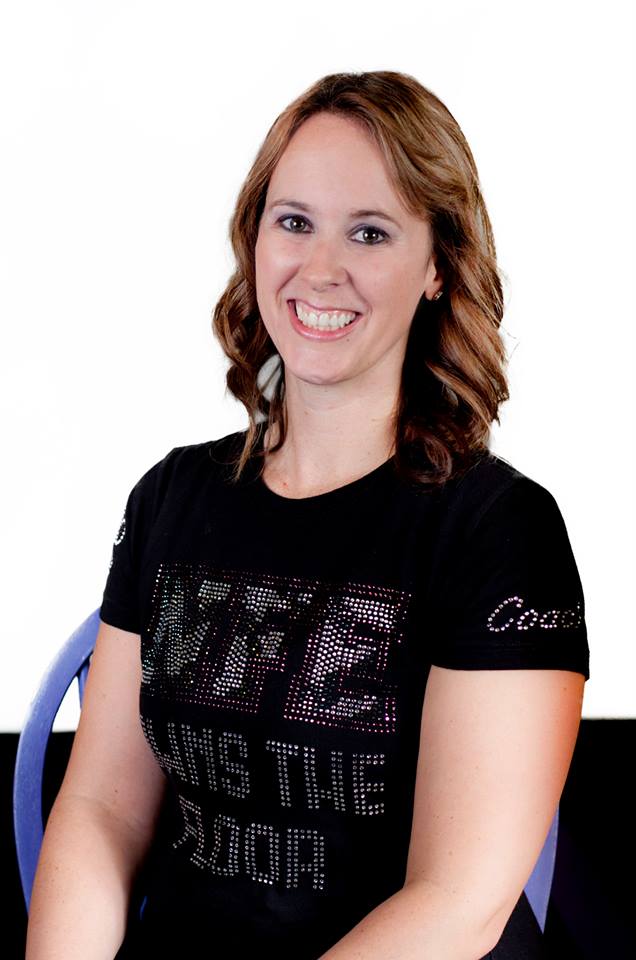 Stefanie Nelson: In 2010, Stefanie Nelson started North Florida Elite with two 6’ x 10’ folding mats and a small rented space. At the time, she was working as a middle school science teacher, but realized that she missed coaching, so she started a tumbling program. Fast-forward to 2013, and her Starke, FL-based gym is now 6,000 sq. ft., with tumbling programs, cheer classes, a special needs team and half-year/all-star teams. Despite the growth, Nelson still juggles her teaching job with the demands of running a gym—something she’s trying to mitigate. Shares Nelson, “My ultimate goal is to not have two jobs.”
Doing double-duty makes for a very hectic life. Nelson works until 8 p.m. Monday through Thursday, and she’s working at the gym until 9 p.m. on Fridays. On Saturday, she’s paying bills and grading papers. She also leans on her “overly organized” husband, who runs the house and helps coach when she needs him. (The gym recently lost a coach so he’s filling in for the time being.) “He’s the glue that holds it all together,” Nelson says.
People who are thinking of holding down their full- or part-time job and opening a gym shouldn’t have any illusions about the dedication it requires, but Nelson says the rewards can make all those late hours pay off. “The main thing is seeing the girls and wanting them to experience success on—and off—the purple floor,” she says. “I want them to see that there’s more to the world than our little town in Florida.” (A few students have written about Nelson’s influence in their life for their college essay applications, which she says has been especially gratifying.)
Nelson’s advice to future gym owners is to “be organized and do it because you love it and not because of the money. I don’t want a thankless $100,000 a year job. Make sure you get into it for the right reasons. There have been days when I thought, ‘Why not sell the gym and not work 70 hours a week?’” But for Nelson, the thrill of seeing her athletes succeed both on and off the mat is what makes it all worthwhile.
 Leslie Pledger-Griffin: Like Nelson, Renegade Athletics owner Leslie Pledger-Griffin understands the sacrifices that must be made in order to get a gym off the ground. Pledger-Griffin first started teaching tumbling out of the wrestling room in her high school at just 15 years old, and she met her husband at a cheerleading competition. They started their all-star program together, and Pledger-Griffin balanced her job in education for a year before leaving to work full-time at their 12,000 sq.-ft. facility in Calhoun, Georgia.
When she was juggling, Pledger-Griffin would leave the house at 6:30 a,m. for her teaching job, work until 3:15 p.m., drive to the gym and work there until 10 p.m. “You are exhausted,” confides Pledger-Griffin. “You still have to cook supper, wash and iron clothes and, on weekends, you often have practice or competitions. Then you start all over again on Monday.”
On that note, Pledger-Griffin advises anyone working and running a gym simultaneously to take ample time for self-care—whatever it takes. “Time is valuable,” she shares. “There is no shame in taking a nap if you can squeeze one in between jobs. Eat and sleep when you can.”
Another of Pledger-Griffin’s keys to sanity is to “work smarter, not harder.” For Renegade Athletics, she utilizes the web-based class management system Jackrabbit so that she can answer account questions or schedule classes from anywhere. “You can do it from your other job, from home or even from your smartphone,” explains Pledger-Griffin. “It’s the best money we spend each month.”
 Michelle Epps: Meet Michelle Epps, who owns Cedar Hill, TX-based Twisters Spirit Athletics. At one point, Epps was working full-time, working on her MBA and running a new gym all at the same time—with a staff that had no real competitive cheer knowledge. “We were learning as we were going,” Epps says of those early days. One of her biggest challenges of running a gym while holding down a second job was “keeping a high level of quality at both jobs.” Yet Epps knew from the beginning that if she were forced to make a choice, she would choose her gym: “It was, and still is, my passion and my purpose. It is that thing that I would do for free.”
Epps stresses the importance of knowing when to work—and when to take some much-needed away time to recharge. According to Epps, it doesn’t do you or your athletes any good of you’re burned out and low on energy. Her calendar was and is her “best friend,” and staying organized and coming to realize that you cannot please everyone are also key lessons she has learned along the way.
The ability to delegate is another crucial tool. Epps urges gym owners to accept the fact that you likely can’t—and shouldn’t—try to take on every single duty yourself. Ask people for help, surround yourself with a great support staff and prioritize. It’s easy when you’re multi-tasking to think that every issue that comes up is urgent; learn what has to be tackled today, and what can wait until tomorrow. On the same note, Epps also advises future gym owners to know their niche and focus on making that great, rather than trying to tackle everything at once.
As far as taking that huge leap and quitting your job to focus on the gym, Epps says, “I think the first step in making the decision to work at your gym full-time is knowing that this is your passion. This is the job that gets you up in the morning and keeps you up at night thinking of ways to make it better.”
In other words, work hard, work smart and go into this for the love of the profession and the kids. If you have to balance two or more jobs—as many owners do at first—take one day at a time and remember that you went into this because it’s your passion. Or, as Epps says, “the thing you would do for free.”
–Dina Gachman
Behind the Merger: East Celebrity Elite
jen : February 26, 2014 12:25 pm : Web Exclusives| webexclusive1 As the divide between small and large gyms grows wider, it’s not uncommon for gyms to merge in an attempt to pump up profits and competitive power. On the surface, the reasons to merge seem clear—building a larger membership base or having the means to form a stronger coaching staff. But dig deeper and you’ll find that a number of other motivating factors are often at play, from strengthening the local cheer community to wanting to benefit the athletes. For our “Behind the Merger” series, we caught up with three gym owners who opted to merge and discovered the real deal behind making the challenging yet rewarding move to become one. See the first in our series below!
Merger #1: East Elite + Celebrity Cheer = East Celebrity Elite
Location: Tewksbury, MA
Reason for merging: Remaining profitable in a challenging economy
Combined number of athletes: 400+
Cheryl Pasinato, former owner of East Elite, discusses her gym’s 2009 merger with Celebrity Cheer and the payback of moving forward.
 CP: Why did you decide to merge?
Pasinato: It was a mutual merger [between East Elite and Celebrity Cheer]. I knew them for a while; we were two of the biggest gyms numbers-wise in the area. But when the economy took a downturn, we both started to lose kids.
CP: What was the motivator, aside from the economy, to merge with Celebrity Cheer?
Pasinato: To stay competitive nationally, we felt we needed to do something. It was to position our gym as a bigger, non-local program competing at the national level. We also had a philosophy to offer our kids the best coaches and the best staff. With diminishing numbers, we didn’t think we could do this on our own; we felt we had to merge.
CP: Describe the landscape before merging.
Pasinato: We were 8-10 miles away from each other and, if a kid didn’t make it at one of our gyms, they would go to the other one. People [parents and kids] started to create competition between us. We were the worst rivals ever. Our staff didn’t get along; we were really competitive with each other. Essentially we merged with people we didn’t even speak with—but we did it for the business and the kids.
CP: The merger must have been challenging. How did you make it work?
Pasinato: We both had strong staffs with different philosophies and strengths. But we felt we could learn from each other. We also felt we could use each other’s strengths to come up with the ideal program. For instance, tumbling coaches are hard to come by, so combining our coaching staff would benefit our kids. It was a better talent pool.
CP: What else made the merger challenging?
Pasinato: Selling it to the parents. For the most part, everyone was excited after we made the announcement, but we had been rivals for all these years who wanted to beat each other. After a couple months, there were indeed issues, but mostly with the parents (loyalty-type issues on little things).
CP: How so?
Pasinato: It was pride-based—things that kept the parents separate like colors and competition. We had pride in our [respective] identities and names and our colors, but this went away after the first year because the kids had a really good year.
CP: What was the key to making it work?
Pasinato: Compromise. There was a facility issue: [Celebrity Cheer’s] was cheaper and more centrally located. We felt bad for the kids leaving their gym behind, but we had to compromise. We did things to help the kids feel comfortable, such as using their [East Elite] colors. We talked to the older kids and told them we needed their support to make this work and for them to be examples to the younger kids. We merged right after tryouts and kept all the teams separate except the minis and Junior 5 teams. After the second year, we merged everyone.
CP: Any other examples of how you compromised?
Pasinato: We were more conservative about attendance; they weren’t. Together we adopted a [joint] policy that was less conservative but one that motivated everyone to come to practice.
CP: What was most surprising to you after the merger?
Pasinato: What surprised me most was how the four of us [the original gym owners] got along. We all had these ideas about each other; that we were so different. But as we came together, we realized we were more similar [in our business and coaching attitudes]. We all had the same goals too: providing a better experience, fostering growth and more profit, making [cheer] a career.
CP: How has the merger made you more competitive?
Pasinato: We have a lot of different levels now—division and age groups at every single level. We are giving kids the opportunity to progress using their skills and offering them more opportunities.
CP: What is your advice for other gyms considering a merger?
Pasinato: I think you have to consider the reasons why. If it’s financial, that’s good; if it’s for a better name, that’s not a good reason. The name doesn’t necessarily bring the kids. A good reason is to be competitive and have more resources, such as revenue and cash flow.


