

In addition to all the great content we bring cheer professionals in our quarterly print issue, you’ll find plenty of original exclusive content right here at TheCheerProfessional.com.
Keep checking back for all the latest and greatest news, updates, debates and more!
Test Your Trends Knowledge!
jen : April 20, 2014 10:23 pm : In the Industry| Web Exclusives| webexclusive2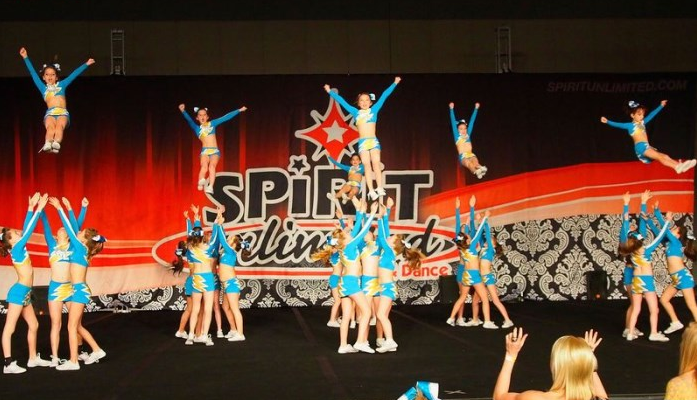 With all of the developments in our ever-evolving industry, it can be hard to keep up. For handy reference, we’ve compiled a thorough timeline of how some of today’s hottest trends and innovations came about (and the companies that pioneered them). But before you check it out, take our quiz below to find out how much you know—then check out the answers below!
1. Which of these companies debuted its custom uniform line back in 1999?
a) Ozone
b) Teamleader
c) Rebel Athletic
d) Chasse’
2. What year did Varsity introduce its Varsity Family Plan?
a) 1998
b) 2001
c) 2006
d) 2009
3. Which of these companies was not among those who originally launched US Finals?
a) Varsity
b) Spirit Brands
c) The JAM Brands
d) Epic Brands
4. Which of these invitation-only events made a splash in 2014 with an accompanying feature film?
a) The Revolution
b) The Majors
c) All-Star Games
d) Champions League
5. In 2013, Epic Brands debuted three new events. Which of these was not one of them?
a) The Summit
b) The Reveal
c) The Debut
d) Future 5
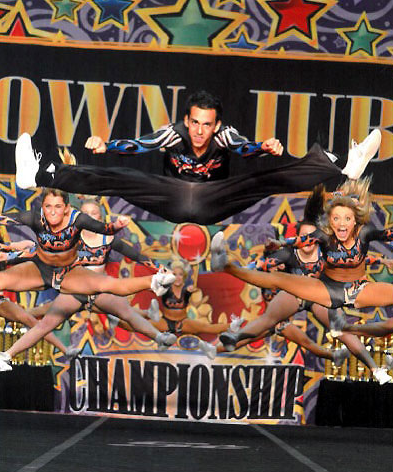 6. What’s the name of Spirit Celebration’s royalty-themed end of year event?
a) Cheer Kingdom
b) Cheerlebrity
c) Crown Jubilee
d) Reach The Throne
7. Several events adopted stay-to-play policies in select cities in 2014. Which of these was not one of them?
a) Cheersport
b) American Cheer Power
c) JAMFest Cheer Super Nationals
d) Coastal Battle at the Capitol
8. What was The Summit called in its previous iteration?
a) International All Levels Championship
b) The Road to Worlds
c) Battle of All Levels
d) All Levels Challenge
9. Which two companies combined to form EPIC Brands?
a) COA and Coastal
b) Americheer and Great Lakes Cheer Championships
c) ACDA and Spirit Unlimited
d) Xtreme Spirit and Twisted Spirit
10. What current publishing company were the original founders of Cheer Biz News?
a) American Cheerleader
b) The Cheer Leader
c) Inside Cheerleading
d) CheerProfessional
Answers:
1.) B: Teamleader debuted its custom uniform line in 1999.
2.) C: Varsity introduced its Family Plan in 2006.
3.) A: The event producers that originally launched U.S. Finals were Spirit Brands, JAM Brands and Epic Brands.
4.) D: The invitation-only Champions League event debuted in 2014 with an accompanying feature film.
5.) A: Epic Brands’ three new events in 2013 were The Reveal, The Debut and Future 5.
6.) C: Spirit Celebration’s royalty-themed end of year event is Crown Jubilee.
7.) B: American Cheer Power adopted its stay-to-play policies before 2014.
8.) A: The Summit was formerly called International All Levels Championship.
9.) C: ACDA and Spirit Unlimited combined to form Epic Brands.
10.) D: The publishers of CheerProfessional were the original founders of Cheer Biz News.

Tammy Van Vleet, GSSA and Aloha Spirit Productions
For the second year in a row, CheerProfessional tapped four of the industry’s cheer “leaders” for a spirited panel discussion on our industry and its future. Check out our “State of the Union” panel for 2014 and read what they have to say:
There seem to be a lot of varying opinions about what needs to happen with Worlds—from venue changes to divisions to bids. What’s your take on the future of Worlds?
Van Vleet: Being from the West, we’ve always felt our teams have been geographically challenged. When you give bids of $650 to an athlete from Miami and another from LA, that’s a huge difference for getting to Orlando. That said, our teams have been able to come out and win and perform well. Personally, I would like to see the location move to include additional parts of the country; I know there are a lot of bigger convention centers that could accommodate this event.
Billy Smith, Spirit Celebration and Amazing! Championships
Smith: Steve Peterson has done a great job coordinating the many companies involved in Worlds. To use a biblical analogy, the problem is now that Worlds has become the “Golden Calf”—I’ve seen it change our industry. It has ruined friendships and caused a lot of dissension in our industry. Now that it’s in its 10th year, I’m not sure there is an event producer out there that doesn’t wish it would go away, but no one will get out because they’re afraid of losing the teams. I’ve been very blessed: my teams that I’ve spent the big bucks on have won gold, silver and bronze, but my numbers of participating teams trying to get bids go down because people don’t want to compete with the gyms that win year after year. I can also promise you a lot of gyms have been hurt by it; small gyms have lost so many kids to large gyms. There are also gyms that are scholarshipping everyone so they can pull kids from all over.
What are the emerging event trends?
Smith: We’re seeing a trend of specialty events, such as the Majors, the Revolution, Amazing! and the Champions League. As our industry evolves, we are definitely seeing event producers and gym owners get more creative in an effort to try and lure customer dollars. Everything has to evolve, and [this trend] is creating lots of options. Also, I believe everyone is creating something different so that Worlds isn’t the end-all and be-all. With the Summit, Majors, the One, Amazing, etc. brands have positioned themselves so that they don’t need Worlds. If Worlds goes away, we’ll all be ready for it.
The United States Cheer Officials Survey and the formation of the NACCC judging committee has sparked a lot of conversation about conditions and compensations for judges. What are your thoughts on the way the industry treats our judges?

Kathy Penree, CNY Storm All-Stars (Albany, NY and Syracuse, NY)
Penree: This is something we discussed at length in Doral. There are two sides [to the issue]: the first is that we need to help judges be protected as far as compensation and working conditions—making sure judges are rested, fed and paid well. We also need to ensure event producers are hiring trained judges. Some of the event producers really stepped up this summer with more in-depth training, and I think we’ll all see great results from that during the season.
However, the other component is that the judges who sign up for the events need to fulfill their responsibility. When judges don’t show up or need a last-minute replacement, [EPs] are sometimes forced to go further down in the pool of judges as far as experience level and knowledge. That’s part of the problem that I go through as an event producer.
Van Vleet: I saw that survey, and I don’t agree with it because we don’t treat our judges that way. We go to great lengths to choose flights and hotels that are more than satisfactory, provide ground transportation, have meals brought in, etc. There are so many event producers—judges can decide where they spend their weekends working, gym owners can decide where they spend money to compete.
Where do you stand on the universal scoresheet?
Penree: Kristen [Rosario] and John [Metz] are leading this effort on behalf of the NACCC; we’re going to try shadowing it at events this season in hopes of rolling it out for 2014-2015 season. It will be easier for us as coaches and gym owners if we can train our teams to one scoresheet. I also like that it will bring back the creativity that’s been taken away by the standard routine. Without divulging what’s on the scoresheet, I know that’s one of their goals.
Van Vleet: I am in favor of a universal scoresheet because it would eliminate teams having to change their routines from weekend to weekend. That has to be frustrating for kids and coaches to be shooting at a moving target. However, I feel like [GSSA] has continually improved our judging and scoring system and we are not involved in the development of the universal scoresheet so I’m not able to provide insight on this.

Brian Harris, United Talent Cheer
Smith: Now that everyone is under USASF safety guidelines, it’s been a huge relief for the coaches. However, now that it’s evolving into the scoresheet, I’m worried that USASF will say all judges have to be trained through them. I don’t want them to set the amount I pay my judges; that should be up to event producers. Also, coaches are likely to be frustrated because they will expect the same scores every week—and that’s not going to happen. Judges evaluate differently; we are a subjective sport. However, I won’t say that it’s not going to work because it has never been tried; if the coaches want to try it, I’m game.
How do you feel about the direction of the USASF as our industry’s governing body?
Harris: I believe there needs to be a governing body, but anymore in this industry, it seems as though everyone is out for themselves. Across the board with competitions, USASF, the biggest companies and Varsity, I think almost every aspect has lost perspective on what the objective is and what most of us are attempting to do. Are we in this for ourselves or are we trying to better our athletes and the sport? When you look at these kids coming in, they just want to learn the basics and have a good experience; most are not familiar with Worlds or cheerlebrities. I feel like the industry is moving in a direction that could eventually have a negative impact if it keeps going the way it’s going. I’d like to see the governing body become more focused on the true purpose and meaning behind what this sport should be.
Smith: Paying off the loan was step one, the new building was step two, but what’s wrong with USASF now is that the Board of Directors is out of balance. It is so Varsity-heavy that until they have an elected board, it’s still a smoke-and-pony game. Even though Jam Brands and the IEP have many teams going to Worlds, they have considerably less votes [than Varsity]. The coaches got another non-voting position last year, but the number of voting members is still Varsity-heavy.
Van Vleet: We are a member of USASF and we choose to support that. I don’t like to tear apart something that I’m a member of—I’d rather offer solutions and make something better instead trying to splinter off and do something separate. We should be united as an industry.
Any other USASF developments you’d like to comment on?
Van Vleet: I’ve been happy to see the credentialing program evolve, but there’s still room for improvement. The requirements should be a little bit more stringent; we can’t mess around when we’re dealing with kids. Our sport needs to be safe and legitimate—and the faster, the better. I think every coach needs to be credentialed and have a background check. This year, we’re making sure all of our staff [meets those requirements]; the goal is to be leaders in the industry and go one step further to make sure the environment is safe for our participants.
Penree: I like that the industry is paying attention to image [with regulations on uniforms and cover-ups] and that we’re taking a stand in promoting a good image for our athletes. Unfortunately, it’s something we have to self-police because the USASF doesn’t have the manpower to walk around and enforce those policies. I’d like to see more programs take the responsibility among themselves to do so. It’s also about how the outside world perceives the cheer world; people don’t understand when they see children walk around the mall in a sports bra. We need to keep the image respectful and athletic.
What’s your stance on the cheerlebrity phenomenon?
Harris: I don’t feel [all-star cheerleading] is as healthy as it used to be. One of the biggest problems is that too much emphasis is being placed on the wrong things at competition. To look the part, young athletes feel pressure to be the prettiest or wear the most makeup, the smallest/tightest uniform, the most glitter. The industry allows for glorifying elements of the sport that aren’t meant to be glorified. Athletes should be spotlighted for their athletic abilities at every level, [but] the idea of “cheerlebrities” creates an expectation and status that few will reach. Kids can’t feel good about themselves because they’re trying to live up to the image of what the perfect all-star cheerleader should be—instead of focusing on their own training.
Van Vleet: I have mixed feelings about it. If [cheerlebrity status] is used in a positive way, it can be very good for our industry, but I’ve seen situations where individuals put themselves above the team, and it doesn’t sit well. There are also safety considerations—this year, we made sure to have barricades around stages so kids can get to and from them safely, as well as maintain their focus on the team competition. We have to think about that because of the visibility these kids have; people are so excited and want pictures and autographs and 15-year-olds don’t know how to navigate that.
Smith: I think it’s unfair to the kids what the magazines have created. I feel sorry for those kids that are cheerlebrities because there is nowhere to go with it. It doesn’t help you get a job, and once it’s over, your life will never be normal. These kids are on a pedestal and, if they do anything wrong, it will be devastating to see how they handle it. Social media can be very cruel to everyone, especially teenagers.
What are some of the other issues affecting gyms and athletes?
Penree: There are discussions about whether [our sport] is too demanding. If you’re walking in off the street and don’t have elite tumbling, there is a lot of pressure to [obtain] that skill, but it’s not something that comes quickly. People have to be invested and train for several years. Some are intimidated by the skill level that they perceive that they need to have; they don’t always realize that there are other levels and that everyone can cheer.
Another discussion we have at NACCC and [the USASF] board is making sure athletes aren’t getting everything at such a young age. If you’ve been to Worlds three times by age 14, you’re like, “Okay I’ll do something else now.” The retention rate is a concern.
Harris: The ever-growing and changing industry puts pressure on both kids and gym owners to keep up. From rules to divisions and even the latest trends, athletes and their gyms must continually adapt to stay ahead of the game. Also, because gyms need revenue, many times athletes are pushed into a competitive program before they are ready, causing unneeded stress on the athletes and their parents. Emphasis on competition pushes gym owners into attempting to build multiple competitive teams rather than diversify—which can be financially detrimental. In my experience, all-star cheerleading is not the driving force behind our program; our stability is created with non-competitive/rec programs that keep costs lower and gain more numbers.
What are some other growth areas emerging for gym owners?
Harris: Obviously, there are many more cheerleaders to be had in Levels 1-3. Levels 4-5 are more select. As gym owners, if all we do is put emphasis on building a Level 5 program, we will eventually fall off because we are not nurturing our other growth areas (including prep teams and non-competitive programs). A major mistake is the approach of making the elite cheerleaders the most important team in the program. It is hard to sustain the “best” team year after year when you don’t have kids coming up from the other levels.
Penree: Gyms are finding that they need to diversify their business since there is such a large overhead with these facilities. Lots of gym owners now realize it’s necessary to do more as far as offering more camps, clinics and classes to outside kids. Training high school teams is a very successful approach and one that every gym owner needs to pursue. Also, [another consideration is] adding things like Pilates/dance or after-school programs; one successful gym in Ohio has even added a pre-school.
What’s the bottom line?
Van Vleet: We should all take this amazing opportunity of doing what we love every day very seriously. Don’t take it for granted; at the end of the day, it’s about the kids at the events. I think we have to be very thankful and protective of the kids involved. I had the opportunity to speak at my high school’s graduation ceremony, and they wanted me to talk about how I took an activity I did in high school and turned it into my career. Let’s be very careful with what we have, because I think it’s pretty amazing.
Behind the Merger: West Virginia Cheer Academy
jen : April 1, 2014 5:56 pm : Down to Business| Web Exclusives| webexclusive2 As the divide between small and large gyms grows wider, it’s not uncommon for gyms to merge in an attempt to pump up profits and competitive power. On the surface, the reasons to merge seem clear—building a larger membership base or having the means to form a stronger coaching staff. But dig deeper and you’ll find that a number of other motivating factors are often at play, from strengthening the local cheer community to wanting to benefit the athletes. For our “Behind the Merger” series, we caught up with three gym owners who opted to merge and discovered the real deal behind making the challenging yet rewarding move to become one. See the third in our series below (and don’t miss our first installment with East Celebrity Elite and second with Legendary Athletics)!
Merger #3: Twin City Stars + West Virginia Cheer Academy = West Virginia Cheer Academy
Locations: Big Chimney, WV, and Marmet, WV (suburbs of Charleston)
Reason for merging: Rapid growth, plus gym owners who were ready to leave the business
Combined number of athletes: 220 (80 competitive)
 Kayla Wygal, co-owner of West Virginia Cheer Academy, caught the attention of Twin City Stars, and when they wanted to give up the business to spend more time with family, they gave Wygal a call.
CP: Your situation is unique; you absorbed Twin City Stars into your gym.
Wygal: It’s only our second season (we started in August 2012), but we saw an incredible amount of growth. It was scary; Twin City Stars was three years our senior. We had competed against them and they beat us, but the owners liked what they saw and were interested in turning over the business to us. On August 26, 2013, we took full ownership.
CP: Tell us about the logistics before the merger.
Wygal: We were the smaller gym and were 10 miles apart from Twin City Stars at two separate ends of town. We pull [kids] from eight counties in West Virginia with Charleston at the center.
CP: What were the steps you took to merge your smaller gym with their larger program?
Wygal: We built a relationship with the owners over a couple of months and decided to tell our parents first. There were hurt feelings—mostly the Twin City Stars’ parents were upset that the owners didn’t tell them. But then [the parents] got to know us, and the kids could still do what they wanted to do: cheer.
CP: How are you managing it now?
Wygal: We use the same name but maintain the separate locations. Seniors go to the original location of Twin City because the majority of seniors were from there, and juniors alternate between the two locations.
 CP: How has becoming a larger gym helped West Virginia Cheer Academy?
Wygal: We were strong at all-star, and they were better at tumbling. They didn’t have enough to make full teams for all-star and now they do. All-star isn’t huge in West Virginia but we have created a buzz and excitement about the expansion. Gyms are talking about us.
CP: What were the reactions you’ve encountered with the membership?
Wygal: The kids are amazing. They are so resilient and do well. The Twin City location parents love us and have taken us in. I have taken on development at Twin City, and some of our parents feel like I’ve chosen them [Twin City] over West Virginia Cheer Academy. That was a surprise, but they are coming around and now the parents are mingling between the two gyms. The attitude is, “We’ve got to do this together if we are going to be successful.”
CP: Are there other challenges?
Wygal: I’ve learned that how you manage coaching staff is key to your success. We have head coaches at each location, and we want to make sure they know they are important. The coaches that share locations have merged. Getting all the coaches together hasn’t happened organically, and we are having our first “all coaches” meeting. Now we are stepping in and enforcing [the mingling]. It will be fine, and we won’t lose anyone; we just need to explain that together they are stronger.
CP: Looking back, would you do it all over again?
Wygal: I would do it all over again. It’s been fun, but it’s been hard. I work 14-15 hour days, but I’ve met so many great little girls I wouldn’t have met otherwise. It’s like with children—you never would have dreamed you could love the second one as much as the first.
CP: Any advice for gym owners presented with the opportunity to expand?
Wygal: Don’t be afraid to be ambitious; don’t fear the opportunity. Yes, it is extremely hard work and it’s expensive. But if you are in it for the kids, it is 100% worth it.
Stay-to-play requirements have become a hot button topic for competitive gyms and the event producers who serve them. CheerProfessional looks at both sides of the debate.
Many gym owners—and parents—have long appreciated the autonomy of making their own travel arrangements for competition, due to the flexibility and options afforded by this approach. However, more event producers are now requiring “stay to play” (requiring that teams stay in a designated room block set up by a third-party company in order to compete). The practice has sparked debate inside the industry: some gym owners are boycotting these types of events, on the grounds that rooms are being egregiously marked up and that it creates less choice for budget-conscious families. However, event producers maintain that stay-to-play is necessary in order to maintain ongoing relationships with the venues and cities their customers have come to love. See what Cheer Zone owner Tamara Reed and Cheer Power’s Regina Symons have to say on the topic.
Editor’s Note: Please note that the views expressed in this article are expressly those of our sources and not those of CheerProfessional.
 Tamara’s take: We are a small gym with four full-year teams, as well as a few mid-season teams that don’t travel as much. Every year, we do at least a few travel competitions. We are big enough for [booking travel] to be a pain and small enough where event producers don’t care about us. This year, we’re doing the American Championship in Chicago and JamFest Super Nationals, both of which require stay to play—as it seems almost every single major competition does now.
On why she opposes it: For us, our parents aren’t willing to just throw down money. Our travel competitions are very well thought-out and we try to give lots of notice [with the details]. With stay to play, you have to go through these companies and don’t have a choice as to where you’re going to stay.
Two years ago, we went to the American Classic, and our parents loved it and begged to go back. Now that they follow stay-to-play policies, we’re running into problem after problem—our group can’t stay connected, we’re far away from the venue and now families have to rent a car since we’re not staying nearby. It seems like stay-to-play just comes with the territory now—and if you want to compete on a national level, you have to put up with these hassles.
On housing company issues: Right now for Super Nationals, we are about 15 miles away from the venue; when we inquired about NCA in Dallas last year, we were told we’d stay 20 miles away. For American this year, we still don’t have a hotel at this point. We were told they didn’t have any hotels available—and that we have to wait until they find more partner hotels and can locate a block with enough room. We never came across any issues like this until event producers started doing stay-to-play.
On issues with parents: We’ve had problems with parents going online and finding a room at the exact same hotel for cheaper. Initially for SuperNationals, they put us at a Jameson Inn near the venue for $95/night, but if you went online, the Jameson Inn website was offering rooms for $50/night. Our parents wanted to know why they couldn’t get it at that rate, and we’re the ones dealing with the upset, angry phone calls. The parents assumed we were upcharging them and trying to get our coaches’ rooms free—but it didn’t include any kickbacks for us. We had to pay the same prices parents were paying.
In the end, we called the hotel company and asked for somewhere further away that was better. Now we’re paying $110/night for a room that is about 20 minutes away from the venue. Our parents are already paying thousands in competition fees, travel, uniforms and everything else—we’re constantly asking them to shell out, and it makes it so much harder when they don’t have choices. Stay-to-play has taken away some of the options as far as parents feeling like they had a say in where their money was going, and the gym owners look like the bad guys.
On possible solutions: I think “Inform To Perform” is great; obviously, we would much prefer to just ask parents where they’re staying and make a list, as it would be much easier. I understand the event producers need to know exactly how many rooms, but it seems like there are other ways to do it, whether it be Inform To Perform or something else. I don’t think they need to be the ones that dictate where we’re going and what we’re paying.
I’m not saying competition travel should be a free-for-all, but it should be very easy for event producers to say, “We’ve got 20,000 kids performing and this is how many parents are here.” Most cities should consider it pretty reasonable to look at your competition numbers and estimate the total from those.
The bottom line: Our industry has gone this long without needing stay-to-play, and I’m not sure why all of a sudden it’s so necessary. I think it benefits event producers and has taken away from gym owners and parents. We have parents who can’t afford to stay at a $200/night hotel and others who can—and I’d like for them to be able to make that choice.
It’s basically become a “Deal with it if you want to compete” type of attitude. Other coaches have said, “Just don’t go [to competitions that require stay-to-play],” but if you want to compete at big competitions outside your local area, that’s not an option anymore. It is what it is, but I’d like to see it change.
 Regina’s take: Until a few years ago, Cheer Power did not participate in “Stay to Play.” I believe in staying where you want for the price you want to pay, so I resisted all housing companies’ requests for stay-to-play. However, I had to change that way of thinking.
A few years ago, Cheer Power had 500 teams in the Alamodome—but the city showed only 200 rooms for this event. They had a nice, long chat with me and indicated I may lose the facility if I was ever challenged by another group bringing more rooms to the city! I also could not get my dates years in advance. That was a real wake-up call for me.
On why it’s necessary: That meeting was definitely the motivation for Cheer Power to get correct room counts in order to keep the venue—this season, we have three large national events where this is needed. For instance, in the Midwest, we use the Columbus Convention Center; so does every other cheer company that holds competitions in Columbus. This is our World Bid event, and I cannot even think about the possibility of losing the convention hall due to not showing enough rooms. We use the Alamodome for our Southern Nationals with the same possibility. There are no other venues large enough to house these competitions.
At our Cash Bash in Galveston, the city promises $20,000 to Cheer Power, but we have to satisfy their requirement for rooms for the weekend. Cheer Power gives the $20,000 back to the athletes! We have to have an accurate room count and satisfy the city’s requirement or risk losing $20,000.
On housing company issues: We have held meetings with our housing company and made it very clear that our parents need to have rooms within their budget. If parents want the River Walk, great, but if they need a more reasonably priced hotel, our housing company has promised to find it for them. If gym owners experience any problems with a housing company, you should contact the event producer directly. When we receive complaints, we contact the owner and get an immediate response.
On issues with parents: Many gyms send a link to parents and they all get their own rooms, which is the easiest thing for the gyms to do. (Our housing company provides the link to send out.) Certainly, we want to make this easy for our coaches and gym owners. We also want to offer rooms in every budget.
We never require booking a room if a hotel is not necessary. Some gyms are close to the competition, some stay in RV’s, some stay with friends.
On incentives/rewards: I have instructed our housing company to give coaches free rooms when requested. Normally you get 1 for every 50 rooms booked.
On gym owners boycotting Stay to Play: Refusing to compete where there is a stay-to-play event doesn’t make sense if the hotel price is reasonable and housing company is handling the event professionally. Price gouging is completely unacceptable! Anyone having any issues with a housing company should get in touch with the event producer and let them know. The housing company works for them and their customers, and they should remember that at all times. Coaches, owners, and parents have too much going on to deal with unprofessional people.
On gym owners’ obligation: I do believe that every gym should abide by stay to play if it is required. Certainly, it’s not fair for only some to do so! We have been a lot stricter this year because we feel like we can find a hotel for every budget. If I feel we are being fair and the prices of rooms are right, then it’s easier for me to enforce.
The bottom line: Pressure from City Chambers of Commerce in order to keep venues is our main concern. They are going to put the group that brings the most rooms to their city in the more desirable venues that they own. It is my wish that gyms could understand the importance of getting these room numbers! We want to give them a great location for their National Championship and keep it from year to year—and accurate room counts are necessary to continue doing so.
In saying all of that, we need to make this easy on the gyms and reasonable for parents. If we can do this, then I feel like all of the gyms will be supportive.
Go, Go Gadget! Review: Cheer Balance Pro Pedestal
jen : March 24, 2014 12:39 am : In the Industry| Web Exclusives| webexclusive1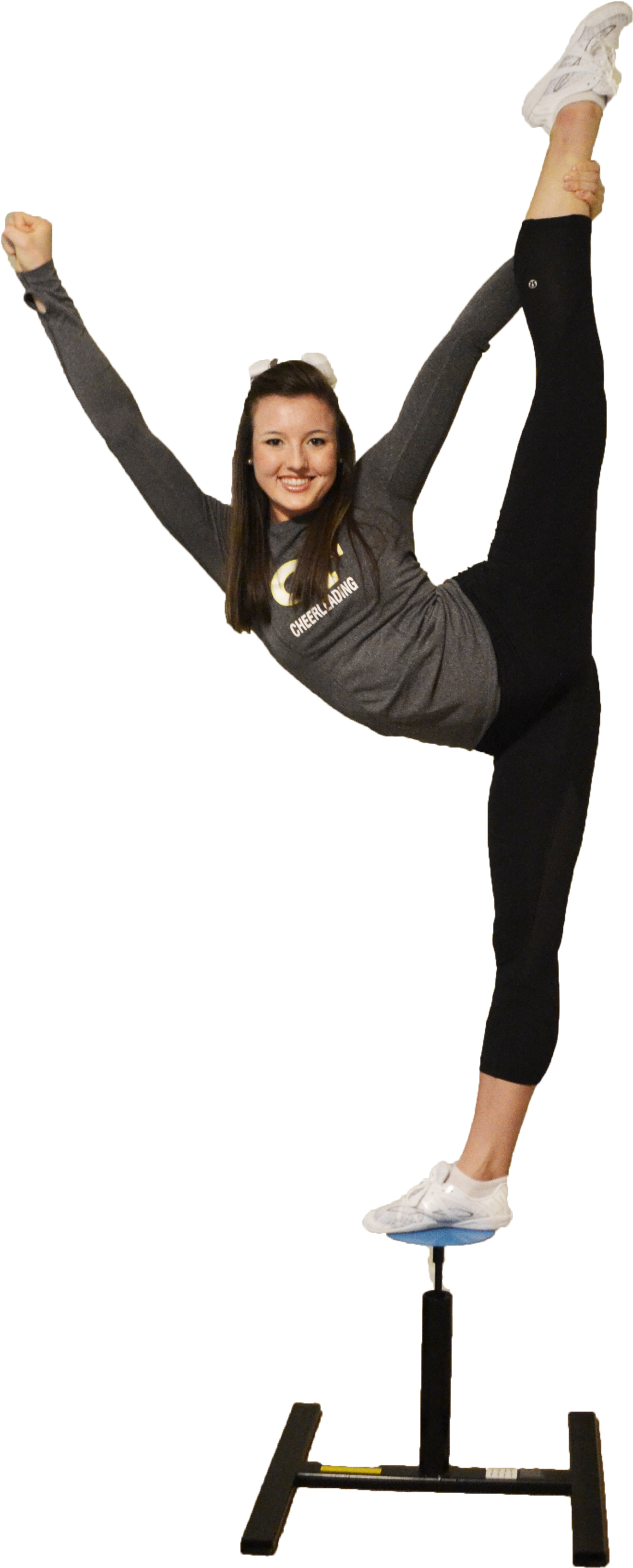 For our new “Go, Go Gadget!” review feature, we asked the team at Georgia Tech to road test the Cheer Balance Pro Pedestal.
What It Is: The Cheer Balance Pro Pedestal is geared at boosting strength and helping to build athletes’ balance for stunting and other cheer skills. Founder David Ciolkosz was inspired by two circus veterans (one a world champion and the other a Guinness World Record holder for balance), who introduced the concept to him using handstand poles. The natural vibration of the pedestal’s pole creates shockwaves of energy, resulting in improved balance strength.
Our Testers: The cheer squad at Georgia Tech, under the direction of coach King Harrison. Harrison owns four Cheer Balance pedestals, which he rotates among his flyers and uses during summer training. Each flyer follows the same circuit: liberty, arabesque, stretch, scale, bow & arrow, scorpion. “When you pull all of those, you really have to work your hip flexors, abs, core, ankle and leg—really focusing on keeping yourself centered over the pole,” Harrison explains.
What they loved: “I teach stunting a lot like people teach tumbling; I’m very focused on body alignment and positioning,” says Harrison. For those reasons, he’s a big fan of the way the Cheer Balance pedestal shows athletes how to position themselves in the air and hold their weight properly. He also appreciates the “instant feedback” the product provides: “If your weight isn’t centered, you’ll fall right off,” he explains.
What they thought could be improved: “It doesn’t teach you how to do a full-up or how to be sharp [in a stunt], but that’s not the point,” says Harrison, who also was a stunt coach at Stingrays for six years.
The verdict: “[The Cheer Balance pedestal] is fun to stand on and do different body positions. It’s not a cure-all, like ‘Bam! I’m a better flyer instantly!’ but if used properly, it can really help flyers find their balance and center,” says Harrison, adding that he recommends it most to newer flyers or those who need to work on flexibility.
How to get it: www.cheerbalance.com


