

In addition to all the great content we bring cheer professionals in our quarterly print issue, you’ll find plenty of original exclusive content right here at TheCheerProfessional.com.
Keep checking back for all the latest and greatest news, updates, debates and more!
Running a gym takes stamina, patience, resilience and the ability to multi-task like a superhero. Add a pro shop into the mix and things get even more hectic—and, if it’s managed well—even more rewarding.
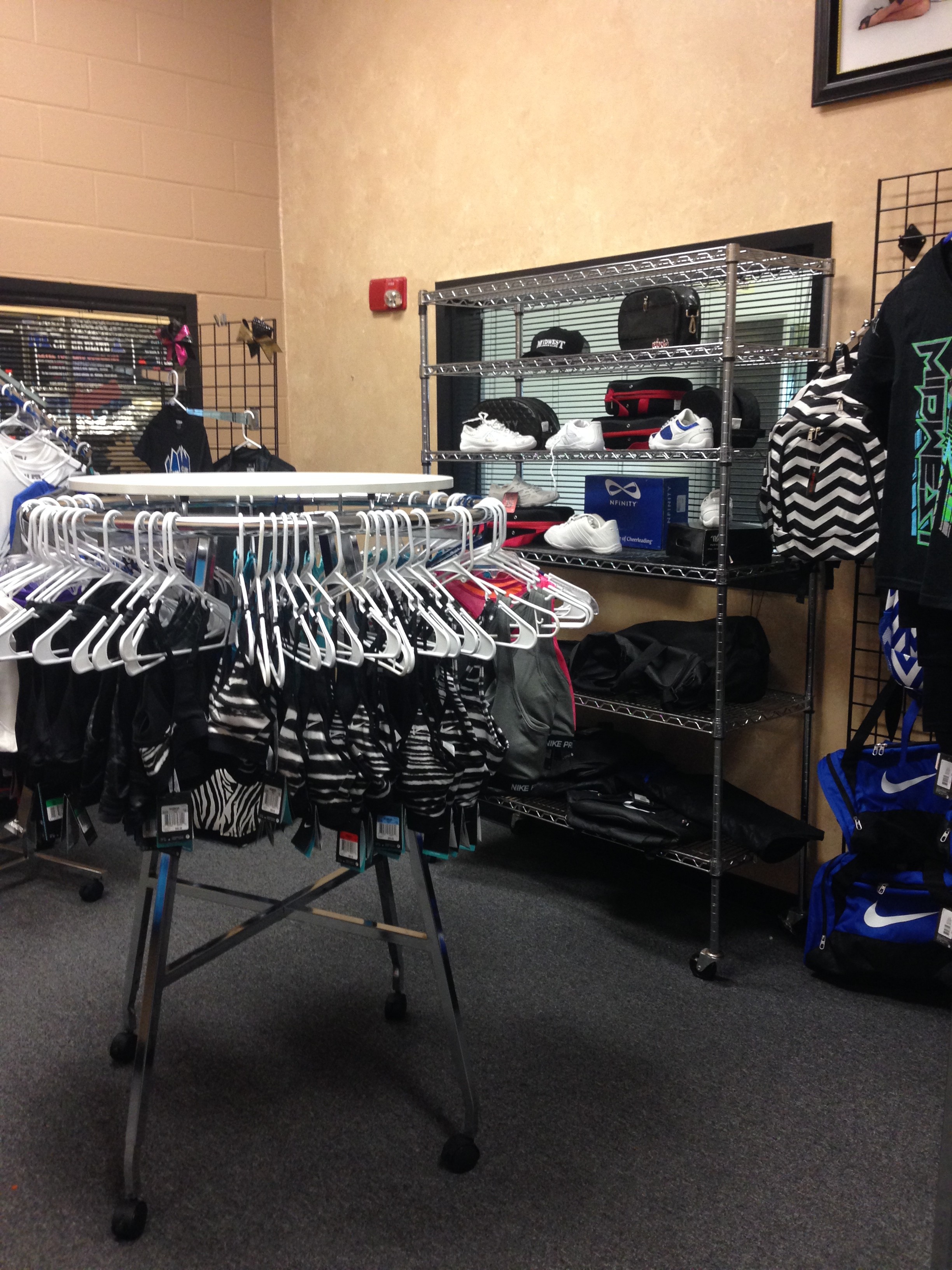 Many gyms start pro shops to sell team merchandise and cheer-related items in an effort to supplement the revenue that comes from running all-star teams and classes. Though it can feel like yet another thing to add to an already very full plate, pro shops can be a huge moneymaker and help increase the profile of the gym. It takes physical space (unless the shop is online-only), manpower and the ability to juggle a side business, but for many gym owners, the sacrifices are well worth it.
“Opening a pro shop was the best thing we could have done for our business,” says Tara Lezin, pro shop director at Tampa-based Brandon All Stars. The gym trains approximately 300 all-star athletes per year from Levels 1-5, and the program has tripled in size since they started nearly a decade ago. When they opened the pro shop three years ago, they were cash and check only, and Lezin was very hands-on, “pressing a lot of rhinestone items and heat transfers” herself. From those DIY beginnings, they established a client base and started reaching out to companies in the area to provide more inventory for the shop.
Like opening a gym, opening a pro shop is a sizable undertaking that requires teamwork. Lezin says they have parents who work the shop when it’s open, and she has an assistant to help with the online store. “Our best-selling items are our Level 5 team items,” Lezin says. “The kids love to represent their favorite teams.” When they mark up the products, they make sure to have a wide selection catering to different family incomes, so that everyone can find something affordable.
Lezin says that, like any new venture, there will be challenges along the way, but in the end, it’s worth it. “The best advice I can give is to find vendors you trust and that back up the quality of their product,” she says. “It’s your brand and you want it to reflect your gym, just like your teams.”
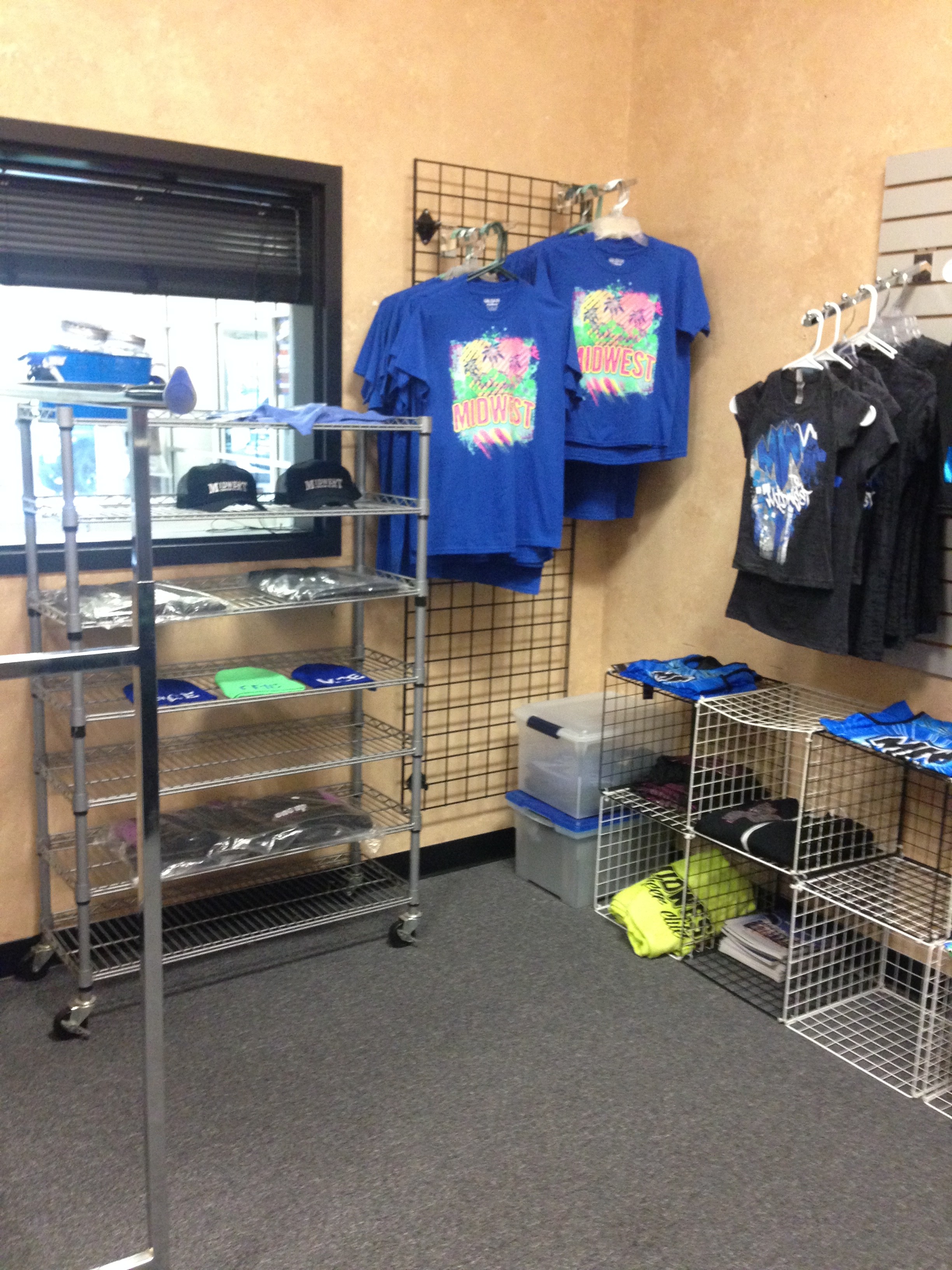 As for Midwest Cheer Elite, owner Tanya Roesel started its pro shop six years ago when they moved into a larger location. Employees do double-duty, with the front office staff also managing the pro shop, stocking and straightening inventory and selling items. It’s a system that works well for the gym, as evidenced by the booming pro shop.
Midwest Cheer Elite is a 24,000 square-foot facility that has been in business since 2003; the gym currently houses over 500 competitive athletes on more than 25 teams. Even with those strong numbers, Roesel says that about 25 percent of income comes from the pro shop. The physical space was once Roesel’s office, but was renovated to accommodate the pro shop. They don’t yet have an online component, but do a lot of marketing via social media, providing photos, sizes and pricing so parents and kids can see what is coming down the pike.
As far as marking up their merchandise, Roesel says that if items are already expensive wholesale, the markup can be five or 10 dollars. When they are a bit cheaper, it can be up to 50 percent. And even if they don’t make much profit on an item, it still serves a purpose: “Our philosophy is: the more we have our logo or brand on a customer, the more advertising it provides for our brand,” Roesel says. In that way, the demands of running the shop are well worth it.
To push items, they order in low quantities and market items as a “one-time thing;” that way, there is always something new for customers to buy. During events like their Fall Showcase, they hold brand-new items until the event happens and then bring them out for a one-time sale. “We literally can sell up to $40,000 in pro shop in one hour,” Roesel says. “It’s like Black Friday, and parents start lining up hours before the sale with lists.”
To date, the best-selling items at Midwest Cheer Elite have been “anything with bling or sparkle,” according to Roesel. But it’s all part of a bigger end: when the parents and kids are proud of their teams, they want to show that pride off by wearing T-shirts, using key chains or buying bumper stickers boasting the logo of their gym—and that’s why pro shops can be such a lucrative endeavor.
–Dina Gachman
Building the Dream Team: Oregon Dream Teams
jen : July 28, 2015 1:05 pm : In the Industry| Web ExclusivesWith eight cheer gyms within a 30-minute drive of Beaverton, plus five more for a little extra gas money, it’s no small claim when Oregon Dream Teams calls itself the fastest-growing gym of its kind in the state. The region’s saturated cheer gym market also means that bringing new athletes through the doors is no small feat.
So it’s somewhat surprising that Tori and Dan Cotton decided to take a minimal marketing approach when they purchased Oregon Dream Teams during the 2011-2012, letting their product speak for itself. But the gamble paid off: the result was a second location within two years—and twice as many athletes.
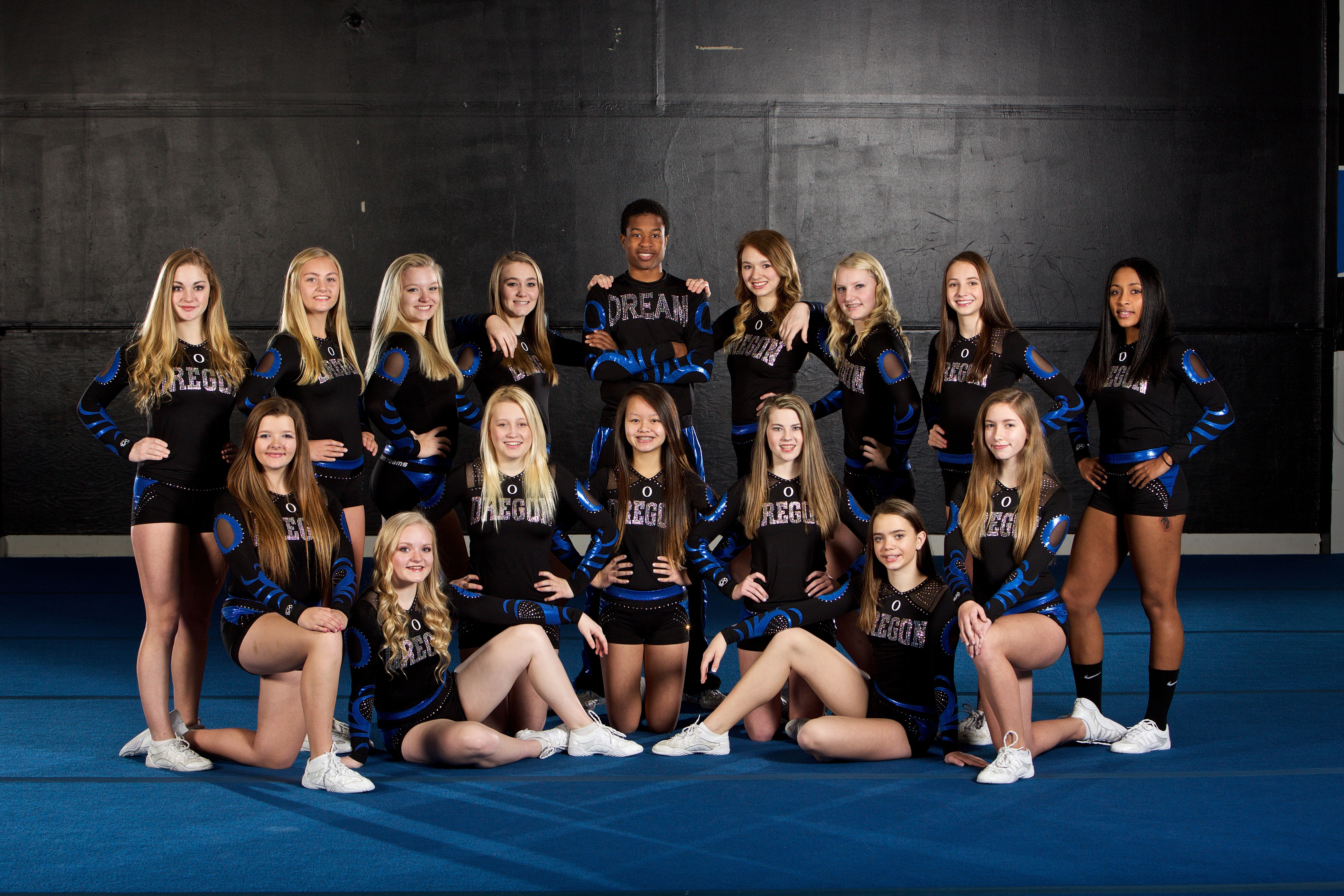 Sure, they generated some leads through their website. Plus, one of their coaches, a social media strategist at an outside marketing firm by day, tackled Facebook, Twitter and Instagram to shout out team and athlete successes. And members were encouraged to bring buddies along to check out Oregon Dream Teams.
But there was no aggressive membership drive, no slashing of prices, no gimmicks. They just offered well-trained coaches who served as mentors and worked alongside athletes’ parents to reinforce positive behaviors in line with family values. They communicated with families about everything from why events were chosen to where all the fees went so that everybody felt invested in the Oregon Dream Teams vision.
“We give our clients the truth,” Dan says, “not a sales pitch. That makes everyone part of the family.” And who knew? People liked it so much they started telling others about it, and the marketing soon took care of itself.
As membership increased, it didn’t take long for the Cottons’ clients who were driving four hours round-trip to start mentioning how great it would be to, say, not drive four hours round-trip. They made it clear that they would really, really like it if there was a second, more southern location.
They were making the drive because the gym’s championship teams consistently earn bids to Worlds and boast multiple titles. The gym has the longest-running and highest-ranking level 5 team in the state, which Dan says brings a lot of notoriety to the program. (To date, their “Dream” Senior Medium Coed 5 team is the only Oregon-based team to place in the top 11 at Worlds.)
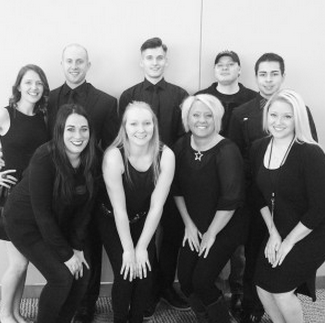 Still, the Cottons’ eyes were not on growth initially, especially since owning even one location wasn’t the original plan. Tori, who started cheering in high school, began coaching as a means of making extra money while she earned her masters in early childhood development and elementary education. But by the time Tori graduated, the school districts were firing instead of hiring due to budget cuts.
Dan, who is a police officer, wasn’t looking to go full-time cheer either. But fate stepped in. When Oregon Dream Teams, where they coached, went up for sale, Tori and Dan took the leap. Dan swapped out his usual late-night patrol shifts for a school resource officer position instead to better balance his time for the business, and the two made it work.
So when Tori and Dan were approached about opening a second location a couple of hours away, they were understandably hesitant. Satellite programs they ran at other gyms had not performed well, and there had been other gyms in the Eugene area that did not succeed. But the phone kept ringing, and by December 2013, there was no avoiding the constant encouragement for expansion.
They gauged interest by hosting a couple of clinics in Eugene, and by the second workshop, it was clear they needed to start looking for a permanent location. By April 2014, they were in business—again. “We hoped that new athletes would join but were not truly prepared for the number we saw,” Tori says. Within a year they had 42 athletes, three teams and continually growing interest at the Eugene location. Like their athletes, they rose to the challenge.
Running a second location from Beaverton came with a few growing pains to start. Because the married owners can’t be in two places at once, and they naturally don’t want to be apart, they have to rely on others to pull it all together. That was when the family atmosphere they created came in handy—they were able to reach out to trusted, committed family members of athletes and coaches to help manage the facility in their physical absence.
Challenges of continuity and routine perfection with new staff occurred, but they mitigated that through periodic visits and a recording system that enables them to watch and review practices in real time. “We are always working to make the program and product the best it can be and that will be a continuous evolution,” Tori says. “But when you double in size, that evolution becomes more of a sprint than a walk.”
The adjustments and extra hands help Tori and Dan keep up the pace, and they feel the flattery and gratitude along the way. “We could not do it without the support of our families, athletes and staff,” Dan says. “In the end it always comes back to being about the kids. We keep that as the focus, and it all seems to work itself out.”
–Arrissia Owen
The Business Book That Changed Everything
jen : July 21, 2015 3:17 pm : Mind, Body & Soul| Web ExclusivesWith so many business books on the market, how can you decipher between dead air and dead-on? We asked five gym owners to share their trusted tomes they used for building their cheer businesses. Read on to find out if they’ll work for you:
 The Confidence Solution by Keith Johnson
Who swears by it: Kayla Wygal, West Virginia Cheer Academy
Years in Business: 2
Why the book spoke to her: “I chose the book because the title was exactly what I needed: a solution for my lack of confidence. I have a Master’s Degree in counseling psychology, so anything that mixed emotional well-being, personal success and business in one book was bound to be perfect for me. I knew I had all the skills, knowledge, experience and resources to make my gym great, but I wasn’t sure why I still felt so defeated by something I had put my whole life into.”
One piece of advice she took away: “If you own a gym, it’s probably because you have the ability to dream and do something you love. Confidence to be your own biggest fan when no one else likes what you’re doing is essential to keep going in this industry!”
Who Moved My Cheese by Spencer Johnson
Who swears by it: Tara Wieland, Michigan Storm
Years in Business: 2
Why the book spoke to her: “[It] was given to me after my son passed away. I had a really hard time adapting to all of the changes in my life at one time (I was also going through a divorce), and my aunt suggested that I read it.”
One piece of advice she took away: “People say all of the time that they don’t like change. But in all actuality, it’s the fear of the unknown that they don’t like. In 25 years, I’ve coached at schools, owned a gym, gone through two mergers that weren’t a good fit—and now I’m back to owning a program again. If I didn’t keep pushing through when things got difficult, or when someone had ‘moved my cheese’… I wouldn’t have made it as far as I have.”
 Think and Grow Rich by Napoleon Hill
Who swears by it: Kyle Gadke, Spirit FX
Years in Business: 11
Why the book spoke to him: “A friend of mine that is an entrepreneur shared that it changed his life, and he is now a leading salesperson in the coffee industry. The book is a great motivation read for any self-starter. For me, it encouraged me to step outside of the box.”
One piece of advice he took away: “One of the quotes in the book that has stuck with me is: ‘There are two kinds of knowledge: general and specialized. General knowledge, unless organized and used for a purpose, is useless.’”
The E-Myth Revisited by Michael Gerber
Who swears by it: Kelly Makay, HotCheer All Stars
Years in Business: 15
Why the book spoke to her: “I like that the book is meant to teach the small business owner to run like a franchise, even if you never plan to have more than one location. Creating systems within your business is so very important.”
One piece of advice she took away: “It reinforces that for a business to be successful many times, the owner must work more on the business than in it.”
 Thou Shall Prosper by Rabbi Daniel Lapin
Who swears by it: Jessica Smith, Kentucky Reign
Years in Business: 4
Why the book spoke to her: “It changed my whole life as a business owner. If you go out every day and do good for others, you’ll be taken care of. It’s like a karma approach.”
One piece of advice she took away: “If you don’t have enough cash flow in your business, according to the book, then you have not impacted enough people. If people would take that to heart, it would change everything. The more kids I’m able to impact, the more certificates of appreciation I receive. Seeing money as a certificate of appreciation for what you’ve done is huge. That’s the biggest takeaway. That’s how you know you’re doing the right thing.”
–Karen Jordan
Owner’s Manual: Craig El of Ultimate Athletics
jen : July 17, 2015 1:13 pm : Down to Business| Web Exclusives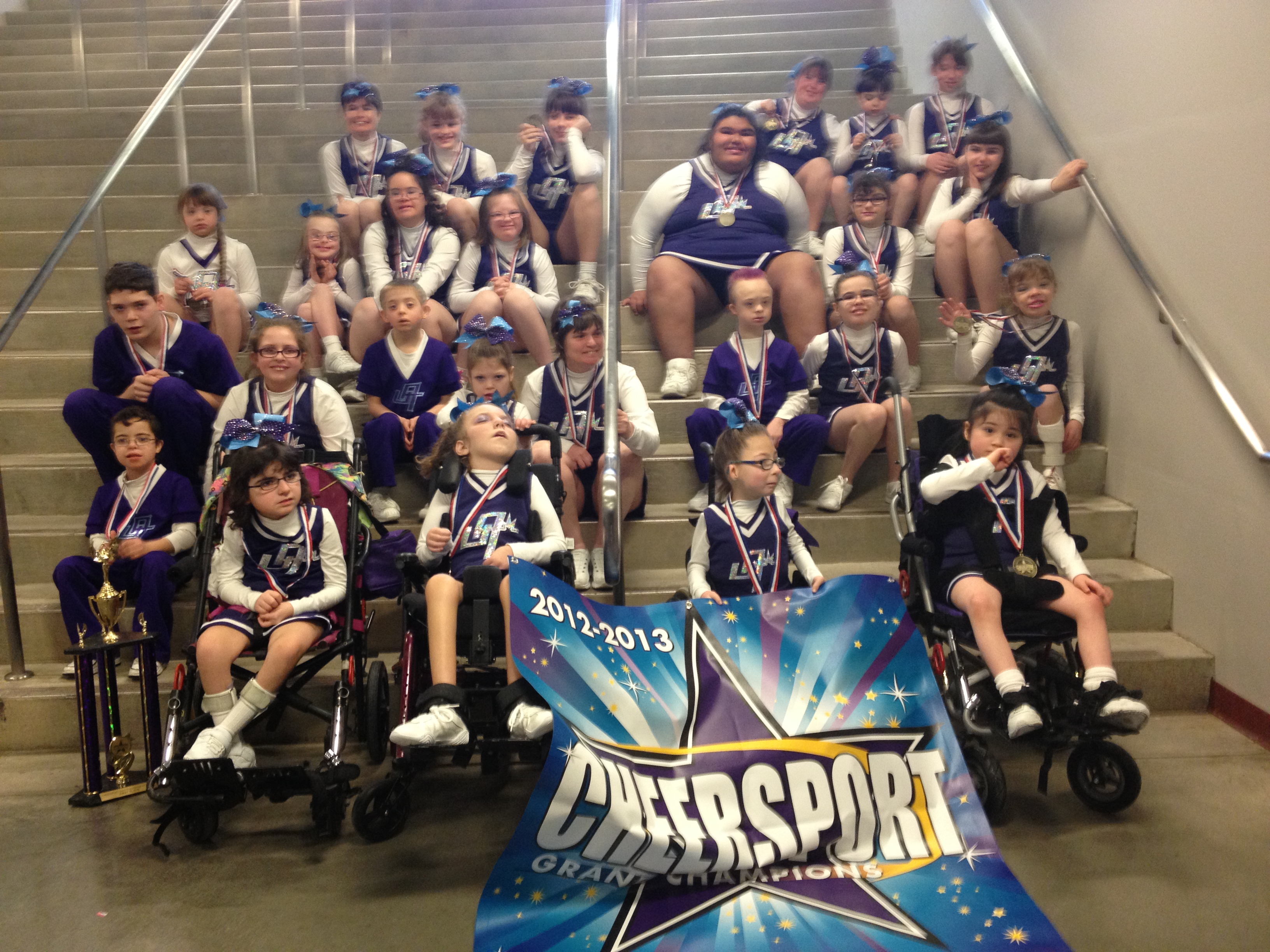 Vital Stats:
Name: Craig El, Co-Owner
Gym: Ultimate Athletics
Locations: Wauconda, IL, and Joliet, IL
Founded: 2001
Size: 23 cheer teams, four dance teams, and four special needs teams
Gym size: 34,000 square feet (Wauconda); 8,000 square feet (Joliet)
The Debrief: The Ultimate Athletics Gems program first launched in October 2008 and is now in its seventh season. Both cheer and dance are offered for the gym’s 45 special needs athletes, along with the opportunity to compete at Cheersport and perform at local exhibitions.
The Dish: You have to ensure that you have individuals trained in special needs working with the team so that you know how to handle behaviors, social skills, motor development and physical skills. You also need to decide what you are equipped to handle—wheelchairs, hearing impairments, autism, walkers, medically involved athletes (i.e. seizures). If your facility can’t accommodate a wheelchair, you need to be upfront about that in your marketing. You also need to have paperwork filled out for the athletes so you know about their diagnosis, as well as any medical and sensory implications that can affect their abilities on the cheer floor.
Sometimes it is necessary to consult with physical or occupational therapists or doctors to ensure that things you are doing are safe for athletes. I have been fortunate to have a great director that is very experienced and she handles the screening process for me.
You need to teach to each athlete’s abilities and constantly work to take them to the next level. We develop a routine based on the level we want the athletes to achieve by competition season. We will often do obstacle courses or stations when working on skills, and each athlete will have different instructions for the course/station based on their skills that need to be worked on.
The special needs teams have weekly assigned practice times, just like our other teams. We ensure that the special needs teams always have the floor space that they need for their practices. We also try to keep the special needs teams days/times for practice consistent year to year to make overall scheduling easier.
It’s definitely growing but it’s not a profitable part of our program. We are not really looking to make money on these programs. The money we are able to pull in, we put back into the program. We have attempted to get sponsors in the past and typically raise anywhere from $300 to $700 in sponsorship money. We utilize fundraising in order to get funds for travel expenses, or uniforms.
 We also recruit “buddies” from our all-star cheer teams. Our ultimate goal is for the athletes to have as much independence as possible on the floor. We have heard from some incoming all-star athletes that part of their decision to join was because of the special needs program. We have had 10 buddies from our program go on to study special education in college. They have called this a life-changing program for them.
Having a special needs team will be one of the most rewarding things you can do! Make sure to do your research into special needs and ensure that you have knowledgeable staff working with the team. Don’t look at this solely as a cheer team—look at it as a life experience for the athletes. You need to be focused on all the ways their lives change by the work you do with them: improving their social skills, improving their body strength, improving their attention skills.
When a parent approaches me crying after a competition and says, “My daughter is 42 years old and has never walked up a flight of stairs before because she was too afraid. How did you get them to do that?” or when a parent hugs me and says, “After the work you’ve done with my daughter, she is able to go to the grocery store with me for the first time ever,” I know that I have done a great job. These teams are so much more than cheer to these athletes and families. Have incredibly high expectations—these athletes will absolutely rise to them!
–Dina Gachman
Branding Case Study #2: California All Stars
jen : July 14, 2015 12:24 pm : Down to Business| Web ExclusivesYou know the ones: those gyms who have instantly recognizable logos, unmistakable choreography and/or a name that’s known all over the cheer world. Many of the most successful gyms in the industry get there by cultivating a strong brand that suits their product perfectly. To find out how to build a massively effective brand, we spoke with three gyms who’ve done just that: Maryland Twisters, California All Stars and Top Gun. See our second installment with Tannaz Emamjomeh of California All Stars!
Branding Case Study #2: California All Stars
 After 14 years in business, California All Stars now has six locations and 1190 athletes. Co-owner Tannaz Emamjomeh answered our questions about how they built the brand.
How did you come up with the gym name? It was a split-second decision. No hesitation. The name “California All Stars” fit us like a glove.
What was the process of choosing/designing your logo and colors? The logo was designed by Sean Dominguez, a local artist. We chose royal blue, black, white and silver. Blue encompasses a certain tranquility and respect; from a color psychology perspective, blue is reliable and responsible.
Is there a mantra or tagline that describes what’s behind your brand? “Faith over fear.”
How much does the pro shop/merchandise play into building a brand? Pro Shop items come secondary to building the brand. I think it’s important to establish your culture first—merchandising will follow suit.
What do you do about imitators/copycats? It is unfortunate that there are businesses out there selling apparel that doesn’t belong to them such as bows, dolls and other gear or likeness of the logo and name. We send cease-and-desist [letters].
How do you use social media to further your brand? Facebook has been a huge tool for us. We post the latest happenings at the gym, competition results and new Pro Shop Items. We use Twitter as well. It’s amazing how one click can reach 10,000 + people instantly.
What in your opinion is the secret to building an effective gym brand? Each organization will have a different path or journey. There is no recipe other than hard work and patience.
What do you consider the strongest part of your brand? The strongest, most significant part of our brand is our continuity and our faith.
Check out our first installment with Tara Cain of Maryland Twisters!
-Lisa Beebe


