

In addition to all the great content we bring cheer professionals in our quarterly print issue, you’ll find plenty of original exclusive content right here at TheCheerProfessional.com.
Keep checking back for all the latest and greatest news, updates, debates and more!
State of the Union, Part 1
jen : February 4, 2013 12:51 pm : In the Industry| Web Exclusives| webexclusive2CheerProfessional tapped four of the industry’s cheer leaders for a spirited panel discussion on our industry and its future.

Pam Puckett, The Cheer Center
In your opinion, what have been the most significant changes or advances we’ve made in all-star cheerleading to date?
Puckett: The best thing that’s happened over [my] 16 years [in the business] is the USASF forming and having the NACCC to work with them—having guidelines to make us a legitimate sport and help all the companies keep things on the same page. It’s given us the structure we needed.
Newby: Worlds has had a huge impact, especially from a recognition standpoint. In some gyms, it’s become such a focus that it’s had some unintended consequences—kids and parents so focused on trying to find a Worlds team to be on, even if it means switching gyms. It’s like the NCAA tournament: you end up with 20 top teams that everyone knows, which you could equate to mega-gyms. For some, their primary goal is to make it to the big dance, and that exists for Worlds in some ways. It might be time to balance some of the attention given to high-level programs that are mega-talented. To address that, we’ve developed The Summit, a more prestigious year-end event geared toward teams that are in non-Worlds divisions. So far, the response to this event has been incredible.
What have been some of the setbacks from your perspective?

John Newby, Executive Vice-President and General Manager of Varsity All-Star
Newby: Having too many divisions/levels/competitions leads to an overall lack of competition. Competition gets watered down and becomes more like an exhibition; teams get spread too thin. You end up with competitions across the country where you have a single team in one division not competing against anyone else. In the end, if we want all-star to be considered a sport, you have to measure your skills against teams of equal [level]. It’s an issue that needs to be addressed.
Kessler: As the sport got more competitive, many gym owners, parents and athletes said, “I want to be number one.” [In light of that trend], the Level 2 Youth athlete who enjoyed working on back handsprings was now pushed to be more results-driven. It became more about having to be successful for fear of losing kids to the gym across the street and less about providing a fun, athletic and educational outlet for the athletes. Kids started getting out of the sport and I feel a main reason was it wasn’t as fun for them as it once was. Cheer is the one sport that does not “cut” athletes. We have a place for every child and we should embrace that more.
What are your thoughts on the current state of the economy and how that has affected—and will continue to affect—gyms?

Karlette Fettig, Indiana Elite All-Stars
Fettig: I think the economy is going to get much worse. Gyms really have to seriously look at how to keep their programs affordable. What we’ve been doing at Indiana Elite is trying to make programs in our gym affordable to more families. One of those solutions has been starting half-year programs. Also, along with national traveling teams and regional teams that go to surrounding states, we have teams that only compete locally and exhibition teams that don’t compete to keep fees down. It’s important to eliminate barriers to entry—if you’re a program that’s just doing large competitions and traveling, it’s very hard for families to afford that. Get them excited about cheer at a relatively inexpensive level, and once they understand what it entails, they’re ready to take the next step.
Puckett: Gym owners had to be more creative with their resources and not just count on children walking through the door; it became important to offer different things such as birthday parties and other activities. About three years ago, I saw some definite slowdown, but interest overall is increasing back upward. It’s partially the rebound of the economy, but also us being more creative. Our half-season teams have tapped into a whole different market, appealing to the beginning athlete and people coming from rec teams.
What trends do you see coming down the pike as far as events?
Fettig: Whenever competitions ask for feedback, I press hard to give us what’s really necessary. Stop giving free giveaways, take out the extras and focus on what’s important—spring floors, raised stage (in some cases) and equipment in the practice room. All of the extra goodies are not nearly as important as quality judging and ample teams to compete against. We can forego the “lights, camera, action” if we get those two pieces.
Newby: At the same time gym owners and parents are feeling the pinch, event producers are under significant stress. Event producers are seeing increased expenses from the venues, as well as shipping and transportation costs. It’s a huge challenge to try to manage through these tough economic times and keep from taxing these parents and gyms. We’ve spent a lot of time over the last couple years digging into cost-saving opportunities. How important are giveaways and trophies and banners? It’s been a highly sensitized issue for us. We’ll do everything we can to manage our costs and keep from passing that on through the customer.
Any thoughts on judging and scoring?
Fettig: Our coaches have felt that in trying to work toward the grid and be more objective in scoring, they’ve taken out the ability to be creative in the routines. I believe event producers have to continue to develop their scoresheets so that there is a good balance between objectivity and creativity.
Newby: As partners with the gyms, the best thing for the industry in the long-term is a modified universal scoring system. It makes sense to me to move in that direction eventually, as long as there are some variables; some event producers can decide on whether the percentages are applied to pyramids and stunts. I think it will take time. It’s not an easy flip of the switch, but I know there are some really intelligent people who are talking about options to be considered.

Dan Kessler, The Jam Brands
Kessler: As the sport became more competitive and results-driven, coaches began asking for a more rigid scoring system. They wanted to know, “If I do this, will I score here?” They asked for less subjectivity and a scoring system that was more black-and-white—so this was reflected in scoring systems across the industry. In the past two years, there has been a new movement. Coaches are now asking for scoring systems to allow for more creativity. They feel the routines have become too “cookie-cutter” and they’ve lost their showmanship. Our industry is market-driven, so we have always listened to our customers. I think some coaches and owners believe that, as event producers, we just create our scoring systems without any input from our customer base. In fact, we do talk and poll tons of customers before we make any changes, as we understand that they are the ones that will really be affected.
We seem to be in an era of more USASF rules and regulations that are causing some divisiveness. What’s your take on that?
Newby: With any governing body, there are going to be conflicting and varying opinions on just about every issue. The organization is young, dynamic and still developing. When all-star started, there were no rules or regulations, very little organization and few, if any, guidelines—it was the Wild West. Obviously, change is difficult, but necessary. You’re not going to please everyone, but the people working on this are in it for the right reasons and are looking out for the kids. A more unified set of rules has helped to make the sport legitimate and created a strong foundation to take all-star cheerleading to the next level.
Kessler: When you have more rules and regulations, that lessens your ability to be creative and entrepreneurial. We have to allow our sport to foster growth and be creative. If it becomes so strict that a gym owner says, “Man, I can’t be creative because I can only do XYZ,” how good is that? We always get compared to gymnastics—let’s stop being compared. Let’s be a fun sport that isn’t so structured and rigorous.
Fettig: I understand the concept behind the governing body wanting the image to be better for the sake of industry growth. But if you’re going to put rules in place, you better be able to police them. Otherwise it will just lead to a lot of bickering. If they’re not policing it, I’m not sure why it’s being put in place. What are the ramifications of not following [them]?
Read Part Two of State of the Union!
Suit of Armor: Warding Off Lawsuits
jen : January 30, 2013 1:54 pm : Down to Business| Web Exclusives| webexclusive1 Though it’s one of the most successful and well-known gyms in the nation, Freehold, NJ-based World Cup All-Stars hasn’t been immune to facing a lawsuit. To date, the program has faced two.
“You never know who is going to come back and sue you,” says co-owner Joelle Antico. “You have to run your gym like a business; this isn’t an extracurricular activity. If owners don’t have insurance, anyone can come after us personally.”
World Cup is just one of many programs facing a growing reality: cheer professionals are at risk for a wide range of lawsuits—ranging from copyright to injuries to harassment. Modern gym owners must be well-equipped to face whatever might be hurled their way, and taking the necessary measures for lawsuit prevention is key.
Cover your bases.
It may seem obvious, but the most effective way of warding off lawsuits is to make sure all aspects of your business are up-to-date, competent and compliant. “As long as you keep your insurance current, keep your floor safe and assure that your staff is qualified and certified, that’s a big first step,” says World Cup co-owner Elaine Pascale, who has 19 years of experience.
Drawing up clear policies can also ensure that there is no gray area up for legal interpretation. National Cheer Safety Foundation CEO Kim Archie says a gym owner’s top priority should be establishing clear, written policies that cover all the bases. “Having the right procedures that cover things across the board—from bullying to abuse to sexual harassment to injuries—is crucial,” advises Kim Archie, CEO and founder of the National Cheer Safety Foundation.
Both Pascal and Archie agree—gym owners must document everything. Looking back, Pascal says she wishes that she’d been stricter about paperwork from the start. “We had kids coming in from the outside in lower-level classes, where we didn’t know the parents as well. We weren’t as vigilant with forms and documents and making sure everything was checked off,” says Pascal. “[It’s important to] take care of everything.”
Insure your future.
“As a fast-growing segment of the industry, cheer gym facilities have their own unique needs apart from squads and competitions,” explains Lorena Hatfield of K&K Insurance, one of the leaders in the sports insurance field. “Facility owners may need various types of insurance such as property, contents, workers’ compensation, auto and crime coverage.”
According to Hatfield, coverage that includes coaches, teachers, the gym owner and the gym itself is best. She suggests choosing an insurance policy that offers commercial general liability, which typically protects against liability claims for bodily injury and property damage. A number of companies cater directly to cheer gyms, such as K and K, Markel Insurance Company and Sadler Sports (which Archie calls one of the “best in the business”).
Though most companies do offer policies at various limits and price points, Hatfield says it can be risky to skimp. “Purchasing coverage on price alone can be dangerous, as there are often differences in what is offered between providers,” she shares. “It’s important to know what is excluded, as well as what is covered, before purchasing insurance.”
It’s also key to work with your provider on tailoring your policy to your program’s specific needs. “Personal and advertising injury, professional liability and medical payments for participants may also be part of an insurance program tailored for cheer squads,” adds Hatfield.
Also important is clarifying any exclusions that may be in the fine print. “In policies, there can be public exclusions, which can include negligence clauses that strip the gym of coverage. You have to get the most specific, specialized coverage,” says Tom Gowan, a Philadelphia-based law partner who focuses on personal injury cases.
Face reality.
If an incident does occur, address it immediately. “Follow up, check in, document it,” Pascale instructs. “Find out how the child is doing that night. It shows sensitivity. We don’t like seeing any one getting hurt. We really do care.”
–Nicholas McCarvel
 When people think of competitive cheerleading, Wisconsin usually isn’t the first place that comes to mind. Cherokee Greendeer was just 19 years old when she set out to start a cheer gym there in 1999, but she knew she was taking a risk. “I had to be direct; I had to sell the sport, to make everyone see that this is definitely legitimate,” says Greendeer. “Parents thought, ‘Rah rah rah, that’s all our daughter will do,’ but once they saw what it was really about, they said, ‘Wow, this is what our daughter can do?!’”
Despite her youth and her initial difficulties communicating the true competitive nature of the sport, Green Bay Elite thrived. Most of her inaugural athletes came from Green Bay Southwest High School and her own alma mater, Ashweaubenon High School—where she’d cheered for her senior year. (Greendeer first started cheering as a fourth-grader in her home state of Ohio and had also cheered for NEO All-Stars before moving to Wisconsin in high school.) Along with calling on her high school connections, Greendeer began hiring more trained, qualified and credentialed coaches.
Following a building period, Green Bay Elite’s teams outgrew their regional competitors and began traveling to compete nationwide. 2007 marked the first year that a GBE team earned a Worlds bid, and 2010 the first year one of her teams placed in its top three (International Junior All-Girl Level 5)—a significant turning point in Greendeer’s eyes.
“It was quite an accomplishment because these kids had grown up through our program,” recalls Greendeer. “I’d known these little girls since they walked in here and couldn’t do a cartwheel, so to medal in Worlds was a huge accomplishment for us.”
So what’s the secret behind GBE’s success? It’s a combination of love of the sport, insistence on respect and business savvy. “I was so young when I started building the program that I had to learn how important the business part is,” says Greendeer. “In our industry, you have to keep two clients happy: the parents and the athletes. You’ve got to make sure they believe in your program, that they love it with their whole heart, because that’s what keeps them coming back.”
Some lessons she could only learn through failure. Looking back, Greendeer says she wishes she would have hired an office manager off the bat, as she tried to do everything herself with less than desirable results. “Thinking I could do every role was my biggest mistake,” she recalls. “To succeed, you have to learn from your mistakes and realize what you’re good at. Even if you have to start small and hire an office manager just a few days a week, do it—it’s so important.”
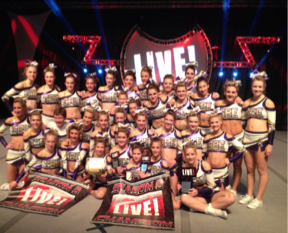 Green Bay Elite’s coaches expect a lot from their athletes, both in the gym and in their everyday lives. In today’s text-heavy world, communication and old-school respect are the words to live by. The competitors are reminded often how their conduct reflects on themselves, their family and their program.
“We try to work in real-life lessons to the sport of cheerleading,” says Greendeer. “That’s our philosophy, teaching things through cheering that they can draw on throughout their lives. When they go out into the world, it matters how they carry themselves and how they communicate. We make it fun, but we make sure it’s respectful.”
Today, Green Bay Elite has grown large enough to boast seven all-star teams, including four travel teams, along with offering classes, camps and clinics for high school squads. Recent years have seen the Green Bay Elite teams bringing home more awards and accolades, and in 2009, the program won the “Small Gym of the Year” honor at the Worlds VIP Reception and Awards Ceremony. Two years later, Greendeer was nominated for the “Gym Owner of the Year” award.
For the coaching staff, however, it’s less about winning championships than it is seeing changes in the kids they work with.
“The growth of the sport has been really gratifying,” reflects Greendeer. “I never expected to find myself in my dream job: working with kids, watching them grow and go to college and get married, just having the opportunity to be an influence in their lives and the directions they go.”
–Janet Jay

Take two deep breaths and call us in the morning? Not quite that simple—but we’ve unearthed a few smart ideas on how to stamp out stress.
Between the constant pressures of coaching, competing and running a business, it’s no secret that being a cheer professional can be a highly stressful endeavor. “Everybody who has ever owned a gym understands that it’s pretty much 24/7,” says Troy Hedgren, co-owner of Laguna Hills, CA-based Pacific Coast Magic. “Especially with a gym our size, with four locations and more than 500 athletes, the days for us are very long.”
Whether you thrive in go-go-go mode or are feeling the burn of burnout, whether your gym is miniscule or massive, it’s imperative to cope properly and decompress—even if you have to “schedule” time to do it. To find out how to turn a breaking point into a turning point, we turned to several busy cheer professionals and expert Zohar Adner for their hard-earned advice on achieving balance.
Schedule breaks.
As a coach and gym owner, your days start early and often don’t end until midnight—and many feel that there is still not enough time in the day. Undoubtedly, creating work-life balance can be tough with such an all-consuming lifestyle, but living without it is ultimately unsustainable.
“Coaches and gym owners need to schedule breaks and time to breathe,” says Zohar Adner, author of The Gift of Stress. “You can’t just run from one activity to the next to the next. You would never treat an athlete like that; you wouldn’t even do that to your car. If it’s not something you would ask of anyone else, it’s time to take a step back and look at what you’re asking of yourself.”
Hedgren finds his rare Zen by taking time to connect with nature and the outdoors in the midst of his jam-packed day. He often spends mornings returning emails and making calls, then heads to the beach for an hour or two before heading to the gym. “You have to have that one little release,” he confides.
If slowing down doesn’t seem like an option, consider the benefits. Research has shown that 90 minutes “is the optimal length of time for a person to concentrate on something—more than that, and you start to get decreased effectiveness,” Adner cautions. “Taking a break lets your brain settle down and gives your body a chance to rest.”
Also, “breaks” don’t have to mean a major time commitment—Adner recommends starting with five minutes a day and working your way up to an hour in the morning, an hour in the evening and (ideally) an hour mid-day. “We used to take a lunch hour,” says Adner. “People were happier and healthier.”
Build a support system.
Creating a supportive community is key to reducing stress, even if you feel like no one understands your unique stressors. “By isolating yourself, you’re only putting more pressure on yourself,” says Adner. Afraid to ask for help? Think of how great it feels when you’re able to help out a friend. “[Give] other people the opportunity to be that person for you,” adds Adner.
The approach works for Hedgren and co-owner Kellie Elliott, who say they lean on each other, their spouses and network of coaches and athletes quite often. “Everybody takes a part in not only working for me, but helping me out as a parent,” says Elliott. “I don’t think I could do what I do if I didn’t have that support system—it’s definitely teamwork. You just have to make sure to get good people that you trust in those positions to make you successful.”
Be prepared.
According to Adner, 90 percent of stress is recurring. “You can pretty much predict the things that are going to come up,” he says. At USA Wildcats in Naugatuck, CT, they deal with all of the typical stressors—athletes getting injured, people running late to competition and other incidents that can cause “coaches [to run] around like chickens with their heads cut off, trying to come up with a backup plan,” says coach Amanda Daniels.
Preparing in advance—much like you would for a competition—ensures that you won’t get taken by surprise. “Don’t try to reinvent the wheel each time,” Adner advises. “Learn from your past experiences.” Having a disaster checklist can keep everyone calm during a crisis, and having set practices in place will ward off confusion and chaos.
“The less thinking you have to do in those moments, the better off you will be,” says Adner. “Go to the plan, as opposed to having to figure it out on the spot.”
-Stephanie Carbone
Squad Bullying: How to Deal
jen : January 21, 2013 12:18 pm : Mind, Body & Soul| Web Exclusives| webexclusive2 Last October, many in the cheer world were left reeling when former Vancouver All-Stars cheerleader Amanda Todd committed suicide as a result of bullying. (“Rest in peace and fly high,” many wrote on their Twitter feeds.) For years, Todd had been the target of widespread bullying—both online and offline—after a stranger tricked her into taking a shirtless photo, then ruthlessly spread that picture around the Internet. A YouTube video the 15-year-old made a month before her death told the story of her anguish via handwritten notes; one of the notes read, “I have nobody. I need someone.”
Just weeks before, 15-year-old cheerleader Peter Blake McCullers ended his life at his home in Tamarac, Florida. Much like Todd, bullying was cited as the cause, and a swell of social media support spawned the phrase, “Love more. Judge less.”
According to data from the 2011 Youth Risk Behavior Surveillance System, 20 percent of American students in grades 9-12 have experienced some form of bullying. No doubt about it: bullying has become a major menace in our country’s schools and universities—and cheer teams are far from immune from this behavior. Just ask Katie Sack, head coach at Team Illinois Cheerleading. During the 2010-2011 season, a parent informed Sack that an athlete in her program was constantly berating another athlete during practice. “We had no idea this was going on because the athlete was choosing times when the coaching staff wasn’t around to make those comments,” says Sack, who has coached for nine years.
For cheer professionals, the first step to preventing bullying is to understand why some kids bully and why others fall prey to it. Award-winning researcher Tammy Lowery Zacchilli says a number of reasons could be at play, from natural or learned aggression to attention-seeking to self-protection. “Bullying involves an imbalance of power,” says Zacchilli, who is an assistant professor of psychology at Saint Leo University.
Bullies may also target people who differ from them in some way. “Kids with low self-esteem often end up on the receiving end of bullying. Victims may be physically weak or have a disability or could be socially awkward,” adds Zacchilli.
Though some dismiss bullying as “kids will be kids”-style behavior, its risks are serious. The experiences of teens like Todd and McCullers point to a very real issue: a Yale University study found that bullying victims were two to 9 times more likely to report suicidal thoughts than other children.
Tackling Bullying: Tactics That Work
We asked top coaches and cheer professionals to offer suggestions on how to prevent bullying on teams and how to tackle it when it happens:
Stay vigilant: Cheer professionals have to keep their antennae up all the time to sense any trouble. “Some children and teens do a great job of hiding the pain that they experience when being bullied,” explains Zacchilli. When a normally outgoing child becomes socially withdrawn, it is a warning signal. Gerald Ladner of Cheer Athletics says that body language can also provide valuable clues to what’s going on in an athlete’s mind. “A simple gesture of not making eye contact could be a sign that they want to talk to someone,” he says.
Forge alliances between athletes: No doubt the benefits of team bonding are well-documented, but it may be especially instrumental in preventing animosity between teammates. “If the team spends time together, they will come together,” says Ladner, who recommends taking the team out often for dinners after practice. “Bonding doesn’t have to be elaborate—it can be as simple as picking a name out of a hat and having them write a note to each other.”
Take a stand: Implementing a no-tolerance policy towards bullying could be the way forward. Zacchilli suggests sharing the policy with athletes and parents at the beginning of the season, outlining specific disciplinary actions and making team members aware of the consequences. The key is enforcement, says Cheer Extreme Raleigh founder Kelly Alison Smith, who ensures her program strictly adheres to its zero-tolerance policy. “We have kicked children off teams in the past at the first sign of it,” she says.
Be strategic: Understanding each athlete’s unique personality and the way he or she handles stress goes a long way in preventing bullying incidents. “Don’t stick the most competitive kid in your gym with the newest girl if she’s already a nervous kid,” advises Smith of Cheer Extreme Raleigh. “When you have overly anxious kids, consider who will be in their stunt group for the entire year before finalizing groups.”
Hear everyone out: Maryland Twisters coach Matt Green says that what some perceive as bullying is sometimes just tough love or misunderstood behavior, so it’s crucial to hear both sides of the story. “We will listen to the child who is feeling bullied and try to determine the severity of the situation by discussing all the facets of the problem,” says Green. “Sometimes the kids can confuse tough love with malicious intent.”
Create awareness: When Phoenix All-Stars co-owner Amy Bailey learned that one of her 9-year-old male athletes was being bullied, Bailey decided to take action. She discovered AACCA’s “Bullying is Nothing to Cheer About” campaign and planned an anti-bullying event of her own at the cheerleader’s school for parents, community members and students.
“We did a presentation in front of those very kids that were bullying Raven,” shares Bailey. “Some of our all-star cheerleaders also did a small performance, showcasing the very thing that Raven was teased about.” The event received local news and television coverage, and according to Bailey, the bullying stopped afterward.
One thing most cheer professionals can agree on is that open communication is the key to tackling bullying. Athletes will be more willing to talk about it if they trust their coaches. Says Bailey, “We need to promote team work and positivity, and make sure our cheerleaders don’t turn into the ones doing the bullying.”
–Dinsa Sachan


