

In addition to all the great content we bring cheer professionals in our quarterly print issue, you’ll find plenty of original exclusive content right here at TheCheerProfessional.com.
Keep checking back for all the latest and greatest news, updates, debates and more!
 Avon, Ohio’s Tumbles & Cheers is on a roll: after being named the USASF’s “Best Small Gym in America” in 2010, the gym recently moved to a brand-new 14,000 sq. ft. facility—replete with inground rod floor, tumble trak, trampoline and 1,300 sq. ft. worth of pits. What’s been their secret to success? According to Heather Zidek, the gym’s founder and coach of the Ohio Extreme All-Stars, it’s all about keeping your gym drama-free and setting high expectations.
What is one thing you wish you’d known when starting out?
Zidek: “Don’t sweat the small stuff” is easy to say, but harder to act on. In the beginning, I tried to please everyone. I’d lose sleep at night, I was stressed and I’d take quality time away from my family. Now, I no longer strive to be everything to everyone, but to be the place for those that have the same philosophies as we do. We are a business. We have a responsibility to our clients, and we don’t treat people differently based on who they are, what skill they have or who they know. Secondly, we treat children as athletes—they’re capable of hard work and sweat. Lastly, we don’t put up with the drama. I’ve come to realize that some people just thrive on drama, so now I focus my efforts on those that have the same philosophies and I don’t get upset with those that don’t.
How would you sum up your coaching approach?
Zidek: The athletes would say I’m pretty tough on them. I hold them accountable, push them to their individual ability levels and give them praise when they earn it. I’m not one of those coaches who constantly praises them for everything they do, so when they do get it from me, they know that they really earned it. Some of them haven’t had to work hard for anything in their lives, and this is the one place where they realize that their parents can’t hand them a winning team or a certain skill. That’s why we really push them—I realized that they crave that feeling of responsibility, so I give them lots of praise for their achievements.
Name something you wouldn’t do again as a coach.
Zidek: One of the toughest thing as a gym owner is trying to find good coaches. When we started out, before I knew many people, I would find a coach who looked good on paper and hire based upon that, figuring that they’d mesh into our philosophies and that it’d all work out. What I’ve learned to do now is wait until the right person comes along. We’re a family here, and the staff is the core. You can teach someone how to spot or teach a skill, but it’s very difficult to teach someone how to be a good role model, to be a team player and to treat others with respect.
What are the unique challenges and rewards of coaching in a small gym environment?
Zidek: The most unique thing is our family environment. We praise their accomplishments in school and other extracurricular activities. The families have responded as well, and I think almost everyone after their first year knows everyone else in the program. The kids are quick to call, text or Facebook to tell us what happened that day in school, and if they’re struggling, we try to help. I think the kids see that we can relate to them, that we’ve all been there and that we’re someone [to whom] they can turn. If we were a larger gym, I don’t think we’d be able to have that unique relationship with them.
Buying an Existing Gym: Obstacle or Opportunity?
jen : February 27, 2013 2:34 am : Down to Business| Web Exclusives
Buying an existing gym can be a smart proposition in many ways—ranging from built-in clientele to existing facility and equipment. However, it’s important for both seller and owner to do due diligence beforehand to make sure it doesn’t devolve into a sour deal or ongoing game of “He said, she said.”
Take for example the real-life case of George Strauss*, whose dream of buying his own gym quickly turned into a nightmare for both him and cheer professional Sherry Jones*. Less than a year ago, the two made arrangements for Strauss to buy Jones’ Midwest-based gym—today, each person has a distinctly different account of why that now-defunct deal imploded. Read both sides of the story:
Strauss:
A former college and all-star cheerleader, Strauss first sought to buy the gym in order to enter a new market. At the time, he was living an area of the West Coast where the all-star market was already congested and the cost of doing business incredibly high—making the idea of buying a Midwestern gym extremely attractive. After visiting Jones’ gym, he was sold. Strauss claims he made a down payment of $25,000 to secure the sale, but signed no contract—a decision he says he deeply regrets.
“It was very young-minded of me to do that without any paperwork and without any signatures,” says Strauss. “There was a lot of pressure on their end, saying they were going to sell the gym to other people if I didn’t give the money down. I paid them in good faith, based on many promises that if it didn’t work out they would return the money.”
After his family’s move to Indianapolis, reality set in, and Strauss says he felt blindsided. According to Strauss, the 14,000 sq.-ft. facility that he had been told was bringing in $20,000/month was actually only making around $6,000; he also says all of the clients he thought were members of the gym actually were not. “We had no business when we moved there,” says Strauss.
Strauss says the situation put his family in financial duress, and after the deal fizzled, he was upset that they never received their money back or a return on his investment. He thought of hiring an attorney, but says he couldn’t afford one. It was a painful lesson that Strauss hopes to never repeat.
Jones:
Jones tells a very different tale about what happened between her and Strauss. She says that Strauss did not pay $25,000, but instead agreed to put down a sum of $7,500 as an non-refundable payment in order to show that he was serious about buying the gym. (At the time, Jones had several interested buyers.)
“He knew that if he didn’t have the paperwork done by a certain date, the deal would be off and he would lose his earnest money,” says Jones.
After Strauss moved to the area, but before the deal was finalized, he began coming to the gym every day while it was still under Jones’ direction—and she didn’t like what she saw. “He was horrible to the employees,” remembers Jones. “He kept saying things like, ‘When I take over…’” She also learned that Strauss had been kicked off his college cheerleading team for assaulting a female teammate. Adds Jones, “It was red flag after red flag.”
Jones says that after about five weeks, one of her coaches informed her that Strauss had abruptly disappeared. “When I contacted him, [I found out] he had abandoned his apartment,” says Jones. “He was here for maybe a month, then in the middle of the night, boom—gone. He went into default on his end of buying the gym out.”
Looking back, Jones says she feels it was a “blessing that he walked away. I felt like I was putting my parents and kids who’d been with me for over a decade in jeopardy.”
The story of Jones and Strauss’ business deal gone wrong brings to mind an old saying: “There are two sides to every story, and then there’s the truth.” Though it’s doubtful anyone will ever know what really happened in their situation, it does point to several useful lessons for others considering buying or selling a gym—namely making sure both sides sign contracts to protect their interests. Jones says she also regrets not doing a more thorough background check before entering into the agreement, while Strauss says he should have done better research on the gym before relocating his family.
Gina Nicholas, who owns Legion of Allstars in Griffin, Georgia warns against making any deal that doesn’t feel right. One of the most important things to do, she says, is your homework. “Find out the reason they want to sell or buy,” Nicholas says. “If you’re not comfortable in a deal, just walk away from it.”
Nicholas, who has a background as a dental hygienist and a homemaker, stumbled into gym ownership when her then 9-year-old daughter was looking for a place to develop her cheerleading skills. Since buying her gym nearly six years ago, Nicholas has focused on the nuts and bolts—considering herself a “strictly business owner” while hiring the expert staff she needs to train the students her gym serves. The gym now boasts seven all-star teams with more than 100 athletes, says Nicholas.
Though Nicholas’ purchase went smoothly, she feels strongly about warning prospective gym owners before making such a major purchase. “You never leverage anything you’re not willing to lose, like your house,” Nicholas advises. One of her top tips is to tour the gym several times before purchasing and hire a professional who sells equipment to look over the gym’s assets; that way, you can find out what they are worth based on depreciation. This approach can protect people from being taken advantage of and paying too much for used equipment, she says.
Nicholas also suggests considering alternatives to buying. “If at all possible, rent a facility,” she says.
After months of struggle, Strauss says he was finally able to recover financially. He has since relocated his family to the South in hopes of a brand-new start with his own camp and choreography business. While he wishes he had done things differently, he hopes others learn from his mistakes. “Don’t get your heart set on something and pay for more than what it’s worth,” says Strauss. “Look at things smartly. If you feel like something is wrong initially, it probably is.”
-Writer: Karen Jordan; Photo: via AK Athletics
*Names and details changed for privacy
Healthy Eating: Planting the Seed
jen : February 25, 2013 12:03 pm : Mind, Body & Soul| Web Exclusives| webexclusive2 Mo’ meat, mo’ problems? That’s the premise of documentaries like Forks Over Knives, which explore the theory that animal-based and processed foods lead to degenerative disease and other health issues. “Films such as Forks Over Knives, Food Inc. and Fast Food Nation have heightened awareness about our nation’s food system and persuaded viewers of benefits of a plant-based diet,” says Jennifer McDaniel, MS, RD, and spokesperson for the Academy of Nutrition & Dietetics.
The popularity of such films—coupled with a mass movement toward healthier eating—points to an overall trend: plant-based diets are hot. A 2012 Vegetarian Resource Group survey found that 7.3 million Americans are vegetarian, while 22.8 million others follow a vegetarian-inclined diet. “More people are interested in meatless meals some of the time. They may not be complete vegetarians, but they are interested in moving in that direction,” says Sharon Palmer, author of The Plant-Powered Diet.
Why make the shift? Research has shown that bioactive compounds found in plant foods can reduce inflammation and damage to cells, cutting down the risk of chronic diseases like cancer. Plant-based diets have also been documented to keep you leaner and keep lifestyle diseases like diabetes at bay. And, along with long-term health benefits, it may also boost endurance—a welcome development for any all-star athlete.
Of course, plant-based diets are nothing new among performance-centered athletes. Just ask legends Joe Namath, Martina Navratilova, Billie Jean King, Desmond Howard and Carl Lewis—all of whom don’t eat meat. And while many school-aged athletes might consider fast food to be one of the major food groups, others might be intrigued by the idea of going flexitarian, vegetarian or full vegan. We asked the experts for their tips on making this lifestyle change work for all-star cheerleaders:
Keep the energy flowing: Long practices and intense competitions call for a high energy level, and athletes who rely too much on vegetables might develop an energy lag. To prevent sluggishness, McDaniel suggests incorporating foods like legumes, soy products, grains and healthy fats like nuts, avocados, seeds and olive oil into the daily diet. “[Athletes] need to make sure they are getting adequate calories, and not just veggies and fruits,” advises McDaniel.
Pacify the palate: Transitioning to a plant-based diet can be tough. “Those in transition can try some of the alternative meats or plenty of tofu, all of which are high in protein and fat,” says Jack Norris, RD, and author of Vegan for Life.
Get your fill of nutrients: People on plant-based diets can miss out on some nutrients, such as iron and vitamins. “Because the plant-based form of iron is not absorbed as easily as iron from meat, vegetarians need to eat plenty of iron-rich foods,” says McDaniel. To remedy this issue, McDaniel suggests eating lots of beans, greens and fortified foods every day. Also, Vitamin C helps the body absorb iron, make sure the refrigerator is stocked with strawberries, oranges and tomatoes.
Vitamin B12 and Vitamin D can also present a challenge. The human body can synthesize Vitamin D when exposed to sunlight, but to get enough Vitamin B12, it’s all about eating more fortified foods. As for calcium, those who don’t eat dairy products will have to obtain their necessary calcium quota from calcium-rich soy products and dark leafy greens.
Keep the focus: Hungry athletes will have to avoid snacking on junk food when they don’t have easy access to plant foods. “Snacking on whole foods and snacks made with whole foods is key,” says Kate Geagan, author of Go Green, Get Lean. She suggests keeping Justin’s Nut Butter packs handy for high protein nourishment on the go. Other healthy snacks include peanuts, walnuts, kale chips, fruit smoothies and granola bars.
Most importantly, remember that this diet isn’t for everyone. Put your athletes in touch with a dietician who can chart out a diet program tailoring to their individual needs before they embark on any diet.
Other Plant-Based Diets
Not ready to go totally vegetarian just yet? Try these diets:
Semi-vegetarian (or Flexitarian): This is mostly a plant-based diet with meat meals thrown in once in a while. Go for Meatless Mondays!
Pescetarian: Fish are the only animal product consumed on this diet. This is a great way to get your protein and omega fatty acid retirements fulfilled—but keep an eye on mercury exposure.
Lacto-ovo vegetarian: People on this diet eat no meat, but consume milk and eggs. (Translation: no calcium and vitamin B12 worries.)
–Dinsa Sachan
Class Act: Get an “A+” in Throwing Specialty Classes and Clinics
jen : February 20, 2013 1:18 pm : Down to Business| Web Exclusives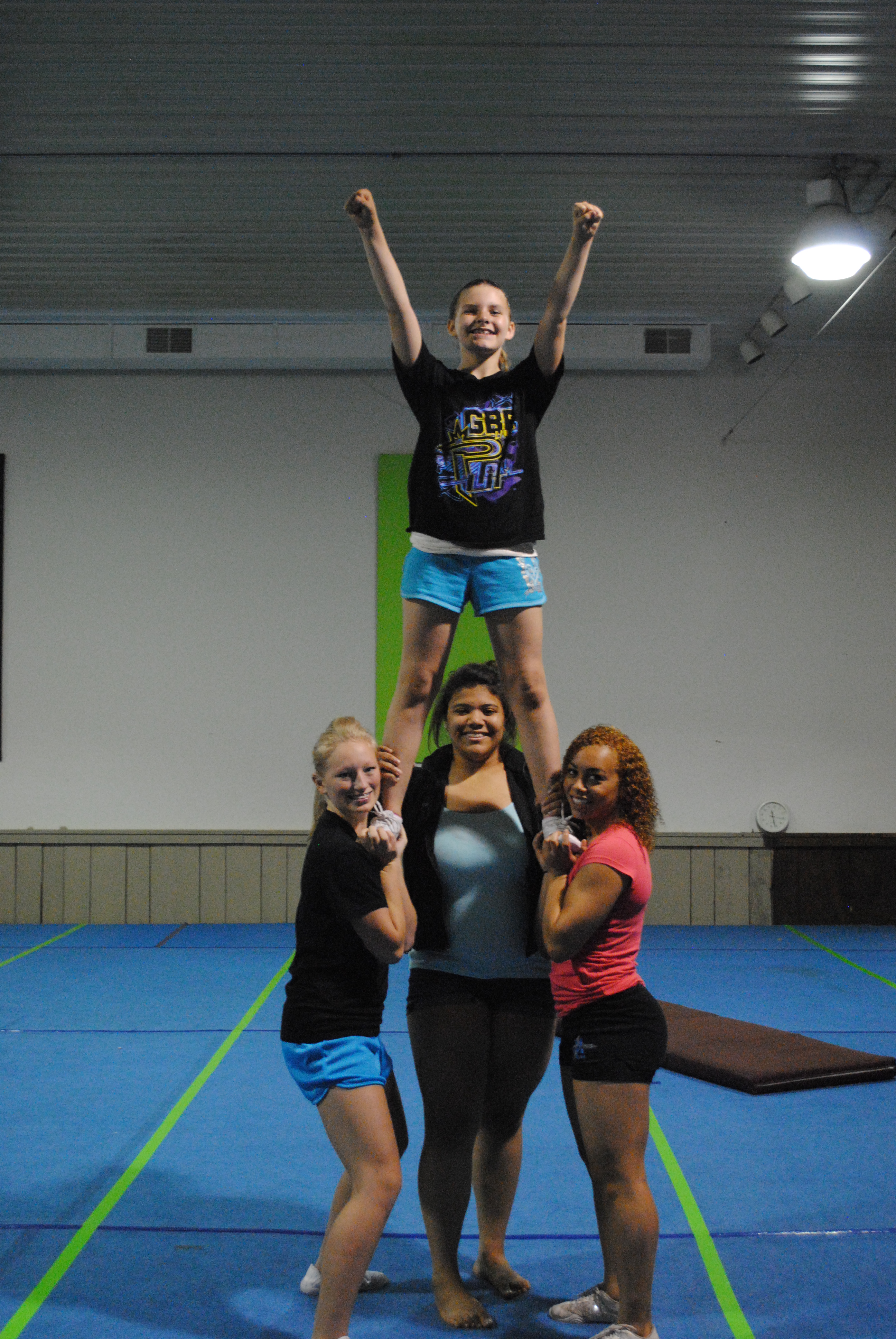 At Cheer Factor in Foxboro, Mass., specialty clinics are for athletes at the “top” of their game—literally. Inspired by a similar program at USA Gymnastics, Cheer Factor’s new “T.O.P. (Talent Opportunity Program)” has been a huge hit with athletes from its three locations, as well as area schools. Geared at Level 5 athletes (or those approaching Level 5 status), the T.O.P. clinic has become a coveted invite-only event.
“Not only did it serve as a motivational tool and a great way to get all of our kids from different locations together, but it was also a way to start building our Level 5 program for next year,” shares Heather Kalnicki, head tumbling instructor. 32 of the 40 invited athletes attended, and the exclusive nature of the clinic inherently created demand for future offerings. “A lot of Level 3 and 4 athletes who are borderline know they’ll get invited when they’re ready,” adds Kalnicki.
Whether it’s an elite invite-only clinic, cheerlebrity master class or other type of specialty clinic, classes and clinics can be a win-win for both athletes and cheer professionals. For athletes, it’s a chance to break out of routine and focus on a specific area of improvement, while for gyms, it can be a viable source of revenue and means of attracting new athletes.
How It Works
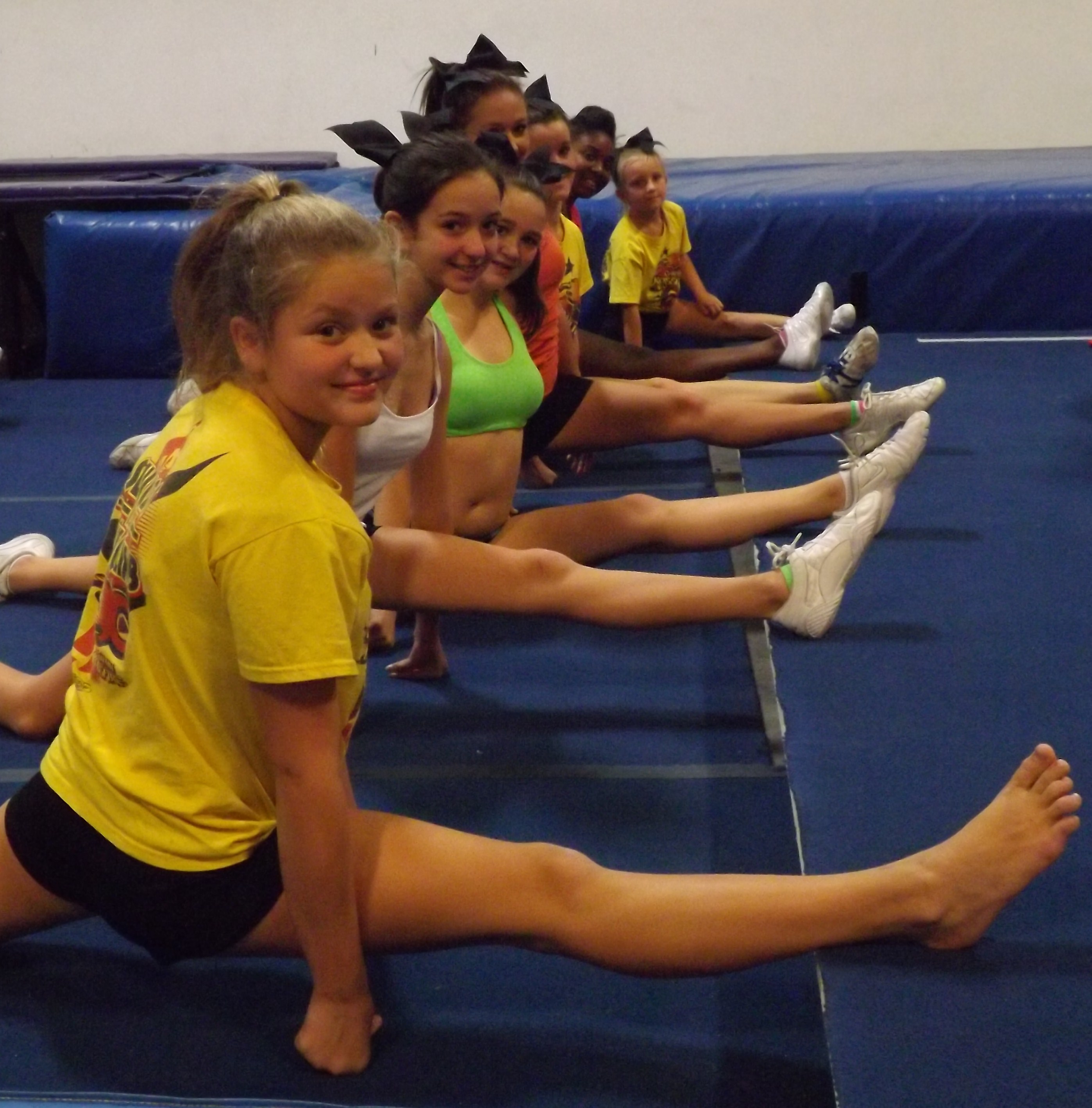
Simply put, master classes and specialty clinics meet a specific need for athletes—such as honing in on a special area of interest or learning from a top professional from outside the gym. Depending on the nature of the class, classes can be ongoing or one-time only. For instance, at Columbia, SC-based Carolina Crossfire Cheer, ongoing classes range from back handspring clinics to stunting classes to “Fit and Flex” (focused on stretching and flexibility). “If you pick a skill that your athletes need work on and create a clinic or class, parents and cheerleaders are more likely to have a reason to participate,” says owner Angela Koenig.
In some instances, one-off clinics can spring from unexpected opportunities. That’s exactly how Lisa Murphy of Union Grove, WI-based Envy All-Stars ended up booking cheerlebrity Kiara Nowlin for a tumbling clinic. Murphy had inquired about hiring Nowlin as a choreographer and learned that Nowlin doesn’t do choreography, but instead travels to various gyms providing master classes. “My partners loved the idea and thought it would be great for us, being a new gym,” shares Murphy.
Planning + Profit
 According to Koenig, one-time classes and clinics can be especially profitable when properly planned. While ongoing classes are typically limited to a low student-to-instructor ratio, clinics can often accommodate more athletes; families may also be more willing to make a one-time investment than pay for a recurring class. “If you set a minimum number of students to be registered in order to host the clinic and if you charge the right amount, you can make more than [in] a standard class,” says Koenig, who says a typical three-hour clinic at her gym could cost $30 per participant.
In other cases, the end goal may not be profit-related, allowing for more flexibility with pricing. For the T.O.P. Clinic, Cheer Factor charged just $10/participant as the clinic was geared to be a feeder for the gym’s Level 5 program. “We didn’t want to make money—our goal was more motivating our athletes and getting all the Level Fives in our area together in one gym,” says Kalnicki.
Cheerlebrity and choreographer master classes can be a more substantial investment, as gyms are paying not only for the cache of the cheerlebrity but also for all of the costs involved with getting him or here there. “Keep in mind that you have to pay the agreed-upon fee, airline tickets, hotel and food,” advises Murphy of Envy All-Stars. However, even if it turns out to be a break-even or losing proposition, master classes can often provide long-term benefits that outweigh the short-term expense. For Envy All-Stars, Nowlin’s visit provided needed name recognition and a promotional boost for their relatively new gym.
Timing should also be taken into consideration. Koenig recommends hosting master classes and specialty clinics on days that the gym is closed in order to turn extra profit; she also typically holds them during times that athletes don’t have school. “Summer and Christmas break camps/clinics are great because most parents and children are looking for something to do,” says Koenig.
Making the Most of It
Getting creative with the clinic/class name or using a theme can generate extra interest. For example, Carolina Crossfire Cheer’s “Fit and Flex” often has a waitlist, and Cheer Factor’s “T.O.P.” denoted the elite nature of the clinic. When working with a cheerlebrity, his or her name can act as a marketing tool in itself—the bigger the cheerlebrity, the bigger the draw.
Offering incentives is another way to set your clinic apart from others. “Incentives can range from giving $5 off registration to those who bring a friend to offering a T-shirt to the first 12 that enroll,” suggests Koenig. She adds that it’s important to find out what other gyms in your area offer and at what price before making any final decisions.
Classes and clinics can also serve as a springboard for more of the same. Cheer Factor plans to hold “T.O.P” on a bimonthly basis, and Kalnicki says that “everyone wants to be invited. A month before T.O.P, we started to see a lot of the older girls stepping up and younger girls trying to get to that point.”
At Envy All-Stars, Murphy capitalized on the popularity of the Kiara Nowlin tumbling clinic by planning a follow-up fundraising event for “Kiara’s Cause” with Nowlin and fellow cheerlebrities Bianca Treger and Jenee Cruise. “My senior girls will be hosting them and a portion of the money raised will go to JDRF for research on juvenile diabetes,” says Murphy.
Why They Matter
The most obvious benefits of a specialty clinic are for the students. By bringing in a cheerlebrity her athletes admired, Murphy says her students were hugely motivated and ready to attempt difficult moves they weren’t trying before Nowlin came around. At Cheer Factor, the “T.O.P.” clinic coaxed athletes out of their social comfort zone by mixing them on teams with advanced athletes from other gym locations and high schools. Specialty clinics geared at areas like stunts or jumps can also give athletes more aptitude in an area that may have previously been an individual weakness.
From a gym owner’s perspective, specialty clinics and master classes can set your program apart and generate buzz in the community. Depending on the type of event, you may be able to obtain media coverage and raise further awareness about your gym and its activities. At the very least, it’s a unique opportunity to attract new athletes and convert them into committed customers. Says Koenig, “Hosting specialty clinics or classes can also bring in non-gym members and allow them to see what your program is about.”
–Diana Bocco
 Anyone who encounters Cheer Extreme All-Stars’ Courtney Smith-Pope need not wonder where she gets her effervescent passion for the sport—after all, it’s all in the family. Her mom and co-founder, Betsy, acts as the financial and admin guru for all 9 CEA locations around North Carolina, while her sister, Kelly, oversees its Raleigh and Greenville locations. She first met her husband of 10 years, Ben Pope, back when he owned a Premier Athletics gym in Asheville—today he runs CEA’s Winston-Salem location and coaches tumbling and stunting, while their two daughters cheer at the Kernersville location (which Smith-Pope calls “the mothership” of the operation).
And at the center of it all is Smith-Pope, the feisty nucleus that acts as the face and creative force behind CEA. Named USASF’s “Coach of the Year” in 2009, Smith-Pope has brought CEA to international recognition—with her teams taking home gold medals from Worlds in 2010 and 2012. “People buy our T-shirts from 62 different countries from my mom’s little store—orders come in from Seoul, Singapore, South America and Canada,” shares Smith-Pope.
Part of the program’s notoriety comes from Smith-Pope’s considerable social media presence—she has amassed more than 6,300 Twitter followers and partners with online channels like CheerLIVE to air the annual CEA showcase. (Her Facebook photo is a close-up of her eye with the CEA logo imposed.) “Jeff Webb told me I had a social media addiction—to which I responded that he needed to get with the program,” she laughs. “I’m not personally visible in our 9 locations every day and that’s the way kids who cheer for me can contact me. We’re lucky that the Internet provides that visibility and [opportunity for] commentary; it’s important to have a great image virally.”

Pope and her sister Kelly Smith
Though CEA is now considered one of the industry’s premier programs, it stems from somewhat humble beginnings. Smith-Pope originally aspired to be a gymnast, but fell in love with cheerleading in middle school. When her sister wanted to follow in her cheering footsteps but couldn’t find a team, Smith-Pope and her mom decided to start a recreational league. “Soon 20 of the best rec kids were paying $5 apiece to practice in our backyard,” she remembers. “That was in 1993 and I was 14.”
By the time Smith-Pope was cheering at Wake Forest University, the newly minted all-star program was practicing out of a gymnastics facility—she traveled home to be there every Sunday throughout college. As a biology major, Smith was poised to enter medical school, but true to form, cheer intervened. “We had 80 kids going into the last tryout before I took the MCAT, and 150 kids showed up [to try out],” Smith-Pope remembers. “With each of them paying $10/practice, I decided to make a go of it.”
As CEA has grown over the years, the self-described “cheer fanatic” has kept that homegrown mentality—and partly attributes it to the program’s success. “Being so young, I got to watch a lot of people make a lot of mistakes, like building a facility you can’t support,” she shares. “I saw a lot of people go out of business who were working just to make rent. In the model we have, we’ve never not made a profit—everything we do is related to the number of kids we have.”
This translates into a business model in which many of CEA’s locations are based inside gymnastics facilities (the two entities split the tuition, with CEA providing staff and running the program in exchange for space); Pope-Smith then pays her employees per athlete coached. “They work for retention, not by the hour,” she says. “Everyone gets to feel like their own boss that way and see the effects of their hard work.”
 Riding the momentum is another key to CEA’s longevity. On the heels of last year’s Worlds win, Smith-Pope recently opened a new location in Charlotte and has surpassed the 1,000 athlete mark across all locations. She’s also in the public cheer eye thanks to her outspoken co-leadership of the All-Star Gym Association, which she helped start in 2008 but blew up in membership and visibility last year. It’s all part of Smith-Pope’s bigger mission to spread her love for the sport: “I hope to inspire new entrepreneurial event producers and new ideas—people coming into the industry with passion and love,” she says. “We’re all part of a rising tide. It’s time for a return to the optimism that inspired [this industry’s] growth in the 90s.”
With Smith-Pope at the helm, anything is possible.


