

In addition to all the great content we bring cheer professionals in our quarterly print issue, you’ll find plenty of original exclusive content right here at TheCheerProfessional.com.
Keep checking back for all the latest and greatest news, updates, debates and more!
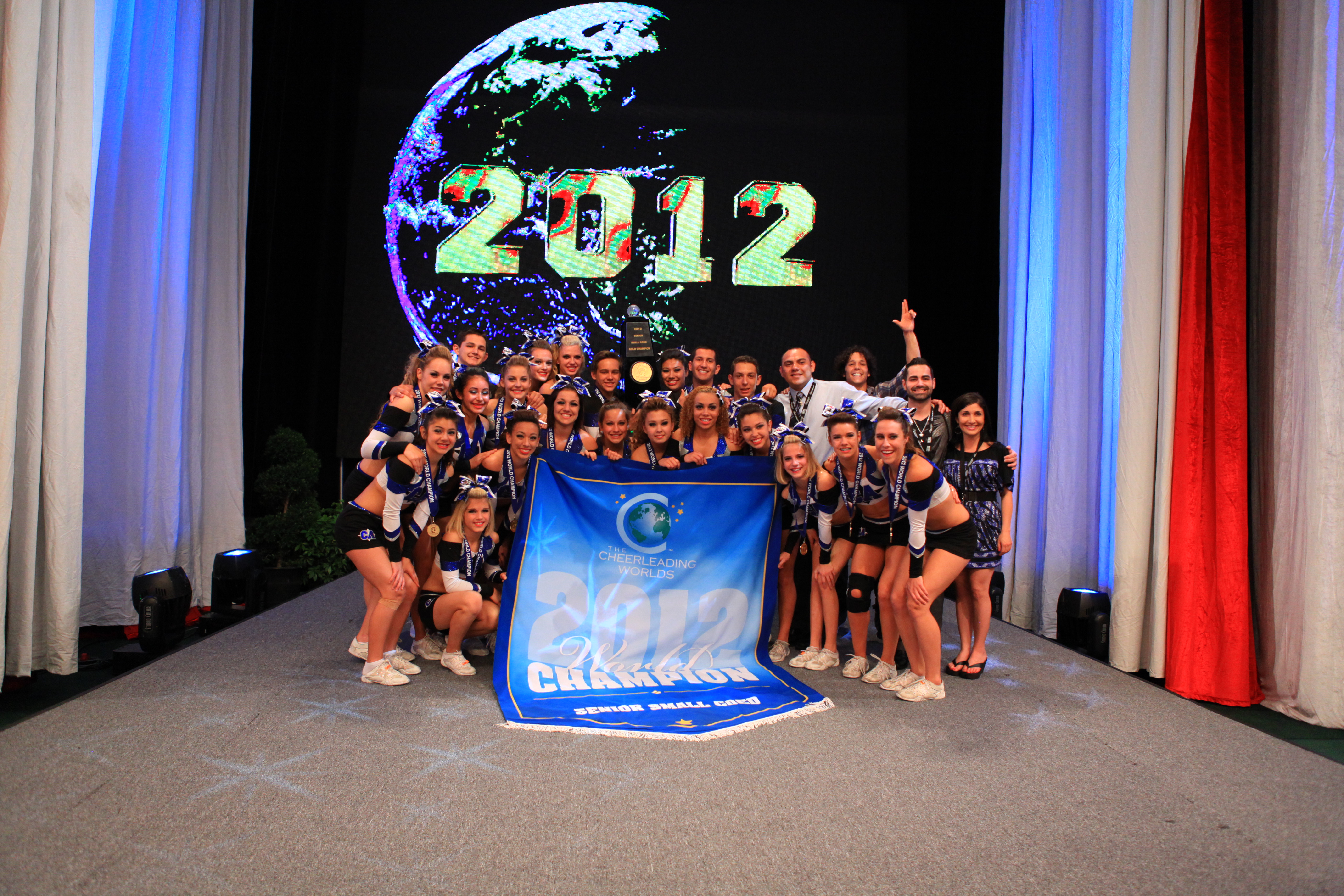 “Eat, cheer, sleep”—it may sound like a gym wall mantra, but it’s actually one of the taglines for California All-Stars’ online web series “Cheerleaders.” Featuring coach Eddie Rios and cheerlebrities like Gabi Butler, Jenee Cruise and Kiara Nowlin, the AwesomenessTV show has followed the program’s famed “Smoed” Level 5 team and its highs and lows throughout the season. To date, the series has gotten more than one million overall views on YouTube—impressive exposure for what has already become one of the industry’s most recognizable brands.
“Cali Smoed has gained attention since the show—the most sought-after items in our pro shop are currently the Smoed T-shirt and bra,” says co-owner Tannaz Emamjomeh. “However, while our staff and kids appreciate the notoriety, nothing takes precedence over the program as a whole.”
According to Emamjomeh, finding balance in that regard has been one of the primary challenges of shooting the show. Certain athletes are featured more prominently than others—but, off-screen, it’s important that all 885 athletes between the program’s five locations feel just as valued. “We were working through some minor conflicts on our Smoed team because some of the veteran members were questioning if the show was a distraction,” admits Emamjomeh. “Our priority is team success, so we addressed it right away by reminding the staff, kids and parents how much we value team over anything.”
Of course, there have been plenty of upsides as well. The gym receives a stipend that will go toward offsetting Worlds costs, and Emamjomeh says the Smoed athletes have gotten thousands of new Instagram and Twitter followers. For her and co-owner Jeff McQueen, the show has also provided an international means of showcasing the gym. They’d been approached for reality shows in the past, but this was the first time the pitch aligned with their vision.
 “The producer is a former cheerleader herself, so she understands competitive cheer,” says Emamjomeh. “Her goal was in sync with ours: showing the competitive aspect, athleticism and hardcore training behind the scenes. We felt comfortable that the show wouldn’t impact us negatively, but rather give viewers a glimpse of high-level training.”
Filming started last September and is now concluding after Worlds, where cameras weren’t allowed to capture the competition but caught the action off the mat. There’s talk of making the show into a televised reality show, but Emamjomeh has plenty to focus on until that happens. She and McQueen are currently opening another location in Ontario, CA (joining the five others in California and Nevada), and the program just came off an impressive showing at Worlds with not only Smoed, but also its Sparkle and Black Ops teams taking home gold.
It’s all part of a West Coast cheer empire that only seems to be gaining traction—something Emamjomeh and McQueen never anticipated when they started out in 2001. “We didn’t have any hopes other than winning NCA nationals. We had no inkling that we would ever expand, nor was it a goal of mine,” says Emamjomeh. “Opportunities fell into our laps, and therefore, the business model had to change to maximize success for a multi-location gym.”
She attributes much of the success to the program’s strong sense of identity and level of exposure. “The Cali brand has evolved and grown over the years; I think it’s necessary for any gym to define and shape the culture of the program,” says Emamjomeh. “Our Worlds teams have elevated our exposure and we’re grateful for that. It’s been a fun and exciting ride.”
Eyes Off the Prize: All-Star Prep and Half-Year Teams
jen : May 6, 2013 11:59 am : In the Industry| Web Exclusives| webexclusive1 Are all-star prep and lower-level teams the future of all-star cheerleading?
Over this past weekend, hundreds of athletes converged on Walt Disney World for an epic cheer competition. Worlds? Not exactly. This year marks the debut of the Summit, a Varsity All-Star event catering to teams in non-Worlds divisions. Following a similar template to Worlds, the Summit awarded 107 paid bids and 355 at-large bids to more than 450 teams of all levels. “[The aim] is to allow some of the very best non-Worlds teams to compete head-to-head at one time and in one location,” says Varsity’s John Newby.
It’s all part of what appears to be a movement away from the ultra-competitive focus on Levels 5 and 6—and toward a return to the more recreational aspect of cheer. “So much emphasis has been put on the highest-level teams in the country trying to qualify and be part of Worlds that the majority of programs haven’t had the same opportunity,” adds Newby. “We think this [event] will balance some of the attention to only the highest-level teams and create some exciting new opportunities.”
Another recent development in this vein is the introduction of All-Star Prep, geared toward half-year and less competitive teams. USASF treated the 2012-2013 season as a pilot period for this new division, which is characterized by a shorter two-minute routines, a simplified tumbling category and a “no crossovers” rule. Currently non-sanctioned, the All-Star Prep division does not count toward a Worlds bid and is offered by event producers like Epic, CheerSport and Jam Brands.
“The prep division has really helped us because we can take inexperienced kids and give them a taste of competition without going the full gamut with a Level 1 or 2 team,” says Karlette Fettig, co-owner of Indiana Elite in Noblesville, Indiana. “[Gym owners] should be focusing on bringing kids in at a lower level because they’ll be the Level 4 and 5 cheerleaders one day.”
What’s driving this relatively new trend? In CheerProfessional’s recent “State of the Union” panel, experts including Fettig attributed the shift to the economy. With many families struggling, all-star gyms must find ways to make their programs affordable in order to retain clients and continue to attract new athletes.
“This remains a very difficult economic time,” says Fettig’s co-owner Bethe Beaver. “Families have been forced to make some tough decisions, and we are very fortunate that so many of our families have been able to remain at the gym.”
Fettig and Beaver credit that level of retention to their introduction of half-year teams, a method that a growing number of gyms are using to get cheerleaders through their doors. These teams start later in the season (usually in December) and keep costs down by attending local competitions, choosing less expensive uniforms and not requiring matching practice wear. They also have lower tuition, but still receive benefits such as tumbling classes and clinics.
East Celebrity Elite is another gym finding a new niche through half-year teams. Owner Cheryl Pasinato believes half-year teams serve two main purposes: 1) giving children an introduction to all-star cheer and a taste of competition, and 2) ensuring there are athletes in the gym—even if they can’t make a full-year commitment. Pasinato knows all too well what it’s like to feel the financial pinch, as the state of the economy played a role in necessitating her gym’s merger four years ago. (And East Celebrity Elite is far from the only one—Beaver says that many gyms in her area have merged, taking the number of gyms within a 20-mile radius from 10 to just three.)
Both Pasinato and Beaver also cite another benefit to the half-year programs: the opportunity to develop relationships with local recreational cheer programs. “Throughout the year, we work with several local organizations and their recreational cheer programs,” says Beaver. “Typically, the feedback from the organizers and parents involved was always very positive, but we had been struggling to find a way to get them more involved with what we do. The half-year program seemed to be the perfect starter program for many of these families.”
Pasinato takes it a step further, often recruiting coaches to come coach East Celebrity Elite’s half-year teams. “We have a good relationship with the youth coordinators and a lot of them do encourage their kids [to participate in half-year teams],” says Pasinato. “A lot of them are very good coaches, and they’ve done a really good job.”
Of course, not all gyms are heading in this direction. Top Gun All-Stars, known to many as a “Worlds gym,” has taken some measures to make its younger teams more affordable—but co-owner Kristen Rosario says that change is due more to parents’ reluctance to commit to such an expensive sport before getting a full indication of their child’s interest.
“Other than that, we really have not made changes to our all-star program as far as pricing,” Rosario explains. “We did, however, decrease the number of out-of-town competitions [to which] we travel.” She adds that this still gives Top Gun teams plenty of opportunities to compete, as there is an “overabundance” of competitions from which to choose while still staying closer to home.
Regardless of their current direction, gyms are still providing many opportunities for young people to get into all-star cheer—from the more recreational focus to the strongly competitive bent. And they remain optimistic about the futures of their programs.
For Top Gun, keeping families invested is about providing a quality experience backed up by a strong legacy. “I do believe that the name that many gyms have built for themselves can, in fact, be some help,” Rosario says. “Obviously, if you’re going to pay for something that is as expensive as cheerleading, you’d rather pay for it in a place where you know that you’re going to get good training and see good results.”
For Indiana Elite, it’s about staying flexible and conforming to clients’ needs. “Bottom line—we are open to adding new classes and programs that we believe will benefit the families in our program and/or in our area,” says Beaver. “It is our goal to provide a program and an atmosphere that is positive for our team members and their families, and it is our hope that if we can continue to provide an environment that the kids and their parents like, then we will prosper.”
Game Night: Innovation through Motivation
jen : May 1, 2013 12:44 pm : Down to Business| Web Exclusives| webexclusive2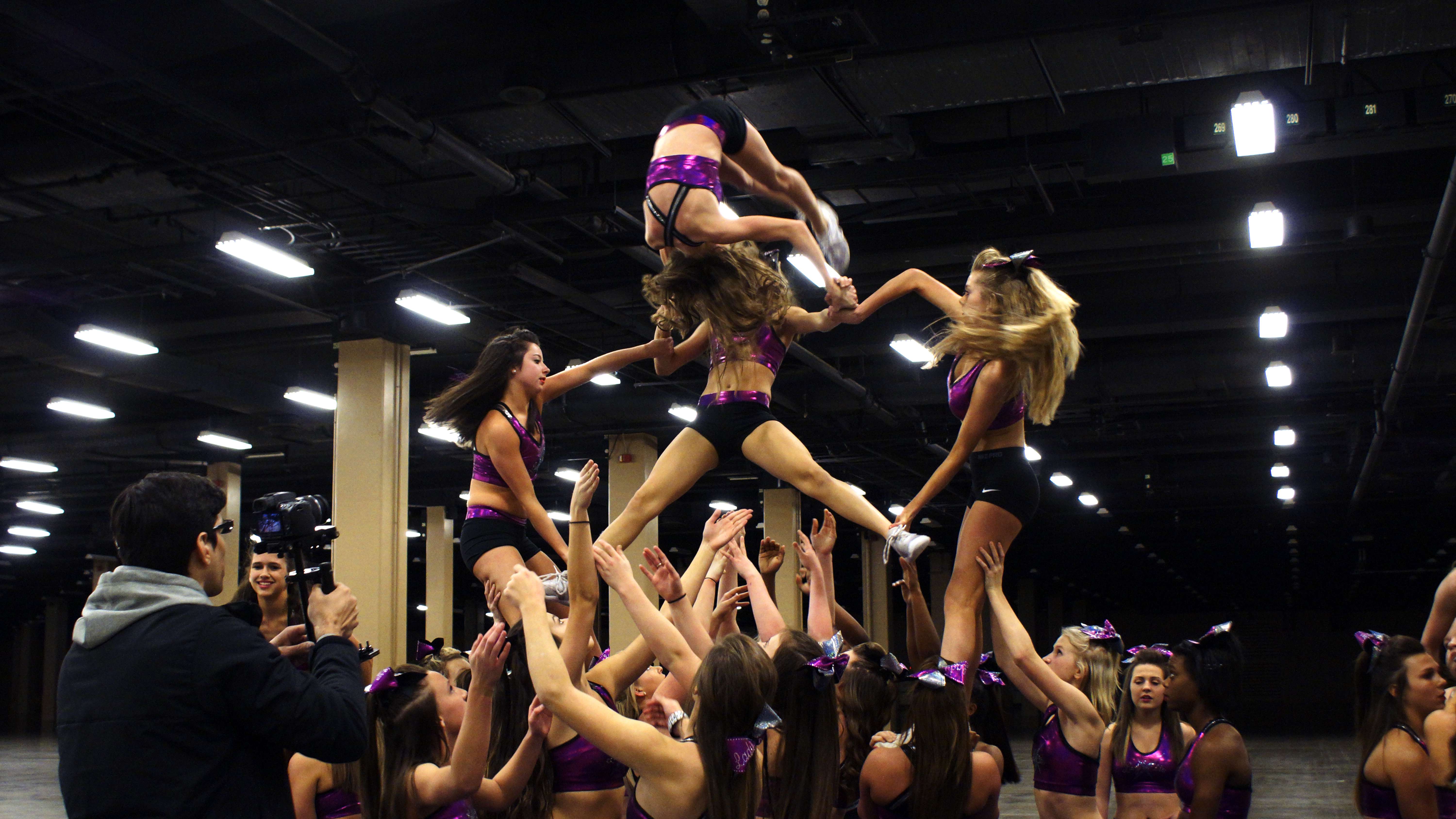
Artwork for this article provided by:
Photography by Karissa
www.facebook.com/photographbykarissa
photographybykarissa1@gmail.com
Almost as one, the squad held their breath. Their eyes were fixed on a Jenga tower, perilously placed and swaying back and forth slowly. If their teammate could pull out a piece and successfully replace it, they’d only have to do whichever exercise was written on it. But if she were to knock the tower over, it would mean an automatic full-out of the whole routine for them all. She pulls the block out gingerly and….
It doesn’t matter whether the tower falls: the athletes are engaged, having fun and training hard. Above all, they’re excited to come to the next practice at Raleigh’s Cheer Extreme just to see what their coach, Sarah Swicegood Macrow, will come up with next. “You can do a game with anything and make it fun, and it ends up motivating them to do what they need to do in a routine,” says Macrow. “By the time they leave practice, they’re sweating and tired, but to them, they just tried to win at Go Fish or Jenga.”
Macrow isn’t alone in believing that there’s more to being a cheer coach than running drills and routines. At Southlake, TX-based Spirit Xtreme, coach Melissa Meriwether kicks off practices by grabbing her iPhone to cue up her athletes’ new favorite game: the “Wheel of What.” The free app features a spinning gameshow wheel that chooses how they’ll train that day. “We always walk that fine line between not wanting to burn them out, but keeping it fresh and fun,” explained Meriwether. “That was one of the reasons I started an all-star cheer gym. I thought, ‘There’s got to be a way to be competitive but still keep it fun for the kids.'”
Instead of laps, her girls run races against each other or see who can reach the top of Spirit Xtreme’s climbing ropes the quickest. Athletes are encouraged to work with a buddy or partner—both for support and to develop the team dynamic. It’s all part of an increasingly popular model in all-star gyms: innovation through playful motivation.
The Three F’s: Fitness, Focus and Fun
Photography by Karissa
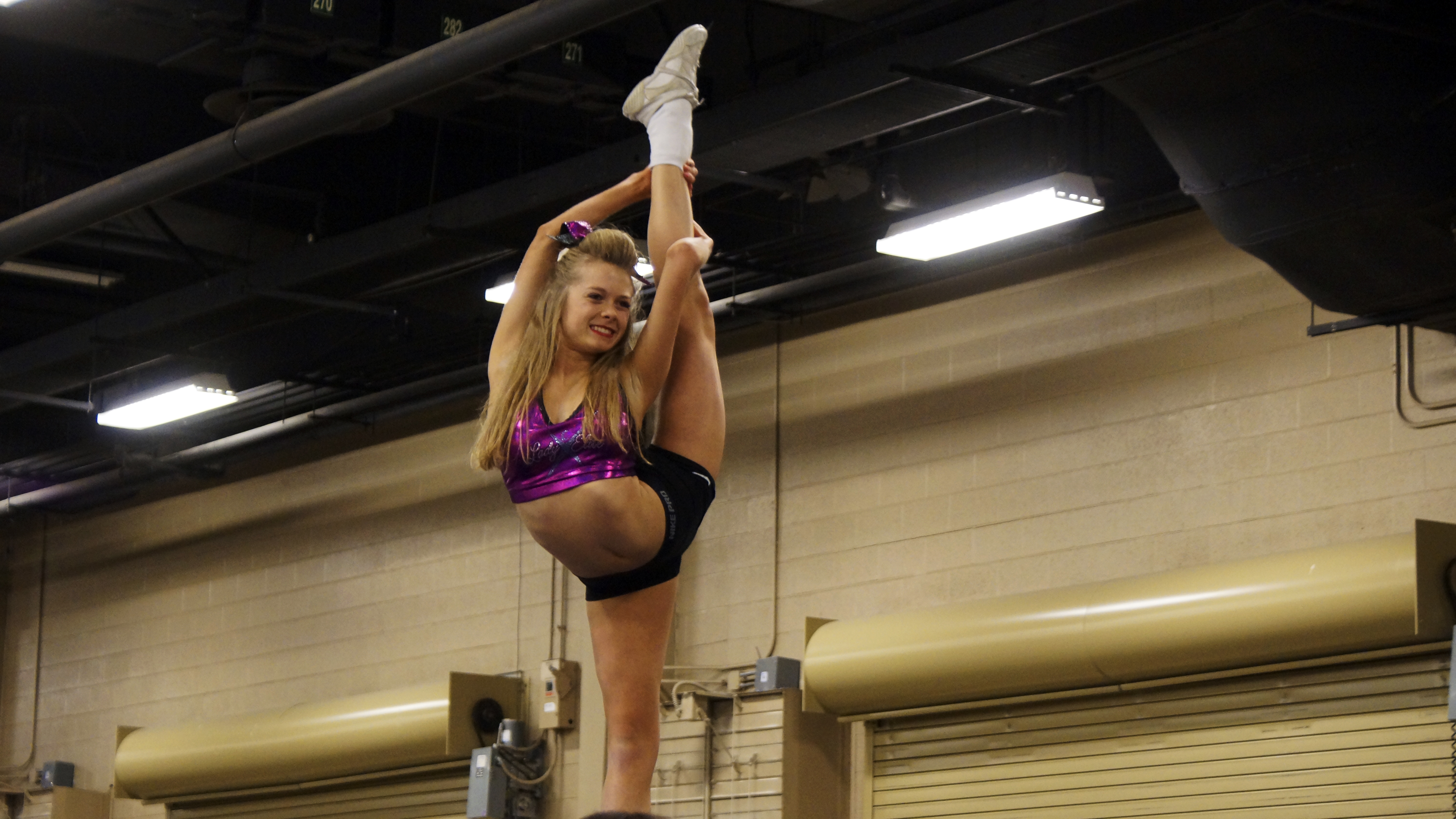
Along with teaching new skills and refining routines, cheer professionals are also exploring new, interesting ways to approach training and fitness. At Spirit Xtreme, Meriwether recently realized that while all of her athletes wanted to improve their jumps, many dreaded the thought of doing toe touches every day. Thus began “The 50 Day Challenge,” an optional training regimen that she introduced as an incentive. The premise was simple: start at one toe touch and one pushup, and every day, add another. (Some cheer moms even joined in for fun!) At the end of the 50 days, athletes who completed the challenge were entered in a prize drawing—but, of course, the true rewards came through the added training.
“They were choosing to take part rather than being forced,” shares Meriwether. “I think we can all relate to that: when something is a game or competition, we jump right in—as opposed to when someone says, ‘You have to do this,’ and then it’s not as much fun.”
Trying new ways of learning can also mean simply switching up the way teams conduct practice and showcase new routines. At USA Wildcats East in Norwich, Conn., owner and head coach Ryan Spanich stages real-life “slow-motion replays” to show teams what they need to improve and how to do it. He also encourages individuals and/or small groups to perform for the team at large in spotlight sessions. “[All-star cheer] is such a team sport that a lot of individuals can get lost in it,” he explains. “This particular exercise brings it back to the individual and makes them more accountable for what they do.”
Square Peg, Meet Round Hole
More traditional coaches may balk at such unconventional techniques, but Meriwether and Macrow say that trying something different can work wonders. For those who are hesitant, Meriwether suggests choosing one area of focus and experimenting. “Find an area where you’re willing to make the sacrifice to try something new,” advises Meriwether. “Shaking things up for the kids will work different muscles and keep them excited.”
Of course, there is also the element of added work and imagination on the coach’s part, but it need not be stressful, says Macrow. She cautions other coaches not to overthink ideas, as some of her most popular games involve easy props like yarn or sidewalk chalk. (See “Just Press ‘Play’ sidebar for ideas.) “Each game puts a different spin on what we do, and it helps them keep up with their skills,” says Macrow, who often posts new ideas on ASGA’s Facebook page. “And even though it’s more work, it also makes practice more fun for everyone—including the coach.”
As for any concerns that a playful approach might cause athletes to goof off, it tends to bring about quite the opposite. “I think playing games makes it a more rewarding experience,” explains Macrow. “We work harder and we do a lot more, but they don’t realize it because practice feels like it goes more quickly. They’re not working for Nationals, they’re working to win the game—and that makes them better and builds that team bond everyone is looking for.”
Check out our blog for ideas on how to put these tips in practice!
The 411 on Credentialing: 5 Things You Need to Know
jen : April 29, 2013 4:57 pm : In the Industry| Web Exclusives The road to coaching all-star teams involves a regulated process. Before anyone can coach all-stars, they must be credentialed through USASF.
How it works: The current credentialing process focuses on three subjects: tumbling, tosses and stunts. To be certified, all first-time coaches must complete a written test, a practical field experience form and a hands-on test that Amy Clark, USASF’s national director of membership, describes as a “one-on-one kind of verbal assessment of the coach’s ability to teach skills.”
Three years after receiving credentials, coaches must be re-credentialed—a process that consists of a different written test and another verbal assessment focusing more on safety, progression and troubleshooting. “The verbal test tells us much more about a coach then the written test,” Clark says. “When you ask probing questions, it really examines their coaching to the core.”
How it started: The USASF was actually created to help provide structure to the certification process. “For all intents and purposes, most people say the all-star industry started around 1986 or 1987—very small, regionally,” Clark says. “It started to grow nationwide in the early 90s. [At the time], it was a developing sport that had no governance. It had no guidelines and no certification or credentialing specifically for all-star. So when we started 10 years ago, our goal was to create this umbrella of an organization that could actually get everybody credentialed and get the stamp of approval on people that basically possess life experience.”
What it costs: The process currently costs around $15 per category and level for first-time coaches and $35 for those being re-credentialed. For coaches that work at gyms that are not members of the USASF, they must also pay a $40 annual membership fee.
Why it matters: The goal of the credentialing process is to help ensure the safety of the athletes. “It basically is the assurance to their customers that they possess the skill and knowledge to be working with their children,” Clark says. “The only place that is currently required to have credentials are those coaches of Level 5 or Level 6 teams, and they’re going to take their teams to Worlds.”
Where we’re headed: The USASF credentialing process is expected to change in the summer of 2014. Coaches will face required instruction, more comprehensive classes and more resources including online training videos, according to Clark. Credentialing will take place primarily at summer regional meetings.
“There are new gyms starting where people have little experience, and there are new coaches coming in that were athletes and not coaches and don’t have the coaching experience,” Clark says. “That’s why we have this need to change.”
Debbie Love, who assists with the University of Louisville’s cheerleading program, wants to see even more stringent requirements. “I feel that there needs to be required hands-on training for tumbling instructors, and that coaches should have required injury prevention training either online or in person,” says Love who is also a tumbling expert. “We are taught to spend a good deal of time with each person we credential, so it is a very thorough process.”
Love says other safety courses should also be a requirement for coaches. “I also feel AACCA should be required by all,” Love says. “It is a great general safety course. I don’t feel you can have too much education. The minute we stop learning, we fail.”
Effect-ing Change: The Sparkle Effect
jen : April 24, 2013 5:04 pm : In the Industry| Web Exclusives| webexclusive1 Just over a decade ago in 2001, the Kentucky Elite Showcats were the first and only special needs cheer team in the country. Today, the trend has exploded with more than 500 squads in the United States, Canada and Great Britain and divisions popping up at major events like Cheersport, NCA and Worlds. At the forefront of the movement? 19-year-old Sarah Cronk, founder of the Sparkle Effect—a non-profit that has spawned more than 87 special needs teams in its singular quest to make cheer an inclusive sport for all.
To the casual observer, Cronk might resemble any other go-getter college sophomore—she’s a senior resident adviser in her dorm at Whitman College, Kappa Kappa Gamma sorority sister and certified yoga instructor. Yet Cronk has been an active entrepreneur and changemaker since the age of 15, when she was first inspired to spark the Sparkle Effect. At the time, Cronk and her teammates from Bettendorf, IA-based Pleasant Valley High School had just conducted a cheer clinic at the Iowa Special Olympics. During the experience, Cronk was struck by how easy it was to adapt cheerleading across varying skill levels—and the way it gave everyone an opportunity to shine in the spotlight.
That revelation, coupled with the fact that her autistic older brother was thriving on the school swim team, planted the seedling for Sparkle Effect. “I wanted to use cheerleading, which was my passion, to do the same for other kids,” says Cronk. “It’s so fun, too! You get to see everyone’s smiles. Communities rally around cheerleading and we found that tying inclusion into that really creates a perfect storm.”
Originally, Cronk’s efforts were tied exclusively to Pleasant Valley HS, where she and her squad created the Spartan Sparkles—the country’s first high school-based inclusive cheer team—by securing grants from Do Something and local rotary organizations. Yet when inquiries started pouring in about how to start a similar team, Cronk knew she was meant for a bigger mission, and the Sparkle Effect was born.
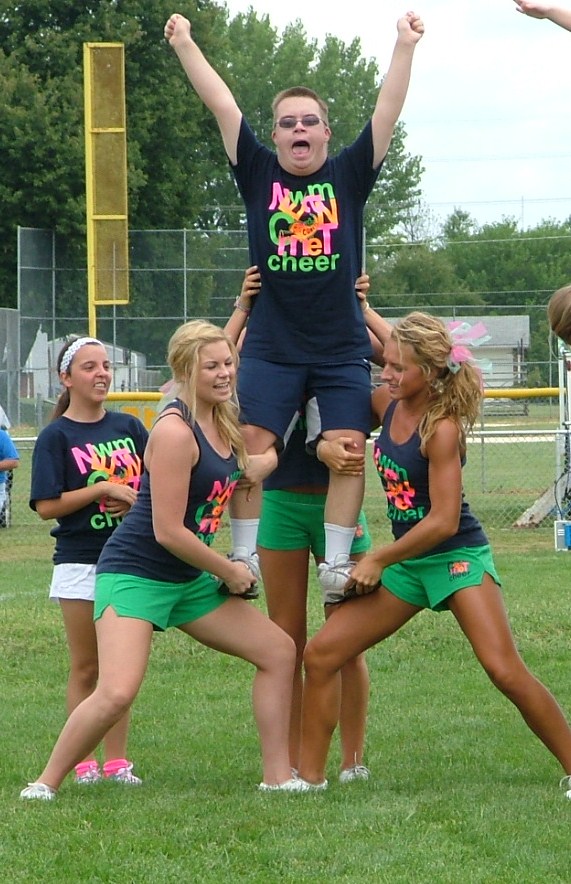 SVia a free “Quick Start” kit on the Sparkle Effect website, interested parties can download a full toolkit for starting a special needs team (such as fundraising tips, grant applications and step-by-step advice). Cronk and her team have also partnered with Varsity for a uniform grant program, and Sparkle Effect reps travel around the country offering free on-site training to new special needs startups.
As president of the non-profit, Cronk’s day-to-day duties run the gamut from planning campaigns, managing various teams, assisting with trainings, handling public relations and overseeing the board of directors and part-time employees. Last summer, she spearheaded the promotional “Are You In?” tour, traveling to various UCA and UDA camps to generate interest in the Sparkle Effect. “The scope I learned as a cheerleader about mobilizing people to take action and fostering a spirit of community has definitely taken me a long way,” shares Cronk.
Not that the road has always been smooth—at the outset, Cronk was a teenager with virtually no business experience, and she occasionally struggled with being taken seriously. Yet by staying the course and securing corporate partners like Varsity, Cronk and the organization were able to truly take off. These days, her biggest challenge is often juggling the demands of attending college and running a non-profit simultaneously.
“It’s taken a lot of practice, and it’s not always easy,” Cronk says, adding that she’ll often delegate duties when she can’t leave campus. “It’s really just about staying on top of things. Sleep sometimes goes by the wayside.”
If recognition is any indication, Cronk’s efforts have certainly paid off. In 2012, she was named a CNN Breakthrough Woman and a L’Oreal Woman of Worth, and the Sparkle Effect was a Classy Awards regional winner for Human Rights Charity of the Year. However, Cronk hopes for a day when this work isn’t seen as unusual.
“Ultimately, my biggest dream is that inclusion is as big a part of cheerleading as pom-pons are,” she says. “I hope that eventually people don’t need to get that fired up about it—and that it’s just the norm.”
–Jennifer Deinlein


