

In addition to all the great content we bring cheer professionals in our quarterly print issue, you’ll find plenty of original exclusive content right here at TheCheerProfessional.com.
Keep checking back for all the latest and greatest news, updates, debates and more!
A Long & Winding Road for LGBT
jen : July 1, 2013 2:26 am : Mind, Body & Soul| Web Exclusives| webexclusive1 Have the industry truly come a long way? CheerProfessional explores the treatment of gay athletes in all-star cheerleading.
For Mike Blaylock, director of Midlothian, VA-based FAME All Stars, all-star cheerleading’s evolving attitude toward gay athletes in sports can be summed up one way: The fact that he can talk openly about his upcoming wedding to his partner of five years, Adam, in the gym.
“What I love is when I have little girls in my gym begging to be flower girls,” he says, fighting back tears. “I have little girls, that the day of the wedding—this makes me emotional talking about it—but they want to be involved. Not because it would be fun or different, just because they recognize that the bond I have with this person with whom I spend my life. They respect that it’s not a mockery, and it’s not fake. They respect it enough to where they would be a part of it if they could.”
When Blaylock talks about his gym’s 6-, 7- and 8-year-olds recognizing his relationship in the same way they recognize “quote-unquote traditional relationships,” he gets choked up. Because according to Blaylock, that positive reception wouldn’t have been the case 15 years ago in all-star cheerleading.
One Step Forward, One Step Back
All-star cheer isn’t the only area that has made some strides—in April, Washington Wizards player Jason Collins made history when he became the first openly gay male athlete playing in a major sport. Professional athletes from sports organizations including the NFL, NHL, pro soccer and ESPN, among others, have also banded together to form the You Can Play organization. Its motto: “Gay athletes. Straight allies. Teaming up for respect.”
Yet some feel we haven’t come far enough. Though most would assume that the last place sexuality would be an issue would be all-star cheerleading, a USASF rule made last spring cast doubt on the industry’s acceptance level. The rule mandated that males “minimize exaggerated or theatrical movements,” and many in the industry viewed it as discrimination against gay cheerleaders. The rule was later retracted, but the spotlight on the issue brought the treatment of gay athletes in competitive cheerleading to the forefront.
The recent controversy begs the question: What’s the climate for gay athletes in cheerleading gyms today?
That Was Then
Blaylock remembers all too well being discriminated against as a high school cheerleader via “harsh statements” to his face and behind his back from fellow students outside of his squad. Since starting his coaching career in 1998, he has slowly experienced a significant difference in the way he is viewed.
“The treatment back then wasn’t that it was negative, as far as in-your-face negative,” says Blaylock. “It was more of the ‘Let’s keep this quiet’ attitude or ‘Let’s not put that out there so much.’ And as time has passed and perspectives have changed, the ability to be who you are as a coach—and discuss those kinds of matters without the fear of ridicule or fear of being included in certain things—has [risen] dramatically.”
This Is Now
Not all gyms have specific policies for inclusion, but some do have unwritten rules about acceptance.
“[At FAME All-Stars], we’ve never had to create a tolerance policy because it’s just a universally known idea that we’re accepting,” Blaylock says. “We’ve never had to address with our parents or our team that one behavior should not be frowned on. I know that that is my own little bubble, but I have to say that I’m proud of that bubble.”
Over at ACE Cheer Company, based in Hattiesburg, Mississippi (a part of the country that skews conservative), co-owner Brandon Roberts says they take a strict anti-bullying stance, going as far as to sit down with parents and athletes if they hear kids making anti-gay comments about other athletes or coaches.
“We now have 11 locations, and it doesn’t matter the location—whether it’s Nashville or as far south as Pensacola. It doesn’t matter where you’re at, or if you fall into the Bible Belt; [we make sure] the entire program and all of the families are loving and accepting of all of our athletes. That’s the one thing that we really push,” Roberts says. “It’s about safety. It’s about sticking with your brothers and sisters no matter what, and [being] there for them.”
But the self-expression and tolerance that ACE and FAME encourage isn’t the case everywhere. Some local gyms, Roberts says, still encourage their athletes to keep their sexual identity a secret or turn athletes away from their program because of their sexuality. He tells the story of one gay athlete who switched from another gym to ACE as a high school senior and finally came out at the end of the season.
“He said the one thing that our program taught him was that it was okay to be himself,” Roberts says. “It wasn’t that our program turned him or changed him; it was just the fact that he felt like he had to be silent or couldn’t say anything because of the [former] program he was at. [He felt] that he would be bullied or kicked off the squad, or that they wouldn’t allow him or they would out him to their entire school. It’s a shame that that still happens.”
Rules of Engagement
Circling back to that controversial USASF rule, depending on whom you talk to, the rule was either a pointed dig at gay athletes or a more broad-based nudge toward how the federation wanted the sport to look.
“I was offended [by the rule], to be quite honest,” says Blaylock. “I felt that in a sport that I think that that is so huge in comparison to other sports, in which we teach and advocate for so much inclusion, I felt that [the rule] was hypocritical and contradictory to one of the most wonderful things about our sport. It was so against what I think event producers and coaches and parents and athletes have worked so hard to create. To get that wording from the USASF board really came across as a slap in the face to not want to carry on that wonderful sense of inclusion that we have in our sport.”
However, Roberts felt the rule could be interpreted differently than merely a slam to gay cheerleaders—and that “flamboyant” performance of any kind, from gay or straight athletes, isn’t necessarily in line with what some gyms, ACE included, preach. He says he has asked individuals to tone down their performance if it takes away from a squad’s “uniform” look. For example, ACE does not include makeup for boys or body glitter when it performs in order to encourage what Roberts describes as an “all-American” style.
“I did think that when [the rule] came out that it was pointed in a certain direction; however, you had to look at it both ways, and I wasn’t going to jump on the side that this is homophobia,” he says. “But we have to look at what are we putting out as an industry. Are we scaring other people away from joining our program? Are we putting the label that every male cheerleader will immediately be [assumed] gay? Or is this a way of telling individuals not to be themselves? I think we as an industry and we as a gym had to look at what exactly they were asking and how we interpret it.”
Despite the rule and its subsequent controversy, Blaylock says he is optimistic about the future of all-star cheerleading’s role in equality for all sexual orientations.
“What I am hoping we achieve is…when you see an athlete walking by who may not have proper gender behavior, you don’t even notice, you don’t even turn your head—that’s when we’ve achieved some serious groundwork, and I believe we’re on that path.”
–Jamie Beckman
Spotlight: Cheer Athletics
jen : June 26, 2013 11:32 am : In the Industry| Web Exclusives| webexclusive2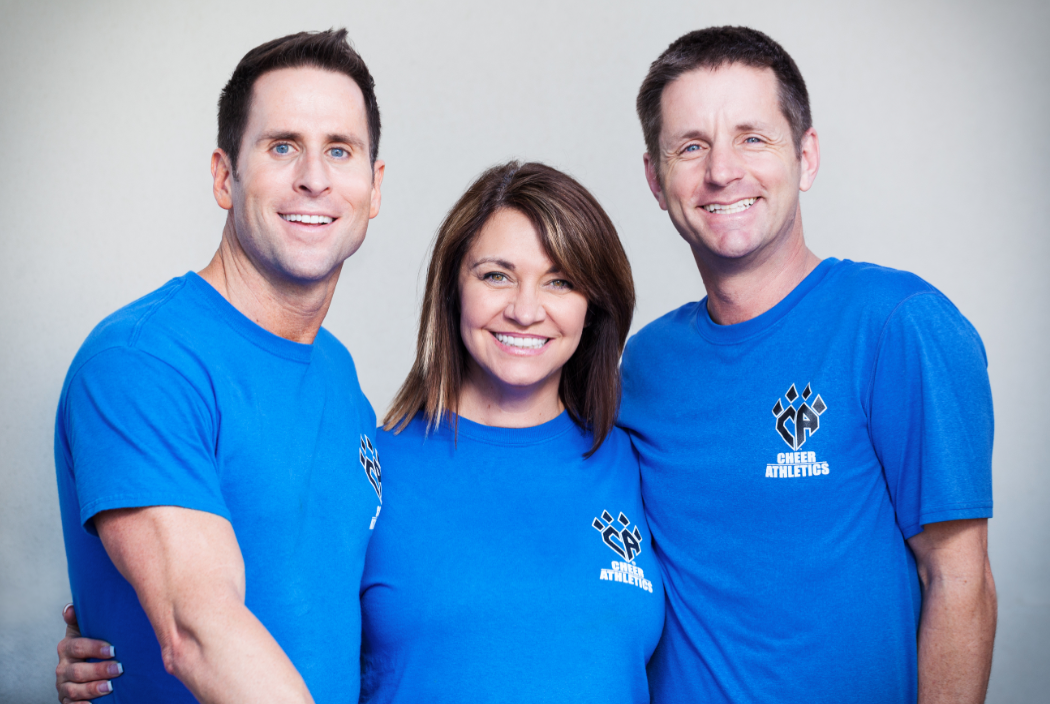 The co-founders of Cheer Athletics eye the wide expanse of blue mat and white-and-blue Panthers in front of them as the speakers thunder the lyrics, “We don’t know how to fail—Small, Medium, or Large, we’re tougher than nails and we’re gonna leave the other cats chasing their tails.” The lyrics are no empty boast: Cheer Athletics is arguably one of the most successful all-star programs in the nation. To date, the program boasts 33 Worlds medals (14 more than the next winningest team) and more Worlds championship titles than any other program—not to mention a long list of resident “cheerlebrities” and illustrious alumni (such as Justin Carrier and Matt Parkey).
Things used to be different. When Jody Melton and Angela Rogers formed Cheer Athletics in North Dallas almost 20 years ago, they were just a couple of coaches with just a few kids practicing on the greenish-brown grass of a city park. Then the kids told their friends, and their friends told their friends—and a powerhouse was in the making. Cheer Athletics took home its first national title in the NCA Open Division in 1995, and the program more than tripled in growth the following season. (Co-owner Brad Habermel joined the fold in 1996.) The “hugs and high-fives” reinforcement and family atmosphere—along with high standards and high ambitions—also helped to attract greater numbers of motivated athletes from the Dallas area and beyond to their gym home in Plano.
“We didn’t have a formal mission statement, but we knew we wanted a team that would be the biggest and the best,” says Rogers of their initial approach. “As we grew, we learned it’s not just about being a great athlete—it’s about being great people. We obviously want to win, but that’s not the ultimate goal. It’s about growing and teaching our athletes to be respectful of themselves, their teammates and other people.”
For years, the partners have toyed with the idea of expanding, and this year, things have fallen into place: Cheer Athletics is opening a second gym, this time in the heart of Austin, TX. (A former CA Wildcat happens to own the 11,750 sq. ft. gym.) Though Austin doesn’t have the same concentration of cheer gyms as other big cities in Texas, Cheer Athletics Austin co-director Gerald Ladner said that he was looking forward to changing the perception of cheer in the Austin area.
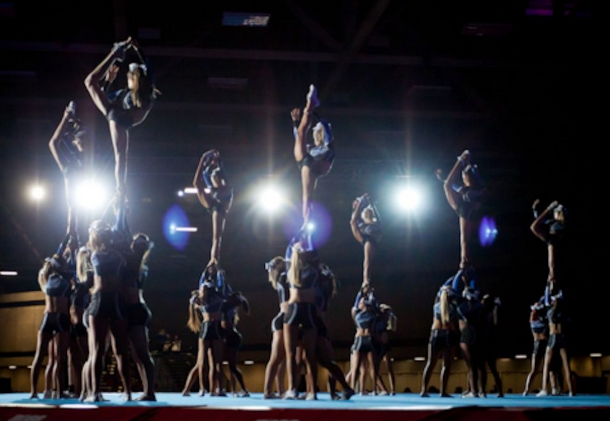 He’ll have plenty of opportunities: so far, the reception has been staggering. CA Austin—”CLAWstin” to those in the know (or at least the Twitterverse)—went from nonexistent to the biggest gym in town overnight. “We’d been assuming we would start off small, but turnout has been beyond our wildest expectations,” says Melton. On the first day signup for classes were offered, they filled up in three hours, and in its first year, the gym will have seven teams competing.
Amid large-scale changes and growth in all-star cheer over the past two decades, Cheer Athletics has remained one of the industry’s most notable programs. A big part of that success can be attributed to the behind-the-scenes balance: Habermel runs the all-star program, Rogers handles most of the financial duties and oversees retail, and Melton manages the technology and communication side.
“I think all three of us are fortunate that we really complement each other; like the [cheerleaders], we each have individual skills, but I feel like one of us is really strong at nearly every aspect of business, so we’ve always had our bases covered,” says Melton. “We work together but we’re not the same. We all have different strengths and interests and I think that’s led to a really healthy partnership.”
Between the two locations, CA now has 35 all-star teams (28 in Plano and 7 in Austin), and their growth and triumphs don’t look to be stopping anytime soon. So how do those cats stay on the top of their game?
“One little piece of advice: don’t rush to make it easier, make yourself better,” reflected Rogers. “A lot of times it’s very easy, especially in a competitive sport, to look to other variables as to why something might not be successful, when really we should look to ourselves and what our teams are doing.” And with all eyes on Cheer Athletics, she certainly won’t be the only one laser-focused on what Cheer Athletics’ teams will accomplish this year.
–Janet Jay
Are too many at-large bids being given to The Cheerleading Worlds? CheerProfessional looks at both sides of the debate.
More teams than ever are making the annual pilgrimage to compete at the Cheerleading Worlds in Orlando, and the packed stands this year were a testament to its soaring popularity. Yet some cheer professionals are questioning whether too many at-large bids are being given out to the event—resulting in scheduling issues, overcrowded venues and a perceived loss of prestige. We spoke with Capital Elite’s Debbie Sprague and New Jersey Spirit Explosion’s Theapia Best to learn more about their opposing perspectives.
Editor’s Note: Please note that the views expressed in this article are expressly those of our sources and not those of CheerProfessional.
Debbie Sprague, Owner, Capital Elite All-Stars
 Debbie’s take: In my opinion, the number of at-large bids given shouldn’t be restricted. I think at-large bids reward the small gym teams and athletes who work hard to get to level 5. Most small gyms like mine aren’t trying to go to Worlds to win or even place top 10 (at least for right now). We just want our athletes to be exposed to the best of the best—it inspires them and gives them goals. I’ve heard that some people think that all the Level 5 teams out there are going, and I know they’re not.
Her program’s Worlds background: My team was Senior Restricted for most of the year, and we gave a Worlds bid one shot in March at One UP. We got an at-large bid, and it was our first time going Senior 5. At Worlds, we were very happy to hit our routine on the floor, and it was an incredible experience for these kids and myself.
[Once we got back], our teams were like rock stars, and it really helped grow the industry here in Springfield. We had our local TV station do a 30-minute segment and there was also newspaper coverage. We got a lot of athletes from outside our area—I was shocked at the number of kids that turned out for tryouts.
On the ripple effect the amount of at-large bids has on the industry: USASF has to have the income from the small gyms to hold such an amazing event. If the small gyms couldn’t get bids, then there wouldn’t be as many paid and partial paid bids for the bigger gyms. That’s the trickle-down effect.
Also, the audience for Worlds grows because of small gyms like ours. My aunts and uncles now want the ESPN airdates—these are people over 60 who would never be interested if I hadn’t taken my team to Worlds! And the list goes on and on. That helps our sport grow; you have to have a viewing audience to be successful.
On how it affects the prestige level: I think [having more bids] has made Worlds even more prestigious. The top teams we all thrive to watch are getting better and better every year, and all of the small gyms help feed the excitement for the big gyms.
I even buy Cheer Extreme, Top Gun and World Cup apparel to use as training incentives in my gym. I have given away T-shirts that they can earn for skills like standing full, double full, etc. It’s amazing how hard kids will work for them.
If Worlds was just the top three teams in the country, I wouldn’t pay to travel and attend. The whole excitement is in trying to get the bid, be on the floor and be in the atmosphere of so many great teams. If our teams weren’t going to Worlds, what would we be working for? There always has to be an angle. Gymnasts work toward the Olympics, and this is our far-reaching goal. It keeps us going.
On perceived schedule/overcrowding issues: I think that Worlds definitely needs more seating or a bigger venue. However, with a packed arena, it’s really nice for those upper-level teams who come out to a screaming crowd. It’s just awesome and makes them feel good for all the work that they do.
On possible solutions: I disagree with co-ed and all-girl teams having to compete against each other for bids, since we don’t compete against each other on the floor. If you want to get the best of the best there, limit the bids to a certain amount of both all-girl and co-ed teams.
The bottom line: Cutting at-large bids means less revenue and we all know USASF needs money. Who cares if there are lower Level 5 teams there as long as kids aren’t getting hurt? Not everyone will be as good as CEA, Top Gun and Cali. We love those teams and that’s who we look up to and learn from.
Again, we didn’t go to win or even place top 10—we went for the experience. My kids loved the chance to walk on that same floor as the best. It inspired them, it changed the way we practice, it changed the way my younger teams work at practice. It changed the way I coached and the way we look at our athletes before placing them on any team! We’ve learned so much.
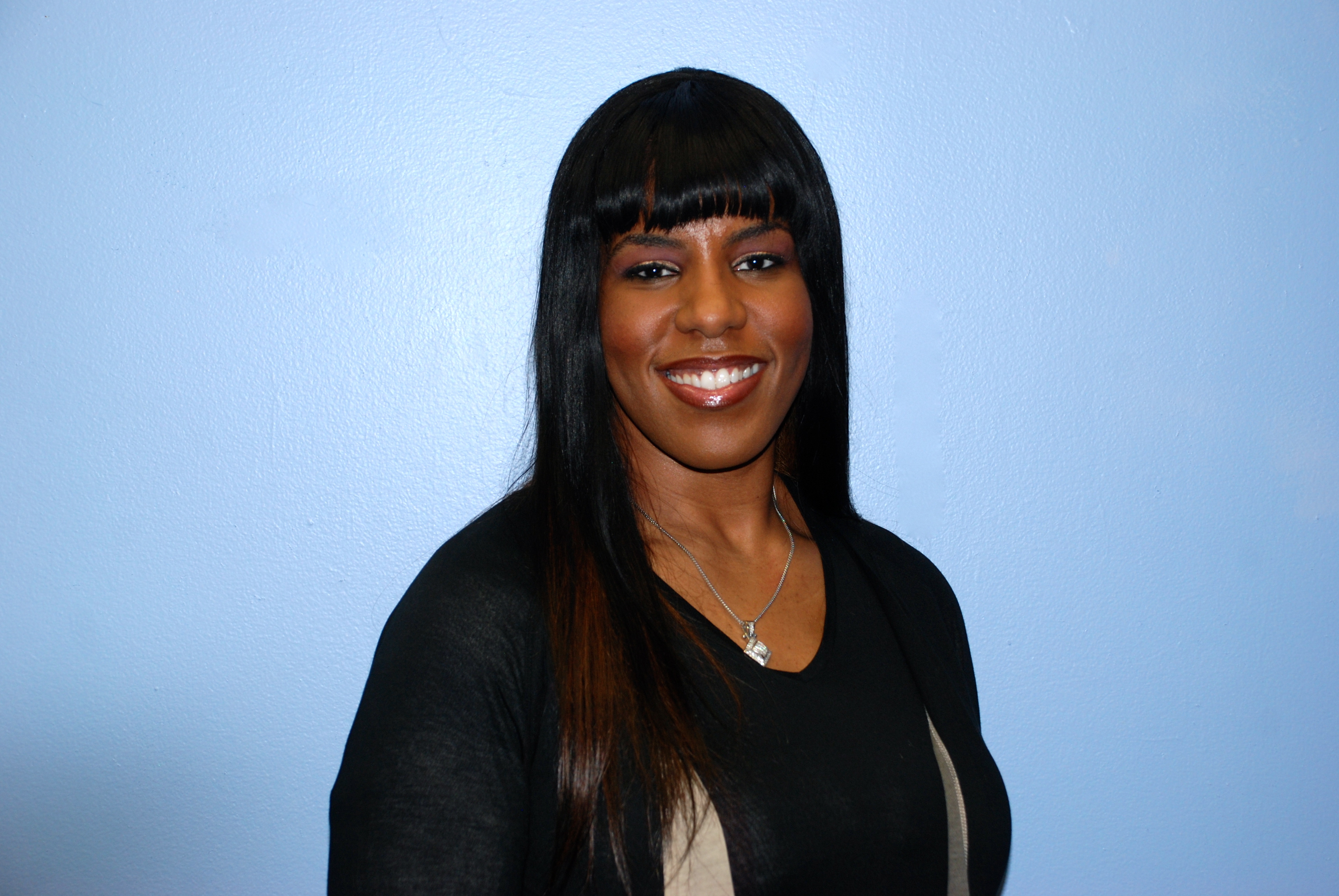 Theapia’s take: As Worlds has evolved and more companies have gotten bids [to give out] in the last three to four years, I think that all level 5 teams just assume they will compete at Worlds at this point. There are so many bids that, by the end of the season, even last place teams are awarded at-large bids. I can’t even think of a Level 5 team in NJ that didn’t get to go to Worlds last year—it seemed like every team in the state got to go. The issue this creates is that it makes attending the event more of a level 5 right than a privilege.
Her program’s Worlds background: We have three Worlds teams, and we’ve attended the event at least seven or eight times. I think we only missed it the first two years, and we’ve gone on full paid bids every year. Last year was the first time we ever sent a team without a paid bid (our international team); this year, all three teams got paid bids.
On the ripple effect the amount of at-large bids has on the industry: Worlds has definitely increased the event size of all competitions that give out bids. Teams travel for World bids, not just for trophies anymore. When you plan your schedule [as a coach or gym owner], you plan it around competitions that are giving Worlds bids; before, it was determined more by what was convenient date-wise. Now when there are events that don’t give bids, many teams don’t even go because there is no opportunity to secure a bid. What’s the point? They’re saving their money to try to secure a Worlds bid.
On perceived schedule/overcrowding issues: The biggest issue this creates is overcrowding at the event. So many of the parents stress out about getting up early to go get in line. I think [USASF] thought that decreasing the number of teams that make it to finals would also decrease seating/capacity issues, but it actually made it worse. All of the kids at Worlds love cheerleading, so if they’re not competing, they’re getting up and going to watch—whereas if they were able to compete, they wouldn’t be able to do that.
On whether Worlds still holds the same prestige: The first few years of the Cheerleading Worlds, the bids were so exclusive that only the best of the best were invited. Now that things are different, I can actually see it both ways. There are some smaller gyms that are not going to Worlds to win, and I can see them getting more customers who are interested in being on Worlds teams. If it became so exclusive that everyone wouldn’t have an opportunity to go, then those gyms wouldn’t exist and our sport wouldn’t be growing.
On the other hand, I do feel it could be a bit more exclusive, so that teams that are Senior Restricted or Senior Level 4 but going Level 5 for just one competition aren’t getting bids.
On possible solutions: I can’t come up with a solution without knowing the true intent of the Worlds competition. Ultimately, it needs to be decided: what is the goal of Worlds? Is it the right of every Level 5 team to be represented?
If so, it needs to not be so difficult to make finals. Teams spend so much money to go, and they only take 10 teams to finals when there are twice that amount of great teams. The divisions go on for so long—do the judges get it right the first day? The division starts at 10 am and goes until 4 pm, and they’re only taking 10 teams to finals. What are the chances those teams are ranked correctly for a division that’s been going on for six hours?
Some [cheer professionals] have proposed the idea of regionalizing the bids, but the regions all have different divisions, so it would be hard to do that. Also, some regions have great teams, and some regions have very weak teams. You wouldn’t get a good representation of what the true best programs are, which is what Worlds is supposed to be.
The bottom line: Is the intent for all Level 5 teams to be represented? If so, then they need increase the number of teams by percentage that make finals. If the intent is to make the teams feel like being invited is a privilege, then they need to decrease the number of at large-bids given so earning a bid becomes a big deal in itself.
Fast Facts: At-Large Bids
jen : June 23, 2013 11:55 pm : In the Industry| Web Exclusives| webexclusive1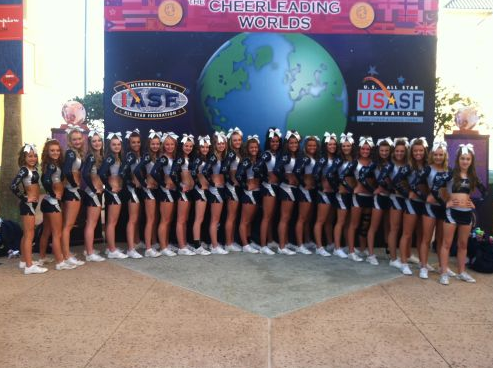 Are too many at-large bids being given to The Cheerleading Worlds? Before you read our “Two Sides” debate on the topic, get the facts and stats surrounding it.
**209 at-large bids were awarded to Worlds in 2013. 86 full paid bids and 12 partially paid bids were also awarded. (Source: TheRoadtoWorlds.com)
**In 2013, each paid and partially paid bid to The Cheerleading Worlds cost sponsoring event producers between $7,000 and $25,000. (Source: USASF.net)
**During the 2012-2013 season, event producers classified as “Tier One” were permitted to award three at-large bids for each fully paid bid at the same national championship. Event producers classified as “Tier Two” were permitted to award one at-large bid for each partially paid bid at the same Worlds qualifying event. (Source: USASF.net)
40 event producers awarded at-large bids to Worlds in 2013. The most were given by NCA All-Star Nationals and Cheersport Nationals (18 apiece). See the breakdown by event producer:
18 at-large bids
NCA All-Star Nationals
Cheersport Nationals
10 at-large bids
UCA International All-Star Championship
Cheer Power Midwest World Bid National Championship
7 at-large bids
Jamfest Super Nationals
One Up Championship
6 at-large bids
ACDA – Reach the Beach All Star Nationals
American Cheerleaders Association Cheer Nationals
Champion Spirit Group Super Nationals
Cheer America Cheer Bowl National Championships
Cheer Tech – Spirit National Championships
COA Midwest National Pure Championship
Coastal Corporation – Battle at the Capital
GLCC Grand Showdown
JAMZ All-Star Nationals
Spirit Fest Nationals
Spirit Sports – Duel in the Desert
USA All-Star Championships
WSA Grand Nationals
21 other event producers awarded at-large bids (with five awarding 5 bids; two awarding 4 bids; five awarding 3 bids; four awarding 2 bids; and five awarding 1 bid.) (Source: TheRoadtoWorlds.com)
Announcing our Young Entrepreneur Competition with Nfinity!
jen : June 17, 2013 2:26 pm : Blogs| Web Exclusives| webexclusive2 Is your brain abuzz with a dynamite business idea? Do you think you’ve got what it takes to open an innovative cheerleading business or gym—and just need the resources to do it? We’ve got the goods to get you there, thanks to Nfinity’s Young Entrepreneur Competition.
We’re partnering with Nfinity to offer this exciting new venture designed to help up-and-coming cheer professionals get started on their professional path. Prizes include a $5000 cash prize from Nfinity, booth space at multiple events, a print ad in an upcoming issue of CheerProfessional and graphic design services for your business logo and ad.
To be considered, contestants must be 25 or under and submit the following business plan components to marketing@nfinity.com by 11:59 p.m. on August 16, 2013:
- projected overhead
- revenue sources
- projected revenue
- start-up costs
- past and/or present marketing strategies
- executive summary on your product or service (250 words)
So what are you waiting for? Go get started on your business plan to be the cheer industry’s next big thing!


