

In addition to all the great content we bring cheer professionals in our quarterly print issue, you’ll find plenty of original exclusive content right here at TheCheerProfessional.com.
Keep checking back for all the latest and greatest news, updates, debates and more!
And Now For a Word About Sponsorship
jen : August 7, 2013 12:21 pm : Down to Business| Web Exclusives When Cheer Zone Cheerleading athletes sport T-shirts around town in Mount Washington, Kentucky, it’s more than just a way to show team pride—it’s also a savvy strategy for keeping the program afloat. The various company logos decorating the back signify the successful T-shirt sponsorship program created by owner Tamara Erdes to help offset the financial burden for the gym’s 60-plus athletes and their families.
“Our sponsorship is set up more to help the parents than it is the gym,” explains Erdes. “We want to provide them every opportunity to cheer.”
It’s a win-win situation all-around, as the sponsors receive valuable exposure throughout the year with the T-shirts being worn at competitions and events. Erdes makes it easy for all types of companies to get involved by offering various price points, such as larger logos for more money or smaller logos for less. Other forms of exposure sweeten the deal: “It’s easy to give the company a shout-out on Facebook or put their name on a banner,” adds Erdes. “The company not only loves the exposure, but they will be more likely to help again in the future.”
Stumped on how to set up your own sponsorship program? Get started with these five strategies:
Get the athletes in on the action. At New York-based Core Athletix, owner Rob Ulrich employs a similar approach in enlisting sponsorship. Like Cheer Zone, businesses receive different perks depending on the level of sponsorship—from being on a T-shirt to being listed on the Core Athletix website. Sponsors range from “little mom-and-pop restaurants and shops to large franchises and corporations,” and athletes are largely responsible for driving the effort. “Athletes ask the businesses to sponsor them and help fund the ever-increasing cost of all-stars,” explains Ulrich, who currently has 200 all-star athletes and 300 additional athletes training in the gym’s two facilities.
Make your expectations clear. How much support is realistic to expect from sponsors? That really depends on your program and its manpower. The amount Erdes and her athletes have raised has been “dependent on the parents and how willing they are to go out and get the sponsorships,” she says. “Some families have raised over $500 with minimal work.” Setting a minimum can also bolster efforts—at Grand Cheer in Katy, TX, co-owner Casey Lane says that they usually ask for donations of at least $250 to help offset the cost of things like uniforms or competition registration fees.
Consider obtaining non-profit status. To secure sponsors, building trust and strong bonds with the community is essential. And when businesses feel that they’re helping a good cause—and that their donation is building a positive image for their brand—they’re even more likely to lend a hand. Case in point: Anaheim, CA-based Maximum Cheerleading, where owner and program director Nelson DeDios says that having non-profit status has helped land more sponsorships since businesses can write off donations. The process of becoming a non-profit can be long and arduous, requiring high amounts of paperwork and taking up to 12 months, but DeDios says it has been highly worth it for his 10,000 sq. ft. operation.
Lane of Grand Cheer, which has about 45 competitive athletes, agrees. Thanks to the program’s non-profit status, Grand Cheer has been able to attract sponsors ranging from Sears Hardware to Terminix to Action Gypsum Supply. “You better have your 501c3—otherwise, the big money will not even look at you,” he states.
Don’t be afraid to get creative. Funds aren’t the only way sponsors can show their support—scholarships, equipment and resources are also fair game. “The best thing you can do is talk to people and see if there is any mutual benefit,” says Lane of Grand Cheer. “Sears is a sponsor of ours, but they don’t give us any money; we get to use their parking lot for car washes when we do them.”
Go all in. When deciding whether to introduce a sponsorship program, consider the time and energy it will take. According to DeDios, you should expect to get out of a sponsorship request what you put into it—and that goes for athletes and parents, too. “Be prepared for the amount of work [this entails] when deciding if this is something you want to pursue,” says DeDios. “When someone really puts forth the work, it’s feasible to be able to pay off your entire season, but collecting that type of donation takes a ton of work.”
The bottom line: Some gyms have students whose families are able to donate large sums or pay for their child’s travel and expenses without a problem, while other gyms need more support—and there’s nothing wrong with asking for it. Like those interviewed for this story, many gym owners have found that local businesses want to help out, enabling local youth to become more physically fit, pursue a passion and learn life skills that will stay with them into adulthood. To get the most bang for your buck: 1) make sure you offer different price points, 2) engage the kids and parents in sponsorship efforts, and 3) explore all avenues when you’re looking for sponsorships.
“We as gym owners have a ton of resources right in front of us,” Ulrich says. “We have a gym full of kids and parents—tap into them and their resources and help them help you.”
Carbs: Sorting Fat from Fiction
jen : July 31, 2013 2:43 am : Mind, Body & Soul| Web Exclusives| webexclusive1 When the Chico Cheer All-Stars travel to UCA Nationals in Orlando, team owner Tiffany Hayes schedules team meals at restaurants such as Planet Hollywood, where her athletes eat chicken sandwiches, pasta and Caesar salads. “While all of the options might not be as nutritionally valuable as what we would choose to make at home, they are much better than having the athletes grab ice cream and churros for dinner while running around Disney World,” says Hayes.
Hayes’ strategy is a familiar one to many coaches: keep out cheap, sugary, processed carbs—essentially everything they sell at event concession stands—and let healthier foods in.
“I encourage carbohydrates in the forms of fruits, vegetables, beans and whole grains,” said Hayes, who is also a registered dietitian. “I joke with the athletes because they all love carbs. I tell them it’s okay to eat carbohydrates, [but] just try to choose the healthy carbohydrates and create a good balance with protein as well.”
How can a coach tell the difference between healthy and unhealthy carbohydrates? Nutritionist Jonny Bowden says that if you can pull it out of the ground and eat it, it’s a food that contains healthy carbs (such as broccoli, spinach or bell peppers). Everything else is suspect. Once you identify healthy carbs for your athletes, here are some other tips to keep in mind:
Set an example. Team meals are teachable moments. “Whenever I eat around my athletes, I eat complete meals with a variety of nutrients,” says Tiana Beich, a Chico All-Stars coach and dietetics student. “I also bring healthy snacks to competitions and practices.”
Optimize your snack bar. Another way athletes absorb proper diet principles is at the gym snack bar. According to Stephanie Beveridge, the executive director of programs at Copperas Cove, TX-based GymKix, the snack bar at her gym sells fresh foods, cheese sticks, organic yogurt squeezers, Orgain protein shakes, Zevia all-natural diet soda, Switch sparkling juice, CLIF bars, Terra chips, Rip Slush, Sensible dried fruit, mixed nuts, all-natural applesauce, Umpqua oatmeal and natural beef jerky.
Head off the parent problem. Parents often bring cupcakes, cake and cookies—the types of processed carbs coaches don’t want kids eating—to the gym for celebrations. Hayes says her gym encourages parents to portion treats in individual servings to take home. “We no longer see large cakes and brownies being brought in before practice,” Hayes says. “Our staff focuses on the birthday song and having an entertaining practice more than the food associated with the event.”
Read the labels. Beveridge encourages athletes to read labels. Since many labels can be confusing, she breaks it down in a way that’s easy to understand—basically, anything with more than five ingredients or anything not easily recognized or pronounced likely isn’t a good food option.
“We try to keep it simple,” says Beveridge. “It’s hard enough to teach stunting and tumbling, but to try to explain why medium chain triglyceride fats are good and hydrogenated oils are bad would literally make their head spin. We tell them to try to shop on the outside aisles of the grocery store because that is where the meat, dairy and fresh foods are located.”
Say “no” to carb-loading. Should athletes alter their diets and “carb-load” (i.e. “stuff themselves with pasta”) before an event? Sports nutritionist Nancy Clark, RD, author of the Sports Nutrition Guidebook, says unless an athlete is going to physically exert himself or herself for more than 90 minutes the next day, the answer is no. Clark encourages athletes to always fuel up and refuel with a healthy carb-based diet that includes pasta, potatoes, rice, fruits and vegetables while taking a rest day before competition. The rest day gives muscles time to store carbs for competition.
 At Mystic All Stars in Apple Valley, CA, signs on the wall proudly proclaim “Family,” and its teams chant “We are Family” at practices and competitions. The close-knit atmosphere at Mystic signifies what is true for so many all-star programs—that gyms can be much more than just places to practice tumbling, twisting and rehearsing for the next big event, but rather places where seeds of meaningful relationships are sown. Strong emotional connections often form between coaches and athletes, thanks to the intense training and shared cheer experiences that bind them together. But are such deep bonds good for business—or risky business?
On the positive end of the spectrum, coaching provides a great opportunity to influence kids positively and instill beneficial traits and habits in them. Mystic All Stars owner Robert Alvey says he and his staff go to great lengths to form special bonds with their athletes. “I have had the pleasure of influencing students of all ages and socio- economic backgrounds,” shares Alvey. “Some of my students come from broken homes and this is the only family they know.”
Coaches can also help students deal with unforeseeable tragedies in their lives. At Cheer Extreme’s Raleigh location, owner Kelly Alison Smith saw this firsthand when an athlete’s mother was recently diagnosed with leukemia. The mother was in desperate need of bone marrow donations, and finding a match was a tall task.
“[The athlete] was devastated and so were we,” says Smith. “Together we devised a plan to set up as many bone marrow drives as possible. We spread the word about how easy it is to donate bone marrow and received hundreds of cheek swap sets.” Within two months, Tonia’s mother got a call that a match had been found. Adds Smith, “The relationship formed between this family and me will be everlasting.”
Seeing the athletes bloom into responsible, productive adults is another heartening byproduct for coaches and gym owners. Very recently, ACE Cheer Company owner Happy Hooper attended the wedding of one of his all-star athletes. “I simply thought, ‘How amazing that I have had the honor to watch her grow into an amazing young person, cheer in college and watch her enter the workforce as a contributing member of a marketing firm,” he says. “Now I’ve seen her achieve yet another outstanding life rite—to marry the person she loves.”
Setting Boundaries
Though relationships shared with athletes are undoubtedly fulfilling, they can also be personally challenging—especially when cheer professionals get too attached. Alvey recalls one male athlete to whom he acted as a “surrogate father,” granting a full cheer scholarship and even allowing him and his mother to reside in his guest home temporarily. When the athlete unexpectedly transferred to another gym, Alvey was devastated. “I have only one flaw and that is I care too much,” says Alvey. “That can sometimes let you down.”
He adds that it’s helpful if you can keep things in perspective and accept that you will be disappointed once in a while: “No matter how hard you try there may be that one kid in a hundred that you just can’t help, and as painful as that might be, you just have to let them go.”
For Alvey, sometimes “letting go” also means recognizing that what’s best for the athlete isn’t always what’s best for the gym. When Brandon Shinnamon, an at-rish athlete whom Alvey had personally recruited and mentored, showed exceptional cheer potential, Alvey decided to refer him to Pacific Coast Magic. There Shinnamon could cheer on its Worlds team “Mysterious,” whereas the highest level offered at Mystic All-Stars was Level 3. “I didn’t want him to miss the opportunities that would be afforded to him [as a Level 5 athlete],” says Alvey.
However, even when you have a tight bond with a particular athlete, it’s crucial to avoid favoring any one person or placing individual needs over the team as a whole. “As a coach or gym owner, you must find that line to make sure you never develop favorites,” warns Hooper. Smith even goes as far as to sometimes overcompensate—she admits that she is usually harder on those she is closer to during practice. “So, from a public eye, it seems the opposite,” she explains.
The bottom line is to not overstep the line. “It’s okay to build relationships, but always make sure you set boundaries and establish them and don’t stray from them. This will help the students to understand when you may have to be stern or help to correct a negative action,” says Alvey.
If gyms have policies stressing that each athlete should get individual feedback and attention, it can help deter coaches from getting too involved with a favorite few. At Cheer Extreme Raleigh, the coaches are tasked with keeping detailed notes on each athlete and how he or she is progressing throughout the season. “We send out individual progress reports to each and every kid in my gym, so they feel the personal touch from the coaching staff,” says Smith.
Ultimately, cheer professionals need to accept the fact that they won’t be able to resolve all of the problems in their athletes’ lives—and that the parents should always be informed about serious issues. “If a situation begins to approach the inappropriate line, you as a coach should seek the parents’ help. If your attempts to reach parents or family members fail, then encourage the athlete to reach out to a professional counselor,” advises Hooper.
When Families Don’t Pay: 5 Things You Can Do
jen : July 24, 2013 1:47 pm : Down to Business| Web Exclusives Cassandra Rice of Henderson, NV-based Cheercats has watched her gym, Gymcats, grow into a thriving business over the last 21 years. In 1992, Gymcats started out with a base of just 150 members. Today their current roster counts 1,500 clients with 220 athletes enrolled in nine cheer programs. Each week Rice’s clients pass through the front door for rigorous 90-minute tumbling, cheer and choreography workouts. For the casual observer, it’s a scene that might seem to come with ease. In truth, Rice works hard to strike a balance between managing a dynamic program and ensuring that families continue to support it.
Ever since the economic downturn of 2008, owners are finding they need to get a little creative when it comes to answering the question: what to do when clients don’t pay? Though on-time membership dues are one of the biggest challenges gym owners face, minimizing late payments is possible—particularly when solutions can prevent members from getting behind in the first place. Here are five tips that just might pay off:
Be proactive by contacting clients immediately. Facing the problem of delinquency head-on creates a devoted customer base, says Angela Havard Patton, owner and coach of Dallas-based Texas Cheer. With 160 kids enrolled in her program, Patton uses email and texting to remind parents and kids when fees are due each month. She also maintains a low monthly tuition rate, noting competition fees are paid separately. But when families encounter a rough patch, Patton offer solutions such as payment plans to help get clients caught up.
Rice has also found that “working with financially troubled clients pays off.” The collection measures at Gymcats are straightforward—she and her staff call unpaid clients on the 18th and 19th of every month to provide a friendly reminder: “We communicate that parents must respond by the 20th and 21st or their child will sit out.”
For clients unable to make full payment, consider volunteer options and work-credit opportunities. At Gymcats, some parents clean the gym in exchange for their children’s participation. Rice believes that some form of barter is necessary and that members must demonstrate a willingness to meet their obligation—she warns against comping or giving scholarships to financially troubled clients. “We’ve found that doesn’t work; especially when they [the client] show up with a new car,” says Rice.
Over the years, Rice has encountered a few families that have either been reluctant to consider work options or unwilling to pay altogether, but those instances have been few and far between. Overall, the approach has helped the gym retain clients long-term. “[In those instances], we lost only one child rather than the whole team,” says Rice.
Patton agrees that most situations are salvageable, estimating that “99 percent of the time parents want to pay.” During her gym’s tenure, only one family has not. “We had to let them go,” she says. “But I make every effort to help parents because if I don’t, it hurts the kids.”
Use a contract. Every year, Rice asks clients to sign a new contract. While this may seem overly cautious, Rice uses it to emphasize costs—not just tuition and membership dues, but estimated travel expenses associated with competitions as well as coaching and choreography billings. “It’s almost like sticker shock,” Rice justifies. “We don’t want any surprises, and we don’t want them to sign up for something they know they can’t afford.”
Contact a collections agency. Denise Olewnik, owner of Pennsylvania-based Keystone Extreme All-Stars, decided to use a collections company two years ago. “Collection works,” Olewnik says, adding, “It’s not personal.” But before this became her go-to method, Olewnik tested a number of strategies to encourage parents to pay.
She used to list delinquent client names on a secure, members-only website. While the practice was successful, it made parents angry. “We stopped because we would rather offer good customer service [than alienate clients],” Olewnik notes.
After that, Olewnik implemented a two-pronged approach. If tuition wasn’t paid during the season, kids weren’t allowed to practice until they were current. If, at the end of the season, they remained delinquent, kids were barred from tryouts for the upcoming year. However, she soon discovered clients would either stop coming or move to another gym.
Prior to sending a client to collections, Olewnik still favors sitting kids out as a means to encourage parents to pay. While using an outside agency to collect billings is effective when necessary, Olewnik warns it only results in receiving a percentage of the actual money owed. Thus, her advice remains: “Don’t let it go that far.”
Alternatively, hire outside help. With a full-time job as a special education teacher, Patton decided she needed help. “I hired an accountant to assist with collections,” Patton says. Her accountant positions herself at the front door during evaluations, and fees are collected before a child can take part. “Sometimes that’s tough,” she admits. “But it works.”
Involve other gyms. While Rice has never had to use a bill collector, she is not afraid to enlist the help of others. “In Nevada, gyms communicate with each other,” she says. “If a client doesn’t pay, their name is shared,” adding that other facilities do take note. Olewnik says there is a similar tactic in place in Pennsylvania but concedes it is voluntary and isn’t always followed.
Despite differing strategies, Patton, Rice and Olewnik agree that ultimately gym owners must work hard to maintain relationships and encourage on-time payments. “We realize people struggle,” Rice says, insisting she feels good about charging and collecting fees. “We know we have a good program and people have to be willing to recognize that and pay for it.”
GTM Sportswear Spotlight: Les Stella
jen : July 22, 2013 6:00 am : In the Industry| Web Exclusives| webexclusive1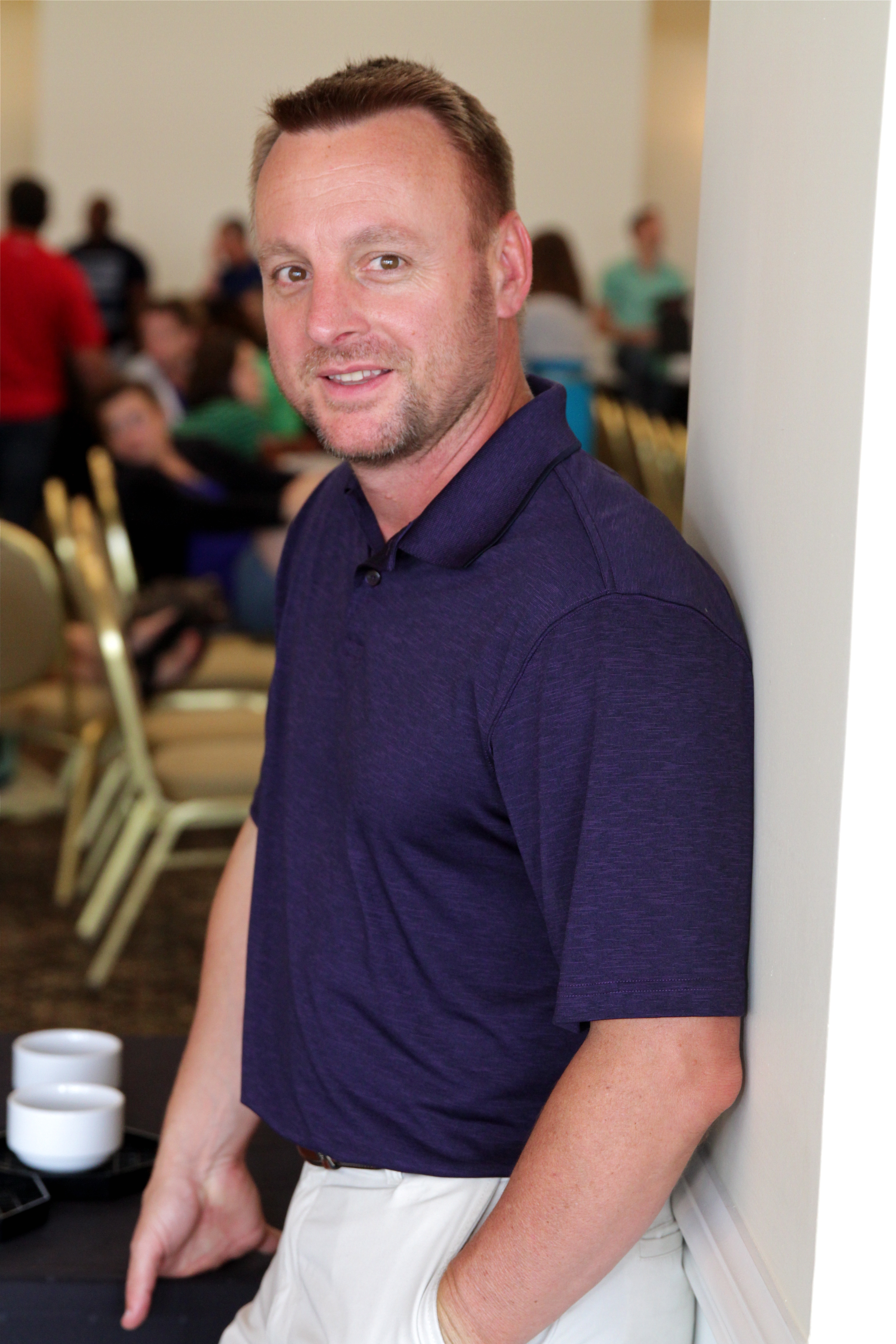 Ahh, the holidays—the perfect time to get away from work and relax, right? Not the case for Les Stella. From Easter to Christmas Eve to Thanksgiving, no day is too sacred for the hundreds of coaches worldwide who call Stella day in and day out to clarify USASF rules. “The only day I haven’t gotten a call is Christmas,” shares Stella. “Calls come in at all hours, since we do this for the world, not just the U.S. It’ll be the middle of the night, and I’ll get a call from Australia. It’s all over the map.”
Most would probably draw the line at giving out their personal cell phone numbers to an entire industry of cheer professionals, but Stella considers it all in a day’s work as USASF’s Executive Director of Rules. He keeps his iPad on him at all times for easy reference and to double-check for accuracy.
“My role is basically the keeper/enforcer of the rules,” says Stella, who is currently developing a database that will make it much easier to reference rules and their interpretations. “A lot of people assume that it’s the world according to Les Stella, but I’m just a part of the committee. However, at the end of the day, there has to be a ‘bottom line’ person—and that’s me.”
So how did Stella amass such an encyclopedic knowledge of all-star cheerleading and its intricacies? Attribute his passion and penchant for cheer to 30 years spent in the sport. Stella first started cheering in 1983 as a De La Salle High School student in New Orleans after his karate troupe was approached by a group of cheerleaders: “I was outside with a few buddies working on our [karate] form, when three attractive females came up to us and said, ‘You have really sharp motions—want to try a stunt?’ I was hooked ever since.”
After high school, Stella went on to cheer for three different colleges and become a UCA camp instructor. From there, his cheer career included coaching positions at Germantown High School and The Ultimate Cheer School (TUCS), as well as at a large gymnastics gym in Georgia. While taking his teams to competition, Stella was keenly aware of the fact that routines had to be altered constantly to fit the rules for each different event. This observation caused a light bulb moment for him in 2003: what if there was a governing body that could help regulate and create more consistency?
Stella quickly set up a meeting, asking for two hours of Bill Seely’s time and two hours of Jeff Webb’s time. “All the years I’d worked for UCA, I’d never asked for a favor, so I called one in,” he remembers. “[They said], ‘The good news is: you have great ideas and we like everything you have to say. The bad news is we just started a governing body. The ham sandwich is that we want to make an offer to you to move to Memphis and help start the USASF.’”
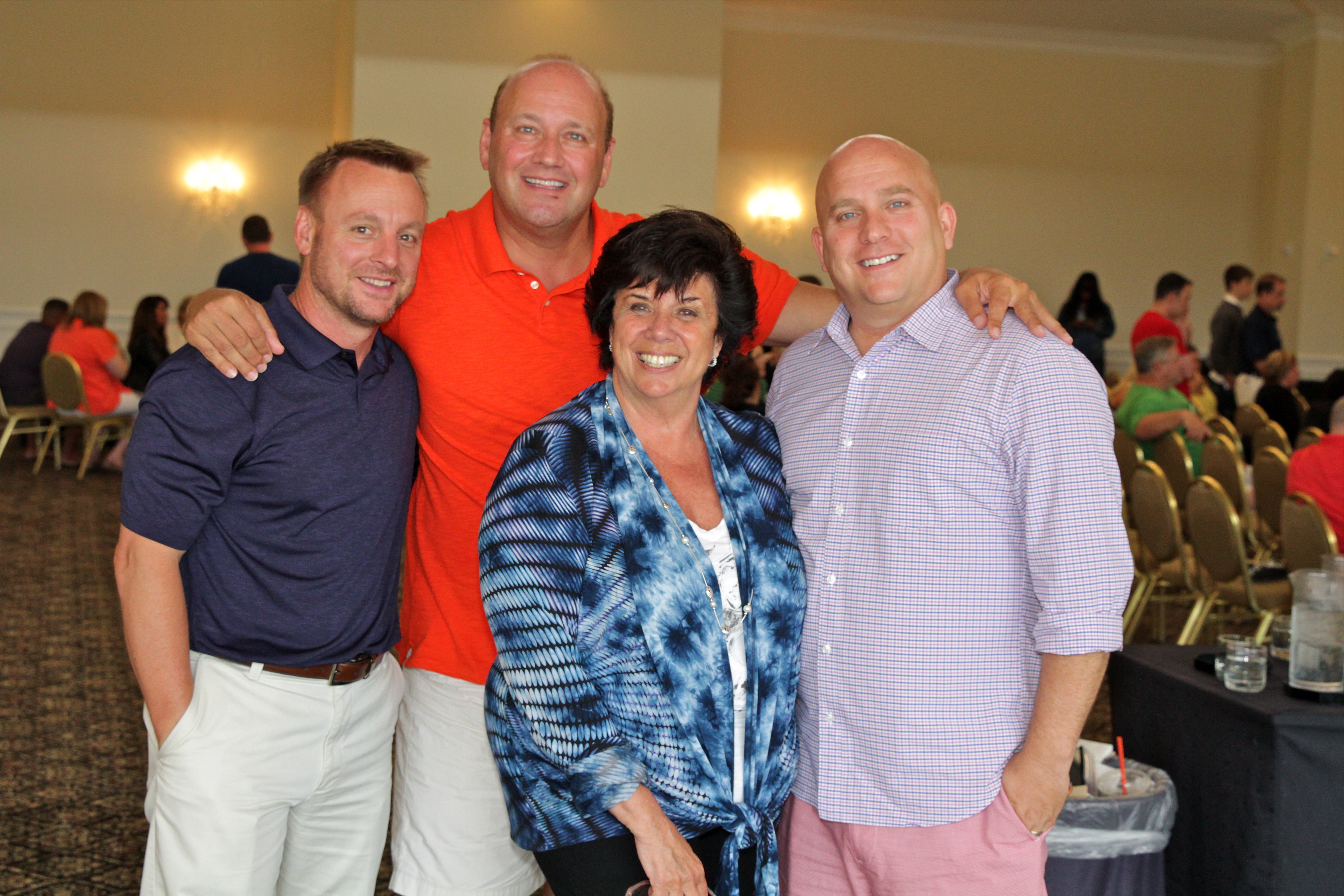
Les Stella with Morton Bergue, Elaine Pascale and Dan Kessler at NACCC
In his decade with the USASF, Stella has become one of its most recognizable faces and figures. He is known as the “Rules Guy,” running the committee and traveling to regional meetings to train safety judges on interpreting the rules. Though his job can often be tension-filled and stressful, Stella says he understands when coaches hotly debate a penalty. “When I was a coach, I needed someone to turn to for answers, so I can have empathy for coaches in those situations,” says Stella. “I don’t take it personally—they’re just defending their business, their kids, the way they pay their mortgage.”
That isn’t the only way Stella supports other cheer professionals. He soon plans to revive the “Les Stella Coaches’ Challenge,” a motivational Facebook group dedicated to fitness, and “Good for Cheer,” an initiative Stella is spearheading to create more media awareness around the positive side of cheerleading. “I get so sick and tired of mainstream media only talking about cheerleading when something bad happens,” shares Stella. “I’m collecting stories that provide a counterpoint to those negative ones.”
It’s all part of a deep passion for cheer that drives Stella every single day. “I’ve seen what cheer does for kids—thousands and thousands who come out of their shells and develop skills that follow them for life,” he says. “It’s such a cliché, but that’s what I truly believe.”


