

In addition to all the great content we bring cheer professionals in our quarterly print issue, you’ll find plenty of original exclusive content right here at TheCheerProfessional.com.
Keep checking back for all the latest and greatest news, updates, debates and more!
Showcase Spotlight: JuST Cheer!
jen : September 25, 2013 1:20 pm : Down to Business| Web Exclusives| webexclusive1 As family and friends filed into the bleachers, the young cheerleaders of Fairfield, NJ-based JuST Cheer All Stars waited patiently for their turn on the rented spring floor in the clean space of the local high school gymnasium. Outside the gym, the chilly December air permeated the hallway, where a handful of vendors had set up tables and were ready to sell everything from ribbons and JuST Cheer logo tees to pizza, sodas and snacks. The schedule for the day’s event was tight: “First Tinys, then Minis and levels building up to the fives,” says Karen Potucek, co-owner and president of JuST Cheer All Stars, noting that, for many of the athletes, it was their first time performing in front of a crowd.
Despite the jittery cheerleaders sitting cross-legged around the perimeter, this wasn’t a competition—it was simply JuST Cheer’s pre-season showcase. “We’d been doing showcases in one form or another for the past few years,” says Sean Sova, coach and co-owner. “But this was the first time we did one for the whole program in one day, and it was a great success.”
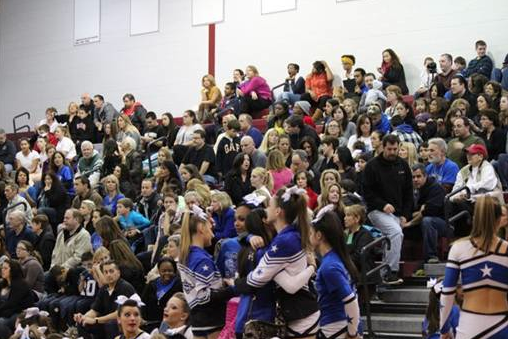 Showcases have all the elements of competition: a cheering crowd, nervous athletes and the desire to do well. It’s also a tool many gyms employ for marketing their facility and their athletes—not just locally, but also online. (For instance, Charlotte All-Stars showcase videos can be viewed on YouTube, and Woodlands Elite streams theirs on CheerLIVE.net.) According to Sova, the benefits are far-reaching, from engaging current athletes to recruiting new talent. “Our cheerleaders invite friends, some from other all-star programs or recreational cheer teams,” says Sova, adding that the showcase helps pique curiosity among these potential clients.
But putting on a showcase is a “considerable” effort, says Potucek. Because their gym doesn’t have bleachers, she and Sova had to make arrangements to use the high school gymnasium. It’s also expensive: JuST Cheer’s outlay included rental of a spring floor for $3,000 and the space for $2,000. To recoup costs, they charged admission of five dollars per head and sold food and gear on-site.
“We broke even,” Potucek says, but notes they could have saved money had they used the spring floor in their gym. Other money- saving initiatives require creativity and planning. For instance, Potucek says they’ve forged unique partnerships in the past, such as asking the high school hockey team for help. “JuST Cheer donated $300 to the team for their assistance,” she says. “That can help make a showcase relatively cheap.”
The use of social media also keeps costs down. “Social media has increased in our gym over the past few years,” says Sova, “and it has been invaluable.” For last year’s showcase, she and Sova sent out “Come See Us” information using Twitter and Facebook and asked parents and kids to do the same. Post-showcase, videos of the day’s event were viewable on YouTube and also distributed via email. “This is extremely helpful in improving routines and preparing [athletes] for upcoming practices,” says Sova. He adds that having the ability to watch showcase video afterward has been “the single most important tool we have to help correct poor technique.”
Showcasing is often also beneficial for family and friends. For many, it is the first time they can see their children perform because travel time and distance for competition can be a challenge for some parents. It also sets the kids up for competing: they experience the feeling of performing and become more comfortable in front of a crowd. “There are accolades, too, which builds confidence,” 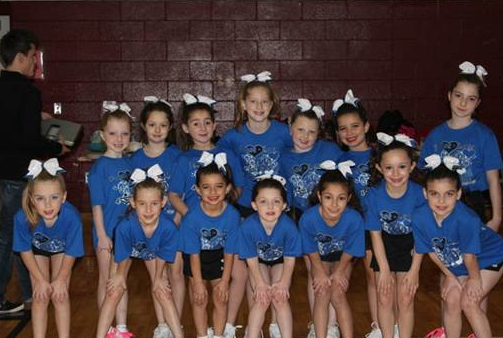 says Potucek. “I’ve had parents tell me there is no [more] ‘talking them off a cliff’ when it’s time to compete.”
The event is also open to the public. “We do get people from other gyms,” says Potucek. “They want to see what we’re doing or see their friends.” Yet Potucek and Sova agree this is not a negative: it serves to generate interest in JuST Cheer’s program. “We do get a couple of kids out of it,” adds Potucek, whether it is recreational program children looking to step it up as an all-star or cheerleaders from other gyms that like what they see. “They think it was fun and want to join,” he adds
Yet the main motivator for JuST Cheer is to “get the kids on the floor and get them experience,” says Potucek. Sova agrees, adding, “especially those athletes new to all-star cheerleading.”
–Cathleen Calkins
Candid Coach: Samiha Alexander of Georgia Heat
jen : September 23, 2013 2:19 am : In the Industry| Web Exclusives Ever since the Georgia Heat opened its doors six years ago, Samiha Alexander has been at its nucleus—coaching winning teams in almost every level. As one of this year’s USASF Coach of the Year nominees, she knows the importance of coaching safely in tandem with grooming top-notch teams. We asked Samiha to share her hard-earned insights on safety and success:
How has your USASF Coach of the Year nomination impacted your career?
Alexander: I think [I was nominated because] I love my kids and I set high expectations for them. I believe that they’re athletes, and I train them that way. I was very humbled by the experience and the fact that someone thought enough of me to nominate me. Now I want to make those people that believed in me proud and continue to build our gym and build those athletes to be the very best they can be.
Have you ever experienced an athlete injury or safety issue that taught you the importance of safety?
Alexander: Absolutely. Last year we had some concussions, so we had to retrain our athletes and rethink what we needed to do to keep that from happening. We worked with the bases to teach them how to cradle and catch correctly, and the flyers on various ways to fall more safely. It was important that they learn to fall tightly with their arms by their sides—the natural reaction is to put your arms out to brace the fall, but that can make a base take an elbow to the temple.
We also had a girl break her femur, and her doctor said that there was a previous injury in her case. [In light of that], we try to teach our kids that if there’s an injury, we need to know about it. We also try to explain that after injury, athletes won’t be able to walk back into the gym and be where they were three months ago. We remind them that they will get back to where they were, but we have to do it slowly.
I also talk to my girls about getting too comfortable in their skills, or not always being as focused as they need to be. Something really careless can happen and it causes an issue. When you lose focus, that’s when an injury occurs. This was not happening with new skills, but instead skills they’d already done and mastered. The coaching staff had to come together and discuss we needed to do to help the kids stay safe.
What are some of the biggest safety issues in the industry, and do you have any suggestions for solutions?
Alexander: One of the worst is athletes doing skills they’re not ready for. I think athletes need to master certain things before they’re allowed to do them, especially in competition. I believe that the industry is moving in the right direction as far as getting coaches and athletes to go through training. I also think coaches have to be honest with themselves, as well as with the athletes and their parents. We need to tell them that we’re going to put them where it’s safe and where they will become stronger athletes.
Tell us three things you wish other coaches would do more.
Alexander: I would like to see more coaches teach their kids the importance of sportsmanship. It bothers me when it comes down to the last two [teams], and when second place is called, first place is jumping up and down and screaming. I think it’s rude. Another thing I would like to see coaches stop doing is down-talking other teams. Coaches are role models for the kids they coach and shouldn’t demean other professionals. Also, coaches should teach a clean routine. Usually a clean routine means the kids can do the skills safely, not just to get points.
–Mandi Hefflinger
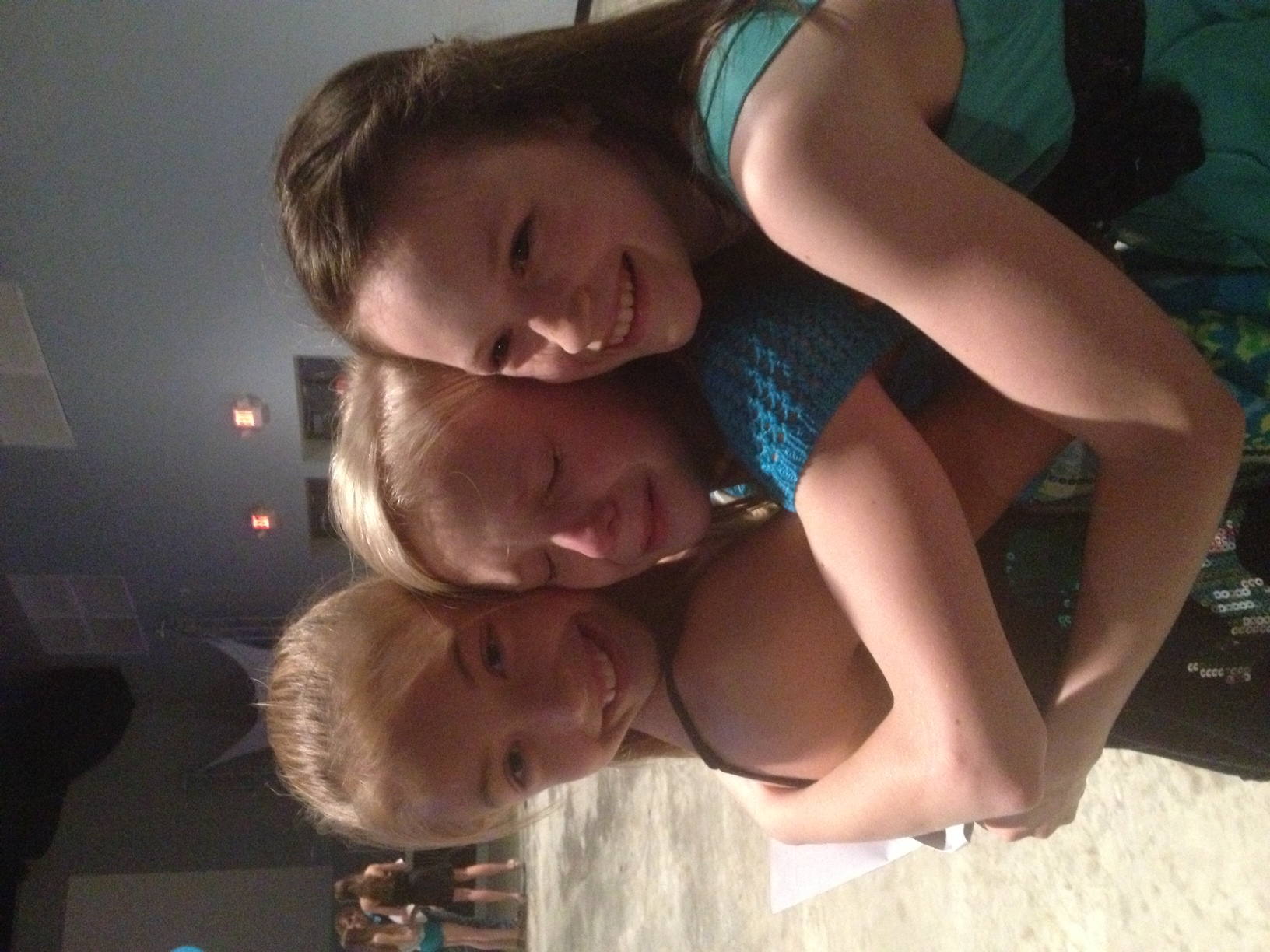 At Kernersville, NC-based Cheer Extreme Allstars, team placements are no longer simply announced online, but have now become a festive affair with much more fanfare. This spring, owner Courtney Smith-Pope introduced the “Teal Reveal,” a gala event held at a local church. Smith-Pope spent the morning with her team moms stuffing personalized invites for each athlete, and when she yelled “Go!” later that night, the athletes eagerly ran to each decorated table to see which team held their fate. In retrospect, Smith-Pope said she loved seeing the athletes react to their placements—hearing happy screams, seeing them hug their moms, being able to comfort a select few who were disappointed—but the event was also helpful on a practical level.
“We get to say thank you to all the parents personally. They come in, and they’re all dressed up, and we show a video with the highlights of tryouts that gets everybody all excited for the season,” shares Smith-Pope.
Of course, not everyone is always excited by the news at the start of a new season—many gym owners must deal with parental pressure to place their child on a higher-level team. To keep team reveals from being stressful and/or tense, it’s important to set the tone for a positive experience by establishing clear expectations, outlining long-term goals and, of course, communicating with athletes and parents.
Five top tips for a successful team reveal:
1. Have standards—and stick to them. While parents may want to see their child succeed right away, the proper placement is one that will be both safe and challenging for the athlete. The best way to avoid unpleasant surprises on placement day is to be specific about what you’re looking for from athletes at each level and make sure everyone on staff shares your vision. Jessica Bugg Smith, owner of Nicholasville, KY-based Kentucky Reign, advises, “Establish policies and procedures for how you want to run your program, and be consistent across the board. If you say that you need a certain skill set for a certain team, you have to stick to your guns.”
2. Follow your own rules. Gym owners and coaches often face pressure to give certain athletes special treatment, but when you do a favor for one person, word gets around. Other parents will expect you to bend the rules for their children, too. Cheer Extreme Allstars is in its 20th year, and Smith-Pope has learned a few things along the way. “The kid you put on the team because you’re close to them…it never works out in the long run. It gives them a more inflated sense of value than they really actually have. They take advantage of the situation, and it’s worse when other parents find out that something like that happened and you moved a kid or did something after the fact. You have to be on the up and up.”
Letting favors affect team placement also does a disservice to the whole team. Bugg Smith offers this example: “You take a child who’s working on a back handspring, right at a Level 2. You put her on a Level 4 team, and what ends up happening is one of two things: either the kid with the Level 2 skills doesn’t continue to develop her own skills, because in practice, you don’t have time for her—or on the flipside, you focus so much on trying to get that kid up to par that your Level 4’s aren’t getting what they need to get to Level 5.”
3. Build relationships. Create an environment where parents know you want what’s best for their child, so they will trust you and respect your decisions. Bugg Smith communicates with parents as often as possible about their child’s progress, and she makes it crystal clear that coaches and parents are working toward the same goal. “All we all want is success for the athlete,” shares Bugg Smith. “Our coaches’ number one priority is to give their kid the best chance of success. That doesn’t necessarily mean winning every championship, but that the child is progressing and growing.”
4. Create a shared vision. Proper placement benefits the individual athlete, their current team and every team they join in the future. Bugg Smith advises owners of smaller gyms to think long-term: “It’s very important that we’re focusing on the process of developing the athlete versus just where they are this year.”
If an athlete or parent is disappointed in a placement decision, they may threaten to leave and go to another gym, but according to Smith-Pope, that’s a mistake. “The biggest skill you can have in our sport is competition experience. Sometimes they think, ‘I’ll work on those skills and then come back to Cheer Extreme,’ but in reality, if you want to make the team, you want to be on the floor with us, years prior to that.”
5. Consider how you share the news. A successful team reveal relies on finding the right fit for your gym. At Kentucky Reign, team placement is a relatively casual experience. Bugg Smith explains, “We just need you to come in, see what you can do. Generally people know where they’re going. It’s not a big surprise.”
At Cheer Extreme Allstars’ Teal Reveal, the event acted not only as a fun way to kick off a new season, but also a valuable opportunity for parents to ask questions. In the past, Smith-Pope would field texts and phone calls from unhappy parents at all hours of the night, but she enacted a new policy at the Teal Reveal: “Any question they have has to be asked in person.” She found that parents were less confrontational this way because they wanted to avoid making a scene. Coordinating an event like the Teal Reveal is certainly more work than posting a list, but according to Smith-Pope, “We had the best year ever last year, and this really set the tone [for the new season] right from the start.”
–Lisa Beebe
Judges Speak Out: Survey Results
jen : September 16, 2013 3:00 am : In the Industry| Web Exclusives| webexclusive1 In July, the findings of the United States Cheer Officials Survey were released. Get a snapshot of the judges’ responses in this recap, or click here to download a PDF of the entire survey.

Just the Facts
- The current number of judges estimated to be working in the all-star cheer industry is 250; 106 participated in this survey.
- 36% of respondents have judged 6-10 years, while 29% of respondents have judged 11-15 years.
- The companies most strongly represented in the survey include Varsity All-Star (70% of respondents), Jam Brands (62%) and Spirit Sports (45%).
- Not all respondents answered every question, and participants were guaranteed anonymity.
Conditions & Compensation for Judges
Hours worked: 73% of respondents work a 8- to 12-hour day, while 26% responded that they work more than 12 hours at an event.
Lunch breaks: The majority of respondents (55%) said they receive between 20-40 minutes for a lunch break, while 29% of respondents said they receive less than 20 minutes.
Compensation: 54% of respondents receive between $100-$199 for a one-day competition, and 42% said they receive $300-$399 for a two-day competition.
Reimbursement: When asked about reimbursement, 72% answered negatively about travel time; 51% answered negatively about baggage fees; and 44% answered negatively about dining expenses.
Number of Judges: Only 6% of respondents felt that competition companies hire the appropriate number of judges for the amount of teams competing.
Qualifications/Training
45% of respondents felt they had been properly trained on the scoresheet, while 38% felt they had been properly trained on the skills rubric.
26% of respondents felt that competition companies select judges based on their level of expertise for high-stakes divisions.
Only 11% of respondents “strongly agreed” that competition companies select judges based on strength of knowledge.
Survey Recommendations Based On Input
- Standardize judge selection across brands
- Implement a judge appraisal process
- Develop more meaningful communication of rule changes/clarifications
- Develop a judging organization that is separate and distinct from competition brands
- Provide for a Head Official at each event
- Implement a consistent travel reimbursement policy
- Develop an online voucher system
- Develop a travel arrangement site that gives judges’ control over flight selection
- Develop a pay negotiation process
- Provide Judges’ Break rooms at all competitions
- Implement a judging hour maximum
- Close registration the week before scheduled competitions
- Provide a pay amount consistent with industry standard
Sound Bytes
“I hate the rubrics. I feel that it has taken away all creativity and that the sport of cheerleading has become boring. I hope they will give this sport the freedom it deserves and give more opinion back to the judges—otherwise, they should just calculate what teams are doing by computer and not even have judges.”
“I feel that there should be a ‘rule’ put in place that any competitions with over eight hours of judging involved should use a two-panel, division-rotating panel.”
“I believe that judges need to be compensated more and have more of a say in travel times, etc. Respect for time and appropriate compensation both need to improve in order to increase the quality of judging panels.”
“There definitely needs to be a more universal training and qualification for judging. [I’m] tired of sitting next to judges who are judging just because they know so-and-so.”
Validity
We asked Cheer Industry Insights expert Jeff Watkins for his thoughts on the survey’s validity:
“This appears to be a sound study and well-reported. Any time a study can get half of their population to participate, it is definitely representative [of the collective opinion]. It is good for the judges to be able to make an anonymous statement without consequence. The only issue I see is that it was conducted, written, and edited by cheer judges—I believe the study would carry a lot more weight if done by a non-judge.”
Give to Live: The Benefits of Volunteering
jen : September 9, 2013 11:47 am : Mind, Body & Soul| Web Exclusives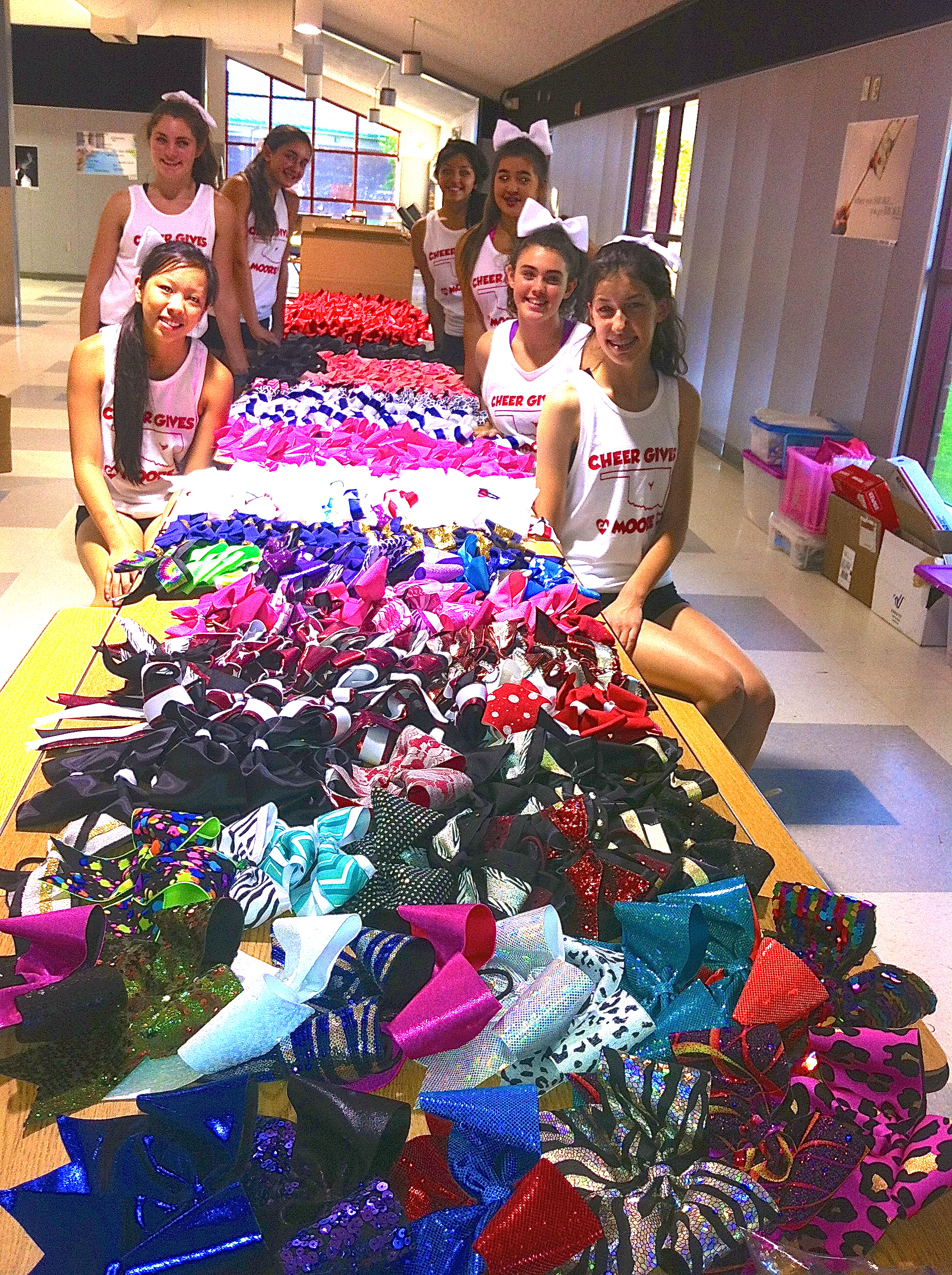 Six years ago, Jon and Tammy Estes, co-owners of Miss Tammy’s All-Star Company in Cleburne, Texas, sought a way to make a difference in their community. As satisfying as it was for them to work with local youth in the gym environment, the couple wanted to do more. When a local boy developed neuroblastoma (the most common form of cancer in children), they knew they’d found their cause.
Research has shown that volunteering can provide a number of physical and emotional benefits. Estes and his wife discovered this firsthand when they designed T-shirts bearing a “Children’s Cancer Arm Bands” logo to help fight pediatric cancer.
One dollar from the sale of each shirt was designated toward pediatric cancer research, and so far, their efforts have garnered $3,000 to date. Their excitement and passion for the cause spread to their athletes, who enthusiastically got involved in the campaign.
“The kids love the [giving aspect] and their parents are so proud of them,” says Estes. “This has such a positive effect on them. They are not just concerned with winning on the mat, but winning in life.”
Amazing! Efforts
 While some individual gyms are promoting charitable causes, Spirit Celebration owner Billy Smith realized that the cheer community as a whole could be doing much more. He decided the industry needed a platform on which “cheer celebrities could enhance cheer charities.” To achieve that goal, he created “Amazing! Champions,” high-profile competitions that bring awareness to the importance of philanthropy and promote greater participation.
Smith explains that each team selects a charity or cause and then competes for prize money, which is awarded to those charities. “We interview every kid about the charity before the competition, and some gyms submit videos of what they are doing with these charities. Many of them have personal stories to tell,” he says. “It’s very emotional. We are trying to make winning about someone else. The whole concept stems from passion.”
This year “Amazing Champions” expects to give away $10,000. “In five years, I’d like to give away $100,000,” states Smith.
Going Global
 Julie Bolton of Orlando, Florida, was aiming for an even wider audience when she launched Cheer for a Cause in 2010. Designed to bring together all-star gyms and athletic facilities from around the world, the organization fosters volunteerism. “Our core goal is to unify giving from the heart within the community,” she says. “We are developing leaders in giving back.”
What initially started as a Facebook group/social media effort has morphed into people taking initiative all over the world. Teams now spearhead their own charity efforts and can partner with Bolton to use the Cheer for a Cause logo to get more awareness and support. More than 20 different charities have benefited so far, including Habitat for Humanity projects, breast cancer awareness campaigns, epilepsy fundraisers and specific events for individuals touched by illness or tragedy. “We have teams in Europe, ambassadors in France, the United Kingdom, Colombia, Canada and New Zealand,” Bolton notes. “It makes the kids feel we are all connected.”
18-year old Kayley Cabalero, an ambassador for Cheer for a Cause in Carl Junction, Missouri, took the lead on relief efforts for victims of the 2011 tornado in Joplin. With a built-in philosophy of giving—her family has routinely shared its good fortune with others at Christmas—Kayley felt compelled to help after witnessing the destruction so close to her hometown. To date, she has amassed 100 pounds of clothing as well as many gift cards. “I wanted to do something geared toward teens, so I collected sports supplies, cheer bows, soccer equipment,” she says. “Every time I receive a box of donations, it’s like Christmas. I get so excited being able to help others, especially after seeing the devastation firsthand.”
Not only are these cheerleaders offering much-needed assistance to those with critical medical, financial or social needs, they are also nurturing compassion for others and dedication to service. Kayley noted, “We’re more than just individual members working on separate projects. When one of us needs the other, we act as a support system. We really are one big family.”
Stay tuned to our blog on Thursday for a rundown of all the ways volunteering can benefit your body!
-Phyllis Hanlon


