

In addition to all the great content we bring cheer professionals in our quarterly print issue, you’ll find plenty of original exclusive content right here at TheCheerProfessional.com.
Keep checking back for all the latest and greatest news, updates, debates and more!
In the cheer business, “gym hopping” is considered a four-letter word. Whether it’s an athlete that wants to trade up to a larger gym or a parent who wants her child to be a featured flyer, families make the switch for a variety of reasons—but often find that the grass isn’t any greener on the other side. And for gym owners, it can result in loss of income, bad blood with clients and issues preparing for competition.
So how can gym owners recognize the signs early on and improve retention? Get some ideas from gym owners at Rockstar Cheer, Myrtle Beach All-Stars and Power All Stars.
Reason #1: Position
Sometimes athletes are unhappy with their position on a team, especially if they feel they’ve been “demoted” from flyer to base, for example. Frequently, it’s the parent, not the child, who feels slighted. Carlos Realpe, head coach at Naples, FL-based Rockstar Cheer explains: “The parents who drill it in their kid’s head that flying is the only position available for them, those [kids] are the ones that we see fail in this sport.”
Solution: Speak to your clients and try to change their mindset. “It’s not about your own performance—it’s about the team’s performance and how you contribute to it,” Realpe says. Debunk the idea that flyers are the stars of cheerleading, and stress the value of all the positions, whether bases, tumblers or front spots. Unlike other sports, there are no alternates; every athlete is invaluable. They must love the sport itself, not their position in it.
Reason #2: Placement
Similarly, athletes may be disappointed when they think they’re on a team that’s beneath their abilities, but again, it’s usually because of the parents’ persuasion. “Very rarely do you have an athlete go, ‘I want to leave because I feel I’m higher than this level,’” Realpe says. “And [when that does happen], usually those are the athletes that really are higher level.”
Solution: Realpe’s philosophy is “program first, team second, individual last,” and he works to maintain that philosophy. Know what your program can offer, and stay within it. “From a safety standpoint, putting kids in teams [where] they don’t belong automatically increases your injury rate,” he says.
If the athlete is truly advanced and you don’t offer a team that suits their skills, it’s best to let them go. They’re bettering themselves, and it’s better for your program to maintain its structure.
Reason #3: Other Gyms
Cindy Cumbo’s all-star program is based in the high-tourist area of Myrtle Beach, South Carolina. Entrepreneurs make assumptions based on the lucrative activity during tourist season and don’t consider the reality of the rest of the year. As a result, shiny new gyms with assumed reputations pop up frequently, attracting Cumbo’s athletes—but many can’t maintain their business. At four years old, Cumbo’s Myrtle Beach All-Stars is the oldest program in the area.
Solution: Cumbo says simply, “You have to find your niche.” Keep your focus, whether it’s all-star prep, Worlds teams or tumbling classes. Speak honestly with clients about your program and what you provide, and they can choose what’s best for them. “Everybody has a cheer gym DNA,” she says, “and my gym DNA may not fit with yours.”
Whether established or new, it’s important not to make promises you can’t keep. “When you’re giving people unrealistic expectations, that’s when you have loyalty issues,” adds Cumbo.
Reason #4: Unhappy Parents
As mentioned, it’s often the parents, not the child, who want to switch gyms, because they feel their child deserves more. While children are resilient and bounce back quickly from setbacks, tenacious parents make emotionally-based decisions about their cheer future.
Tori Ballard, assistant head coach of Bowling Green, KY-based Power All-Stars, lost two athletes on their parents’ insistence. The fathers were close friends, so though the idea to leave initiated with one, the other followed suit. He was disappointed that his daughter didn’t have a full yet, and no explanation or comforting from Ballard would pacify him. “I think they were made promises from another program that their daughter would fly and have a full,” Ballard says. “And now she’s on a lower-level team than she was with us, and they both front spot.”
The father’s irritation rubbed off on the daughter, who grew impatient with her own deficiency. When a presumed rival teammate achieved the skill before she did, she stormed out.
Solution: In cases like this, it’s best to let them go. “I feel gym-hopping is a petty thing to do, and people who can do that shouldn’t be with us,” Ballard says. “We’re very family-oriented, and those people are like poison.”
No matter what reason for jumping ship, all three coaches say cheer parents feel entitled to more. Ballard suspects that parents no longer teach the values she grew up with: commitment, loyalty, stick-to-itiveness. The problematic gym-hoppers go from gym to gym until they get what they want, sometimes bringing your program down in the process. When in doubt, it’s often better to let them go.
As Realpe says, “If you’re going to contribute to me disliking the sport I’ve been successful at my whole life, then I probably don’t want you here.”
Money, Money, Money
Missed or delayed payments can be hints that something is wrong and signal a potential gym-hopper. Be sure to have a clear contract, dictating specifically what’s owed, how much and when. That way, if delayed payments lead to a collection agency or to small claims court, your gym is protected. “If you have a clear written contract, you’ll be set for getting your money one way or another,” says Realpe.
Consider including a quit fee, and be firm about consequences: no payment equals no class. “If someone is financially invested, then they’re less likely to leave,” Cumbo says.
And gym owners can also have each others’ back when it comes to preventing this type of behavior. For instance, Realpe has an agreement with other local gyms for when new athletes come calling. “If they leave other gyms with a balance, I don’t take them,” he says.
–Renee Camus
Read this article and the rest of our magazine on Issuu here!
Owner’s Manual: Beth Mundell of Fyrestorm Cheer
jen : February 8, 2016 1:10 pm : Down to Business| Web Exclusives When it comes to team moms, Beth Mundell has her system down pat. Mundell’s team rep program at Fyrestorm Cheer has been in place since the gym first opened four years ago. Currently, the gym has 10 team reps spread across six all-star teams and two rec teams—depending on the age, size, and needs of each team. And it works: “I believe very strongly in the program,” says Mundell. See how she does it in our in-depth Owner’s Manual!
Vital Stats:
Name: Beth Mundell, Owner and Coach
Gym: Arizona All-Stars Fyrestorm
Locations: Tempe, AZ and Maricopa, AZ
Founded: 2012
Size: 75 athletes on six teams
Gym size: 2,200 square feet
The Dish: I think team reps are one of the most valuable positions you can have [at an all-star gym]; it’s an additional layer as far as point of contact. By calling them “team reps” instead of “team moms,” we allow it to be an older sibling who may have custody or a father or grandparent—it welcomes everyone, as opposed to just the moms.
I often hear horror stories from other gym owners, [probably because] some gyms just choose whoever wants to volunteer. I didn’t have hesitations because I believe that if you choose reps wisely, you won’t have a problem. We’re very particular about how we operate, and we don’t bring on team reps until about three months into the season. During that three-month time period, people who are interested come to us. We don’t open an application process; it’s not that formal. If team reps who’ve been successful in past years are interested in doing it again, we’ll utilize them in the coming year. If someone didn’t work out, it allows us to search for someone who will be a better match. The coach and the team rep have to be an incredibly good match, and their communication styles have to work because that’s the coach’s right hand.
After we meticulously find out who is interested, we explain in full what their days will be like and what our expectations are—both in the gym, at competitions, and outside the gym. We expect them to represent the gym in a positive light and not gossip on Facebook or cause drama. We expect them to solve problems.
The team reps report to my gym director, and parents can then direct their questions to the team reps. Mostly, team reps send out emails and texts, but if we need help during practice, they come in. During competition, team reps are the point of contact—they hand out the schedules, carry first-aid equipment/inhalers and help with bathroom trips. They’re our hands on the mat. They’re not there to coach; they’re there to allow the coaches to coach.
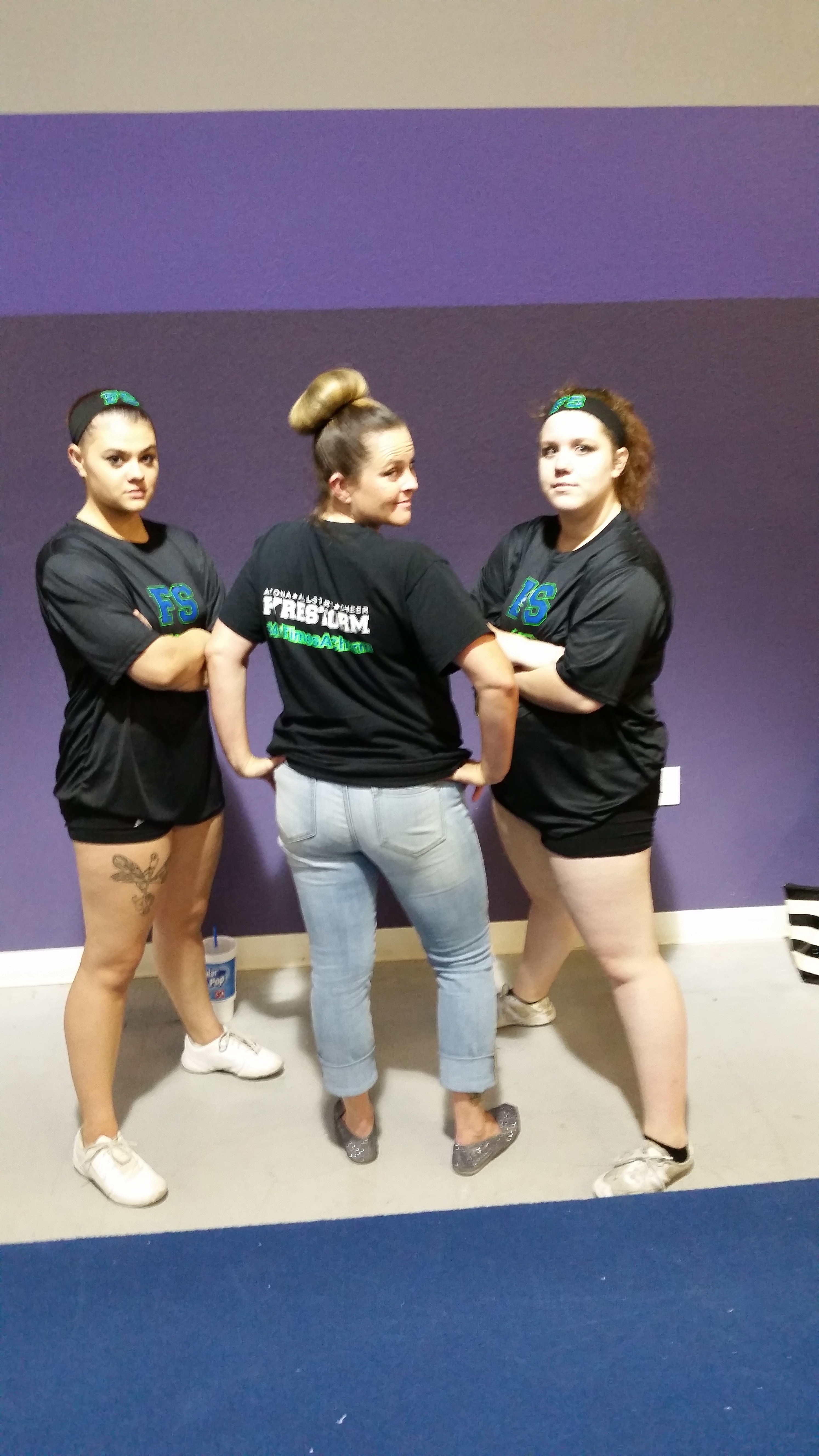 It’s a volunteer position, but we do sign a contract with them that includes confidentiality clauses. They have a little bit of advanced access, and they get to be part of the business part of the company, so I guess that’s a perk.
My biggest piece of advice for anyone thinking of bringing on team reps is to choose wisely. If asked in hindsight, I think every single gym owner who has had issues knew at some point that this person was going to be a problem, or they were warned. When there is a problem, address it immediately. With clear expectations, there’s no grey area there.
The most positive outcome I’ve seen is that the drama and gossip is cut down by a ton. In the contract our reps sign, we are very specific about drama. When I have four kids who need inhalers and injuries, I need somebody that I know will be good in an emergency and be an asset, as opposed to someone who panics.
Overall, I think every single gym should have a team rep—people are afraid of giving control away, but if you choose wisely, it’s a huge help.
–Dina Gachman
Fundraising Case Study #3: Spirit Ohio All Stars
jen : February 3, 2016 1:00 am : Down to Business| Web ExclusivesFundraising is a challenge all gyms face, but done right, it can be an exciting, memorable experience for everyone involved. For inspiration, we’re interviewing gym owners who’ve found ways to put the “fun” in fundraising. Case in point: Mansfield, OH-based Spirit Ohio All Stars, which runs a Sponsor My Uniform fundraiser. Gym owner Steve Fuller spoke with us about why he thinks it’s something every gym should do.
 How does the Sponsor My Uniform fundraiser work? We break the uniform down into parts—right sleeve $50, left shoe $25, etc.—until the sum of all the parts is what the total uniform costs each athlete. The athlete then takes this form to family reunions, parent company picnics, places like that—anywhere they’ll run into close family friends or relatives that would like to kick in a few bucks to help out. Uncle Bob sponsors the right sleeve, and Mom’s co-worker sponsors the left shoe, and before you know it, 11 people have spent a little money to help purchase the athlete’s uniform, complete with hair bow and shoes. We caution kids about going door-to-door without a parent’s okay.
We borrowed this idea from another gym and I can’t believe there’s anyone not doing this. It’s the easiest fundraiser we’ve ever done. Some parents put their own creative spin on it—we had a mom put the value of certain chores on each part. For instance, if a person sponsored a sleeve, they would get their flowerbed weeded for it.
Do most of the athletes participate? You always have a certain number of people who don’t need financial help, but the uniform is kind of a tough nut. It’s $450, plus there’s tuition due, so if you can share that [financial burden] with other people, it’s a lot easier to swallow. We have a lot of single moms, and cheer is kind of a luxury sport, so if people can get help with that one big bill, they appreciate it. Probably two-thirds of our kids participate in the fundraiser—and they don’t have to do the whole thing. Even if they get $200 worth of sponsorship, that helps.
On your end, what is involved in running it? The only thing we do is hand out the picture of the uniform with the parts and prices labeled. Everyone who’s on a team in our gym has a folder in our foyer, in bins that are labeled by team. We make copies of the uniform flyer, and every athlete gets one. We also have it up on our website, so if you lose it or need another one, you can just download it. That’s really all there is to it. Then they go out [to approach sponsors], and people write their check right to us. We hold all of those checks until they’re done, and they include their own check to cover the rest of the uniform.
Do the uniform sponsors get anything special? Athletes take pictures of themselves in their uniform and send them out with a thank-you note to everyone who sponsored them. We’re also have a sponsor page on our website and a monitor in the gym that displays the sponsor names. It’s not a huge deal—it’s more of a big deal for the child seeing their name up there than it is for Uncle Bob, who’s probably never coming into the gym. We also offer that to other sponsors. If you’re a pediatric dentist and you want 1,000 people who have kids to see your name, then you might run an ad in our gym, so your ad pops up there for 8-10 seconds.
Do you have any tips for a gym that’s interested in trying the Sponsor My Uniform fundraiser? No. This is the simplest, most effective thing we’ve ever done. Nobody these days wants to get involved in fundraisers—they always feel like a certain amount of work. This thing sells itself. If you’re somebody’s aunt, and your niece comes to you and says “Would you sponsor me?” [The answer] is, of course you would! Plus, you only need 11 people [to cover uniform costs].
Do you think it works so well because parents are benefiting by having to spend less on the uniform? Exactly. $450 is a lot to come up with at one time. We’re buying uniforms in July, typically, when you also have family vacations, and your kids are [on summer break], eating you out of house and home. It’s just an expensive time of year, and it’s nice to be able to spread that cost over a bunch of people. People are happy to donate $25 or $50.
Have you done any other successful fundraisers? We just did a Cartwheel-a-Thon, and I want to do it again this winter when the gym is packed. We got this idea from another gym. You give everybody a Cartwheel-a-Thon packet with a sponsor sheet. All the kids go out and get sponsors, and they can suggest a flat amount or do it per cartwheel. Week one is about getting donations. Week two, coaches and parent volunteers pull these kids at the end of class to see how many cartwheels they can do in two minutes. (If they’re little, they can do forward rolls.) In week three, they go out and collect the sponsor money. This is the first year we did it, and it generated about $2,000. You have prizes for the top three kids, like a $50 gift card.
Do you have any tips for a gym owner setting up their first Cartwheel-a-Thon? You need somebody to oversee the whole thing—an organized point person who keeps track of participants and winners, puts pictures on Facebook, makes sure the prizes are distributed—and makes sure all the money gets collected. It’s a three-week deal—a week to collect sponsors, a week to monitor everybody doing cartwheels and then a week to get the money turned in. It’s easy to lose focus during that three-week time, so you need somebody who’s going to keep the kids motivated.
–Lisa Beebe
Spotlight: Scott Foster of Rockstar Cheer
jen : February 1, 2016 1:00 am : In the Industry| Web ExclusivesIf what happened in Vegas actually stayed in Vegas, then Greenville, South Carolina’s Rockstar Cheer and Dance might not be where it is today. After all, it was a 2007 visit to Sin City—specifically the Hard Rock Hotel—that inspired owner Scott Foster and his wife, Kathy, to pick a unique theme for their gym that was “different and out of the box,” says Foster.
 Out of the jukebox is more like it. Every team at all seven Rockstar gym locations is named after a rock band, and Foster doesn’t discriminate one genre over others. There are teams named for classic bands, like the Small Senior Level 5 Queen and the Large Junior Level 3 Heartbreakers. Then there’s The Rolling Stones, The Beatles, Journey, Nirvana, Poison, No Doubt and the Dixie Chicks. Plus, there’s a team called The Wiggles and a few nods to the 80’s, including Vanilla Ice.
“We even call our team moms band leaders,” says Foster laughing.
The playfulness ends with the team names, however. After all, Foster cut his teeth cheering on the University of Louisville JV and Varsity teams (earning three team National Championships and one Partner Stunt National Championship) and coached for five years with Louisville-based powerhouse GymTyme. Translation? “It was all business,” says Foster. “And I am definitely a product of that ‘get it done’ environment.”
And the environment that began with just one gym in Greenville now includes seven gyms across three states, which collectively boast 47 teams and nearly 350 athletes. Foster is quick to point out, however, that the six gyms he’s partnered with operate largely on their own.
 “I don’t spy on them or anything,” says Foster. Instead he shares with them what he calls simply, “the Rockstar style.”
“From top to bottom we have a quality product,” says Foster. Much different than a franchise, insists Foster, his team helps partner gyms absorb everything Rockstar from branding to skills and choreography consultation to uniforms, management, business and staff training. The process takes as little as a few days to more than a month because, says Foster, “you can’t put what we do in a manual.”
“We also share a work-hard philosophy and network,” says Foster, who does visit partner gyms in person on occasion and will Facetime into a class to offer suggestions on choreography or stunting. However, for the most part, he leaves the gym’s day-to-day operations up to the local management teams.
And the teams are doing well on their own, winning over 300 national titles and three silver and two bronze medals at Worlds. It’s an impressive haul for small gyms located in and around “little old Greenville, South Carolina”—particularly since Rockstar competes against teams from massive cities like Dallas and Atlanta that are brimming with a seemingly endless pool of talented athletes. Foster has reconciled and even embraced this, however. He has to—one of his gyms only has 35 athletes on its roster.
 “If I lose a Level 5 athlete to injury, I need to get a Level 4 kid up to fill that spot,” says Foster, who also coaches five high school teams. “But I’m proud of that.”
Foster also prides himself on the fact that his coaches, including his wife Kathy, will instruct a Mini 2 as well as a Senior 5 class, hardly groundbreaking but still important, says Foster, as it demonstrates that cheerleading is not just about Worlds—it’s about being part of Rockstar’s legacy.
Foster’s legacy also includes the wildly successful Cheerlebrity competition. Founded in 2011 by Foster, the contest is an opportunity to compete but with rare, live feedback from peers, choreographers and cheer royalty like Maddie Gardner, a member of the lauded University of North Carolina cheer team. Foster downplays his role in the success of Cheerlebrity, but a quick glance at its social media feeds—almost 19,000 Twitter followers—proves how popular the events are for athletes.
It’s all part of what Foster describes as a renewed sense of genuineness within the sport of cheerleading. A far cry from past years, when Foster says just about everyone and anyone claimed a national championship. “It felt a little fake,” admits Foster. But now with a score sheet that “dictates the routine,” cheerleading is get back to a good place.
“It’s booming,” says Foster. “It feels really good to be a part of cheerleading today.”
–Molly Blake
As for the future, Foster isn’t opposed to partnering with two or three more gyms in the area in order to keep growing at a steady pace. After all, there’s no team named Taylor Swift yet.
Candid Coach: Alicia Zito of Rebels Elite
jen : January 21, 2016 11:04 pm : In the Industry| Web ExclusivesTalk about balance—Alicia Zito isn’t just 2015’s Eastern Cheer & Dance Association’s “Cheer Coach of the Year,” but also a choreographer, judge, mom and a full-time attorney. When not practicing law, Zito runs the Reading, PA-based gym Rebels Elite, which currently has just over 90 athletes. CheerProfessional caught up with Zito between the court and the competition mat for a candid Q&A session.
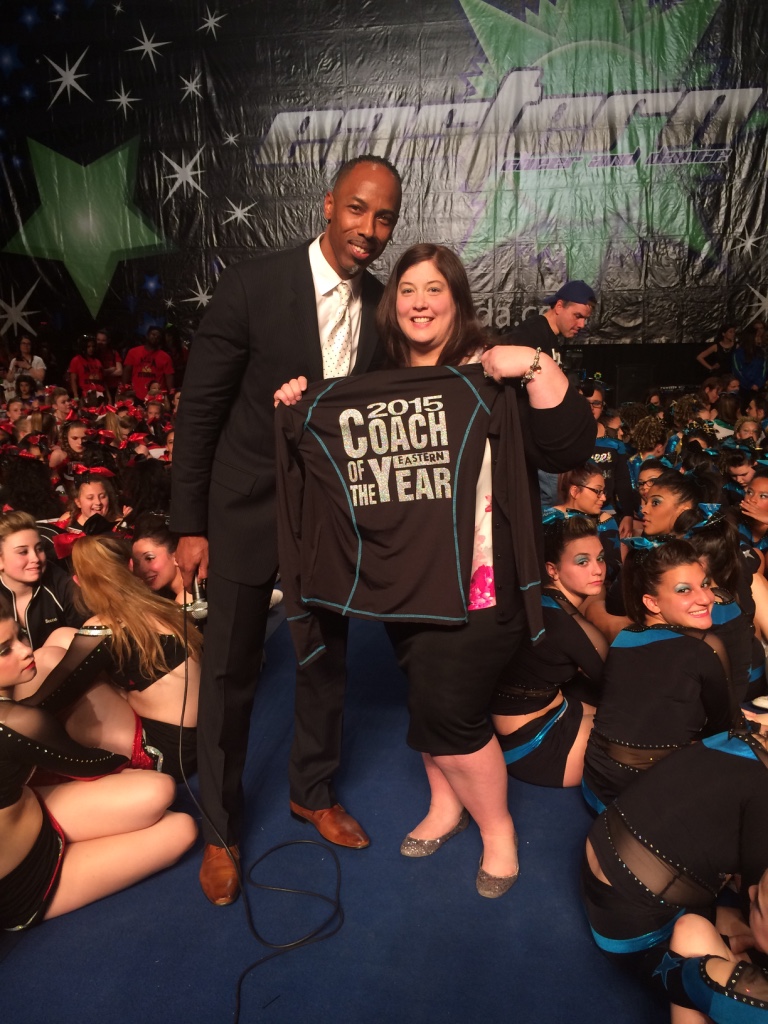 You took over the Rebels All-Star program and named it Rebels Elite in 2013. How does the new program differ from the old one?
Zito: They were small, almost like a prep program, in a tiny facility with no equipment. The athletes were ready to be more involved in the competitive cheer world. The old program was really economical [in order] to get the kids in the community involved in cheering; we don’t live in a very wealthy area. We wanted to give kids a chance to participate in something like this, without all the high-end costs. And I still try to stay true to that today, even though we’re now on the national circuit. We’re one of the lower-cost programs in the area.
Like many cheer professionals, you hold down a full-time job outside the gym. How do you balance being an attorney with running the gym?
Zito: My schedule is tight, but I make time for it because it gives me an outlet for my high-stress job. I’ve always coached cheerleading, even when I was in law school. I needed something to break up my day from studying, and I can’t pull myself away from it. I enjoy it so much. It is stressful running an all-star program, but to watch the kids learn and grow and have fun is my release.
Your tagline reads, “Family means no one gets left behind or forgotten.” How important is it to you to have that family feeling among your students?
Zito: I’m a gym owner who’s really involved with the kids. I know them and their families. I know what they’re doing at school and what they’re involved in. You’re dealing with primarily a lot of high school girls, and with that comes the typical teenager issues and school issues—and the fights and the bullies. We try to circumvent all that and keep the kids positive. The kids will talk to me about whatever they need to.
I really think the kids can learn and grow in a family environment, and like in any family, we hold them accountable for what they’re doing. We have our good days and bad days, but at the end of the day we’re still family, and everybody has to understand that. You pull together when you’re a family, and that’s how you win. That’s how you succeed, that’s how you learn to grow.
What’s your advice to teams deciding whether to hire a choreographer or do the choreography in-house?
Zito: If you’re doing it yourself, you need to be knowledgeable about the new rules and scoring grid, because every year it changes. Every year, you have to be on top of the game, performing the elite skills and sequences in order to stay competitive. If you’re able to do that in-house, it’s great, because you know the kids best. You know their abilities, and you can work with the routine. But there’s something to be said about having an outside choreographer bring their fresh ideas and creativity to the program. [Those who] have worked for high, nationally-ranked Worlds teams are able to give you that extra bit of flair that you may not be able to get yourself.
–Renee Camus


