

In addition to all the great content we bring cheer professionals in our quarterly print issue, you’ll find plenty of original exclusive content right here at TheCheerProfessional.com.
Keep checking back for all the latest and greatest news, updates, debates and more!
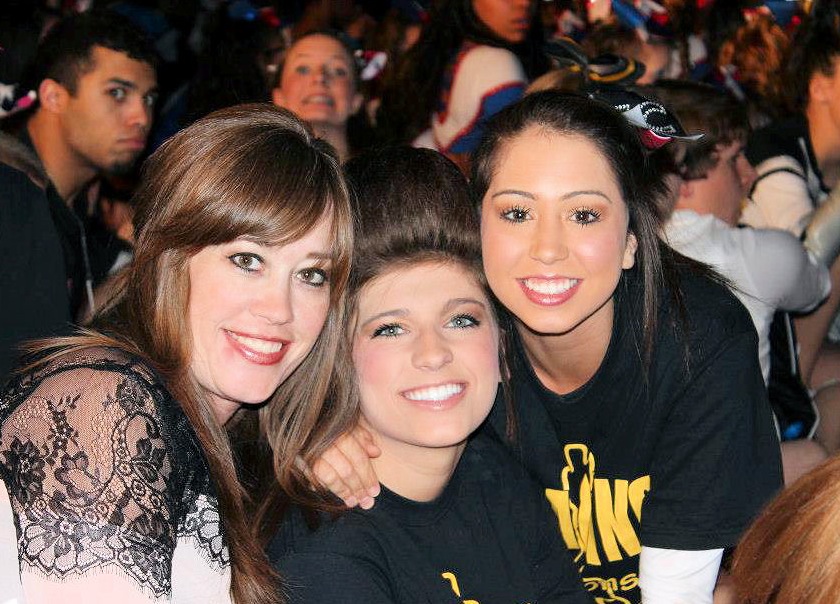
Angela Havard Patton with athlete-coaches
The old adage “Go with what you know” is a familiar one for Cheer Savannah owner Stephanie Britt. When hiring new employees, Britt tends to go straight to the source—athletes from within her gym who’ve been there, done that.
The decision has always been a no-brainer for Britt, who finds it extremely advantageous to use coaches who grew up in the culture of the gym. After all, they already know the drills and terminology, so very little training is necessary. In addition, the athletes are familiar with gym policies and can teach others how to best represent themselves and Cheer Savannah to the community. “You’re only a leader if people follow you,” says Britt, “and leadership is key to any gym program’s success.”
Britt isn’t alone—this strategic move speaks to the ushering in of a new generation of all-star athletes just starting their cheer careers and taking the reins. As the industry has matured, so have its core athletes who have cheered all-star since they were young children. This experience gives them a unique vantage point to offer current gym owners, many of whom live and breathe the business but never had the chance to take the all-star mat themselves.
Angela Havard Patton of Texas Cheer is also on board with this approach. She says she exclusively hires only current and former all-star athletes to help run her cheer program, which is designed to be a “low-cost, low time commitment” gym. “I believe in hiring and training our youth to be leaders,” says Patton, “because they are so open minded at a young age and have so much creativity.”

Angie Caldwell and Elaina Bertoli
Give it a test run. Consider holding a tryout of a different type—at Cheer Savannah, all coaches must go through a trial period in which both sides try each other out before permanently joining the staff. During that time, Britt looks for “that glow, that passion, that leadership—you just know when it’s there.”
Currently, Britt has two former athletes and even two moms-turned-coaches on her staff. After being around the team and helping their own daughters train, the mothers learned so much about cheering that Britt decided to use all that impromptu education and put them to work. “They have the gift,” says Britt, who firmly believes that a coach’s most important attribute is the ability to mentor and lead.
Continue to foster a sense of loyalty. One of the great things about hiring an athlete from within is that he or she likely already has a strong loyalty to you and your program. Just ask Steven Hogenson, who spent his senior year of high school cheering at Eagan, MN-based Northern Elite All-Stars and now both coaches and cheers on the gym’s open team. Hogenson says he can understand how important the gym is to the kids since he used to be one of them. “The gym is not just a job, but a home and family,” says Hogensen.
Communicate clear expectations. With a doctorate in special education, Patton uses her background as a behavior specialist to teach athletes not only cheer skills, but also how to become leaders. She firmly believes the key to keeping kids out of trouble is to give them a home base, a place to go and rules to follow. Because the younger kids look up to the older ones as real life role models, Patton expects her athlete/coaches to also assume leadership roles in the community. She has a strict policy against any negative social media activity and asks the athletes to hold each other accountable by reporting to her any suspect behavior.
Patton feels that ultimately, when coached by peers, kids try harder. “When you set the bar high, kids rise to that level,” says Patton. Her mantra for coaches: “You must be reliable, you must make a commitment, and you must show up. You don’t let down your family.”
Help them embrace their new role. One of the biggest challenges many athletes-turned-coaches face is asserting their newfound authority to others that were once teammates or friends. 18-year-old Elaina Bertoli can relate—she currently helps coach four teams at Five Star Cheer Academy in Joliet, Illinois, while still competing in All-Stars and preparing to attend college in the fall. Gym owner Angie Caldwell first asked Bartoli to help coach the minis and younger teams when she was 15 years old and she’s been wearing two hats ever since then.
“The hardest thing about transitioning from being a peer to coaching is knowing when to step back from being a friend to being a teacher,” says Bartoli. She says that Caldwell has helped her feel more comfortable in the new role by always having her back and encouraging open communication when problems arise.
Bartoli is also continually learning new lessons. She recently suffered a slipped disk and concussion, which showed Bartoli the importance of proper safety precautions and taught her about what is most important as both a competitor and a coach: “I learned you have to fail sometimes in order to really be able to appreciate winning.”
-Vicky Choy
Implementing Your Gym’s Social Media Policy
jen : November 20, 2013 12:32 pm : Down to Business| Web Exclusives| webexclusive2 The following is a guest post from coach, choreographer and social media consultant Kate Boyd:
By now, you’re aware that you need a social media policy, and you may already have one created. So start by giving yourself a high five! Because the first step in implementing a policy is to have one (or at least be in the process of it).
But once you have it, you need to take the next step: putting it into action. You could just hand over a sheet with the guidelines to your team, coaches and parents … but that won’t get you very far if you won’t be taking the steps to also enforce the policy. So below I’ll outline a few ways that you can make sure your guidelines are not ignored.
Make it a part of your handbook or constitution. Show your team that you take these guidelines very seriously by incorporating them into your regular handbook or constitution. Include it as part of your expectations for behavior and consider making your team members—and their parents—sign it to show that they have read it and agree to it.
Assign consequences and follow through. When preparing your guideline,s be sure to think of consequences for infractions or working them into your demerit system (if you have one). Make them specific and create a safe reporting system so others feel as though they speak up about inappropriate behavior on social media.
The most important part is to follow through. You shouldn’t punish every instance reported, since many of them probably won’t deserve that. However, when something does fit your criteria for inappropriate behavior, stick to your guns and enforce the policies you worked so hard to produce.
Empower and encourage your team captains and employees. The truth is that you will not be able to monitor everybody’s social media activity alone. You will have to give some extra direction and power to those you’ve chosen as team leaders to help you out if you want to ensure effectiveness. Tell them what you’re looking for, encourage them to engage online and give them the authority to report or draw attention to inappropriate behavior from your team.
Educate parents. Another part of your social media team could be the parents of your athletes. Take some time to educate them about the technology and threats involved in social media and the policy you have put into place to protect their children. Then encourage them to be a presence on social media by interacting often with their children online and offline about what’s being posted.
Engage frequently. Even though delegation will make the job of enforcing your policy much easier, it doesn’t absolve you from being involved on social media. You should still make an effort to have a presence on the various channels that your athletes use and interact with them there. It will help build accountability as well as relationships.
I know some of this may seem controlling or as though you’re infringing on their freedom of expression, but a solid social media policy is about protecting your athletes as well as your business and reputation. By implementing your policies, you’re creating increasingly social media savvy human beings who will be equipped to make wise decisions and ultimately succeed.
Kate Boyd is a coach, choreographer and consultant whose goal is to make you, your team and your program look its best. Visit kateboydcheerleading.com to learn more about Kate or to find articles about leadership, technique and choreography.
GTM Spotlight: Scott “Crasher” Braasch
jen : November 13, 2013 1:45 pm : In the Industry| Web Exclusives| webexclusive1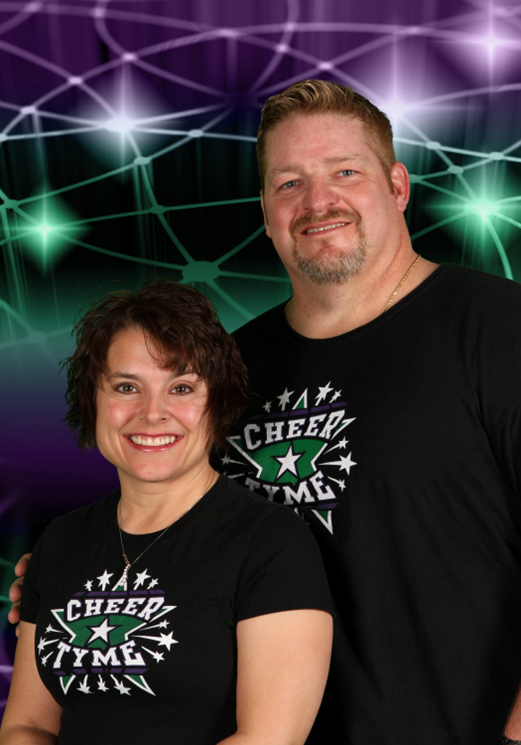 Scott “Crasher” Braasch’s nickname is hard to ignore—especially in cheerleading, a sport that tends to frown on crashes of any kind. Braasch is quick to mention that the nickname doesn’t reflect how he drives or stunts, but the Cheer Tyme titan still remembers the moment he got the moniker, when his wild-eyed, excitable high school football coach congratulated him after a game-winning play.
“He grabbed me by the face mask and said, ‘You’re the Crasher, Braascher! You crashed ’em!’” Braasch recalls.
The nickname started off as a joke, but “Crasher” as a concept has informed the way Braasch coaches—by viewing his back spots, bases and flyers as individual athletes with unique skills, just as a football team would its quarterbacks, running backs or offensive linemen. That also means requiring his athletes to train with drills, conditioning exercises and sport psychology.
“I’ve always had sort of a very authoritative way of coaching, and it’s been something that my athletes responded to,” he says. “I got into cheerleading in its very early stage, when cheerleading was trying to fight for its sport identity, [and] it really was a blessing for people to see somebody like myself who approached it truly like it was a sport.”
A series of career-ending injuries cut his football career at the California University of Pennsylvania short, but a former football buddy of his (the first male cheerleader at the school) and Braasch’s girlfriend (also a cheerleader) encouraged him to come to the games and, later, join in on stunting. The prospect of being surrounded by females—and tossing them in the air with the ease of flipping a coin—certainly helped convince him.
“I remember the first time I did a walk-up chair and thinking that was the coolest thing ever in the world: ‘I can’t believe I just picked this girl up and held her up,’” he says. “It was probably a year later that I was going full-up awesomes and rewinds.”
 He was instantly hooked on the sport. He watched TV competitions and VHS tapes of top squads to study up on new stunts and gain inspiration for creating his own. Now, in the YouTube age where VCRs aren’t necessary, he owns three Cheer Tyme locations in Pennsylvania and Virginia. He even invented the Full Up Machine, a four-inch-tall rotating contraption that looks like the cushy top of a barstool, to help flyers learn and stick their full ups, half ups and double ups. Braasch says the machine enables mobile repetition, which is key to nailing stunts safely—but without beating up back spots and bases, a nearly unavoidable casualty of the learning process.
Braasch says the response to the Full Up Machine was very positive, but the machine is no longer being manufactured by Core Athletix, the company that helped develop it. He hopes to see it rise again in the future, he says, but until then he has several other top-secret inventions in his back pocket.
Safety in the industry has long been one of Braasch’s top priorities. He says he wants to emphasize simple cheerleading basics like “step, lock, tighten” and “perfection before progression” to increase safety in stunting, which has become more complicated—and, thus, potentially more dangerous—in recent years. Next up for Braasch is his newly won national at-large seat for NACCC, where his top goals are to 1) unite cheer coaches, 2) increase communication among gyms of all sizes and locations and 3) make it easier for parents of potential cheerleaders to see that the sport is a safe one.
“We have to be more and more safety-conscious. When we put pro athletes in jeopardy, then we put our sport in jeopardy,” he says. “Those things can’t happen if we want to have longevity as a legitimate sport and a respectable sport. Otherwise we’ll create things so crazy that they’ll look at us like the early days of the UFC, which was just unsafe, and was frowned upon. It’s already tough in the media as it is.”
In fact, with his new position, you could say that he’ll be the Crasher all over again.
“I don’t think that will ever go away,” he says. “For whatever reason, it has stuck, and I guess it was meant to stick. It’s who I am.”
Two Sides: Universal Scoresheet
jen : November 6, 2013 2:54 am : In the Industry| Two Sides| Web ExclusivesThe buzz around adopting a universal scoresheet has reached an all-time high—will one finally be adopted next year? CheerProfessional explores the pros and cons of going forward with this initiative.
One of the hottest topics at this year’s NACCC conference in Doral? The idea of a universal scoresheet. Cheer professionals Kristen Rosario and John Metz are among the industry’s outspoken advocates for this development, and the 22 member companies of IEP announced their collective endorsement of having a universal scoresheet back in 2010. However, respondents to a CheerProfessional survey in June were evenly split, with half for and half against (and one stipulating that she would support a universal rubric rather than scoresheet).
Many believe a universal scoresheet will help introduce more consistency among competitions, improve consistency and eliminate headaches for event producers. However, others think that a universal scoresheet will create less event choices/competitive advantages for cheer programs and make choreography more homogenous.
So who’s right? To dig deeper into what’s behind the universal scoresheet debate, we talked with Shea Crawford of Brandon All-Stars and Mikey Hobson of Top Notch All-Stars to get their take on this hot-button issue.
Editor’s Note: Please note that the views expressed in this article are expressly those of our sources and not those of CheerProfessional.
 Shea’s take on the universal scoresheet: This is something that’s been discussed for at least five years, and the time has finally arrived to make it happen. I first realized the need for a universal scoresheet several years ago when we got the lowest score the first day at a Cheersport competition, then made a very minor change to the routine and got the highest score on day two. We also finished first at a different event two weeks later with the same routine.
So many teams throw amazing routines, but when you have no idea how it will be rewarded, it’s very frustrating. My job should be to read one scoresheet, not five of them. I feel like it’s asking a lot of kids to work on these skills and train and synchronize—something as simple as changing one count is difficult for a lot of these kids. I just want to be able to prepare the same routine for wherever we go—if it was up to me, it’d be the same routine day 1 through day 365.
On how it will affect judging: I think the universal scoresheet will push for [the formation of] a judges’ association. A universal scoresheet will force judges to be better, and when that happens, it will produce more consistency. The importance of deductions will increase and it will serve to clean up routines. It will also allow event producers to focus on the event a lot more and have a lot less scoring discrepancies. Everywhere you go, you’ll be accountable for the same stuff.
On how it would impact choreography: One of the biggest arguments against a universal scoresheet is that people don’t want to see cookie-cutter routines. My argument against that is that every single team who goes to any one competition is competing on the same scoresheet [that day]. There are 900 teams that go to Dallas [for NCA], and I have yet to see one cookie-cutter routine there. For me, that nullifies that argument.
On how it will produce more consistency: Gone are the days where you can go to a competition and really predict who won. I have been to so many competitions that I watch as a knowledgeable coach—but when I think I’ve pinpointed first through fourth place I’ve never been more wrong in my life. Right now, our industry sorely lacks consistency, and a universal scoresheet will provide that.
On how it will affect event producers: My opinion is that not having a universal scoresheet works against the event producers. There are a lot more Varsity events than other brands, and I personally would rather go on a similar scoresheet more often than not. It hurts [other EPs] more than it helps by having a different scoresheet.
What’s every EP’s biggest headache? Judging and scores. 99 percent of the problem at any competition stems from judging—wouldn’t they rather concentrate on maintaining the schedule and setting up warm-ups? I don’t understand why event producers don’t embrace it so that all they have to do is worry about hosting the event.
A universal scoresheet wouldn’t be that hard to implement—when I look at Jam Brands and Varsity, the scoresheets are different, but not so different that it’s game-changing. With a universal scoresheet, coaches will no longer say things like, ‘Last week, when I was at another competition, it was legal,’ or ‘I’m going to go to Jam Brands because I can score well there.’”
The bottom line: I think a universal scoresheet will help the industry and that is what is important to me. It doesn’t matter so much which scoresheet it is—good coaches will adapt. The industry needs something; I know entire programs that have folded because they lost competitions they shouldn’t have and the gym down the street beat them. A universal scoresheet will help grow the industry through more consistency and a way for coaches to train better.
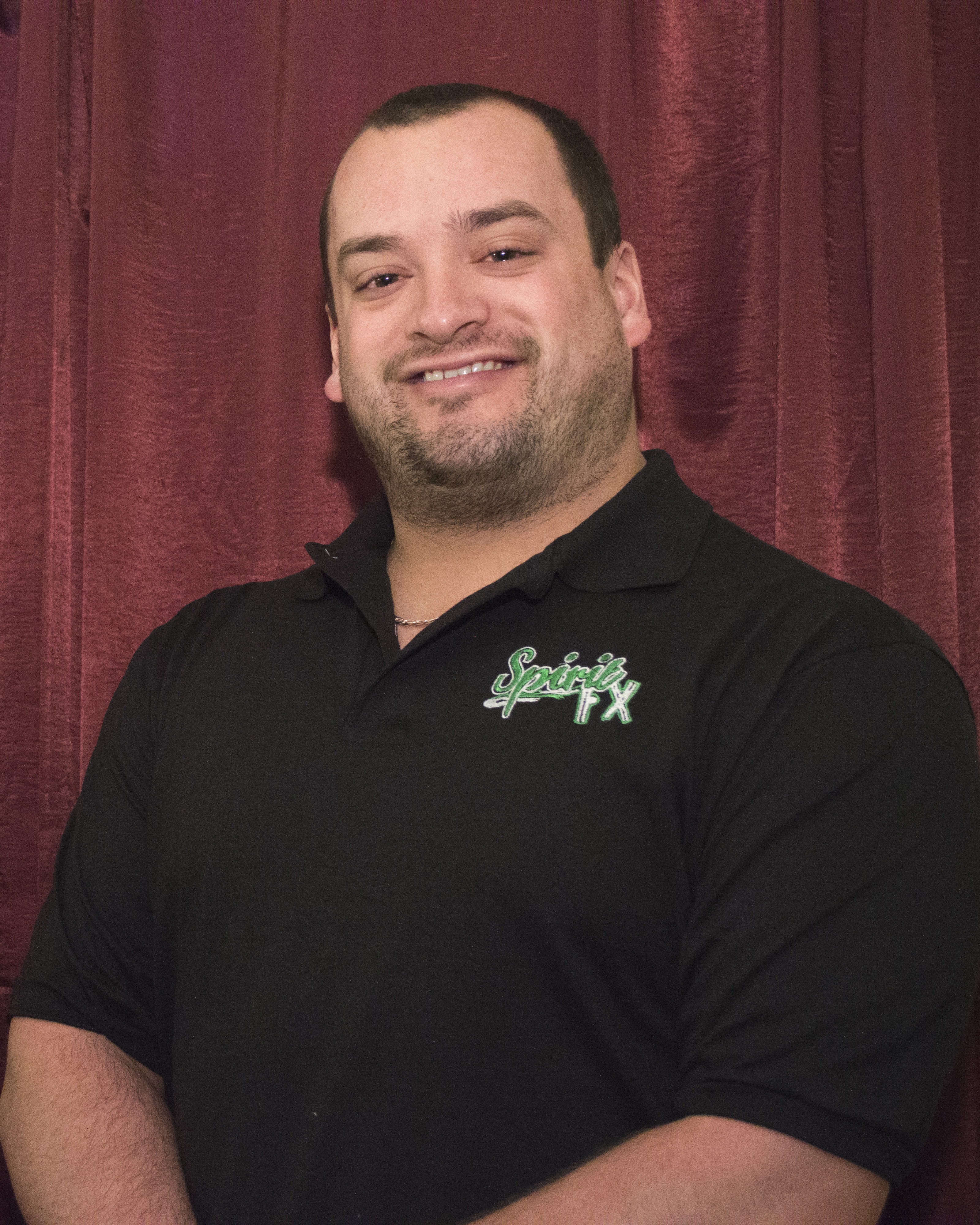 Kyle’s take on the universal scoresheet: I come at this topic from both a choreographer and coach perspective, and as I see it, the biggest negative against a universal scoresheet would be the elimination of options for playing different scoresheets.
When working with various gyms as a choreographer, we talk at length about ways to hit the scoresheet. Based on my experience, I feel personally that more people are against a universal scoresheet than for it. I believe that it has become a hot topic because more people are doing research on ways to hit the scoresheets and understand the difference between rubrics.
On how it would affect small gyms: My question is: what’s the ratio of small gym owners that want a universal scoresheet versus medium or large gyms? Most smaller gyms want and need more options, so I’m curious if that plays a role in the discussion. It’s no secret that the Midwest isn’t a game-changer yet—we’re holding our own, but we’re not North Carolina or Texas or Kentucky. We’re always trying to stay ahead, and we like to have choices.
Also, on a broader level, it could take people a long time to get used to a new universal scoresheet, and teams may not win as much—which could directly affect new people coming to our gyms.
On why consistency across the board isn’t necessarily a good thing: We’ve gone back and forth between Varsity and JAMfest—our gym is very stunt-oriented, and we don’t typically score as well at Varsity as we do with JAM Brands. Having various scoresheets gives you options if your style doesn’t hit [at one specific event producer]. Competition wins help you be recognized in your area—having options where we feel confident that we’ll score well helps our success in the long run.
On how it will affect judging: I can actually see how a universal scoresheet could have a pretty positive impact from the judges’ standpoint. It would make everyone more knowledgeable and efficient knowing one scoresheet instead of five.
On how it would impact choreography: I feel like choreography has already become somewhat cookie-cutter. As for how a universal scoresheet would further that issue, it depends. If it does happen, I would like to see it mirror the Worlds scoresheet approach, where there isn’t really a rubric and they’re just judging the routine you put out on the floor. There aren’t all of these numbers to hit—it’s more about the performance element.
On how it will affect event producers: From a coaching standpoint, I love the option of picking what style suits us best. Each event producer also has their own niche they like to go for: for example, JAM Brands is fun and game-oriented, while Varsity is more competitive and awards-oriented. It also translates to each EP’s focus: the JAM scoresheet is more about counting skills while Varsity awards creativity. If you take our options away and put everyone on the same scoresheet, you might have more people going to competitions they don’t enjoy. The more options in the market, the better.
The bottom line: If this is going to move forward, then we need more clarity on what exactly the universal scoresheet will be. Will people still be able to add more style? Have choices from an event producer standpoint? All the talk is great, but what specifically will it be? There needs to be more specifics before we can form opinions and move the conversation forward.
All in the Family: Coaching Your Own Kids
jen : November 4, 2013 4:53 pm : Down to Business| Web Exclusives| webexclusive2 Many cheer professionals wear several hats—not only as gym owners and coaches, but also as parents. And when the two worlds meet, things can get complicated. After all, raising a child is a challenging endeavor for any parent, but the ante is especially raised when doing double-duty as parent and coach. Issues like favoritism, overcompensation and parental guilt constantly arise and have become frequent topics of discussion in private Facebook groups for cheer professionals.
Just ask Cheer Savannah owner Stephanie Britt, who admits that she is often harder on her daughters, 14-year-old Southern and 13-year-old Saylor. Britt expects more from her own kids because she wants them to cultivate a desire to be the best and to form a strong work ethic. As Britt sees it, the best way to handle the issue of nepotism is by not publicly celebrating her girls’ success or liberally praising them; she feels that, as their coach and the owner of the gym, doing so would be unprofessional. Britt believes that this approach has taught her daughters humility and the meaning of earning your spot.
However, in private, Britt is quick to tell Southern and Saylor “good job” and let them know just how proud she is of them. In return, her daughters recognize this approach and have no problem with it. Says Britt, “I don’t want my girls to get their self-worth from cheerleading. I want them to know I love them whether they can flip or not.”
Not Being “That” Parent
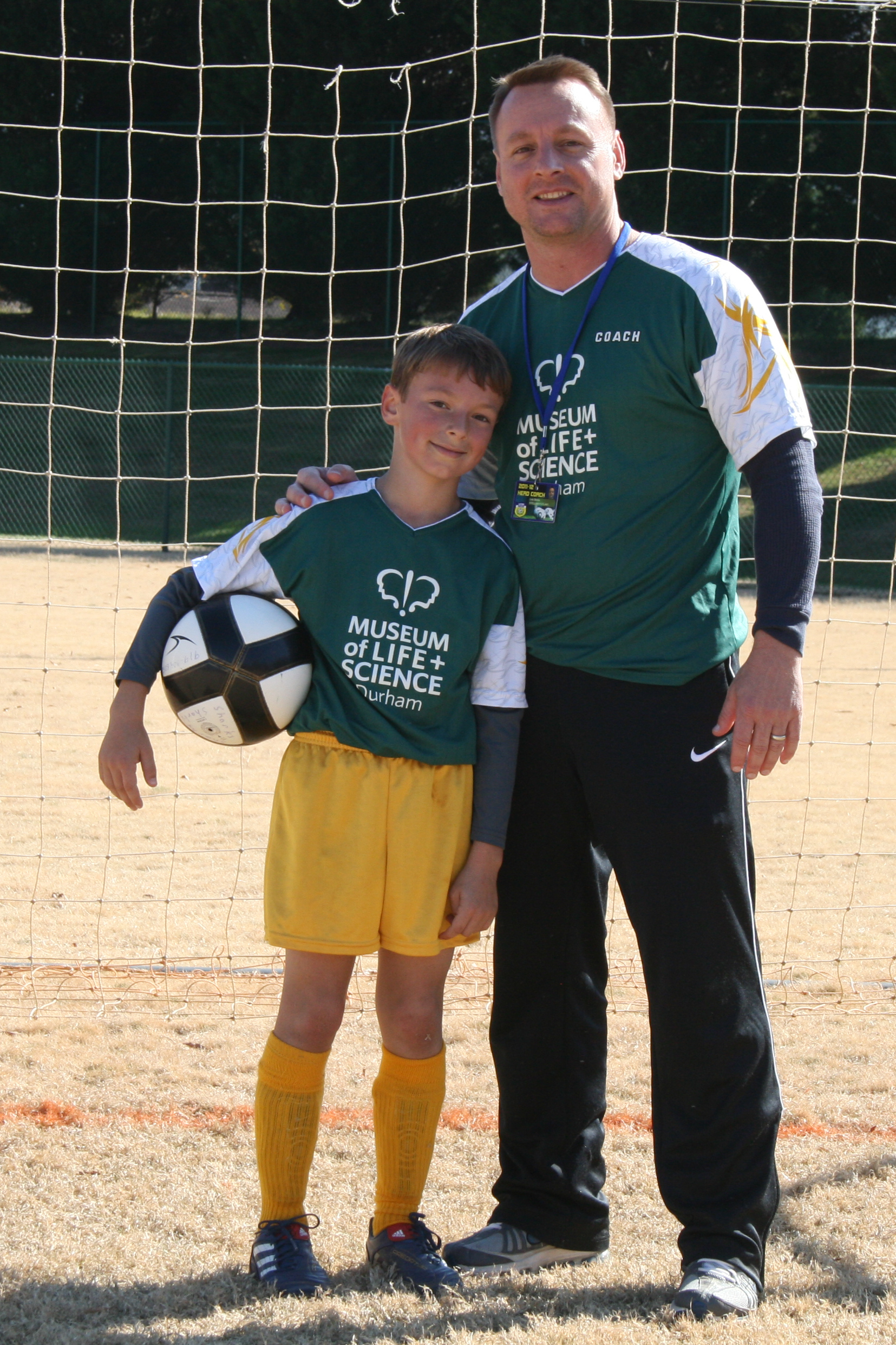 In exploring the pros and cons of coaching your own kids, one of the biggest pros noted by coaches was getting to spend time with their children that they otherwise wouldn’t get due to the time demands of the cheer business. However, the flip side is the issue of nepotism and how one handles walking the fine line between being a coach and being a parent.
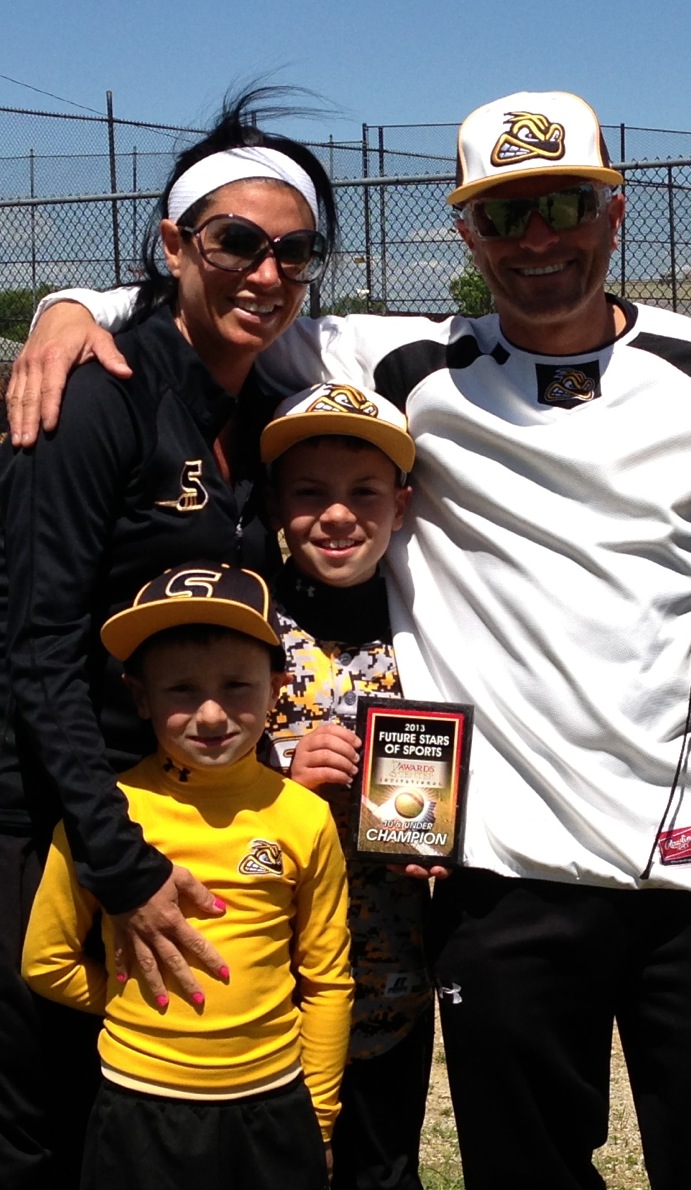
Cheer professionals Aaron Flaker and Les Stella know this conundrum all too well—though they don’t coach their kids in a cheer gym, they’re out on the baseball, football and soccer fields living out these scenarios. “You can turn off being a coach, but you can’t turn off being a parent,” says Flaker of The JAM Brands, who coaches his 10-year-old Braxton and 6-year-old Tyce in both baseball and football.
Flaker’s driving philosophy is that in order for a team to thrive, all athletes have to be empowered to do well. He believes strongly that kids should be able to flourish on their own, and the only way to facilitate that is through fairness to everyone. In light of that, Flaker feels that he probably goes out of his way to make sure his kids are treated the same as everyone else—probably to the point that his sons may think he’s harder on them than others. He doesn’t ever want to engage in “Daddy ball,” where parent-coaches tend to focus only on their own kids and their abilities.
“When you’re in the stands, at least you literally have distance from your kid, but as the coach, human nature kicks in and you have to try not to let your kid’s performance affect you,” explains Flaker.
Stella has also seen his share of “Daddy ball,” as he spends up to three weekends every month coaching his kids’ soccer teams. He originally started coaching 7-year-old Gavin and 11-year-old Spencer in order to spend more time with them—after all, his role as USASF’s Vice-President of Rules, Safety & Judging keeps him on the go pretty much 24/7. Stella believes that in order to successfully coach kids, you need to be able to relate to them, and this is where his background as a former cheer coach serves him well. “Know your audience, and coach accordingly,” he advises, adding that it’s vital to know what type of motivation and coaching approach will elicit the best performance from athletes.
At the start of every season, Stella sets the tone with his sons by sharing that if he gets on their case, it’s only because he wants them to thrive. He says that his boys understand this and don’t feel singled out. Stella is very cognizant that as a coach and parent, there is always a bigger picture at play. “At the end of the day, it’s not about you or your children, it’s about the team,” he shares.
Moving Forward After Mistakes
 Though Bravo All-Stars head coach Adriane Callahan now coaches her daughter Marina’s Level 3 team, she almost didn’t get the chance to have this shared experience with her child. Before coaching all-star cheerleading, Callahan coached Marina in gymnastics and pushed her very hard in a rigorous program that was challenging for Marina. According to Callahan, Marina felt her mom was unfairly being tougher on her than others and quit gymnastics largely because it stopped being fun.
Things changed when Marina joined Bravo—once she advanced to the level that Callahan coached, the two forged a fresh start by talking about how they would do things differently. Marina came to understand that she would be treated like any other kid, and Callahan realized that it’s okay to let Marina naturally progress rather than forcing it. Callahan now admits that she probably worked Marina too hard in gymnastics because she wanted her to be on par with the others, even though her skill wasn’t yet at that level.
Through this experience with Marina, Callahan learned to let the child’s desire and ability drive how you teach them—and, above all, to make sure that they are having fun. “I believe that every coach has to be true to their individual coaching philosophy much like every parent has to follow their own parenting philosophy,” shares Callahan. Marina’s current success and love of cheerleading shows Callahan that, this time, mom and daughter got it worked out right.


