

In addition to all the great content we bring cheer professionals in our quarterly print issue, you’ll find plenty of original exclusive content right here at TheCheerProfessional.com.
Keep checking back for all the latest and greatest news, updates, debates and more!
Owner’s Manual: Darlene Fanning
jen : July 7, 2014 12:36 pm : Down to Business| Web Exclusives| webexclusive2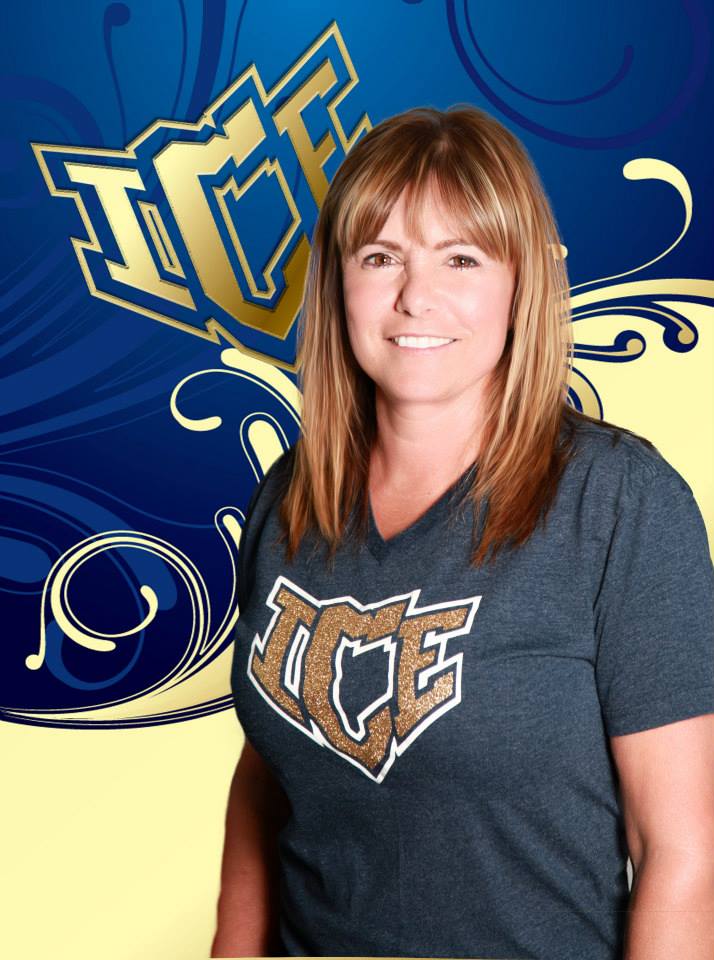 ICE began in 1998 with Darlene Fanning renting space from a local gymnastics facility for a program of approximately 60 kids. According to Fanning, the program “quickly outgrew the space” and two other facilities before landing in their current Mishakawa location in 2007. There she built a 50,000 sq.-ft. athletic center, which houses not only the ICE Athletic Center Fitness Club, but also Midwest Basketball Academy, Network Volleyball, a childcare center and even a Starbucks. In 2009, ICE expanded to Fort Wayne, and in 2011, the program opened a third location in Aurora. This year, a big part of the gym’s growth has been the reintroduction of ICE’s dance program—we asked owner Darlene Fanning to share the details.
Vital Stats:
Name: Darlene Fanning
Gym: ICE Athletic Center
Location: Three locations in Mishawaka, IN; Fort Wayne, IN; and Aurora, IL
Founded: 1998
Size: 800+ athletes
# of teams: 24 all-star teams and five all-star prep teams.
Gym Size: 50,000 sq. ft. facility in Mishawaka, IN; a 15,000 sq. ft. facility in Fort Wayne, IN; and a 35,000 sq. ft. facility in Aurora, IL
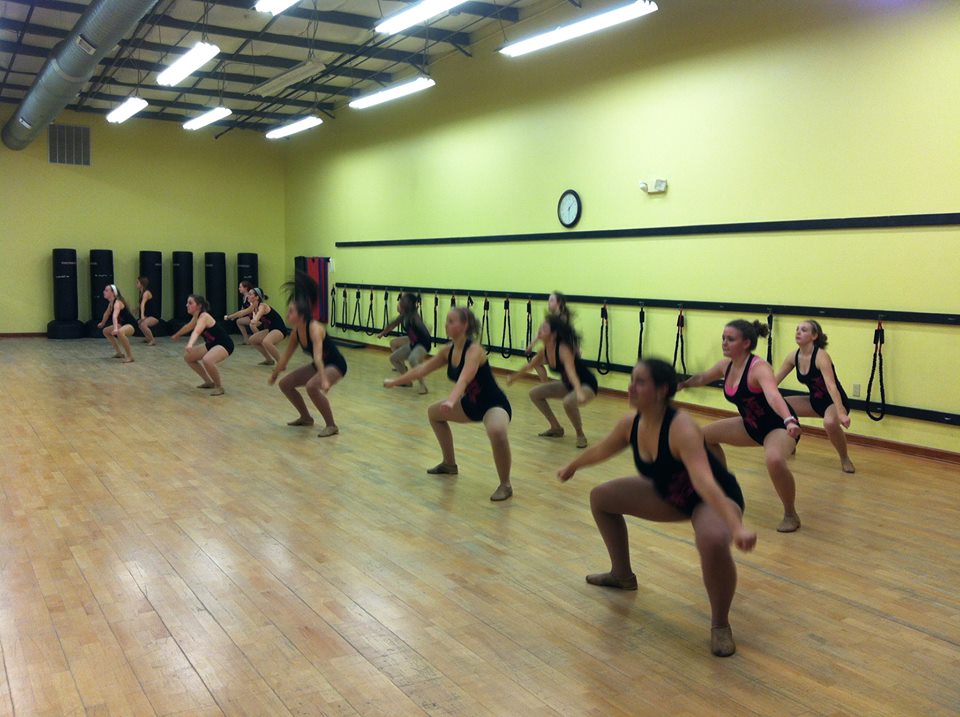 The Dish: Many gyms across the country are adding dance programs. Kids want to compete on a larger stage, and this industry gives them that opportunity where their school cannot. As for ICE, we have had dance teams in the past, but no program for the last two years. This season, we’ve taken a much more serious approach in reintroducing the dance program.
We started hip-hop and pom teams in our Mishakawa location because there really weren’t many options for people who wanted to do competitive dance—especially in the area of pom. There are many local dance studios, but few that offer serious opportunities for high-level competition; lots of people had inquired about it because they knew we had very good competitive cheerleading. With access to the industry via our cheer program, we felt we could offer interested dancers the best shot at high-level competitive dance and national exposure.
Since reviving the dance program, we have been able to increase our numbers without increasing overhead very much because we utilize our space more completely. In our Mishawaka location, we are housed within a 50,000 sq.-ft. state-of-the-art fitness club, so we already have three full-sized dance studio rooms with hardwood floors and mirrors that are used for group exercise classes. We scheduled dance during the off-hours of those rooms, and it has worked well.
The start-up is always the busiest part, but with the right people, it can be a very smooth process. For our Hip-Hop Program, one of our cheer coaches actually had more of a dance background and was thrilled to take on dance, so hiring was not an issue. Our Poms Program was not a terribly difficult process, either. Once word got out that we wanted to start competitive pom at 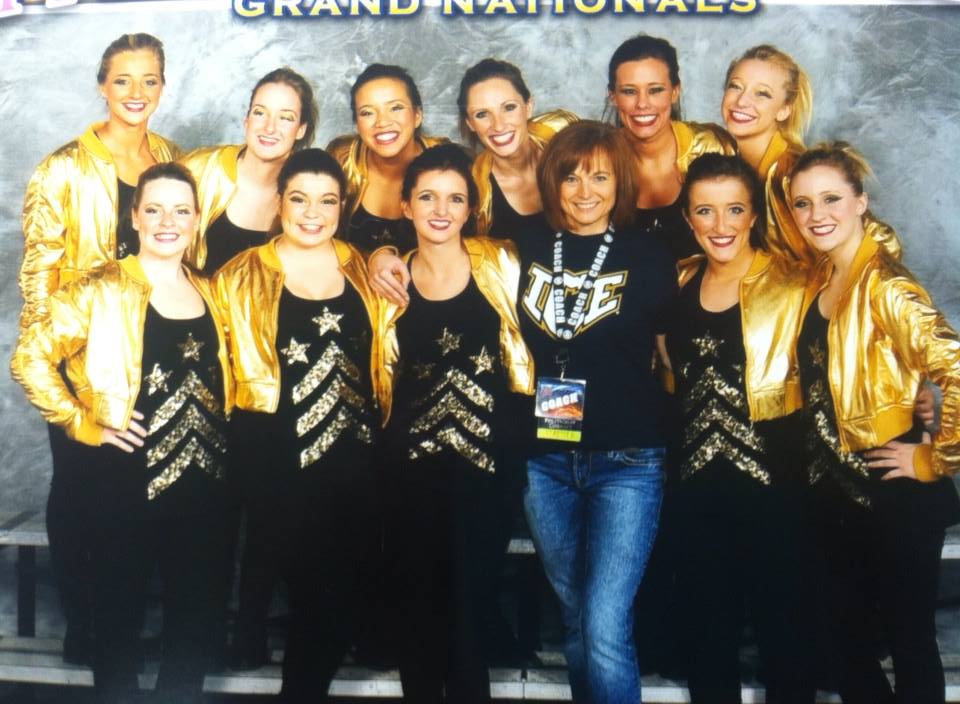 ICE, many of the area high school coaches contacted us and even worked together to help us find our current Poms Director. They were thrilled that we could offer a program for kids so that they would already have experience by the time they got to high school. They really understand the value of an independent, competitive/developmental all-star program for kids and how it can help their own high school squads—it’s been great!
We will start competing with our Poms program next season, but our Hip-Hop Program has been competing at all of the same competitions as our cheerleading program throughout the season. Their very first competition was the GLCC Showdown in Chicago, where they earned a bid to the Dance Worlds. Nearly our entire program was there to watch their performance because none of our kids have really seen an ICE Hip-Hop team. With hundreds of ICE cheerleaders and their families in the VIP section the energy was electric. It is the first time an ICE dance team will be competing at Worlds, so we are very excited.
The fact that they earned a Worlds bid their first time out and that there were so many ICE kids cheering them on really embodied what ICE is all about—we support each other like a family and we work to be the best.
–Dina Gachman
Go, Go Gadget! MyoSource Kinetic Bands
jen : July 1, 2014 12:40 pm : In the Industry| Web Exclusives| webexclusive1 For our “Go, Go Gadget!” review feature, we asked the athletes at Oklahoma Twisters to road test the MyoSource Cheer Kinetic Bands.
What It Is: Designed to improve jumps, flexibility and overall performance, MyoSource’s Cheer Kinetic Bands are leg resistance bands geared at ages seven and higher. They come in two sizes (for those under and over 110 pounds). The product also comes with a flexibility stretching strap (available in four colors) that can help ease stress on joints and provide a practice tool for scorpions and heel stretches.
Our Testers: Athletes at Oklahoma Twisters (Oklahoma City), led by coach Craig Hallmark
How and why they used them: According to Hallmark, jumps have always been one of the strong points of the Oklahoma Twisters program—and he’s open to anything that helps lengthen that legacy. “I liked the idea of Cheer Kinetic Bands because it adds another layer to make our jumps even stronger,” he shares. “When I work with [external] programs on choreography, it always surprises me how much poor technique there is on jumps and that people don’t spend more time on them. At Oklahoma Twisters, we spend at least 30 minutes during every practice.”
For the purposes of the product test, Hallmark introduced the Cheer Kinetic Bands during private jump and tumbling instruction with various athletes from ages 8-14. “We started by doing kicks, then did jumps, followed by conditioning at the end,” shares Hallmark.
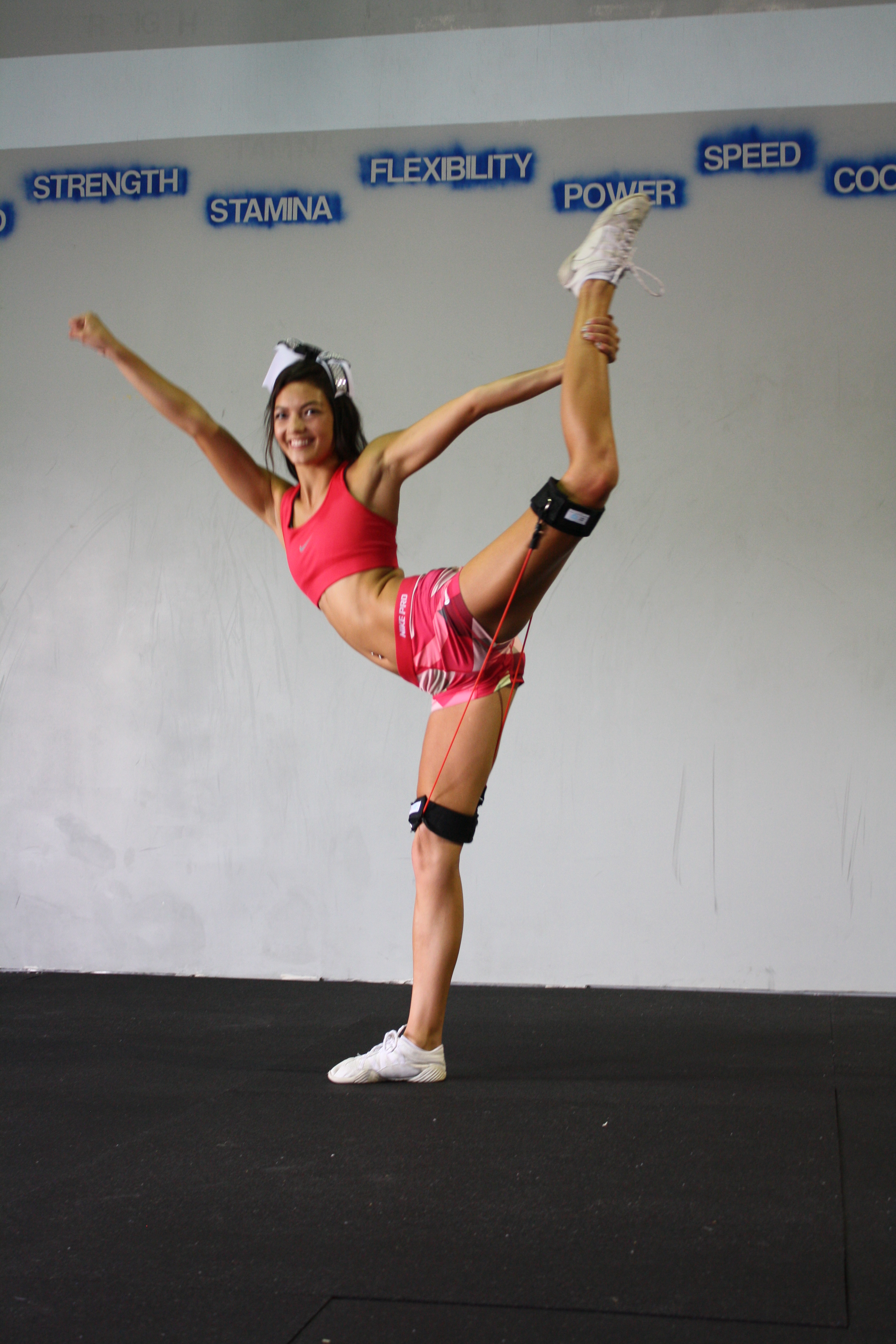 What they loved: Hallmark says he prefers Cheer Kinetic Bands to similar products he’s tried in the past. “The other ones we’ve used had a thicker Velcro thing and it was more of a nuisance,” shares Hallmark. “I liked that the Cheer Kinetic Bands had interchangeable bands with differing resistance, making it accessible to more age groups. It allows for a wide range of athletes to use the product.”
What they thought could be improved: “Some of the kids who are small for their age group had a problem keeping the Velcro on; it was slipping down just a little bit, so we’d have to readjust and tighten up again,” says Hallmark. “However, I recognize that it can be difficult to target a whole age group.” Hallmark is also curious to see how the longevity of the product stacks up: “These bands are thinner than those I’ve used in the past—that’s not necessarily a bad thing, but I’m eager to see how the wear-and-tear is.”
The verdict: Though some of the athletes were skeptical at first, their reactions were positive after testing Cheer Kinetic Bands. “I heard athletes saying things like, ‘These are really going to help my jumps,’” says Hallmark. “In the end, I think these bands will help build muscle memory and strengthen the muscles that are needed for jumps. Repetition will be key—using them over and over again—and I plan to use them as a station when we do conditioning, as well as in privates.”
How to get it: www.myosource.com/cheer-kinetic-bands/
Make the Connection: Why Mentoring & Networking Matter
jen : June 25, 2014 12:22 pm : In the Industry| Two Sides| Web Exclusives Love the new USASF junior coaches’ training curriculum? Thank Courtney Kania-Young of Ohio Extreme All-Stars, whose idea sparked the initiative—with a little help from her mentor, Orson Sykes of Twist & Shout.
Hungry for better safety/emergency initiatives? You’ll be appreciative of the work being done by Houston Elite’s Joshua Johnson (mentored by Ann Lehrman) and Karrie Tumelson (mentored by Debbie Love). Johnson’s proposal for Standardized Emergency Action Plans and Tumelson’s recommendations for Universal Safety Standards for the warm-up room will soon be implemented at USASF events during the 2014-2015 season.
These efforts are part of “Leadership USASF: Mentoring Leaders” program, which started in 2011 under Courtney Smith-Pope and continues under Karen Wilson. Each “class” of 12 finalists is selected by the National Advisory Board to participate in this yearlong program and implement new initiatives that they feel are needed in the industry—with the guidance of a high-profile mentor.
It’s all part of an increasing spirit of collaboration and networking permeating the industry, both online and off. For instance, more than 1800 gym owners and cheer professionals are connecting and sharing inside intel and advice on the All-Star Gym Association (ASGA) private Facebook page. No topic is off-limits—from pesky parents to legality questions to questionable vendors. Platinum Athletics coach Kyle Gadke is one of its many active members and testifies it’s been his gym’s “strongest year to date,” thanks in large part to ideas gleaned from the group.
For instance, at last year’s ASGA meeting in Chicago, he was inspired by Ultimate Athletics’ “team shifts” two weeks after tryouts—an approach they’ve implemented at Platinum with great results. The long-time Level 2/Level 5 coach has also used ASGA advice to improve his own Level 1 coaching skills. “I’d never coached Level 1 and didn’t know the rules; thanks to ASGA, I learned how to coach a back walkover,” he laughs. Gadke also relies on his virtual contacts for feedback on competition routines: “If I’m gearing up for a Varsity event, I can talk to ASGA friends and have them evaluate a video to see what we need to improve on.”
Fellow ASGA member Stephanie Kennedy agrees. Since her gym, Panther Cheer Athletics, is based in Richmond (a suburb of Vancouver, BC), she says it can be easy to feel isolated and out of touch with the rest of the industry. The ASGA group helps her stay plugged in. “I’m overwhelmed by the amount of support I’ve received by other gym owners and their willingness to share information—everything from lesson plans and videos to business forms,” says Kennedy. “Gym owners need to know the knowledge is out there, and making those connections is the key to growing your business.”
Like Gadke, Kennedy has also made invaluable contacts at cheer conferences. It was at the Varsity Gym Owners Conference in Las Vegas that she and PCA co-owner Dawn Silver first connected with Midwest Cheer Elite’s Tanya Roesel, whom later became an invaluable resource as a business/marketing consultant—helping their gym boost revenue via a hip-hop program along with providing technique and safety training.
Working with Roesel was highly inspiring for the her, Silver and the PCA staff, says Kennedy: “Sharing ideas and connecting with other gym owners give you a sense of validation that you are doing it right, just like the big gyms.”
–Vicky Choy and Jen Jones Donatelli
Visit our blog Thursday for testimonials from cheer pros who strongly believe in the powering of mentoring and networking.
Expansion Case Study: CheerForce, Inc.
jen : June 23, 2014 1:02 pm : Down to Business| Web Exclusives| webexclusive2 Creating a thriving program is often the impetus for starting an all-star cheer gym—but what happens when that accomplishment generates considerable demand? How do you answer the call to open another location? CheerProfessional asked three gym owners who took the leap and expanded based on their own initial success.
Learn how CheerForce, Inc. tackles the challenge while maintaining the integrity of their brand.
Expansion Case Study: CheerForce, Inc.
Locations: 6 (California)
Combined Number of Athletes: 500+
Shawn Herrera, founder of CheerForce, Inc., discusses his strategy and business philosophy when it comes to business.
CP: You’re back in school getting your MBA; tell us about that and why you felt it was necessary and what are you discovering?
Herrera: I went back to school because I realized my skill set wasn’t what it should be. The amount of knowledge I needed to do it right [grow the business] was not there. I needed a whole new level of thinking to solve issues, because really, there are two parts to business: product and process.
CP: What do you mean by process?
Herrera: The process, meaning marketing, recruitment, training, all that structure and procedure you need to operate. It is actually more important than the product. But that is not typically the case—most gym owners believe all you need is a good product.
 CP: Why do you think that is?
Herrera: It’s the boring stuff—business basics—and no one wants to talk about it. People open for demand, but never think to ask if it will be profitable. Will it be sustainable? You need to step back and look at the numbers: will it work? You also need to stop and think about the end goal, [which should be] profit. It’s not the revenue, it’s the income—it’s that simple.
CP: Knowing what you know now, what would you have done differently?
Herrera: The scariest part: I realized I wouldn’t do it [expand] the way we did. We didn’t have a process in place; we weren’t ready, and we didn’t have staffing.
CP: How have your practices changed?
Herrera: We are working backward, really. Everything I’m doing now, I’m doing as part of my MBA program and applying in my business. To be financially strong, we need basic processes in place. For example, you need to have an original model that is perfect before you copy. CheerForce wants to be able to duplicate ourselves quickly and successfully. We don’t hit “copy” if I don’t have the process right.
CP: What’s your litmus test for knowing when you are ready to duplicate yourself?
Herrera: If you can go away on vacation for a month, will the gym still function? If the answer is no, you still need to work on your structure. If the answer is yes, hit the copy button and duplicate.
CP: Any last thoughts about owning a multi-location gym?
Herrara: I still strive to succeed with the product but not at the expense of my business, like charging less. It’s not sustaining, and it creates a crazy environment for athletes. We always innovate and test things out at our Simi Valley location. We make sure the original is good enough, regardless of where it’s implemented. For example, we are testing a new DVR system. I am creating a process that can work at every location and then we roll it out. We think of ourselves as one organization with seven teams.lp. Ask anybody and everybody! We are in this industry together and there isn’t a guidebook. Though we are competitors, we are all in it for the kids.
–Cathleen Calkins
Do Dance Teams Equal Dollar Signs?
jen : June 18, 2014 4:00 am : Down to Business| Web Exclusives| webexclusive1 Could the addition of a dance program be something to cheer about at your all-star gym? The sector has certainly seen significant growth in the last five years, with the debut of the Dance Worlds in 2008 and many gyms introducing dance teams and programs. USASF dance committees were formed in 2011 to help foster that growth, and 25 event producers are now on board giving bids to Dance Worlds.
Being part of this emerging trend comes with both risks and rewards for any gym. Though a dance program can diversify your offering and/or boost your bottom line, it’s important to consider elements like scheduling issues, staffing and costs involved. Incorporating dance teams might not be the right move for every gym owner, so it’s important to know the pros and cons before jumping headfirst into those waters.
Rockville, MD-based Shockwave Allstars started offering dance teams and classes last season. Owner Jessie Leone opened the gym with his wife Carrie almost four years ago, and they now have 15 cheer teams, nine dance teams and 410 total athletes in their 15,000 sq.-ft. facility. “My wife runs a very tight ship when it comes to customer service, and we felt that we could bring that same level of commitment to the dance industry,” says Leone. “We also felt it would be a great complimentary use for our facility.”
One of Leone’s top pieces of advice is to “consider whether you can offer a great product with solid margins that can lead you to profitability.” At Shockwave, the Leones incurred a significant amount of build-out expense when they added studios, but because they didn’t expand the facility, the effort didn’t raise their operating expenses other than staffing
Two locations and 275 athletes strong, CNY Storm is now in its 18th year, and owner Kathy Penree added dance teams five years ago when an existing program that already had dance teams in place joined theirs. Though the addition of dance teams hasn’t yet increased profitability for the gym, Penree believes it’s been beneficial as a way of “giving our athletes another outlet for their talent.”
 Fitting the Puzzle Pieces Together
Over at Ultimate Athletics of Ohio, co-owners Denise Haase and Ryhannon Haase-Johnston introduced dance teams six seasons ago. Haase-Johnston oversees the dance program at the gym, while her mom focuses on cheer. The mother/daughter team started with a small dance program offering substantial crossover tuition cuts, which facilitated growth into a larger program. Now that the program is well-established, local dance studios have been coming to Ultimate Athletics for guidance and advice, and going on to compete at all-star competitions.
So how does Ultimate do it? A whopping 75 percent of their athletes participate in both cheer and dance. “We make tuition affordable and really try to balance the practice schedules to accommodate those athletes so they aren’t in the gym seven days a week,” Haase-Johnston explains.
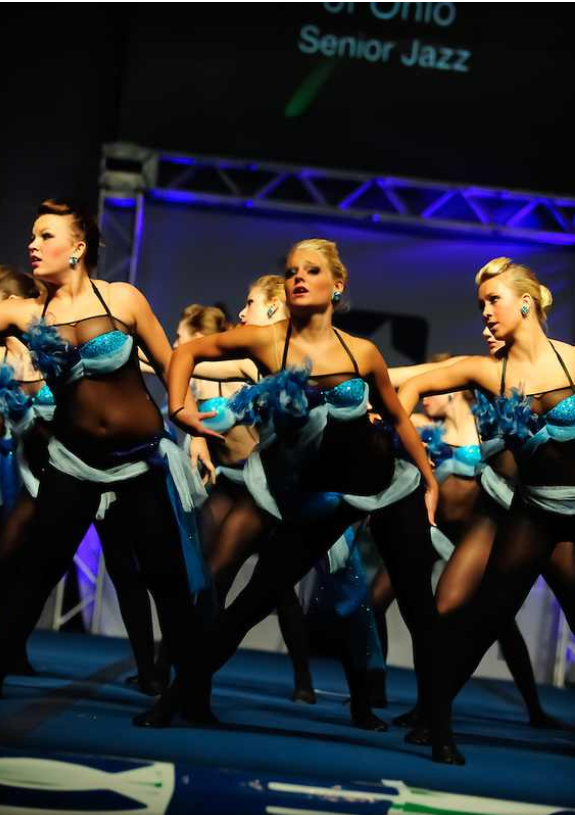
They also try to maximize resources in other areas; for instance, the uniforms and costumes have become multi-purpose as a means of keeping overhead low while still looking professional at competitions. “One unique thing we do to cut back on costs is use our cheer top for our pom teams and pair them with black jazz pants and a mesh leotard to cut down on uniform prices,” says Haase-Johnston.
The tactics seem to be working, as the program has gotten bids to the last three years of Dance Worlds. In May, the gym will be merging with Tumble Athletics to become the newest franchised location of Midwest Cheer Elite—and they hope the dance program will continue to grow. “I wish more gyms could see the potential in turning cheer athletes into dancers,” Haase-Johnston says. “With the right training, it works and gives them an option to express themselves in a different way.”
 Scheduling & Staffing
Like Haase-Johnston, Leone of Shockwave sees dance as a growing sector of the cheer world and a great way for a gym to reach a wider market—provided owners have the right infrastructure in place. However, unlike Ultimate Athletics, they try to have their athletes choose between cheer and dance. “Otherwise, when you get close to competition and start scheduling extra practices, it will become an issue,” says Leone.
At Penree’s CNY Storm, most of her dancers are also cheerleaders, so practice days and times are separated out so that most athletes have a break. “It also teaches those athletes time management skills,” Penree says. However, she adds that competition scheduling can be tough—dance is usually at the beginning or end of the day, making it a long day for any crossover athletes. Smaller competitions can also be a challenge, since there is very little time for costume and makeup changes.
Another top consideration is staffing. Many gym owners stress the importance of not having coaches do too much double-duty, as it can lead to scheduling problems and burnout. One solution is to bring in dedicated dance coaches who can focus on that aspect of the program—for gym owners who are able to find the finances, it can be a huge plus.
Ultimately, the way a dance program is run is up to each individual gym owner, because what works for one gym may not click with another. Consider the infrastructure you have in place, your gym’s finances and your future plans carefully before you commit. If a dance program makes sense for your business, it could be well worth the risks. “Every time a new child joins the gym, your profit margins should be the same for cheer as well as dance,” says Leone. That way, “as an owner you do not care which one they join—only that they join your gym family.”
–Dina Gachman


