

In addition to all the great content we bring cheer professionals in our quarterly print issue, you’ll find plenty of original exclusive content right here at TheCheerProfessional.com.
Keep checking back for all the latest and greatest news, updates, debates and more!
Mind and Body Medicine: Meditation!
jen : May 27, 2013 12:40 pm : Mind, Body & Soul| Web Exclusives| webexclusive1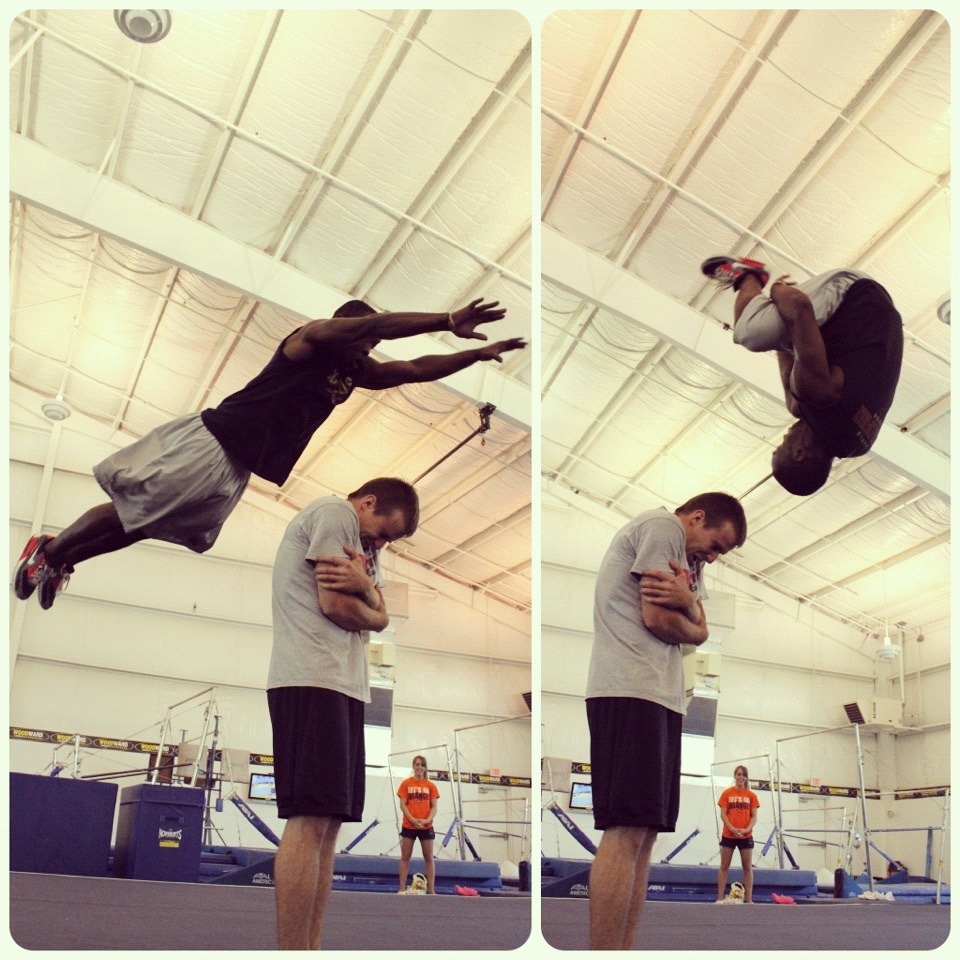 Ozell Williams has always been a man in motion. When not cheering at games or competing with his squad at the University of Colorado – Boulder, Williams is entertaining Denver Broncos fans with his power tumbling team, the Mile High Tumblers. Though stillness doesn’t come naturally for the college junior and Tumblers’ founder/CEO, Williams swears by regular meditation—a habit he says helps to heal his body, recharge his mind and optimally manage his multiple endeavors.
“To connect with others, you need to learn how to tap into your emotions, but first you need to learn to connect with yourself,” says Williams. “Meditation helps me do that.”
So what is meditation, exactly? Put simply, meditation is the practice of calming the mind in order to achieve a state of deep contentment and/or reflection. (Translated from Sanskrit, the term means “peacefully abiding.”) For nearly half a century, Westerners have known about meditation, but many still don’t fully understand the practice or its benefits. Scientific studies show that meditating can decrease stress and burnout; enhance creativity; promote relaxation and restful sleep; and maximize oxygen efficiency.
“Meditation is one of the best tools we have to go beyond the mind’s noisy chatter and experience the peace of present moment awareness,” says Kyla Stinnett, a certified primordial sound meditation instructor at the Chopra Center in Carlsbad, California. Intrigued? Get a primer on achieving this mystical mindset:
Dispel preconceived ideas. The uninitiated may believe meditation involves sitting cross-legged on a mountaintop for hours on end. Not so, says Michael Miller, who operates meditation centers in New York and London. “Meditation is very much for the modern world,” he says. “People often think meditation is having to adopt a philosophy, belief system or religion—but it’s a simple mental technique.”
Indirectly, meditation can help coaches and gym owners become better role models for athletes—offering a prime example of good self-care, adds Miller.
No incense or candles needed. University of Connecticut alumna Kimberly Daniels had accumulated a laundry list of injuries during her days as a cheerleader and UCA camp instructor. In 2000, she discovered meditation, which not only nourished her mind but also diminished the pain from her cheering-related injuries.
Now a meditation teacher, Daniels indicates that the practice can be done almost anywhere for any length of time. “Try to find a comfortable place, close your eyes and focus on the breath. Listen to the sound of each inhale and exhale, acknowledging thoughts but letting them go,” she says.
While daily practice is ideal, Daniels notes that in today’s overscheduled world, it’s necessary to be flexible. When time poses a challenge, a quiet nature walk is better than nothing. “You could even meditate for five minutes in the car on your way to cheer practice,” she adds. “See what works for you. Once you start making time for meditation and you skip a day or two, you really miss it.”
Carve out some downtime. Williams manages to incorporate meditation at least twice a day, often when relaxing in the steam room. “I listen to music and relax my body, going into my deepest thoughts,” he says. Not only does it help Williams decompress, but meditation is also key in helping him navigate his attention-deficit hypertension disorder—bringing about more focus and patience as he goes about his day.
Though the results are well worth it, it does take considerable time and dedication to incorporate meditation into everyday life. Like most habits, it takes 21 days for meditation to become ingrained; it’s important to establish routine by practicing at the same time for as many days as possible (even if just for five minutes). Though calming the mind can be challenging at first, stillness often becomes easier over time. The best way to reap the rewards, according to Stinnett? “Stick with it.”
Peace Be With You: A Quick How-To
To begin, find a comfortable position either 1) sitting on the floor with legs crossed loosely or 2) in a chair with feet flat and knees bent. Keep your spine erect but not stiff, and place your hands on the thighs, palms up. Relax your fingers, jaw and tongue and tuck in your chin slightly. Close your eyes and listen to the breath. (You may choose to play some soft music or burn incense and/or a candle, but this is optional.) As you turn your awareness inward, notice any thoughts or emotions that come into your mind. Don’t try to force them away, but gently bring your attention back to the breath. Continue breathing in your normal pattern.
Apply Yourself: Smartphone Apps for Gyms
jen : May 22, 2013 12:22 pm : Down to Business| Web Exclusives “We’ve got an app for that.”
For gym owners, this is no longer just a trendy catchphrase—in fact, they now can utter those words with confidence. A growing number of all-star programs are recognizing the popularity and usefulness of mobile apps by developing customized apps specifically for their gyms. And the timing is right: more than half of mobile subscribers now use apps instead of Web browsing on their smartphones, according to Internet marketing research company comScore.
For the tech-challenged, a mobile application (or “app”) is a program designed for mobile devices like smartphones and tablet computers. Apps are distributed through application distribution platforms that are operated by the company behind the device’s operating system. For instance, iPhone users download apps from iTunes and the Apple App Store, and Android users download from Google Play.
How does this all play into running a cheer business? Most gym owners create an app to meet two main objectives: communicating with existing customers and marketing to new ones. Find out how it works—and whether it’s worth it.
Just the Push Your Clients Need
At Future Extreme Cheerleading in Loganville, Georgia, gym owner Micah Redden is currently developing an app that he hopes will help ease his workload. Not only will he be able to notify parents and students of schedule changes and class openings, but the app will also update the online schedule so that he doesn’t have to maintain the gym website separately. Since Redden needs to communicate with various groups, the app will also allow him to choose what information to send or “push” to selected people. “Basically what gym owners want from an app is to advertise, publicize and notify,” says Redden.
Like Redden, many gym owners use push notifications to alert their app users of special events, schedule changes, promotional offers and other updates. The perk of push notifications is that they get more attention than emails and texts, since they automatically appear on a user’s smartphone and demand instant attention. Depending on the app’s design, gym owners can either schedule a specific day and time for the notification or send it themselves.
Another increasingly popular feature is the Quick Response (QR) code, a square bar code that can be scanned by smartphones to quickly access a website. Tanya Roesel of Midwest Cheer Elite in West Chester, Ohio features QR codes prominently when advertising to potential athletes. QR codes are on many of Midwest Cheer Elite’s marketing materials, offering easy access to event information, promotional discounts and links to social media. “What’s great about QR codes is that they don’t take up a lot of space and they provide an automatic link to us,” Roesel explains.
To DIY or Not to DIY?
Though it may be tempting budget-wise to attempt designing your own app, most experts caution against it. Do-it-yourself mobile app classes are readily available online, but it’s best to hire a professional for apps intended for business use. Apps created in DIY courses are generally based on standard templates, resulting in a somewhat cookie-cutter look; also, gym owners who want their app to be available to iPhone users (currently about 53% of the U.S. market) will need to get approval via the rigorous Apple Review Process. Since Apple prides itself on beauty, design and functionality, they usually will reject any app that looks like a template. (Android phones are less discriminating; they approve and accept all apps.)
When choosing an app designer, it’s also key to hire a company that offers ongoing service support in light of the ever-changing market. Whenever new devices or updated versions of smartphones are released, they require updates in order for an app to work properly. So, unless you’re a software wizard, most would advise leaving the design and maintenance to a professional.
Another advantage of hiring a mobile app developer is the ability to check analytics. “My customers like the easy access to usage reports that can tell them how many people have downloaded and used their apps,” says Gene Cook, owner of 1BoxApps, a mobile app design company in Temecula, CA that has designed apps for Matrix All-Stars, Cheers Unlimited and Five Star Athletics.
Depending on the company, Cook estimates the cost of most apps (including development, design, Apple submission and maintenance) to be between $500 and $700. Though the investment can be steep for some, any business owner knows that long-term profitability means adapting to new technology and keeping up with the evolving times. As for whether all gym owners will eventually adopt apps for their gyms, Roesel predict, “The smart ones definitely will.”
Candid Coach: Randall “Big Dog” Harper
jen : May 20, 2013 7:00 am : In the Industry| Web Exclusives| webexclusive2 His birth certificate may read Randall, but it is “Big Dog” Harper who has risen to the top of the cheer world at Midwest Cheer Elite in West Chester, Ohio. Named the USASF’s Cheer Coach of the Year in 2012, Harper says that it’s the strong bonds he cultivates with his athletes that keep them all striving for excellence. Find out more about this larger-than-life cheer professional in our exclusive Q&A:
What are some of the unique challenges of coaching an all-star team?
Harper: I wish I’d known that when you’re an all-star coach, you’re not just a coach, but also a psychiatrist. You’re the big brother and the father figure.
As far as challenges go, every athlete is different. Some need you to be stern to motivate them, while other athletes just need you to put your arm around them and say, “It’s okay.” The real challenge is knowing how each athlete on your team ticks. I [make it my business to] know what their family situation is like; I know what they’re doing at school. I can see their body language—if they’re good or if they’re sad—so I know when I need to go up and ask, “Everything all right?”
You’re known as a coach who treats his athletes like family. Why does this work?
Harper: The one thing I know I do best is coach with my heart. And that’s how I want them to compete—with their heart. I treat each athlete like family because it is a family sport. I stop by at birthday parties and graduations, and if someone gets injured, I go to every surgery. I’m there when they go to sleep, when they wake up and at the house afterwards to see if they need anything.
If you treat them like family, they’ll put forth the extra effort for you. They feel like, “He’s got my back, he saw me through my surgery or that hard time in my life, so if he says, ‘Give me that double one more time,’ I’ll do it.” If I’m there for them, they’ll do what I ask them to do without second-guessing.
What’s some advice for someone starting out who dreams of competing in all-star?
Harper: Be yourself! I see tiny kids who look up to others in the gym and they want to be like them. You see kids get burned out when they say, “I want to be a Level 5 athlete right now,” and they’ll try to cheat to get to where they want to be, rather than doing the work and repetitions necessary to truly gain the skills to move forward. Other kids push and push and get burned out, and then they lose the love of the sport. Go at your own pace, and let your own skills dictate when you’re ready to move forward.
How would you describe your coaching strategy?
Harper: They’re the ones who make me look good! Listen, my role is: if the team wins, they get the glory. If the team loses, that’s when I step forward; they need someone to guide them and tell them it’ll be okay. I’ll be the first one to step in front of them and say, “You may have messed up, but you won’t deal with this on your own, and you’ll get better.” And I’ll get a better performance the next time, because they know that Big Dog has their back.
Growing Pains: Going from Small to Large Gym
jen : May 15, 2013 12:45 pm : Down to Business| Web Exclusives| webexclusive1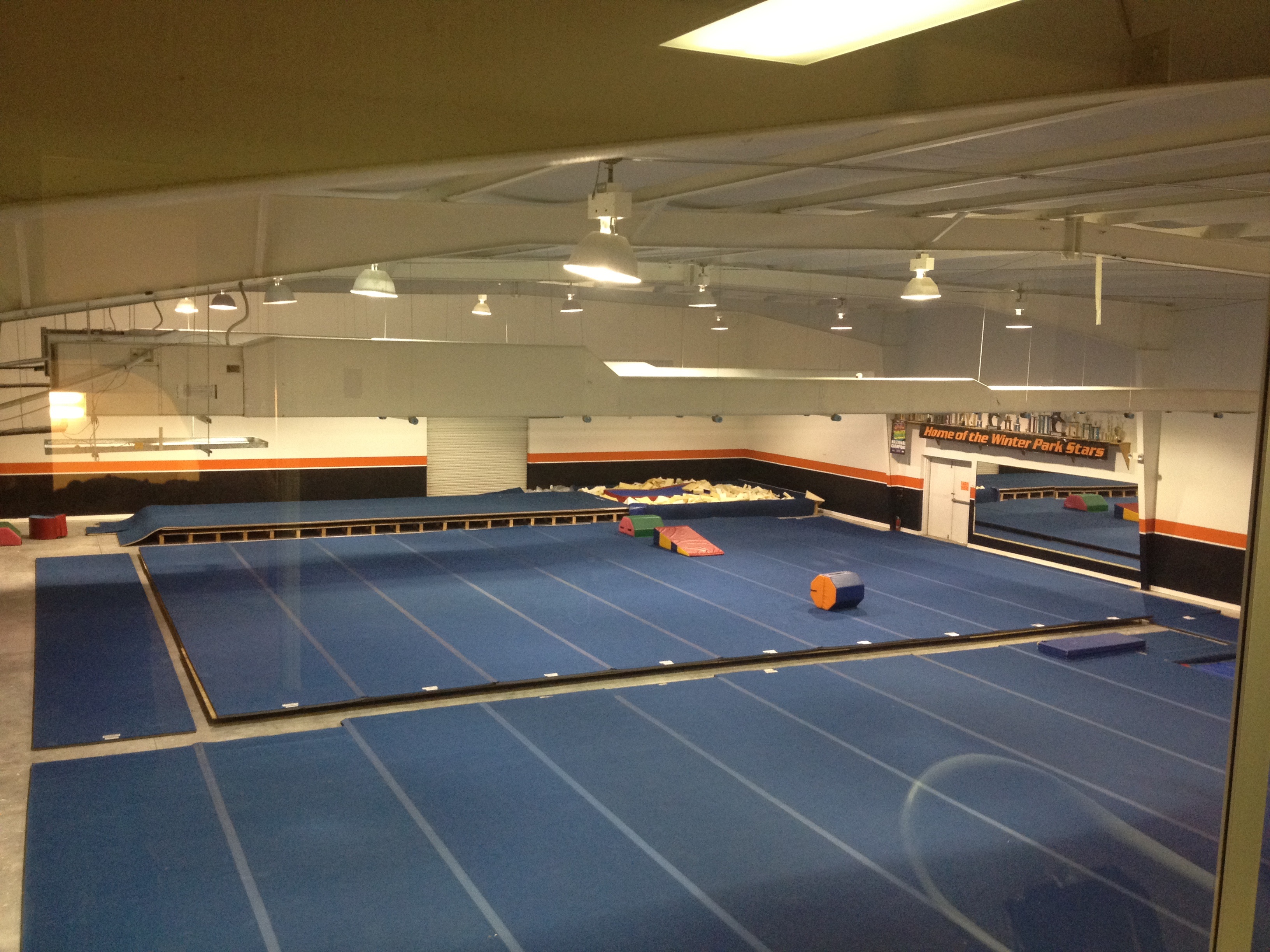 The line between small and large gym is drawn by USASF, which defines small gyms as having 75 or less athletes and having one physical location. So is crossing the threshold can be as simple as the difference of just one athlete? Far from it—as making the jump from small to large status can often multiply the risks, rewards and responsibilities associated with running your gym.
Just ask Candace Guilford, owner of Florida-based Winter Park Cheer Athletics. Guilford relocated her gym in May 2012, shifting from a 4,200 square-foot facility to a 12,000 square-foot space. She felt that the gym was “bursting at the seams,” which prompted the move. Though the extra floor space has been a plus, Guilford says it’s managing the extra bodies that can be a challenge. “I don’t think I expected all of the fires that I am constantly putting out,” says Guilford. “Spending time with coaches, dealing with the kids—when you go from three or four small squads to eight or nine larger teams, it’s a jump. It can be a scheduling nightmare.”
Like Guilford, Pattie Brower of Tri-State Cheer in Havertown, Pennsylvania, has wrestled with similar challenges after expanding her gym. The expansion doubled the gym in size to 14,000 square feet and added a second 54’ x 42’ spring floor and 42’ x 48’ flat floor. Since the ribbon-cutting ceremony last year, Brower has focused her energy on finding ways to keep the space afloat. “Structurally, scheduling teams was never a challenge,” she says. “The challenge is that off time, the fill-in time that offsets the cost of expanding. I just thought, ‘What am I going to do since my costs have doubled?’”
For Brower, the answer so far has been renting space to outside athletes and teams. However, she cautions that gym owners should seriously consider these extra costs when thinking about expanding or moving—rather than just jumping into the decision because they feel like bigger is better. It’s easy to feel energized and optimistic by the success of mega-gyms, but many owners who’ve made the leap say that athletes and their safety should be the primary focus, rather than shiny new equipment or gigantic facilities.
“Don’t get bit by the industry bug and think you definitely need a bigger gym and better equipment,” Guilford continues. “You could easily end up in debt.”
Timing is Everything
For both Brower and Guilford, the right time came when they felt they had no other alternative. “Making that huge jump was scary,” says Brower. “We waited until we had the right amount of athletes, and we became so large that [it was necessary] to break through the wall and expand.”
Guilford is also an advocate of waiting until your program has physically outgrown its space to make any major decisions. For her, the right formula was waiting until every minute and every inch was optimized before making a move. “All you need is a floor if you have great coaching,” advises Guilford. “Don’t try to jump into a larger location too fast—instead, use your floor time wisely. Don’t move until you maximize your space seven days a week.”
Proper budgeting is also paramount to determining feasibility. It’s important to connect with owners of similar-sized gyms to get a realistic idea of monthly costs, as well as to work closely with a bookkeeper and/or business consultant to estimate projected expenses. (To determine a “break-even budget,” ACX’s Randy Dickey advises taking all of your bills and dividing the total by how many hours the gym is open—it may be helpful to compare your current number and the projected number to see how much they differ.) So is it the right time? Let your ledger do the talking.
Keeping the Small Gym Feel
Stephanie Hoot-Whiddon has been through it all at Richmond, TX-based Texas Thunder—from growth to downsizing to an upcoming move in June to a larger facility. (The Texas Thunder website says it’s “Where Large Gym Talent meets the Small Gym Atmosphere!”) Keeping that close-knit, personal feel is important to coaches like Hoot-Whiddon, and like Guilford and Brower, she does not think bigger always equals better. “This industry is constantly changing,” says Hoot-Whiddon. “A lot of people in this industry don’t do this to get rich, and there’s a lot to be said for smaller gyms. I really do it for the kids.”
That seems to be a common thread between owners who have expanded their gym size. It’s easy for kids and athletes to get lost in the shuffle when the numbers grow, so owners must make extra effort to make them feel like they’re an important part of the gym family. For example, Brower’s gym has team bonding events and sleepovers, and Guilford places top priority on making sure “the kids aren’t just a number where you don’t even know their names.”
For Hoot-Whiddon, “finding a responsible staff is the biggest challenge” when a gym is expanding in size. After all, when growth necessitates hiring more coaches and employees, it can be doubly challenging to find the right employees—and make sure they match your values. “My ultimate goal was to have a bigger program but also keep that one-on-one, fun, friendly atmosphere. Losing that was my biggest fear,” Guilford admits in retrospect.
For many gym owners, it boils down to whether you’ve done the proper legwork, whether the timing is right and whether you’re expanding for the right reasons. As Brower says, when all those things come together, “The reward outweighs the risk.”
Owner’s Manual: Andrea Fagundes of Athletic Perfection
jen : May 13, 2013 12:45 pm : Down to Business| Web Exclusives| webexclusive2 In our “Owner’s Manual” column, we ask gym owners to take us “under the hood” and give us their secrets to what keeps their gyms running so smoothly. Find out how Andrea Fagundes and her co-owners at Athletic Perfection handled the transition from small gym to large gym in style:
Vital Stats:
Name: Andrea Fagundes, co-owner (with Jennifer Moore and gym founder Julie Van Os)
Gym: Athletic Perfection Cheer
Location: Tracy, California
Founded: 2003
Size: Eight all-star teams and two all-star prep teams
Gym size: Approximately 6,000 square feet
Debrief: Last summer, Athletic Perfection hit a peak number of 115 athletes—the most the gym has had in its 10 years and a growth of more than 30 percent from the previous season. We spoke with co-owner Fagundes about how her gym is handling the exponential growth—and how they plan to ride the wave of success.
The Dish:
As the class sizes started to grow, Julie realized she couldn’t do it alone, so Jennifer and I came on as partners in May 2012. The biggest thing for the three of us has been to find a balance as far as our respective areas of expertise. In general, I work as the all-star teams director, choreographer, curriculum director and head of merchandise design. Jennifer works on all finance and sales. Julie is call director, along with working on advertising, marketing and choreography. We hold regularly scheduled weekly meetings, which are crucial because they allow us to openly discuss any issues. They also give us time to inform each other of what’s been happening on our end during that week.
Being 100% upfront and organized has been a huge key to our growth. Calendars, conferences and emails are how we stay focused. The three of us had an eight-hour meeting in December during which we planned our entire calendar for 2013. Now we know when picture day is and what days we are open; we have a clear picture of what we need and what we have to offer. The worst thing is for a new face to walk into your gym, and you don’t have an answer for them or a way to keep them in your program. Staying super-organized means that when prospective customers call, we have schedules and dates to share—and they can immediately join a class, team or camp.
Being organized also ensures that, when the gym opens at 5 pm, it’s not a crazy madhouse but instead organized chaos! There are times where it does start to feel a bit crowded in the gym, so we always communicate who will be working—especially during busy hours.
Even as we grow, it’s important to maintain a high level of personal attention. Just like schools have parent-teacher conferences, we offer monthly owner-parent-coach conferences. The gym will not run smoothly if parents are talking about issues among themselves, so we open up the window of conversation. When parents have something they want to address, they can sign up for a 10-minute time slot. The three of us take turns each month [meeting with parents]. We also make sure that at least one owner is available at all times to communicate with parents and kids during business hours.
One of my top pieces of advice would be to never be afraid of having these face-to-face conversations. I probably have meetings once a week with an athlete or a parent. So much of what goes on is usually caused by miscommunication and things getting taken out of context. Ask the parent and see what’s going on—that way, they feel they can get on an even level with you. You get a real read of the struggles an athlete might be facing.
Each staff member is encouraged to choose different athletes each practice and praise them so they know that their work is being noticed. We hand out “You Rock!” postcards, and behind the scenes, we keep detailed binders on each athlete. If we see athletes that haven’t received one in a few months, we do our best to recognize them so they don’t go a whole season without receiving some sort of affirmation.
With more athletes in the equation, it’s important to take a heavier hand in helping them and letting them know that they are part of a family. One of the biggest rewards has been seeing decals for our gym on cars or seeing girls wearing our logo—just knowing that they love Athletic Perfection.


