

In addition to all the great content we bring cheer professionals in our quarterly print issue, you’ll find plenty of original exclusive content right here at TheCheerProfessional.com.
Keep checking back for all the latest and greatest news, updates, debates and more!
Expansion Case Study: Stingrays
jen : May 29, 2014 9:36 am : Down to Business| Web Exclusives| webexclusive1 Creating a thriving program is often the impetus for starting an all-star cheer gym—but what happens when that accomplishment generates considerable demand? Many business owners answer the call for expansion and go on to open multiple locations. To learn more about this approach, CheerProfessional asked three gym owners who took the leap and expanded based on their own initial success. Learn how the Stingrays tackle the challenge while maintaining the integrity of their brand.
Expansion Case Study #1: Stingray Cheer Company, Inc.
Locations: 4 (Georgia and Alabama)
Combined Number of Athletes: 1500+
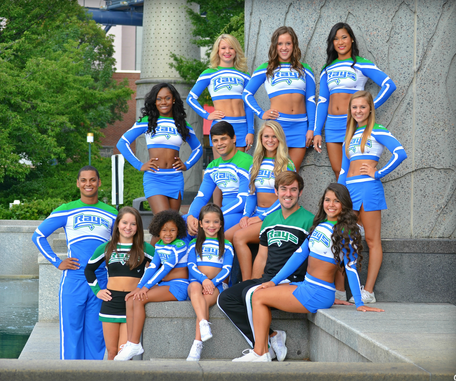
Casey Jones, owner of Stingray Cheer Company, Inc., talks about his gym’s growth to meet the needs of the community and his staff.
CP: Tell us about the various Stingrays locations.
Jones: We now have four locations including our new gym in Alabama, which will open in May 2014. The other three locations are in Georgia—Marietta and Johns Creek, as well as one overflow gym in Kennesaw.
CP: How do you typically split your time between locations?
Jones: Right now I work at two locations—Marietta and Kennesaw—because that’s where I live. I go to Johns Creek one day a week. We haven’t taken over the Alabama location yet so there hasn’t been a need for me to travel there.
 CP: Take us through your expansion history into a gym with multiple locations.
Jones: We started in Marietta, and before opening any additional locations, we wanted to make sure we were doing everything we could there. But we had maxed out our space and it was time to grow.
CP: Was it a function of supply-and-demand, too? How did expansion into Alabama come into play?
Jones: Our All-Star program grew by 200 kids with Johns Creek so we decided to open Kennesaw as overflow. Kennesaw is only five miles away from the Marietta facility; they really function as one gym. Alabama was different—we had a long relationship with the gym there, so we partnered with them before taking over entirely.
CP: What do you perceive as the main risk when it comes to expansion?
Jones: The biggest risk is growing too quickly. You have to have the resources to service the locations (resources being time, funding and staffing). If you don’t, it’s best not to do it at all. For us, I look at the demographics of an area and the population. How many kids are there? How many schools? Is there opportunity to work with the school system, which in turn will feed our all-star programs? But overall, [my advice is to] grow slow and expand when you have to. I’m conservative: as I’ve gotten older in the industry, I just don’t want to chance it [failing at business].
CP: What makes Stingray Cheer Company so successful?
Jones: We wanted to offer a great product and now, with our growth, we are able to offer more people access to Stingray Cheer. We also wanted to provide career opportunities for our instructors and employees; our growth creates that for them.
 5:00 or 6:00 am: I get up early in the morning to work out before the girls wake up. (I have two little girls: 3-year-old Ruby Jane and 1-year-old Eleanor.) 90 percent of my workout is straight running—right now, I use the treadmill because it’s been so darn cold [in Kentucky], but I’ve done a couple marathons and a bunch of half-marathons and smaller races. Then I shower, drop Ruby Jane off at pre-school around 8:30ish and come to the office.
9:30 am: I don’t sit down and check email right away, because that totally distracts you from everything. Instead, [I make] a to-do list. I leave it on my desk, and then try and visualize my day and where I’m going to put my time.
10:00 am: Time for some emails! I really try to sit down and tell myself, “Be productive and don’t sit here for eight hours and get five hours of work done.” When I leave, I’m done for the day. With two young kids, I’ve made an emphasis to get stuff done before I get home; I try not to let it seep in [to home life].
11:00 am: We couldn’t become JAM Brands without the people we have. I normally check in with Tara Harris, VP of Sales and Development, to see what’s going on. Early in the week, I definitely check in with our brand leaders to see how the weekend went, hot buttons, whatnot—and, obviously, to discuss the next week’s events. It’s the same thing every week, in terms of events ending and events starting. (This dialogue continues throughout the day.)
Noon: For lunch, I try to do 50/50, bringing lunch and going out to eat, but it doesn’t usually work out like that. There’s a rotation of places around the office I go to: Qdoba, Jason’s Deli, Backyard Burger, Chick-fil-A, Subway….
 2:00 pm: Check in with the judging department to see how they’re doing. It’s important to make sure that I’m staying up to speed on what’s going on.
4:30 pm: Head home to be back with the girls. The girls take an afternoon nap, so I spend the rest of their waking hours with them until they go to bed. We do anything from arts and crafts to going downstairs to the playroom. Just being a present dad is the most important thing, and I’m lucky that I can do that. That’s my wife Shannon’s time to step away from the girls for a bit.
6:00 pm: Lucky for me, Shannon likes to cook! She makes very good, healthy dishes for us; we love her chili and fish dinners.
7:45 pm: The girls go to bed around 7:30, so Shannon and I try to go downstairs and have adult talk about how our days were. (Even during dinner, it’s a lot of Ruby Jane saying, “Mom! Mom!”)
8:00 pm: Like most people, we have shows that we like to watch on DVR; it’s just trying to enjoy quality time being together. We’re addicted to season one of “Breaking Bad” right now; we also got hooked on “Nashville” and “Boardwalk Empire.” Shannon and I are really big sports fans, so on Saturdays, we’ll be watching games like football and basketball depending on the season.
9:30 pm: Jokingly, but seriously, I’ve been known to fall asleep on the couch. It’s kind of like, go ‘til you’re done, and then you shut it off. There are nights when I could stay up all night and watch meaningless TV, but I have to get up at 5 or 6 am!
 When JAM Brands co-founder Dan Kessler tried cheerleading for the first time at the University of Louisville after two years of playing collegiate soccer, his friends told him he was a natural at stunting. But he still had to learn the techniques from the ground up: a toss hands, then a toss hands extension, then a liberty, then a top hand. “[Stunting] was a new athletic skill that I had to conquer and try to perfect,” he says. “That addiction of getting better kept me going to practice and working.”
One could say the same thing about the way Kessler approaches his business: taking one huge blowout cheerleading event, JAMFest, executing it, fine-tuning it and ultimately growing it into a 130-event-a-year production company, The JAM Brands, whose competitions young cheerleaders and dancers all over the continent clamor to attend.
In 2000, Kessler joined JAM Brands co-owners Aaron Flaker and Emmett Tyler, two of his old college buddies who’d started JAMFest in 1995, and made the team a “triumvirate,” as they call it. “People say [not to] mix business with pleasure or friends with business, but the personal relationship and appreciation and care that we have for each other [is what makes us different]. We like to see each other succeed in life, and that’s helpful,” Kessler says.
As far as splitting up the work goes, Kessler credits Flaker for JAM Brands’ marketing success—right down to the fonts on the signage—and Tyler for a “top-down” perspective, including calculating dollars and cents). Kessler says his own contribution to the triad has been a strong focus on product development, as well as vision for the energetic, fun vibe and look that JAM Brands events are known for. He’s also a pro at “relationship-building,” a strength that’s paid off in spades—for instance, the ideas for both the Majors and the U.S. Finals grew from listening to what cheerleaders, parents, coaches and industry professionals had to say.
“Customer service and listening to people is very important. I try to listen to what is wanted and needed and then bring that into our products,” Kessler says.
 To pull off events of JAM Brands’ caliber and visibility is a feat that Kessler says is attributable to several business must-dos:
Keeping the lines of communication open: Kessler heavily relies on personal communication with coaches and gym owners to disseminate information, and he leans on his office staff to facilitate that end. “Our staff is there to answer and make calls, answer emails as quickly as possible and get out the information as quick as possible,” he says. “You’ve got to have people communicate [your] message.”
Using social media to your advantage: Banners advertising event hashtags and Twitter accounts have become invaluable tools, as has using social media to “pre-promote” logistics information. “We try to tell the coaches and owners to tell the families to like us, follow us and hashtag us, so they can always be up-to-date,” he says. “That’s one of the things unique to us, even now, is the ability to get [information] right away.”
Viewing others’ successes as good for the industry as a whole: Even when competitions similar to JAM Brands pop up, Kessler welcomes new entries into the event business. “We feel pride that we can put out great products and services that other people want to replicate or duplicate or imitate, because that means it’s good,” Kessler says. He’s also keenly aware of how more events can aid the bigger picture of growing the sport in general: “Ultimately, our goal is to get as many kids to walk through the doors of a gym as possible—because that’s the most important thing in our industry: growing the number of participants.”
Making it about the kids: Kid-friendly bells and whistles like inflatable “fun zones,” Jammy the mascot, interactive video technology, social media participation and humorous gags like coaches or grandmas dancing together are all hallmarks of JAM Brands events. These elements are designed to encourage children to have a blast—and their decision-makers to attend the next JAM Brands event.
In event-speak, these are “external fun factors,” according to Kessler. “We invented or created many of the things you see on the all-star market today, and it started with focusing on the kids—that’s why we went with the name JAMFest,” Kessler says. “When you think of JAMFest, it has nothing to do with cheerleading. Back in the day it was NCA, UCA, MCA…very ‘alphabet’ companies. This idea was, ‘We want to have competitions, but we want to remember that these events are fun.’”
Fun is also a personal value of Kessler’s, right down to regular evening playtime with his two daughters and his legendary annual Kentucky Derby party, famous in Louisville for providing what Kessler calls a “slow start” to the long weekend, by way of conversation and bourbon cocktails. This year, his wife Shannon’s new company, Primp Style Lounge (a hair wash-and-style service similar to the popular Drybar chain), is slated to make an appearance at the festivities.
Kessler is proud that his other half shares his entrepreneurial spirit. “We’re America,” says Kessler. “You watch cheerleading competitions and you say, ‘I can do it better.’ [Same with Primp Style Lounge]—it’s along the lines of what we see in New York and Chicago and LA. [Shannon thought], ‘These ‘dry bars’ and blowout places are great, so we’ll bring it to Louisville.”
Now that’s what we call Kentucky fried business smarts.
Candid Coach: Jackie Lindom
jen : May 14, 2014 12:17 pm : In the Industry| Web Exclusives| webexclusive1 At this stage in her cheer career, Jackie Lindom does it all. Besides managing the Twisters Elite Cheer & Dance Gym in Lake Villa, Ill., Lindom also coaches, helps with choreography for various teams and judges for Xtreme Spirit and several rec competitions. (Oh, and she is just 21 years old.) Having been a cheerleader since age five, Lindom made the transition from competitor to coach/gym manager shortly after competing at Worlds in 2010 and has continued to expand her role—inside the gym and out—throughout the years.
As yet another busy season comes to a close, we caught up with Lindom amid her jam-packed schedule to discuss her career, her balance techniques and her affinity for the sport.
How did you make the transition from athlete to cheer professional?
Lindom: As an athlete during my last three years cheering (up until when I was 18), I was always helping out at the gym. My coach on Senior 5 brought me up and transitioned me into the coaching aspect. I worked my way up and coached the Tiny Team for two years, then coached minis while still on Senior 5. After I competed in Worlds in 2010, they hired me [as an employee]. Just being in the gym and learning under my Senior 5 coach taught me everything I needed to know. I’m passionate about my job.
Share more about your various roles and how much time they each take.
Lindom: My number one [focus] right now is Twisters. I pay most of my attention to the gym, making sure it is running smoothly and that the athletes are doing everything they should. I am still very much involved in choreography, traveling all over the place for school and rec teams. I also helped out with skill clinics over the summer; we hosted one at Twisters, and Gabie Dinsbeer, Erica Englebert and a few other “cheerlebrities” came in. I got to work side-by-side with the best of the best. I also judge every weekend. (I didn’t have a free weekend from February through Memorial Day!)
What are your tips on balancing various facets of a cheer career?
Lindom: I just like to go with the flow. I am always just crazy busy; it’s normal [for me]. I do take on a lot, but I get it over with and do the best I can.
What do you think would help improve the competition experience on both sides (for judges and teams)?
Lindom: I think overall, all judges should be trained better on the [specific] scoresheet that they are judging from. I know there are coaches and judges who judge across the board for [various] companies, but I don’t think that some of them have the best knowledge on [every] scoresheet. More training is necessary.
What issue seems to come up often with parents in your gym, and what’s your top tip for handling it?
Lindom: There are always parents complaining or getting into drama with the other parents. I try to stay out of drama, and I handle each situation differently. Some require immediate attention; others fizzle out a little bit [over time]. Parents are irritated at that moment and they want to snap at you, [but ultimately] it’s not that big of a deal.
What makes the hard work worth it?
Lindom: As a coach, I’m passionate about seeing my athletes on stage—it’s a breath of fresh air. They practice so hard to be on the mat for 2.5 minutes, and [the reward is] seeing all their hard work pay off.
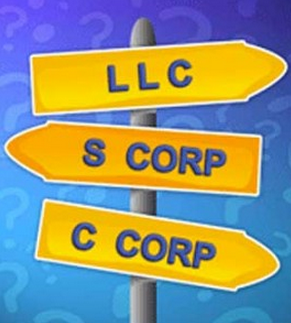 As a new gym owner, looming legal and business matters can flummox you—among them the decision whether to file as an LLC or corporation. Infiniti Elite Athletics owner Cari Ann Bulzone says filing as an S-corp was one of the first things she did when she took over the program from its previous owner in 2012—and it was a learning experience every step of the way. “It’s not something to take lightly; gym owners should definitely do their homework,” says Bulzone, who used LegalZoom as a resource and to facilitate filing.
Whether you go the DIY route like Bulzone or consult a lawyer, here are a few things to consider during the decision-making process:
Liability: Trixie Bennett, executive director of finances/services at Copperas Cove, TX-based GymKix, says that when the gym was set up, protection from liability was her top priority. She chose to go the LLC route because it’s cheap and quick: “LLCs are like the “low-fat” versions of corporations. It gave us the same legal protection as a traditional corporation but with half the ‘fat’ [aka red tape],” says Bennett.
However, both models offer some protection from liability, according to Washington, D.C.-based attorney Thomas J. Simeone. “Both a corporation and LLC limit the liability of the owner for claims against and debts of the company. That is vital,” says Simeone. “But setting up and maintaining a corporation can be more expensive and inconvenient than doing the same for an LLC. For example, corporations may require annual meetings, directors, by-laws, etc. So, for newer and smaller businesses, LLC’s are popular.”
Taxes: From the tax perspective, many gym owners might be better off filing as an LLC. “Unlike corporations, LLCs don’t suffer from double-taxation, in which the corporate entity is taxed and then its shareholders’ dividends are taxed as well,” says Bennett. “Corporations have to pay tax on their earnings before passing the profits through to shareholders to be taxed.”
For example, at GymKix (which is an LLC), any earnings or losses “pass through” to the co-owners and are included on their individual tax returns and taxed at their individual income tax rates. “If you’re a single owner, this might not be too good at tax time as all the profits would be added to your individual income tax return,” cautions Bennett.
Healthcare: When David Skaw, owner of Clackamas, OR-based Thunder Elite All Stars Inc. chose to go the corporation route, healthcare was a prime consideration: “For us, the ability to write off 100 percent of health benefits for officers is important. You can’t do that as an LLC.”
Future Plans: Bulzone of Infinite Elite had the big picture in mind when she decided to file as an S-corp. “I like the idea of being able to bring in other partners; that way, I can offer long-term coaches a little bit more in the future should they want it,” says Bulzone. “I have such great employees who work so hard, and increasing their responsibility will only get you so far. Eventually, I can look at them and say, ‘Would you like to own a part of Infiniti Elite?’” She adds that having an S-corp also allows her to leave her own options open: “Should I decide to leave the program, I wanted the option to pass my shares on to someone else so that the corporation could continue thrive without me if that was ever in the cards.”
Multiple Locations: Skaw of Thunder Elite says if you’re a single-location gym, LLC can be a very viable option. However, “if you have multiple partners and multiple locations, a corporation makes more sense,” he advises. And gyms can have it both ways—even if a gym starts out as an LLC, it’s possible to make the switch to corporation as your business grows and multiplies. “Most states have conversion statutes where you can convert from one to the other,” says New York-based attorney Trippe Fried.
However, switching may be time-consuming and/or expensive. “Though you can switch back and forth, there are fees, and in some states like New York, it can be complex,” says Fried. “You [also] have to transfer the corporate documents into LLC documents or vice versa, so there is some paperwork involved.” In some states, gym owners must go as far as creating a separate entity and then merging the LLC into the corporation (or vice versa). “The result is the same, but it’s a little more expensive from a filing perspective and considerably more paperwork,” points out Fried.
–Dinsa Sachan
Visit our blog for a rundown of the different types of corporations that might work well for gym owners! You can also find handy forms and resources in our “Biz Docs” section.


